Soups & Stews
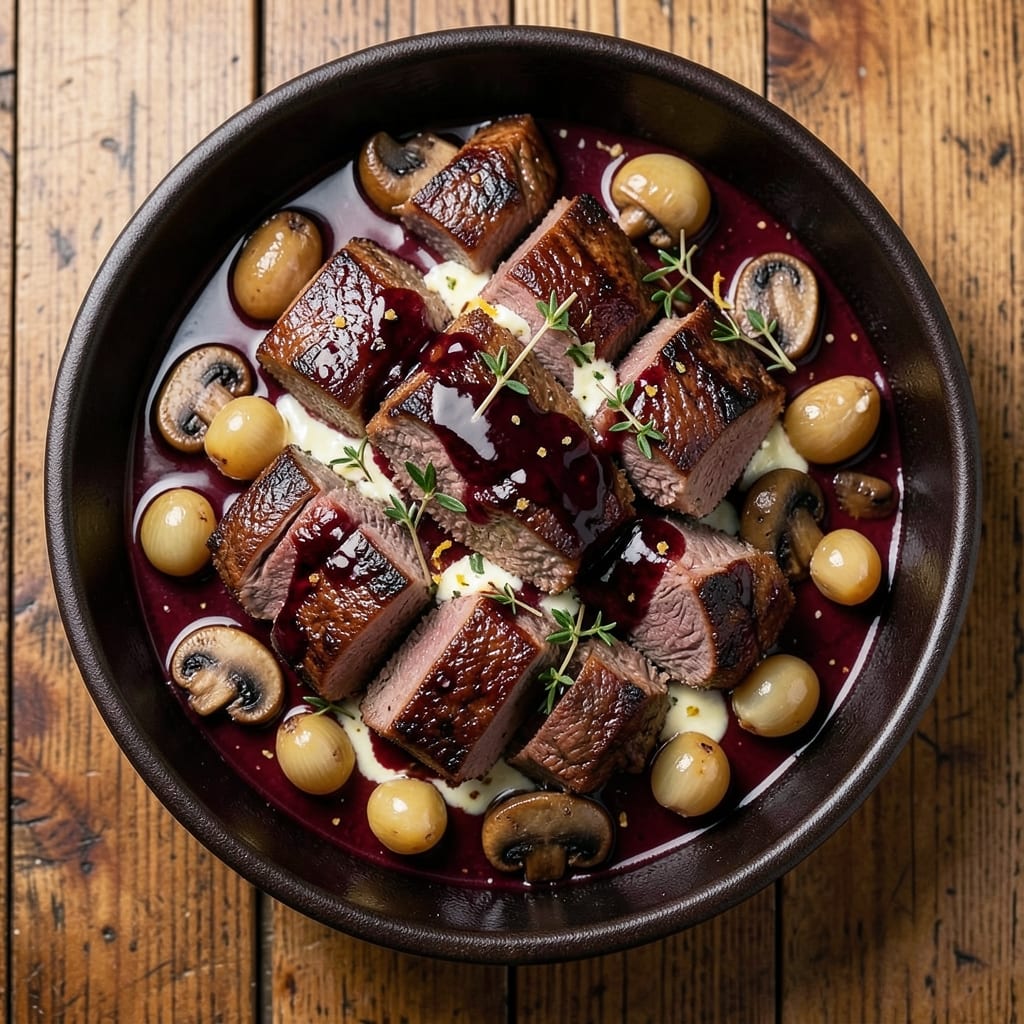
This 5-star beef bourguignon recipe transforms tough beef chuck into melt-in-your-mouth tenderness, all thanks to a slow braise in rich red wine and aromatic herbs. The secret lies in proper searing and deglazing—steps that unlock layers of depth in every bite. I’ve perfected this technique over years of testing, ensuring the sauce is velvety, the meat is fork-tender, and the flavors are restaurant-quality without the fuss.
What sets this dish apart is the balance of techniques: high-heat searing for caramelized edges, low-and-slow braising for tenderness, and careful wine reduction to concentrate flavors. The result? A deep, complex sauce with notes of thyme, garlic, and red wine that clings to every bite of beef. No shortcuts here—just a method that delivers consistent, showstopping results every time.
The beef will fall apart with just a fork, the sauce will coat your plate in a glossy, aromatic layer, and the aroma alone will have everyone gathered around the table. This isn’t just a stew—it’s a centerpiece dish that feels like a Michelin-starred meal. Ready in about 3 hours (mostly hands-off time), it’s perfect for special occasions or when you want to impress without stress.
Pair it with creamy mashed potatoes, crusty bread for soaking up sauce, or roasted vegetables to round out the meal. The key to success? Patience and attention to detail—trust the process, and you’ll end up with a dish that’s worth every minute. Let’s get started.
Ingredients for 5 star beef bourguignon
Here's what transforms tough beef into Michelin-worthy tenderness—rich wine, aromatic herbs, and patience.
| Ingredient | Amount | Notes |
|---|---|---|
| Beef Chuck Roast 🥩 | 2 ½ lb | Cut into 1.5-inch chunks, trimmed of fat |
| Dry Red Wine 🍷 | 2 cups | Bold variety like Cabernet Sauvignon |
| Beef Broth 💧 | 2 cups | Low-sodium preferred, homemade or high-quality |
| Yellow Onion 🧅 | 1 whole | Diced, about 1.5 cups |
| Garlic Cloves 🧄 | 6 cloves | Minced, peeled |
| Fresh Thyme 🌿 | 2 tbsp | Leaves only, stems removed |
| Fresh Parsley 🌿 | ¼ cup | Chopped, for garnish |
| Tomato Paste 🍅 | 2 tbsp | Smooth, not chunky |
| All-Purpose Flour 🌾 | 2 tbsp | For dusting beef |
| Olive Oil 🫒 | ½ cup | Extra-virgin for richness |
| Bay Leaves 🌿 | 2 whole | Dried, removed before serving |
| Carrots 🥕 | 3 medium | Peeled, sliced into rounds |
| Salt 🧂 | 1 ½ tsp | Kosher or sea salt |
| Black Pepper 🌶️ | 1 tsp | Freshly ground preferred |
| Butter 🧈 | 2 tbsp | Unsalted, for finishing sauce |
The beef is non-negotiable. Chuck roast with good marbling is essential—sirloin or ribeye won't cut it. Look for a cut with visible fat streaks at Costco or Whole Foods; their butchers can trim it for you. If buying whole, ask for pre-cut chunks about 1.5 inches thick. The wine? Cabernet Sauvignon or Merlot—whatever's open in your cabinet. Avoid sweet wines; you want bold, dry notes that'll braise beautifully. Fresh thyme and parsley make all the difference too—Trader Joe's has great bundles, but skip the dried stuff here unless it's labeled 'culinary' quality.
No red wine? Beef broth with 1 tbsp balsamic vinegar works in a pinch, though the flavor will be subtly different. Short on thyme? Dried works at half the amount, but fresh is ideal. The tomato paste can be swapped for 1 cup crushed tomatoes if you prefer, though paste gives better body. For the carrots, baby carrots or whole peeled sticks both work—just adjust cooking time slightly. The flour is just for dusting; don't skip it—it helps create that perfect sear. And that butter at the end? Full-fat, unsalted—trust me on this one.
This dish tastes even better the next day, so make extra. Store in an airtight container in the fridge for up to 5 days, or freeze portions for 3 months. The sauce thickens as it cools, so add a splash of broth when reheating. For serving, I like to portion it with creamy mashed potatoes and crusty bread—everyone gets to soak up that glorious sauce. The aroma alone will have guests thinking you've been cooking all day, even though it's mostly hands-off time.
Why You'll Love This Recipe
- Here’s what sold me: the way red wine and beef broth transform tough chuck into something luxurious. That deep, savory richness? It’s like a fancy restaurant’s secret, but with ingredients you already own.
- Foolproof Timing: That slow-cooked beef practically melts in your mouth—no babysitting required. I brown the chuck roast, dump in the wine and broth, and walk away for hours. The onions caramelize while you’re out, so it’s done when you get home, not before.
- Wine-Fueled Magic: Here’s what sold me: the way red wine and beef broth transform tough chuck into something luxurious. That deep, savory richness? It’s like a fancy restaurant’s secret, but with ingredients you already own.
- Leftovers That Win: Between us, this dish only gets better the next day. The beef stays tender, the sauce thickens, and suddenly you’ve got a week’s worth of lunches that taste like you slaved over them. (Yes, even on a Tuesday night.)
Step-by-step instructions for 5-Star beef bourguignon
Here's how to transform tough beef into melt-in-your-mouth chunks with a rich, velvety sauce.
Prepare the Beef for Maximum Tenderness
Pat the 2.5 lb beef chuck roast completely dry with paper towels—this is crucial for developing that signature crust later. Cut it into 1.5-inch chunks, trimming away any visible fat. In a large bowl, toss the beef with 2 tbsp all-purpose flour, 1.5 tsp salt, and 1 tsp black pepper until evenly coated. This flour coating creates a golden-brown crust during searing.
Let the seasoned beef sit at room temperature for 30 minutes before cooking. This equalizes the internal temperature, ensuring even cooking. While it rests, peel and slice the 3 medium carrots into ½-inch rounds and dice the 1 whole yellow onion into ½-inch pieces. These will form the aromatic base of your braise.
Sear the Beef Until Deeply Browned
Heat 0.5 cup olive oil in a 6-quart Dutch oven over medium-high heat until shimmering. Working in batches, add the beef in a single layer and cook undisturbed for 3-4 minutes until deeply browned on all sides. This step is non-negotiable—those browned bits (fond) will dissolve into the sauce, creating deep flavor. If your pan gets crowded, work in two batches to avoid steaming the meat.
Once all beef is browned, remove it from the Dutch oven and set aside. In the same pot, add the diced onion and sliced carrots, cooking for 5 minutes until softened. Stir in the 6 cloves minced garlic and 2 tbsp tomato paste, cooking for another 1 minute until fragrant. This aromatic base forms the flavor foundation of your bourguignon.
Deglaze and Simmer the Wine
Pour in the 2 cups dry red wine, scraping up all the browned bits from the bottom of the pot with a wooden spoon. This deglazing step captures all the flavor you worked so hard to create. Let the wine simmer over medium heat for 5-7 minutes until reduced by half, which intensifies the wine's flavor and removes some of its alcohol content.
Add the 2 cups beef broth, 2 tbsp fresh thyme leaves, 2 whole bay leaves, and return the beef to the pot. Bring to a gentle simmer, then reduce heat to low, cover partially, and let it cook for 2 hours. The beef should be fork-tender by this point, with a rich, deep color. If the liquid reduces too quickly, add a splash of water or broth to maintain a sauce consistency.
Finish with Butter for Luxurious Depth
Once the beef is tender, remove the bay leaves and discard them. Stir in the 2 tbsp unsalted butter, allowing it to melt into the sauce. This final step adds a luxurious richness that elevates the dish from good to extraordinary. Taste and adjust seasoning with additional salt or black pepper if needed—this is where you fine-tune the balance of flavors.
Let the bourguignon rest for 10 minutes before serving. This allows the juices to redistribute throughout the beef, ensuring each bite is moist and flavorful. Garnish with 0.25 cup chopped fresh parsley just before serving to add a bright, fresh contrast to the rich sauce. Serve with crusty bread to soak up every last drop of that velvety sauce.
Pro Tips For Making 5 Star Beef Bourguignon
- SEAR THE ROAST HARD: I used to treat the beef chuck like a shy guest—gentle pats, no pressure. Wrong. Crank the heat to medium-high and sear each side until deep brown crust forms, about 3-4 minutes per side. That crust locks in flavor and keeps the meat from drying out later. (Yes, even if you’re impatient like me.)
- DEGLAZE WITH WINE IMMEDIATELY: As soon as you remove the roast, pour in that red wine hot—scrape every last bit of browned bits from the pan. Let it bubble for 2 minutes before adding anything else. Skimp here, and you’re left with a dull sauce instead of rich, wine-forward depth.
- SIMMER LOW AND SLOW: After adding broth, reduce heat to a gentle simmer—barely any bubbles, just a slow shimmer. Too aggressive, and the wine turns to vinegar. Too lazy, and the beef stays tough. Check the temperature: 300°F (150°C) is your sweet spot. (Your future self will notice the difference.)
- SAUTE ONIONS UNTIL CARAMELIZED: Don’t just chop onions—cook them until they’re golden and jammy, about 15-20 minutes. The deeper the color, the sweeter the base for your sauce. If they’re still pale when you add garlic, you’ve missed the boat. (I learned this the hard way—burnt garlic is a crime.)
Flavor customization for 5 star beef bourguignon
Classic Red Wine Depth
For a truly authentic experience, stick with bold red wines like Cabernet Sauvignon or Merlot—their tannins and acidity balance beautifully with the beef. I recommend using 2 cups of the same wine you'd drink, as the flavors should complement your palate. If you want to experiment, try Pinot Noir for a lighter profile or Malbec for extra richness. Avoid sweet wines—they'll make the sauce taste cloying rather than balanced. 🍷
Herb Variations
While fresh thyme is traditional, you can swap in rosemary for a piney aroma or tarragon for a slightly sweet, anise-like note. For a herb-forward twist, add 1 tbsp chopped sage with the thyme. If you love garlic, increase to 8 cloves (peeled and smashed) for a more intense flavor. Just remember: fresh herbs always taste better than dried in this dish.
Spice and Heat
For a kick of heat, stir in ½ tsp smoked paprika with the tomato paste or add 2-3 slices of fresh chili (like jalapeño) to the braising liquid. If you prefer warm spices, toast ½ tsp ground cinnamon or ½ tsp allspice in the Dutch oven with the onions for a Middle Eastern-inspired twist. Just don’t overdo it—bourguignon is about subtlety, not spice bombs. 🌶️
Umami Boosters
To deepen the sauce’s complexity, add 1 tbsp soy sauce or 1 tsp fish sauce when deglazing the wine. For a mushroomy depth, include ½ cup sliced cremini mushrooms with the onions. If you’re feeling adventurous, stir in 1 tsp miso paste at the end for an unexpected but delicious richness. These tweaks add layers without overpowering the dish.
Sweet and Tangy
Balance the richness with 1 tbsp balsamic vinegar when deglazing or add 1 tsp brown sugar to the tomato paste for a touch of caramelization. For a fruity note, simmer in ½ cup crushed cherries (pitted) with the wine. These adjustments brighten the sauce and cut through the beef’s richness beautifully. 💛
Cheese Finishes
For a luxurious finish, stir in 2 tbsp grated Gruyère or Parmigiano-Reggiano with the butter at the end. If you love blue cheese, crumble 1 oz of crumbled Gorgonzola into the sauce just before serving. These additions add a creamy, tangy contrast that elevates the dish to restaurant-level sophistication.
Nutrition facts
Frequently asked questions
Can I use a different cut of beef for this recipe?
While chuck roast is ideal for its marbling and tenderness, you can use beef short ribs or chuck shoulder as substitutes. Avoid lean cuts like sirloin—they won't become tender enough. If using ribs, increase braising time to 2.5 hours to ensure fork-tenderness. The fat content is key for flavor and moisture!
What if I don't have dry red wine?
No problem! Use 2 cups beef broth with 1 tbsp balsamic vinegar or 1 tbsp red wine vinegar for acidity. For depth, add 1 tsp soy sauce or ½ tsp smoked paprika. The dish will still be delicious, though the wine's complexity will be missing. Sweet wines are a no-go—they'll make the sauce taste cloying.
How do I know when the beef is tender enough?
Test a piece with a fork after 2 hours of braising. It should pierce easily with minimal resistance. If it feels slightly firm, return it to the pot for another 30 minutes. Overcooking can make the meat mushy, so aim for "fork-tender" rather than "fall-apart" texture. The internal temperature should reach 203°F for maximum tenderness.
Can I make this ahead of time?
This dish tastes even better the next day. Store in an airtight container in the fridge for up to 5 days. The flavors meld beautifully overnight. When reheating, add 1-2 tbsp broth to thin the sauce slightly, as it thickens upon cooling. For freezing, portion into containers and freeze for up to 3 months—just thaw overnight in the fridge before reheating.
What's the best way to reheat leftovers?
Gently reheat on the stovetop over low heat with a splash of broth to prevent drying. Avoid microwaving—it can make the sauce watery. For best results, cover the pot and heat just until warmed through (10-15 minutes). If the sauce seems too thick after reheating, stir in more broth or a pat of butter to restore its velvety texture.