
Soups & Stews
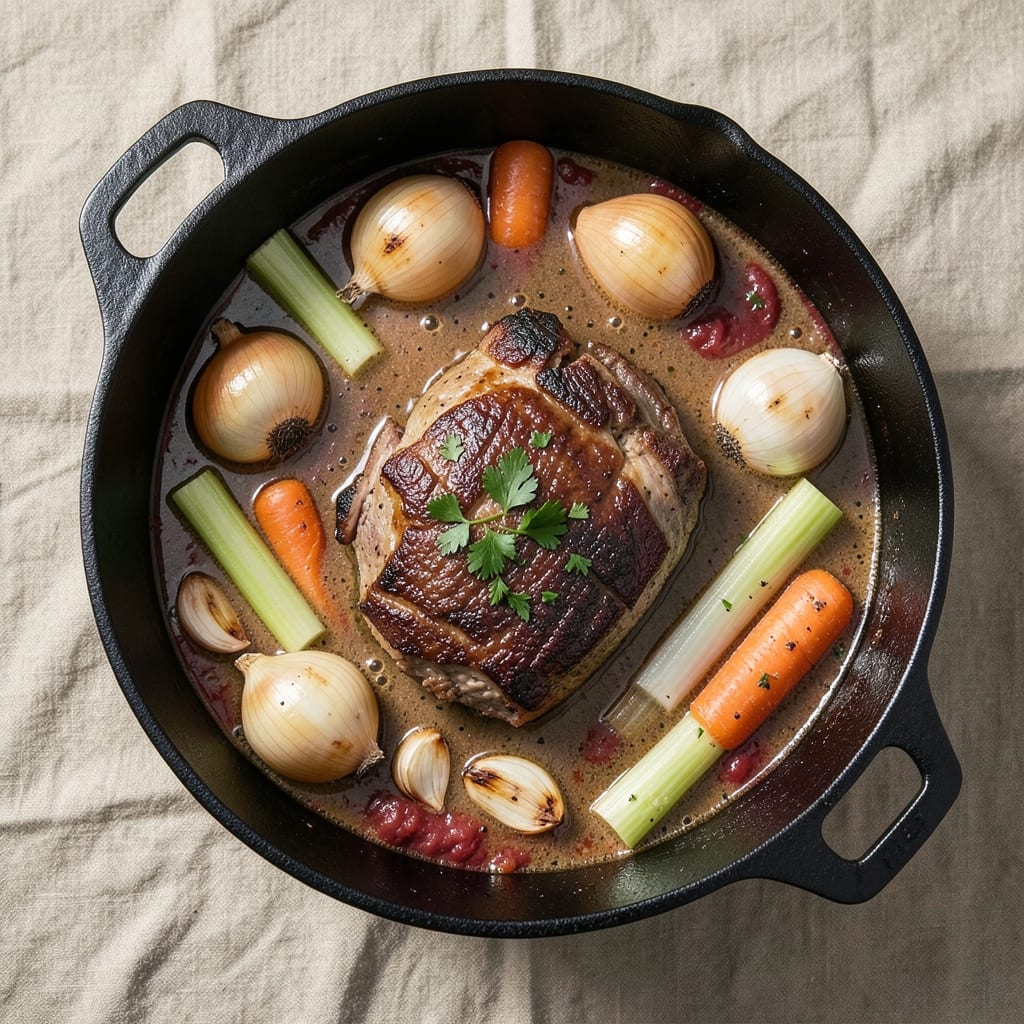
An 8-hour beef stew transforms tough cuts into melt-in-your-mouth perfection through slow braising, unlocking deep umami flavors that build with every hour. The secret lies in proper browning—never crowding the pan—to develop that rich, caramelized foundation before vegetables and broth take over. This method ensures a tender, flavorful result that tastes even better the next day, making it ideal for meal prep or Sunday dinners.
The process begins with searing beef in batches to create a flavorful crust, then deglazing the pan to capture those precious browned bits. Vegetables like carrots, onions, and celery form the aromatic base, while herbs and spices infuse the broth as it simmers. The 8-hour cook time breaks down collagen, turning tough meat into fork-tender pieces while allowing flavors to meld into a harmonious, comforting stew.
By the final hour, your kitchen will fill with an irresistible aroma—earthy, savory, and deeply satisfying. The beef will pull apart easily, the vegetables tender yet still holding their shape, and the broth reduced to a velvety consistency. Serve with crusty bread or roasted potatoes to soak up every last drop of that rich, umami-filled sauce.
This isn’t just a stew; it’s a restaurant-quality meal you can make at home with patience and attention to detail. The slow braising process ensures every bite is packed with flavor, making it a dish worth the wait. Let’s get started on creating something truly special.
Ingredients for 8 hour beef stew
Sixteen ingredients, eight hours, restaurant-quality beef stew that transforms tough cuts into melt-in-your-mouth perfection.
| Ingredient | Amount | Notes |
|---|---|---|
| Chuck Roast 🥩 | 3 lb | Well-marbled, cut into 1.5-inch cubes |
| Yellow Onions 🧅 | 2 whole | Cut into 1-inch chunks |
| Carrots 🥕 | 4 whole | Peeled, cut into 2-inch chunks |
| Celery Stalks 🧄 | 4 whole | Cut into 1-inch pieces |
| Garlic Cloves 🧄 | 6 cloves | Crushed, not minced |
| Tomato Paste 🍅 | ½ cup | Smooth, not chunky |
| Dry Red Wine 🍷 | 1 cup | Bold, like Cabernet Sauvignon |
| Beef Broth 💧 | 6 cups | Homemade or high-quality store-bought |
| Fresh Thyme 🌿 | 2 sprigs | Or 1 tbsp dried thyme |
| Fresh Rosemary 🌿 | 1 sprig | Woody stems removed |
| Bay Leaves 🌿 | 2 whole | Standard dried leaves |
| All-Purpose Flour 🌾 | 2 tbsp | For thickening, optional |
| Kosher Salt 🧂 | 2 tbsp | Diamond Crystal preferred |
| Freshly Ground Black Pepper 🌶️ | 1 tbsp | Cracked peppercorns preferred |
| Olive Oil 🫒 | 2 tbsp | For searing, high smoke point |
The chuck roast is non-negotiable—look for well-marbled cuts at the butcher counter or pre-cut beef section. Costco or Whole Foods often carry high-quality chuck roasts with visible fat marbling, which is key for flavor and tenderness. If you're buying a whole roast, ask your butcher to cube it yourself—pre-cut pieces often have uneven sizes, which means uneven cooking. For the vegetables, organic carrots and celery (if budget allows) have thinner skins that don't need peeling, but regular produce works fine. The tomato paste? Don't skimp on quality—the good stuff at Trader Joe's or Penzeys makes a noticeable difference in depth of flavor.
No red wine? Substitute with extra beef broth—just add 1 tbsp of balsamic vinegar to mimic the acidity. Fresh thyme and rosemary can be swapped for dried at one-third the amount, but trust me, fresh herbs elevate this dish. The flour is optional but worth it if your broth reduces too much—just mix it with a splash of cold water to avoid lumps. For the broth, homemade is ideal, but if you're using store-bought, Swanson or Pacific Foods are reliable choices. The garlic should be crushed, not minced—this releases more flavor without turning bitter. And if you're short on time, frozen carrots work perfectly—no one will know the difference.
This stew tastes even better the next day, so double the batch if you can. Store in an airtight container for up to 5 days in the fridge or 6 months in the freezer. For reheating, low and slow is key—warm on the stove over medium-low heat, stirring occasionally, until heated through. The beef should pull apart easily, and the broth should coat the back of a spoon. Leftovers make amazing sandwiches the next day—just pile the beef and veggies on crusty bread with a smear of mustard. The aroma alone will have everyone gathering around the table.
Why You'll Love This Recipe
- Deep Umami Magic: That chuck roast? It melts into tender, pull-apart perfection, soaking up all the caramelized onion and garlic flavors. Honestly, the first bite makes me forget it’s just a weeknight dinner.
- Leftovers for Days: Between us, I make this once and eat it three times. The flavors only get better after a day or two in the fridge—my kids actually ask for it. Plus, it reheats like a dream, no soggy veggies in sight.
- Budget-Friendly Powerhouse: A single chuck roast and a bag of veggies feed my family for weeks. I’m talking cheap, filling, and no takeout guilt. Here’s what sold me—the price tag is low, but the satisfaction isn’t.
Step-by-step instructions for 8-Hour beef stew with deep umami flavor
This method transforms tough chuck roast into melt-in-your-mouth perfection through patience and technique.
Sear the Chuck Roast for Maximum Flavor
Heat a heavy Dutch oven over medium-high heat until a drop of water evaporates instantly. Add the 2 tablespoons olive oil and swirl to coat the bottom. Pat the 3 lb chuck roast dry with paper towels—this ensures a proper sear instead of steaming.
Place the chuck roast in the pot and sear for 4-5 minutes per side until deeply browned, pressing down gently with a spoon to prevent curling. The goal is to develop a rich Maillard crust that will dissolve into the stew later. If the pan gets too crowded, work in batches. Transfer the seared meat to a plate and set aside for now.
Build the Aromatic Vegetable Base
In the same Dutch oven, add the 2 whole yellow onions, 4 whole carrots, and 4 whole celery stalks—all cut as specified. Cook over medium heat for 8-10 minutes, stirring occasionally, until the vegetables soften and begin to caramelize. This step develops their natural sweetness and forms the flavor foundation.
Add the 6 crushed garlic cloves and cook for another 30 seconds until fragrant. Here's the thing—garlic burns fast, so keep the heat moderate. Stir in the 0.5 cup tomato paste and cook for 1 minute to eliminate its raw taste. This creates a rich, concentrated base that will deepen the stew's umami profile.
Deglaze and Combine All Ingredients
Pour in the 1 cup dry red wine, scraping up all the browned bits from the bottom with a wooden spoon. This deglazing step captures all that concentrated flavor you worked so hard to develop. Let the wine simmer for 3-4 minutes until reduced by half and slightly thickened.
Return the chuck roast to the pot. Add the 6 cups beef broth, 2 sprigs fresh thyme, 1 sprig fresh rosemary, 2 whole bay leaves, 2 tablespoons kosher salt, and 1 tablespoon freshly ground black pepper. Stir gently to combine, making sure the meat is fully submerged. Bring to a gentle simmer over medium-low heat.
Slow Braise for Tender Perfection
Cover the Dutch oven with a tight-fitting lid and transfer to a 300°F oven. The low temperature is critical—it breaks down collagen in the meat and vegetables, transforming them into silky tenderness. Braise for 6 hours, checking occasionally to ensure there's always some liquid in the pot.
After 6 hours, remove the lid and increase the oven temperature to 350°F. This final hour allows the surface to develop a rich, caramelized crust while maintaining the stew's depth of flavor. The meat should be fork-tender, falling apart easily when pierced with a fork or knife.
Finish and Thicken (Optional)
Remove the stew from the oven and let it rest for 10 minutes. This resting period allows flavors to meld and the meat to reabsorb any juices. If you prefer a thicker stew, sprinkle the 2 tablespoons all-purpose flour over the surface and stir gently to combine. Simmer uncovered for 5-10 minutes until the stew reaches your desired consistency.
Remove and discard the herb sprigs and bay leaves. Taste and adjust seasoning if needed—this is your chance to balance flavors before serving. Ladle the stew into bowls, ensuring each serving gets a generous portion of tender beef and vegetables. The result should be a rich, deeply flavorful stew where each bite delivers perfect texture and umami depth.
Pro Tips For Making 8 Hour Beef Stew
- SEAR THE CHUCK FIRST: Skip the slow start—after browning the chuck roast in batches (yes, it’s messy), the crust locks in flavor and makes the long cook worthwhile. I used to skip this, and the stew always tasted like it needed more depth.
- CHOP VEGETABLES UNIFORM: Carrots and celery should be cut into 1-inch chunks, onions into ½-inch slices—no tiny pieces that’ll turn to mush. After making this mistake twice, I realized even cooking matters more than you’d think.
- LOW AND SLOW AFTER 2 HOURS: Once the meat is tender enough to pull apart, drop the heat to 300°F (150°C) and cover tightly. I learned this the hard way—high heat after 2 hours turns the stew into a gluey mess.
- USE COLD WATER TO START: Cold water prevents immediate boiling, which can cook the outer layer too fast and seal in juices unevenly. Sounds counterintuitive, but it guarantees the meat stays fork-tender by the end.
Regional styles of this dish
French Classic Approach
The French mastered beef stew with their Bœuf Bourguignon, where red wine and bacon create a rich, deep flavor. I recommend adding 4 oz thick-cut bacon, diced, to sear first, then removing it before adding the beef. Use Pinot Noir or Cabernet Sauvignon for the wine—these varieties complement the beef beautifully. The French also use mushrooms (about 8 oz pearl onions or cremini mushrooms) for earthy depth. Serve with crusty French bread to soak up every drop of the wine-infused sauce. 🍷
Irish Hearty Style
Irish beef stew, or Irish Stew, traditionally includes potatoes and onions>—no wine, just simple ingredients that pack maximum flavor. I swap the wine for 2 cups Guinness stout> (or any dark beer) and add 3 large russet potatoes, peeled and cubed, halfway through cooking. The beer adds a malty richness, while the potatoes absorb the stew's flavors beautifully. The Irish version is heartier and more rustic, perfect for cold weather. Serve with soda bread for the ultimate comfort meal. 🍺
American Southern Comfort
The American South takes beef stew with a smoky, spicy twist>, often incorporating smoked paprika and cayenne pepper>. I add 1 tsp smoked paprika> and ½ tsp cayenne> when searing the onions and garlic. For extra depth, some recipes call for a dash of hot sauce> (like Tabasco>) at the end. The Southern style also often includes cornbread> on the side, which pairs perfectly with the rich, slightly spicy stew. This version is ideal for those who love a little heat with their comfort food. 🌶️
German Sauerbraten Twist
German Sauerbraten> transforms beef stew into a tangy, vinegar-based masterpiece. I replace the red wine with 1 cup apple cider vinegar> and add 2 tbsp brown sugar> to balance the acidity. Marinate the beef overnight in a mix of ½ cup vinegar, 1 tbsp mustard, and 1 tsp caraway seeds> before cooking. The slow braise develops a deep, complex flavor with a hint of sweetness. Serve with red cabbage and buttered noodles> for a full German experience. This version is perfect for those who enjoy bold, tangy flavors. 🥬
Italian Rustic Version
In Italy, beef stew often becomes a spezzatino>, featuring tomatoes, olives, and capers> for a Mediterranean twist. I add ½ cup crushed tomatoes> (instead of paste) and ¼ cup Kalamata olives> along with the beef. A handful of capers> adds a briny punch. Fresh basil> (instead of thyme) and a splash of white wine> elevate the dish. Serve with crusty focaccia>** or polenta to soak up the rich sauce. This version is lighter yet equally flavorful. 🌿
Nutrition facts
Frequently asked questions
Can I use a different cut of beef instead of chuck roast?
Yes, but with adjustments! Short ribs or brisket work well—they're even more flavorful but may need 6-7 hours instead of 8. For leaner cuts like round steak, reduce the cook time to 4-5 hours to avoid drying out. Always cut the meat into even-sized pieces for consistent doneness.
Why does the recipe call for an 8-hour cook time?
The 8-hour slow braise is key for breaking down collagen in tough cuts, transforming them into fork-tender perfection. The first 6 hours at 300°F melts the connective tissue, while the final hour at 350°F develops a rich caramelized crust. Rushing this process risks tough, chewy meat—patience rewards you with melt-in-your-mouth results!
Can I make this stew in a slow cooker instead?
Brown the beef and vegetables in a skillet first, then transfer everything to a 6-quart slow cooker. Add all remaining ingredients and cook on LOW for 8 hours or HIGH for 5-6 hours. The texture will be slightly different (more brothy), but still delicious. Just skip the final hour at higher heat—slow cookers maintain steady temperatures.
What if my stew is too watery after 8 hours?
Don't worry—this is easily fixed! Remove the beef and vegetables, then simmer the broth uncovered for 15-20 minutes to reduce. For extra thickness, mix 2 tbsp flour with 2 tbsp cold water, stir into the broth, and simmer for 5 minutes. Return the meat and veggies, and let everything heat through. The stew should coat the back of a spoon when finished.
How can I make this stew ahead of time?
This stew tastes even better the next day! Let it cool completely, then store in an airtight container in the fridge for up to 5 days or freeze for 6 months. Reheat gently on the stove over medium-low heat, stirring occasionally. For leftovers, consider making stew sandwiches with crusty bread—it's a game-changer!