
Soups & Stews
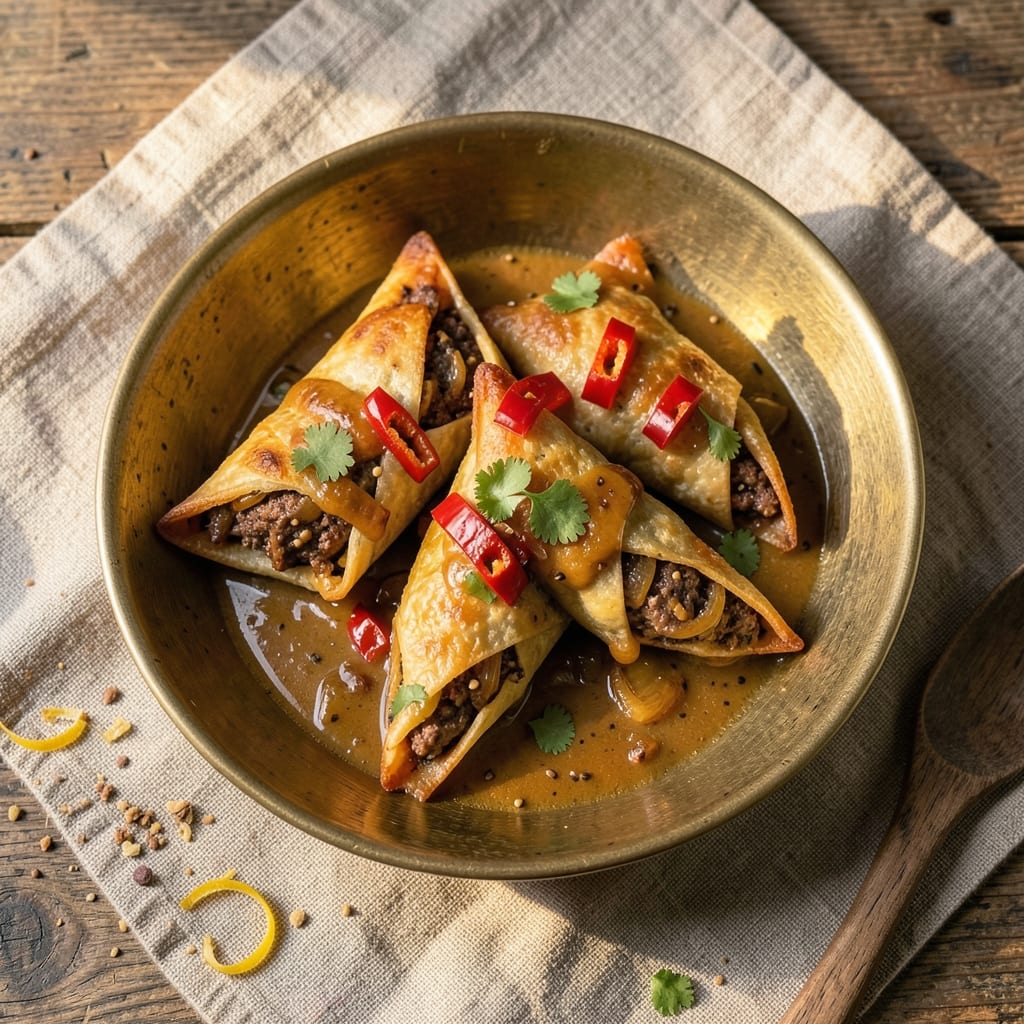
This African beef samosa recipe brings bold flavors and crispy layers to your table with a fusion of North African spices and traditional samosa technique. The secret lies in a rich beef filling infused with berbere and ras el hanout, wrapped in a golden, flaky dough that shatters with every bite. I developed this recipe after craving the perfect balance of spice and texture—something that delivers restaurant-quality results at home.
The dough starts with a simple mix of flour, butter, and ice water, rolled thin for that signature crispy finish. The beef filling simmers with onions, garlic, and a blend of warm spices until tender yet flavorful, creating pockets of savory goodness. What sets this apart is the North African spice profile—berbere for heat, ras el hanout for depth, and a touch of cumin for earthiness—transforming a classic samosa into a dish with global appeal.
By the time you fry or bake these golden pockets, you’ll have a dish that’s as satisfying as it is impressive. The crispy layers give way to tender beef and aromatic spices, making each bite a flavor explosion. Serve with mint chutney or a spicy tamarind dip to balance the richness, and prepare for compliments that’ll have everyone asking for seconds.
Perfect for weeknight dinners or special gatherings, this recipe scales easily and keeps well for a day or two. The key to success? Patience in rolling the dough and frying in small batches for even crispiness. Let’s get cooking—your taste buds are in for a treat!
Ingredients for african beef samosa
Bold spices, tender beef, and crispy layers—here's what makes these samosas unforgettable.
| Ingredient | Amount | Notes |
|---|---|---|
| Ground Beef 🥩 | 1 ½ lb | 80% lean, finely ground |
| All-Purpose Flour 🌾 | 3 cups | For dough, sifted preferred |
| Unsalted Butter 🧈 | ½ cup | Cold, cubed for dough |
| Ice Water 💧 | ½ cup | Chilled for dough |
| Yellow Onions 🧅 | 1 whole | Finely chopped for filling |
| Garlic Cloves 🧄 | 4 cloves | Minced for filling |
| Berbere Spice Blend 🌶️ | 2 tbsp | For heat and depth |
| Ras El Hanout Spice Blend 🌿 | 1 tbsp | For aromatic complexity |
| Ground Cumin 🌿 | 1 tsp | Toasted for earthiness |
| Salt 🧂 | 1 tsp | Kosher or sea salt |
| Black Pepper 🌶️ | ½ tsp | Freshly ground preferred |
| Vegetable Oil 🫒 | 2 cups | For frying, high smoke point |
| Lemon Juice 🍋 | 1 tbsp | Freshly squeezed |
The spices are non-negotiable here. Berbere and ras el hanout are the stars—grab them at a Middle Eastern or African market if you can. Penzeys or Spicewalla online are solid if you're local. For the beef, 80% lean ground chuck gives the best texture—too lean and it dries out. The dough needs cold butter and ice water for that signature flaky, crispy finish. Don't rush the chilling time between mixing and rolling.
No berbere? Mix 1 tsp smoked paprika, 1 tsp cayenne, 1 tsp coriander, and 1/2 tsp cinnamon as a quick swap. Ras el hanout unavailable? Turmeric, ginger, and cardamom at similar amounts work in a pinch. The dough can be made a day ahead—wrap tightly in plastic and chill. For frying, keep oil at 350°F and fry in batches so it doesn't drop in temperature. If you're baking instead, brush with oil and bake at 400°F for 15-18 minutes.
Store leftover samosas in an airtight container for 2 days—they reheat beautifully in a 350°F oven for 10 minutes. The dough freezes well too if you want to prep ahead. Just thaw completely before rolling. These keep their crispiness best fresh out of the fryer, so plan to serve them soon after cooking. The filling reheats well but loses some of that initial crunch—worth it for the flavor!
Why You'll Love This Recipe
- No-Fuss Dough: The dough comes together in minutes—just flour, butter, and ice water. No kneading, no waiting, just mix, chill, and roll. Honestly, even my kids can handle this part.
- Meaty Satisfaction: That ground beef filling? Rich, savory, and packed with caramelized onions. The butter in the dough makes every bite crispy outside, tender inside—like a hug in pastry form.
- Party or Pantry: Perfect for game day snacks or meal prep. Freeze extras for lazy days, or serve warm at gatherings. Between us, these disappear faster than my willpower on a bad day.
- Budget Crunch Helper: Ground beef stretches far, and the dough uses pantry basics. One batch feeds four, and leftovers reheat beautifully. My wallet and I both approve.
Step-by-step instructions for African beef samosa
Let's make these crispy, flavor-packed samosas with layers that crackle and fillings that burst with spice.
Prepare the Spiced Beef Filling
In a large skillet over medium-high heat, add the 1.5 lb ground beef and cook until it loses its raw color, breaking it up with a wooden spoon. You'll want it to brown evenly without burning—about 5-7 minutes.
Push the beef to one side of the pan and add 2 tablespoons vegetable oil. Toss in the finely chopped yellow onions and cook for 3-4 minutes until they're translucent. Add the minced garlic cloves and cook for another 30 seconds until fragrant.
Return the beef to the pan and stir in the 2 tablespoons berbere spice blend, 1 tablespoon ras el hanout spice blend, 1 teaspoon ground cumin, 1 teaspoon salt, and ½ teaspoon black pepper. Cook for 5 minutes until the spices bloom and the mixture is well combined. Finish with the 1 tablespoon lemon juice and remove from heat. Let it cool completely before using—this prevents the dough from getting soggy.
Make the Samosa Dough
In a large mixing bowl, combine the 3 cups all-purpose flour and cut in the ½ cup cold unsalted butter using a pastry cutter or your fingers until the mixture resembles coarse crumbs. Add the ½ cup ice water gradually, mixing gently with a fork until the dough just comes together.
Turn the dough onto a lightly floured surface and knead for 3-5 minutes until smooth and elastic. Wrap it tightly in plastic wrap and let it rest for 30 minutes at room temperature. This resting time is crucial—it relaxes the gluten and makes rolling easier.
Divide the dough into 8 equal portions (about 1 ounce each) and roll each into a 5-inch circle on a floured surface. Keep the remaining dough covered to prevent drying.
Assemble the Samosas
Cut each rolled dough circle diagonally into two triangles. Take one triangle and place 1 tablespoon of the cooled beef filling near the wide end. Fold the sides inward, then fold the wide end up to form a cone shape. Press the edges firmly to seal—this prevents filling from leaking during frying.
Repeat with the remaining dough and filling, making sure each samosa is tightly sealed. Place them seam-side down on a parchment-lined baking sheet and cover with a clean kitchen towel to keep them from drying out.
Fry to Golden Perfection
Heat 2 cups vegetable oil in a deep skillet or Dutch oven over medium heat until it reaches 350°F (use a thermometer for accuracy). Fry the samosas in batches, being careful not to overcrowd the pan—this ensures even cooking and crispiness.
Fry for 3-4 minutes until the samosas are deep golden brown on all sides. You'll know they're done when they float to the surface and the dough is crispy but not burnt. Drain on a wire rack or paper towels to remove excess oil.
For extra crispiness, you can optionally bake the fried samosas in a 375°F oven for 2-3 minutes to set the edges. Serve warm with a spicy chutney or mint yogurt sauce for dipping.
Pro Tips For Making African Beef Samosa
- Fry the Beef Low and Slow: African beef samosa filling needs to render fat without turning into greasy paste. Cook the ground beef on medium-low heat—yes, even if it takes 10 minutes—until it’s just browned, not crispy. High heat shrinks the meat and squeezes out juices; you want it tender enough to stay moist when folded into the dough.
- Chill the Dough Before Folding: I used to rush this, and my samosas would leak filling everywhere. Roll out the flour-butter dough, then refrigerate it for 20 minutes before cutting triangles. Cold dough seals better when folded, and the butter stays firm enough to create crisp layers—no soggy surprises when frying.
- Finely Dice the Onions: Skip the rough chop—African beef samosa relies on onions for texture and flavor. Pulse them in a food processor for 3-4 seconds, then pulse again until they’re a fine, almost paste-like consistency. This ensures they cook down evenly and don’t turn mushy, which happens when you’re lazy and just hack them with a knife.
- Use Less Ice Water: The dough recipe probably calls for ice water, but trust me: you don’t need as much as it says. Start with 4 tablespoons of ice water, then add 1 more if the dough feels dry. Too much water makes the dough sticky and hard to handle—especially when you’re trying to fold those delicate pleats. Less is easier to work with.
Essential equipment for this dish
Deep Fryer Essentials
For perfect samosas, a deep fryer is my go-to tool—it maintains consistent 350°F oil temperature without the hassle of a stovetop thermometer. I recommend the Presto 02820 Deep Fryer for its even heating and large capacity. If you're frying on the stovetop, use a heavy-bottomed Dutch oven like All-Clad to prevent temperature fluctuations. Always keep oil between 350-375°F for crispy, not greasy, results. 🔥
Dough Rolling Tools
A rolling pin with a smooth, non-stick surface is essential for thin, even samosa dough. My favorite is the OXO Good Grips Rolling Pin—it glides effortlessly and has a comfortable handle. For precision, use a 5-inch round cutter (or a plate) to shape your dough circles. If you're short on time, a pastry bag with a star tip works wonders for piping filling into the dough triangles before folding. 💫
Spice Measuring Aids
Accurate spice measurements make all the difference in African beef samosas. Use a small measuring spoon set (like Westcott Stainless Steel Measuring Spoons) for berbere and ras el hanout—these blends are potent, and too much can overpower the dish. A mortar and pestle (such as Kensington Mortar and Pestle) helps toast cumin seeds before grinding for extra depth. For fresh ingredients, a microplane (like Barware Microplane) quickly zest garlic and lemon rind. ✨
Assembly & Sealing
Tightly sealing samosas requires the right tools. A small offset spatula helps press edges firmly without tearing the dough. For extra security, I brush the folded edges with egg wash (1 egg + 1 tbsp water) before frying—it creates a golden seal. A wire cooling rack (like OXO Good Grips) keeps fried samosas crispy by allowing air circulation underneath. 💡
Frying Safety Gear
Never skip safety when deep-frying! Wear heat-resistant gloves (like Oven Mitts by Norpro) to handle hot oil and samosas. A splash guard (or a metal bowl) placed over the fryer prevents grease splatters. Keep a fire extinguisher (Class B for grease fires) nearby—though proper oil temperature control minimizes risks. For cleanup, paper towels or a wire-mesh strainer quickly drain excess oil. 🛡️
Nutrition facts
Frequently asked questions
Can I make these samosas with chicken instead of beef?
Swap the beef for 1.5 lb ground chicken and reduce cooking time to 4-5 minutes until fully cooked. The texture will be slightly lighter, but the spices will still shine. For extra flavor, marinate the chicken in 1 tbsp lemon juice and 1 tsp garam masala for 30 minutes before cooking.
How do I prevent the dough from getting soggy?
Keep the beef filling completely cool before assembling, and work quickly once the dough is rolled. Brush the folded edges with egg wash (1 egg + 1 tbsp water) before frying for a protective seal. Also, fry in small batches to maintain 350°F oil temperature—overcrowding lowers heat and causes sogginess.
What’s the best way to store leftover samosas?
Store in an airtight container at room temperature for 1-2 days—they’ll lose crispiness but reheat beautifully. For longer storage, freeze for up to 1 month (wrap individually in plastic). Reheat in a 350°F oven for 10-12 minutes—microwaving makes them rubbery.
Can I bake these instead of frying?
Yes! Brush assembled samosas with oil and bake at 400°F for 18-20 minutes until golden. For extra crispiness, broil for 1-2 minutes at the end. Baking reduces oil but may lack the signature crunch. Pair with a tangy dip like mint chutney to balance flavors.
What’s the secret to extra-crispy samosas?
Roll the dough thin and even (⅛-inch thick) and chill for 30 minutes before cutting. Fry in 350°F oil in batches, and drain on a wire rack (not paper towels) to trap crispiness. For a pro touch, brush the dough with oil** before frying.