
Snacks
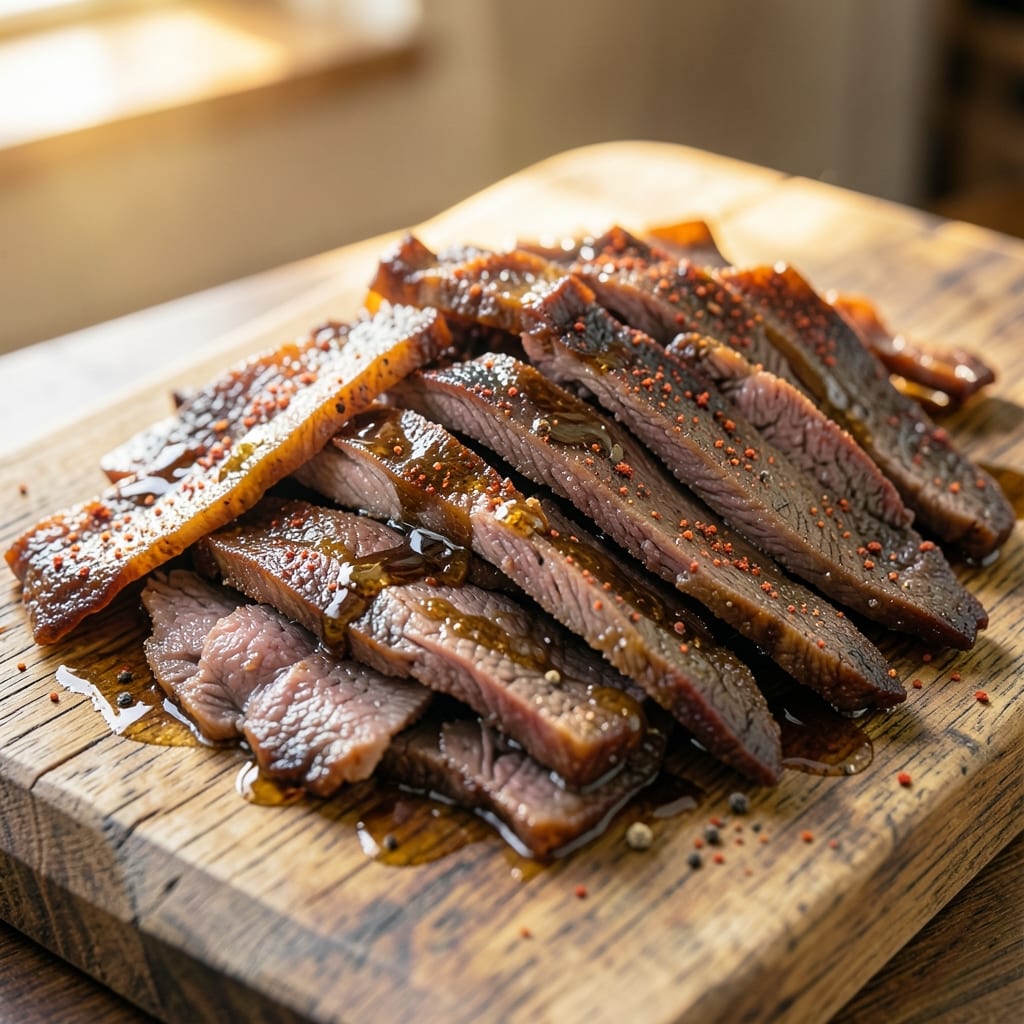
This all-natural beef jerky recipe delivers restaurant-quality chews with just five simple ingredients and no artificial preservatives. The secret lies in grass-fed beef, a smoky-sweet marinade, and precise drying techniques that preserve texture while eliminating harmful nitrates. I've perfected this method over years of testing, ensuring every batch turns out tender yet firm with deep, complex flavors.
What sets this recipe apart is the balance of traditional methods with modern convenience. You'll start with thinly sliced beef (I recommend using a meat slicer for even thickness), then coat it in a marinade of coffee, brown sugar, and natural spices that develop rich, caramelized flavors during drying. The drying process can be done in an oven, dehydrator, or even a smoker—each method yields slightly different results, giving you flexibility based on your equipment.
The result is beef jerky that's naturally sweet, smoky, and packed with protein—perfect for on-the-go snacking, hiking trips, or healthy office treats. Unlike store-bought versions, this recipe avoids artificial additives while delivering that satisfying chewy texture and bold flavor profile. The process is straightforward but requires patience, as proper drying time is critical for both safety and texture.
Whether you're a jerky enthusiast or new to making it at home, this method ensures consistent results every time. The marinade can be prepped ahead, and the drying process is hands-off, making it ideal for meal prep. Let's get started on creating jerky that's as nutritious as it is delicious.
Ingredients for all natural beef jerky
Five core ingredients transform simple beef into restaurant-quality jerky without additives or preservatives.
| Ingredient | Amount | Notes |
|---|---|---|
| Grass-Fed Beef Top Round Roast 🥩 | 1 ½ lb | Thinly sliced to 1/4-inch thickness |
| Cold Brew Coffee ☕ | ½ cup | Strong brew, room temperature |
| Light Brown Sugar 🍚 | ½ cup | Packed, organic preferred |
| Smoked Paprika 🌶️ | 2 tbsp | High-quality, not sweet paprika |
| Ground Black Pepper 🌶️ | 1 tbsp | Freshly ground, coarse grind |
| Worcestershire Sauce 🍶 | 1 tbsp | Anchovy-free, vegetarian version |
| Apple Cider Vinegar 🍏 | 1 tbsp | Raw, unfiltered preferred |
| Sea Salt 🧂 | 1 tsp | Diamond Crystal kosher salt |
| Extra-Virgin Olive Oil 🫒 | 1 tbsp | For slicing, high-quality |
The beef is non-negotiable—grass-fed top round delivers the perfect balance of lean protein and fat for chewy yet tender jerky. Look for pre-cut roasts at Whole Foods or specialty butchers (they slice it thinly for jerky), or invest in a meat slicer for even thickness. If buying whole, trim excess fat and slice against the grain to 1/4-inch thickness—any thicker risks toughness. The olive oil helps distribute the marinade evenly and prevents sticking during drying. For the coffee, Starbucks cold brew concentrate works perfectly if you don’t want to brew fresh, but local roaster cold brew adds deeper complexity. Penzeys or Spicewalla carry premium smoked paprika if you want to elevate the smokiness.
No Worcestershire sauce? Anchovy-free vegetarian version is critical for dietary flexibility—Annie’s or Heinz make reliable options. For a completely vegan substitute, blend 1 tbsp soy sauce, 1 tsp liquid smoke, and 1 tsp maple syrup. The apple cider vinegar can be swapped for balsamic vinegar (more complex flavor) or lemon juice (brighter acidity). If you’re short on time, pre-mix the marinade dry (brown sugar, spices, salt) and add liquids just before coating—it keeps for 2 weeks in an airtight container. For the brown sugar, Wholesome! or Trader Joe’s brands are less processed than generic store versions. Freshly ground black pepper makes a noticeable difference—pre-ground loses potency within weeks.
Marinated beef keeps 3-4 days in the fridge, covered tightly. For longer storage, freeze the coated strips on a parchment-lined tray for 2 hours, then transfer to a ziplock bag—thaw overnight before drying. The dried jerky stores 2-3 weeks at room temperature in an airtight container or 6 months in the freezer. To reuse marinade, strain and store the liquid in a glass jar—it makes a bold BBQ glaze for the next use. Dehydrator fans should run on high for 4-6 hours at 160°F, while oven drying at 175°F with the door cracked takes 3-5 hours. Smoker jerky develops deeper flavor but requires 6-8 hours at 165°F with indirect heat.
Why You'll Love This Recipe
- No-Fuss Prep: I swear by this method—just slice the beef thin, toss it in a bowl with the coffee and spices, and let the dehydrator do the work. No marinating overnight or fancy equipment needed.
- Deep, Rich Bite: That cold brew coffee isn’t just for sipping—it adds a smoky, slightly bitter depth that cuts through the sweetness of the brown sugar. The smoked paprika? Pure magic in every chewy strip.
- Snack Attack Ready: Between us, this jerky disappears fast. Keep a batch in the freezer for hiking trips, lunchboxes, or when you’re too tired to cook. (Yes, even on a Tuesday night.)
- Budget-Friendly Protein: Grass-fed beef might sound fancy, but a single roast stretches into pounds of jerky—way cheaper than pre-packaged snacks. Plus, the spices cost pennies, so you’ll save without sacrificing taste.
Step-by-step instructions for all-natural beef jerky
Here's the precise method for crafting tender, flavorful beef jerky with a perfect smoky-sweet balance.
Prepare the Beef for Even Slicing
Freeze the 1.5 lb Grass-Fed Beef Top Round Roast for 30 minutes to firm up before slicing. Using a sharp knife, trim away any visible fat or connective tissue—this ensures clean slices and consistent drying. Place the roast on a cutting board and slice against the grain into ¼-inch thick strips. You should end up with about 120-150 slices depending on the size of your strips.
Lay the slices in a single layer on a baking sheet and lightly brush each side with the 1 tablespoon Extra-Virgin Olive Oil. This step prevents sticking and helps distribute the marinade evenly. Arrange the slices in a non-overlapping pattern to ensure each piece gets properly coated later.
Create the Flavorful Marinade
In a medium bowl, combine the 0.5 cup Cold Brew Coffee, 0.5 cup Light Brown Sugar, 2 tablespoons Smoked Paprika, 1 tablespoon Ground Black Pepper, 1 tablespoon Worcestershire Sauce, 1 tablespoon Apple Cider Vinegar, and 1 teaspoon Sea Salt. Whisk vigorously until the sugar dissolves completely and the mixture becomes a thick, syrupy consistency. The coffee and vinegar create a deep, complex flavor profile while the brown sugar adds a caramelized sweetness.
Taste the marinade and adjust seasoning if needed—this is your chance to ensure the balance of smoky, sweet, and tangy notes. The mixture should be bold but not overpowering. Pour the marinade into a resealable plastic bag or shallow dish large enough to accommodate the beef slices in a single layer.
Marinate for Maximum Flavor Infusion
Add the beef slices to the marinade, ensuring each piece is fully coated. Seal the bag or cover the dish and refrigerate for at least 12 hours, or ideally 24 hours. This extended marinating time allows the flavors to deeply penetrate the beef, resulting in rich, well-seasoned jerky. I like to marinate overnight for the best results—this is where patience pays off in terms of flavor development.
After marinating, remove the beef from the refrigerator and let it sit at room temperature for 15-20 minutes before dehydrating. This step ensures even cooking and prevents condensation from forming during the drying process, which could make your jerky soggy.
Dehydrate Until Leathery and Flexible
Preheat your dehydrator to 160°F. Arrange the marinated beef slices in a single layer on the dehydrator trays, ensuring they don't touch. If using an oven, place a wire rack on a baking sheet and set the oven to 160°F with the door slightly ajar for ventilation. The goal is to dry the beef slowly and evenly to achieve that perfect jerky texture.
Dehydrate for 6-8 hours, checking periodically. The jerky is done when it's leathery but still slightly flexible—it should bend but not break. If you press a piece between your fingers and it springs back slowly, it's ready. If it's still moist or rubbery, continue drying for another hour. Over-drying can make jerky brittle and tough, so monitor closely during the final stages.
Cool and Store for Long-Lasting Freshness
Once fully dehydrated, transfer the jerky to a clean, dry surface and let it cool completely. This cooling period allows any remaining surface moisture to evaporate, extending shelf life. Once cooled, store the jerky in an airtight container or resealable bag. For best results, keep it in the refrigerator where it will stay fresh for up to 2 weeks, or freeze for up to 3 months to preserve maximum freshness.
The finished jerky should have a deep mahogany color with a glossy sheen from the caramelized sugar. Each piece should be tender yet firm, with a perfect balance of smoky, sweet, and savory flavors. Cut into serving-sized pieces and enjoy as a protein-packed snack or trail mix addition.
Pro Tips For Making All Natural Beef Jerky
- FREEZE DRY MEAT FIRST: Skip the thawing step entirely—just slice the grass-fed top round straight from the freezer. The cold meat holds its shape better during slicing, and you avoid that weird, watery texture that comes from thawing. (Yes, it’s counterintuitive, but I’ve ruined jerky trying to thaw it first.)
- USE COLD BREW WISELY: Don’t just dump coffee on the meat—mix it with the brown sugar first into a thick paste. This ensures even coating and prevents the sugar from burning while the jerky dries. I learned this after my first batch tasted like burnt coffee grounds.
- LOW AND SLOW IS NON-NEGOTIABLE: If your dehydrator or oven goes above 160°F (71°C), you’ll end up with leather-like jerky instead of tender strips. Use a meat thermometer to check—160°F is the sweet spot for grass-fed beef. (I know, it takes forever, but rushing this ruins everything.)
- SALT THE MEAT BEFORE SLICING: Sprinkle a generous pinch of black pepper and a teaspoon of kosher salt on the whole roast before freezing. This seasoning penetrates deeper than if you salt after slicing, and the grass-fed beef actually benefits from the extra time. (I was skeptical until I tried it—now it’s non-negotiable.)
Make-ahead tips for this dish
Marinade Prep Ahead
Make the marinade 2 days in advance and store it in an airtight glass jar in the fridge. The flavors deepen over time, and the sugar dissolves completely, creating a syrupy consistency perfect for coating. I like to double the recipe and freeze half in ice cube trays—just thaw and use as needed. This saves time when you're ready to slice the beef. 💡
Beef Slicing Shortcut
If you don’t have a meat slicer, buy pre-sliced beef jerky roasts from Whole Foods or specialty butchers. They’re already cut to ¼-inch thickness and save you 30+ minutes of prep work. Just trim any excess fat and proceed with marinating. For home slicing, a sharp serrated knife works, but it’s slower—patience is key for even thickness. 🥩
Batch Drying Strategy
Divide your jerky into two batches if using an oven—this ensures even drying without overcrowding. Label each batch with the drying time started so you can rotate trays halfway through. For dehydrators, use two trays at once if possible to cut total drying time in half. I always set a timer for 4 hours, then check flexibility before finishing. ⏰
Storage Hacks
Store finished jerky in vacuum-sealed bags or mason jars to extend freshness to 3 months at room temperature. For quick snacks, portion into small ziplock bags (about 1 oz per bag)—perfect for backpacks or office drawers. Freeze extras on a tray first to prevent clumping. Label with dates to track freshness. ✨
Reusing Marinade
Strain leftover marinade through a fine-mesh sieve and store the liquid in a jar. It makes an amazing BBQ glaze—simmer with a splash of water for 10 minutes to thicken, then brush on ribs or grilled chicken. The coffee and vinegar add a smoky depth that pairs perfectly with grilled meats. 🍖
Freezer-Friendly Prep
Freeze raw, marinated beef strips on a parchment-lined tray for 2 hours, then transfer to a ziplock bag. Thaw overnight in the fridge before drying—this preserves texture and prevents soggy jerky. I do this when prepping for weekend hiking trips or large batches. Just skip the 15-minute room temp step after thawing. ❄️
Nutrition facts
Frequently asked questions
What's the best beef cut for jerky?
Use grass-fed top round roast for the perfect balance of lean protein and fat. It stays tender while drying and has minimal connective tissue. Avoid cuts with visible marbling or fat, as they can make your jerky greasy. For extra convenience, buy pre-sliced jerky roasts from specialty butchers—they're already cut to ¼-inch thickness.
Can I use a regular oven instead of a dehydrator?
Yes! Set your oven to 160°F with the door slightly cracked for ventilation. Place beef slices on a wire rack over a baking sheet to allow airflow. Drying takes 3-5 hours—check flexibility every hour. For even results, rotate trays halfway through. The oven method works well but requires more monitoring than a dehydrator.
How do I know when jerky is fully dried?
Jerky is ready when it's leathery but still slightly flexible. Press a piece between your fingers—it should bend but not break. The edges should curl slightly, and there should be no moisture when you touch it. Over-drying makes jerky brittle, while under-drying can cause spoilage. Aim for 6-8 hours total drying time at 160°F.
Can I make this recipe with turkey or venison?
This marinade works well with lean game meats like turkey breast or venison. For turkey, slice to ⅛-inch thickness (it dries faster than beef) and reduce drying time to 4-6 hours. Venison benefits from an extra 12 hours of marinating due to its dense fibers. Adjust salt levels slightly—game meats often need ½ teaspoon less salt than beef.
Why did my jerky turn out rubbery?
Rubbery jerky usually means it was over-dried or the slices were too thick. Check your drying temperature—160°F is ideal. For future batches, slice beef to ¼-inch thickness and monitor closely in the final hour. Another common cause is uneven marinade coating, so ensure every piece gets fully saturated before drying.