
Snacks
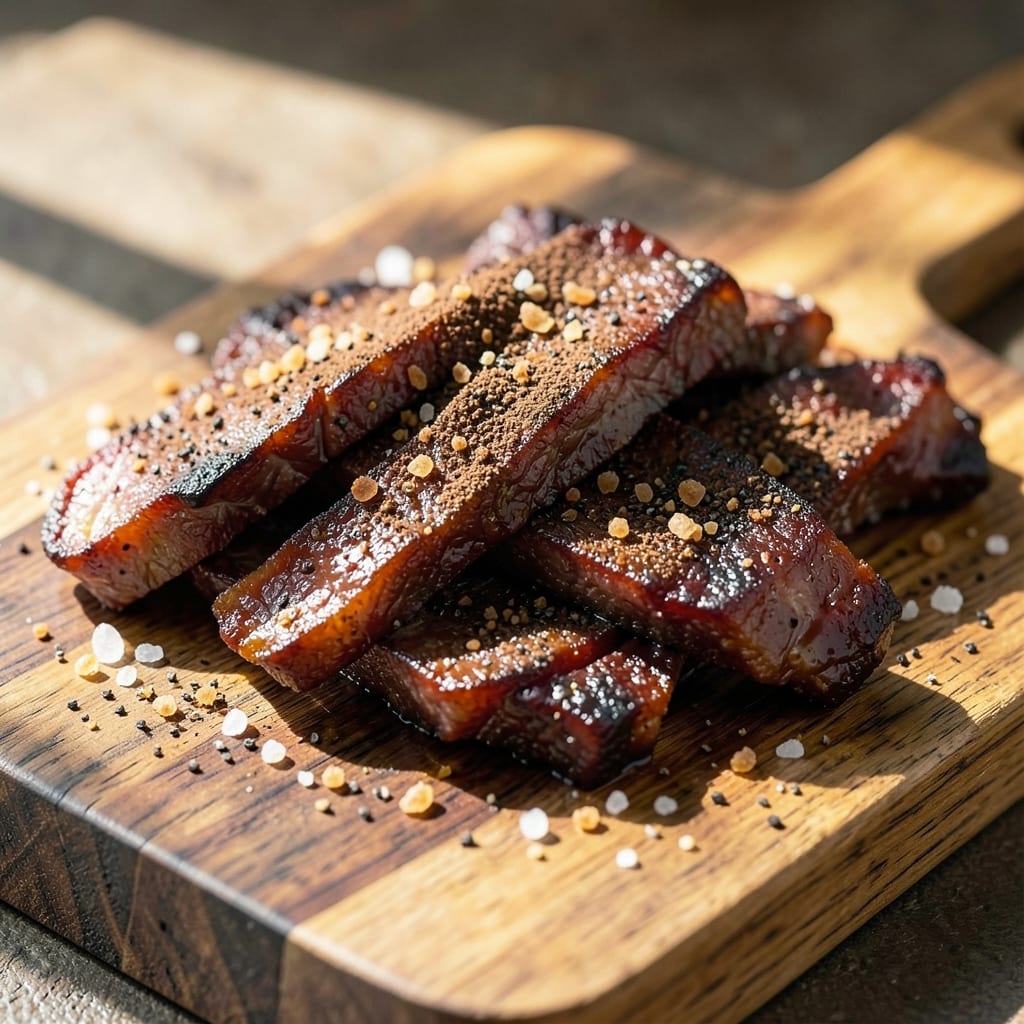
This American harvest beef jerky recipe transforms tough cuts of beef into bold, smoky, and slightly sweet strips that pack a punch—perfect for snacking, hiking, or gifting. The secret lies in a smoked paprika and coffee rub, which delivers deep, earthy notes that cut through the richness of the meat. I developed this recipe after years of experimenting with commercial jerky flavors, and it’s now my go-to for a beginner-friendly, restaurant-quality result at home.
The process is straightforward but requires patience: thinly sliced beef is marinated in a blend of coffee, brown sugar, and spices, then dried to perfection—either in an oven or dehydrator. Safety is key, so we’ll cover proper drying times and cross-contamination prevention to ensure your jerky is both delicious and safe to store for weeks. No fancy equipment is needed, just a steady hand and a little time.
What you’ll end up with is crispy, chewy, and intensely flavorful jerky that’s far superior to store-bought versions. The coffee rub adds a subtle bitterness that balances the sweetness, while the smoked paprika gives it that classic campfire aroma. Each bite delivers a perfect mix of smoky, sweet, and savory—ideal for snacking on the go or as a protein-packed addition to salads and charcuterie boards.
This recipe scales easily, so you can make a small batch for personal use or double it for sharing. Whether you’re a jerky novice or a seasoned pro, the foolproof method ensures consistent results every time. Let’s get started on creating your own bold, homemade harvest jerky!
Ingredients for american harvest beef jerky
Bold flavors start with these simple yet powerful ingredients for homemade beef jerky.
| Ingredient | Amount | Notes |
|---|---|---|
| Top Round Roast Beef 🥩 | 2 lb | Tough cut, grain removed |
| Instant Coffee Powder ☕ | ½ cup | Finely ground, not coarse |
| Light Brown Sugar 🍚 | ½ cup | Packed firmly for accuracy |
| Smoked Paprika 🌶️ | 2 tbsp | High-quality for smokiness |
| Kosher Salt 🧂 | 1 ½ tbsp | Diamond Crystal preferred |
| Ground Black Pepper 🌶️ | 1 tbsp | Freshly cracked preferred |
| Garlic Powder 🧄 | 1 tbsp | Freshly ground preferred |
| Onion Powder 🧅 | 1 tbsp | No added salt |
| Ground Cinnamon 🌿 | ½ tbsp | Warm, not bitter |
| Lemon Juice 🍋 | 2 tbsp | Freshly squeezed |
| Worcestershire Sauce 🍶 | 1 tbsp | Vegan version if needed |
| Olive Oil 🫒 | 1 tbsp | Light, not extra-virgin |
The beef is everything here—top round roast delivers that perfect chewy texture when sliced thin. Look for pre-cut slices at Costco (about ¼-inch thick) or ask your butcher to slice it for you. If you're buying a whole roast, freeze it solid first for easier slicing. Avoid sirloin or flank steak—they're too tender and won't hold up during drying. The coffee powder should be instant and finely ground (the kind you'd use for espresso)—coarse grounds won't dissolve properly in the marinade. For the brown sugar, pack it firmly when measuring to avoid clumps that won't dissolve.
No instant coffee? Finely ground regular coffee beans work in a pinch, but pulse them in a food processor first. Running out of Worcestershire? A splash of soy sauce plus a pinch of sugar mimics the umami depth. The smoked paprika can be swapped for regular paprika plus a pinch of liquid smoke (½ tsp), but you'll lose some complexity. For the spices, Penzeys or Spicewalla brands are worth the splurge if you're serious about jerky-making. The lemon juice and Worcestershire are non-negotiable—they tenderize the meat and prevent mold growth during storage. If you're making a large batch, double the marinade ingredients and keep them in a sealed container in the fridge for up to 2 weeks (the flavors actually improve over time).
The marinade keeps for 5 days in the fridge, but the beef should go in immediately after slicing—don't let it sit exposed. For best results, use the jerky within 2 weeks of drying, though it'll stay safe for 3 months in the freezer if properly wrapped. Store dried jerky in airtight containers or vacuum-sealed bags to maintain crispness. If you're dehydrating, 200°F for 4-5 hours is ideal, but oven drying at 175°F for 6-8 hours works too. The key is 165°F internal temperature—use a meat thermometer to check. For extra safety, soak the dried jerky in vinegar water (1:3 ratio) for 10 minutes before storage to kill any lingering bacteria.
Why You'll Love This Recipe
- Five-Ingredient Magic: I swear by this recipe because it’s that simple—just beef, coffee, sugar, paprika, and salt. No fancy marinades or hours of prep; just slice, coat, and dehydrate. Honestly, the hardest part is waiting for it to dry.
- Smoky Coffee Kick: That instant coffee powder isn’t just a trick—it adds this deep, earthy richness that cuts through the sweetness. The smoked paprika gives it a campfire vibe, and the brown sugar keeps it perfectly chewy. Between us, it’s the kind of jerky that disappears in minutes.
- Snack Attack Ready: I keep a stash in my fridge for road trips, gym bags, or when I’m too lazy to make anything else. It’s great plain, but try it in tacos or over a charcuterie board—suddenly, you’ve got a crowd-pleaser that costs pennies.
- Budget-Proof Protein: Top round roast is cheap, and this recipe stretches it far. A single pound makes enough for days of snacks, and the ingredients won’t break the bank. I’ll be real: I’ve made this with store-brand sugar and still ended up with jerky so good, no one guessed.
Step-by-step instructions for American harvest beef jerky
Here's how to transform tough top round beef into rich, smoky jerky with deep coffee and spice notes.
Prepare the Beef for Maximum Flavor
Begin by trimming away any visible fat or silver skin from the 2 lb Top Round Roast Beef using a sharp boning knife. This lean cut needs every bit of moisture preserved for tender jerky. Cut the beef against the grain into ¼-inch thick strips—this is crucial for both tenderness and even drying. I like to work in batches, keeping the raw beef refrigerated until ready to use to maintain freshness.
Lay the strips on a clean cutting board and pat them completely dry with paper towels. Any moisture left on the surface will prevent the rub from adhering properly and can lead to uneven drying. Arrange the strips in a single layer on a baking sheet lined with parchment paper—this makes applying the rub easier and ensures even coating.
Create the Signature Coffee-Spice Rub
In a medium bowl, combine the 0.5 cup Instant Coffee Powder, 0.5 cup Light Brown Sugar, 2 tbsp Smoked Paprika, 1.5 tbsp Kosher Salt, 1 tbsp Ground Black Pepper, 1 tbsp Garlic Powder, 1 tbsp Onion Powder, and 0.5 tbsp Ground Cinnamon. Mix thoroughly with your hands or a fork until the spices are evenly distributed and the sugar begins to dissolve slightly from the coffee's moisture.
This blend is what gives the jerky its distinctive depth—coffee adds complexity, while the smoked paprika provides that authentic campfire aroma. The brown sugar helps caramelize during drying, creating a subtle sweetness that balances the heat. I always use freshly ground spices for maximum flavor impact, especially the cinnamon which can taste bitter if old.
Coat the Beef and Marinate
Generously coat each beef strip with the rub, pressing it into the meat so it adheres completely. Place the coated strips back on the parchment-lined baking sheet. In a small bowl, whisk together the 2 tbsp Lemon Juice, 1 tbsp Worcestershire Sauce, and 1 tbsp Olive Oil to create the marinade. Pour this liquid mixture evenly over the beef strips, ensuring each piece gets saturated.
The acidity from the lemon juice tenderizes the meat while preventing bacterial growth during the drying process. The Worcestershire sauce adds umami depth that pairs perfectly with the coffee and spices. Let the beef marinate for at least 30 minutes at room temperature (or up to 2 hours in the refrigerator) to allow the flavors to penetrate deeply.
Dry the Jerky for Perfect Texture
Preheat your dehydrator to 160°F—this temperature is ideal for slow, even drying that preserves moisture while developing rich flavor. Arrange the marinated beef strips on the dehydrator trays, ensuring they don't overlap. If you don't have a dehydrator, a well-ventilated oven set to 175°F with the door slightly ajar works, though drying times may vary.
Dry the jerky for 4-6 hours, checking periodically for flexibility. It's done when the strips bend without snapping but still feel slightly pliable. Over-drying leads to brittle jerky, while under-drying creates a chewy texture. The coffee rub will develop a beautiful dark crust as it dries, signaling perfect doneness.
Cool and Store for Maximum Freshness
Once fully dried, transfer the jerky to a clean cutting board and let it cool completely. This cooling period allows any remaining surface moisture to evaporate, preventing condensation in storage. Cut the strips into your preferred serving sizes—traditional jerky is typically 2-3 inches long for easy handling.
Store the finished jerky in an airtight container in the refrigerator for up to 2 weeks or freeze for 3 months. The flavors will continue to develop and deepen over time, making this jerky even more satisfying with each bite. The combination of coffee's bitterness, smoked paprika's warmth, and the Worcestershire's umami creates a complex flavor profile that's perfect for snacking or trail mixes.
Pro Tips For Making American Harvest Beef Jerky
- Trim Thin, Trim Even: Slice your top round against the grain into ¼-inch strips—no thicker, or the jerky will chew like boot leather. Use a sharp knife and keep your hand steady; I learned this after making jerky that took 12 hours to dry and still tasted tough. ---
- Salt First, Then Wait: Generously coat the beef with kosher salt 30 minutes before coating in the dry rub. This draws out moisture so the sugar and coffee stick better—no soggy jerky here. (Yes, even if you’re impatient like me.) ---
- Low and Slow Wins: Start your dehydrator or oven at 160°F, not max heat—high temps = rubbery jerky. After 2 hours, crack the door open for 5 minutes to release humidity. I burned three batches before realizing jerky needs patience, not speed. ---
- Coffee Rub Needs Oil: Mix 1 teaspoon oil (like avocado or vegetable) into your coffee-paprika-sugar blend before coating. It helps the spices cling and prevents the jerky from drying out too fast. (Skip this, and you’ll get dusty, flavorless strips.)
Creative variations of these flavors
Classic BBQ Jerky Twist
Swap the coffee rub for a BBQ-inspired blend using 1 tbsp chili powder, 1 tbsp brown sugar, 1 tbsp smoked paprika, and 1 tsp onion powder. Add 2 tbsp BBQ sauce (like Stubb's Original) to the marinade for that tangy, smoky depth. The result? A jerky that tastes like it came straight from a tailgate party. 🔥
Spicy Chipotle Lime
For a kick, mix 1 tbsp chipotle powder, 1 tbsp lime zest, and 1 tbsp cumin into your rub. Boost the marinade with 3 tbsp lime juice and 1 tbsp hot sauce (like Frank's RedHot). This variation is perfect for tacos or nachos—just cut the jerky into smaller, bite-sized pieces. The lime keeps it fresh while the chipotle adds smoky heat.
Sweet and Smoky Maple-Bourbon
Combine 2 tbsp maple syrup, 1 tbsp bourbon (or apple cider vinegar), and 1 tsp cinnamon in the marinade. For the rub, use 1 tbsp smoked paprika, 1 tbsp brown sugar, and ½ tsp cayenne. This version has a caramelized sweetness with a hint of warmth—ideal for breakfast or as a dessert pairing with dark chocolate. 🍁
Herb-Infused Mediterranean
Replace the coffee rub with 1 tbsp dried oregano, 1 tbsp dried thyme, 1 tbsp garlic powder, and ½ tsp red pepper flakes. Add 2 tbsp olive oil and 1 tbsp lemon zest to the marinade. This variation works beautifully with hummus or as a protein boost in Greek salads. The herbs give it a bright, herby profile that’s refreshing yet bold.
Breakfast Sausage Jerky
For a savory morning treat, blend 1 tbsp fennel seeds, 1 tbsp mustard powder, and ½ tsp nutmeg into your rub. Use ½ cup apple cider vinegar and 1 tbsp honey in the marinade. This jerky tastes like a cross between jerky and breakfast sausage—perfect for on-the-go breakfasts or as a topping for avocado toast. The fennel adds a subtle licorice note that pairs surprisingly well with the coffee rub’s depth.
Nutrition facts
Frequently asked questions
Can I use a different cut of beef for this jerky?
Top round is ideal, but bottom round, flank steak, or chuck roast also work well. Avoid tender cuts like sirloin—they'll dry out too quickly. For best results, trim all visible fat and slice against the grain to ¼-inch thickness for even drying.
How do I know when the jerky is fully dried?
Your jerky is done when it bends but doesn't snap—like a stiff piece of leather. Use a meat thermometer to check for 165°F internal temperature. Over-drying makes it brittle, while under-drying creates a chewy, unsafe texture. The coffee rub should develop a dark crust as it dries completely.
Can I make this jerky without a dehydrator?
Use an oven set to 175°F with the door slightly open for airflow. Place strips on a wire rack over a baking sheet to allow heat to circulate evenly. Drying time will be 6-8 hours instead of 4-6. For extra safety, check internal temp at 165°F.
Why does my jerky turn out too chewy?
Chewy jerky usually means it didn't dry long enough. Try increasing drying time by 1-2 hours or lowering the temperature to 150°F for slower moisture removal. Also ensure your beef slices are ¼-inch thick or thinner and pat them completely dry before marinating.
How long will homemade jerky last?
Properly dried jerky stays fresh for 2 weeks in the fridge or 3 months in the freezer when stored in airtight containers. For longer shelf life, vacuum-seal it. The coffee and lemon juice in this recipe help preserve freshness naturally while preventing mold growth.