
Main Courses
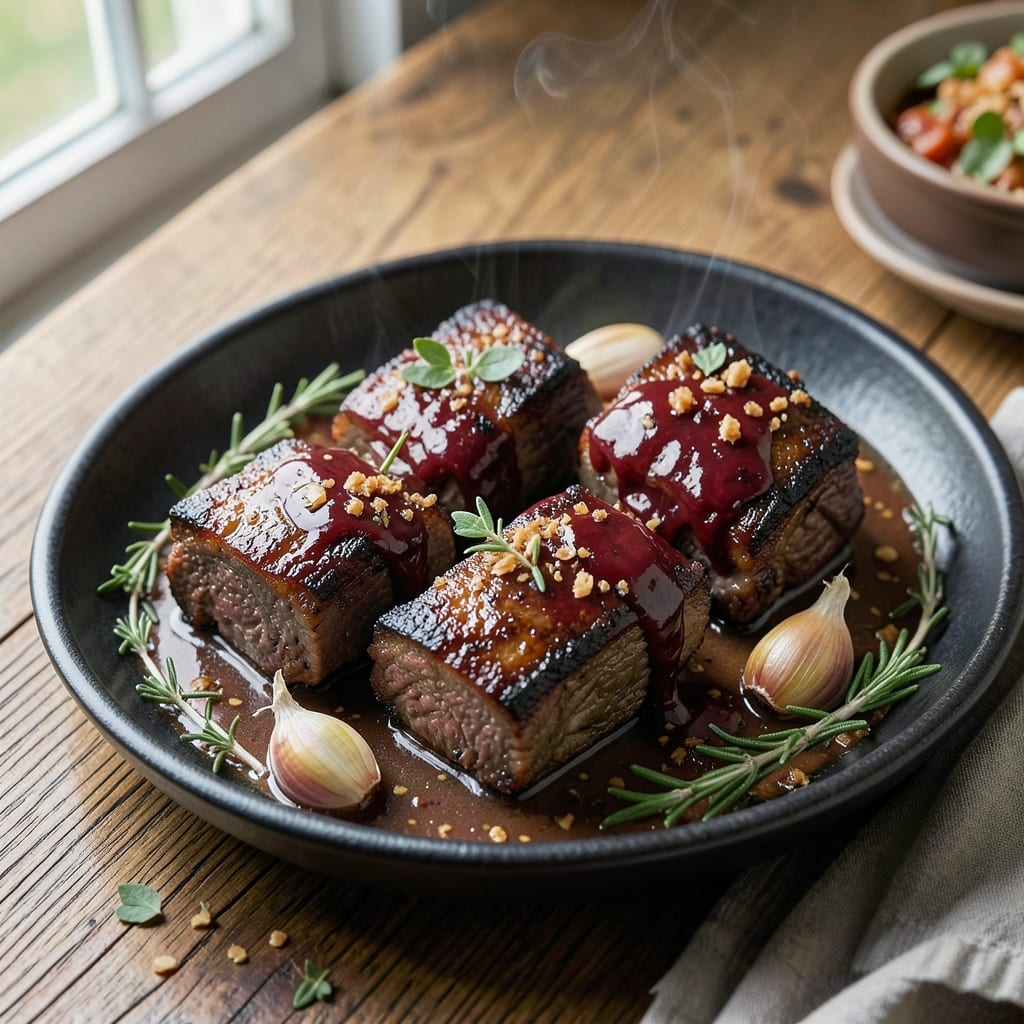
This Angus beef short rib recipe delivers melt-in-your-mouth tenderness with a deep, wine-infused sauce that transforms tough cuts into a luxurious centerpiece. The secret lies in a slow braise that breaks down collagen while building layers of flavor—no fancy equipment required, just patience and precise technique. I've perfected this method through years of testing, ensuring every bite is rich, juicy, and packed with that signature beefy depth.
The process begins with a quick sear to lock in juices, followed by a red wine reduction that forms the base of your sauce. As the ribs braise for hours, they become fork-tender while absorbing the aromatic flavors of garlic, thyme, and bay leaf. What you'll end up with is a dish that rivals high-end steakhouses—fall-apart meat swimming in a velvety sauce that clings to every forkful. The key is maintaining the right liquid level throughout cooking to prevent drying.
Pair these ribs with classic sides like creamy mashed potatoes or roasted root vegetables to soak up every drop of that luxurious sauce. For presentation, plate the ribs slightly askew with sauce spooned artistically around them, garnished with fresh parsley for a pop of color. This isn't just dinner—it's an experience that will have your guests asking for seconds before the plate is empty.
While this recipe requires time, the effort is minimal and the results are unmatched. The slow cooking happens mostly hands-off, leaving you free to focus on perfecting the sauce or preparing sides. Trust me, once you taste the difference between store-bought and this homemade version, you'll never go back to shortcuts again. Let's get cooking—your taste buds will thank you.
Ingredients for angus beef short rib
The luxurious ingredients that transform tough beef into melt-in-your-mouth perfection—just four pounds of Angus and a few pantry staples.
| Ingredient | Amount | Notes |
|---|---|---|
| Angus Beef Short Ribs 🥩 | 4 lb | Bone-in, cut into 2-inch pieces |
| Dry Red Wine 🍷 | 2 cups | Bold variety like Cabernet Sauvignon |
| Beef Broth 🥫 | 2 cups | Low-sodium preferred |
| Garlic Cloves 🧄 | 6 cloves | Smashed for deeper flavor |
| Fresh Thyme 🌿 | ½ cup | Stems removed, chopped |
| Fresh Rosemary 🌿 | ¼ cup | Needles chopped, no stems |
| Bay Leaves 🍃 | 2 whole | Remove after cooking |
| Tomato Paste 🍅 | ½ cup | Squeeze tube preferred |
| Olive Oil 🫒 | ¼ cup | Extra-virgin for richness |
| All-Purpose Flour 🌾 | ¼ cup | For dredging ribs |
| Salt 🧂 | 1 ½ tbsp | Diamond Crystal preferred |
| Black Pepper 🌶️ | 1 tsp | Freshly cracked |
| Fresh Parsley 🌿 | ¼ cup | Chopped, for garnish |
Angus beef is non-negotiable here—look for bone-in short ribs with good marbling at the butcher counter. Costco or Whole Foods usually have them pre-cut, but ask for 2-inch pieces if buying whole. The wine matters too: Cabernet Sauvignon or Merlot work best—they're bold enough to stand up to the beef. I always grab a 750ml bottle and use half, saving the rest for another use. Fresh herbs are worth the splurge—Trader Joe's has great bundles, but even the grocery store's fresh section works. Just make sure the thyme and rosemary smell vibrant, not dried out.
No red wine? Beef broth with 1 tbsp balsamic vinegar works in a pinch—it'll be less complex but still delicious. Fresh herbs wilt fast? Dried thyme and rosemary at half the amount are fine, though they lack that bright aroma. The tomato paste can be skipped if you hate it, but it adds that subtle sweetness that rounds out the sauce. For the flour, King Arthur or Gold Medal brands are my go-tos—they're reliable for dredging. And if you're short on time, pre-cut short ribs from ButcherBox save you chopping work.
These ribs taste even better the next day—make extra if you can. Store leftovers in the sauce, covered, for 4-5 days in the fridge. Freeze for up to 3 months by portioning into airtight containers. I always reheat gently on the stove with a splash of broth to keep the sauce silky. For serving, garnish with fresh parsley right before eating—it adds that pop of color and freshness that makes the dish look restaurant-worthy.
Why You'll Love This Recipe
- Same recipe, two vibes: Serve it over mashed potatoes for a lazy night or plate it with crusty bread for guests. The ribs stay juicy no matter the occasion.
- One-Pan Magic: I swear by this—just sear the ribs, toss in the wine and broth, and let the oven do the work. No flipping, no fussing, just hands-off richness that smells like a restaurant.
- Wine-Infused Gold: That dry red wine doesn’t just cook off—it melts into the ribs, leaving them tender with a deep, savory edge. The thyme? It’s the little herb that turns "good" into "I’ll make this again."
- Weeknight to Dinner Party: Same recipe, two vibes: Serve it over mashed potatoes for a lazy night or plate it with crusty bread for guests. The ribs stay juicy no matter the occasion.
Step-by-step instructions for braising Angus beef short ribs
Here's how to transform tough short ribs into melt-in-your-mouth perfection with rich, wine-infused sauce.
Prep and Sear the Short Ribs
Pat the 4 lb angus beef short ribs dry with paper towels—this ensures maximum browning. In a large Dutch oven, heat 0.25 cup olive oil over medium-high heat until shimmering. Working in batches to avoid crowding, sear the ribs on all sides for 3-4 minutes per side until deeply golden brown. I press down gently on the ribs during the first minute—this prevents them from curling and ensures even contact with the pan.
As they sear, you'll smell that incredible Maillard reaction happening. That's flavor building! Remove the ribs and set them aside on a plate. If your pan gets too crowded, work in two batches—don't rush this step. Those browned bits stuck to the bottom are pure flavor gold that we'll scrape up later.
Build the Flavor Base
Reduce heat to medium and add the 0.5 cup tomato paste, stirring to coat the browned bits. Cook for 1 minute until it darkens slightly. Then add the 6 cloves smashed garlic cloves, 0.5 cup chopped fresh thyme, 0.25 cup chopped fresh rosemary, and 2 whole bay leaves. Stir for 30 seconds until fragrant—you should smell that herbal, garlicky aroma filling your kitchen.
Here's where the magic starts. Sprinkle the 0.25 cup all-purpose flour over the aromatics and stir vigorously for 1 minute to cook out the raw flour taste. This creates a thick, flavorful roux that will help thicken our sauce later. Be careful not to let it burn—watch closely and stir constantly.
Deglaze and Simmer the Braise
Pour in the 2 cups dry red wine and scrape up all those delicious browned bits from the bottom of the pan. Let it bubble away for 2-3 minutes until reduced by about half. You'll see the alcohol cook off and the wine concentrate into a rich, syrupy liquid. This is when your kitchen should smell like a French bistro—herbs, wine, and caramelized meat.
Return the seared ribs to the pot, along with the 2 cups beef broth. Bring to a gentle simmer, then reduce heat to low. Here's the key: cover the pot and let it cook for 2.5-3 hours until the ribs are fork-tender. The sauce should reduce to a thick, glossy consistency that coats the back of a spoon. If it gets too thin, uncover and simmer longer—you want that rich, velvety texture.
Finish and Rest the Ribs
Once the ribs are tender (they should fall apart easily with a fork), remove them from the pot and transfer to a serving platter. Strain the braising liquid through a fine-mesh sieve to remove any herbs or bay leaves, then return the sauce to the pot. Simmer uncovered for 5-10 minutes to reduce further and intensify the flavor. The sauce should coat the back of a spoon and be thick enough to cling to the ribs.
Let the ribs rest for 10 minutes before serving. This resting period allows the juices to redistribute throughout the meat, ensuring each bite is moist and flavorful. While they rest, taste the sauce and adjust seasoning with salt and black pepper as needed. Garnish each serving with 0.25 cup chopped fresh parsley for a pop of freshness that cuts through the richness.
Pro Tips For Making Angus Beef Short Rib
- Sear the Ribs First: I learned this the hard way—skipping the sear means flavor gets lost in the sauce. Hit those ribs with a screaming-hot pan (no oil yet) for 2-3 minutes per side until deep brown, then add oil. That crust locks in juices and makes the wine reduction taste like it belongs there.
- Deglaze with Wine Immediately: Don’t let those browned bits sit. As soon as you pull the ribs out, pour in that dry red wine right away—no waiting, no distractions. Scrape every last bit off the pan with a wooden spoon while it’s hot. That’s where half the flavor hides, and cold wine won’t cut it.
- Use Bone Broth, Not Water: I was skeptical until I tried it: beef broth (homemade or high-quality store-bought) adds depth the wine can’t fake. Skip the water—even for extra liquid—because it’ll turn your sauce into a sad, thin glaze instead of a rich, velvety sauce. Save the water for boiling pasta.
- Let Them Rest Under Foil: After braising, resist the urge to rush. Tent those ribs with foil and let them sit for 15 minutes off the heat. This lets the meat reabsorb juices that would otherwise pool on the plate. I know, I know—you’re hungry—but cutting into them too soon means dry, stringy bites. Worth the wait.
Storing and reheating this angus beef short rib
Refrigerator Storage
Store your braised short ribs in the sauce within an airtight container for up to 4 days—the sauce keeps the meat moist and flavorful. I use glass Pyrex containers because they're sturdy and microwave-safe if you need to reheat later. Always let the ribs cool to room temperature before refrigerating to prevent condensation buildup, which can make the meat soggy. 🥫
Freezer Prep
For longer storage, freeze the ribs in their sauce for up to 3 months. Portion into quart-sized freezer bags, leaving 1 inch of headspace for expansion. Squeeze out excess air before sealing to prevent freezer burn. I like to label each bag with the date—this helps track freshness. Thaw overnight in the fridge before reheating. ❄️
Stovetop Reheating
My preferred method is reheating on the stovetop to maintain that velvety sauce texture. Transfer ribs and sauce to a heavy-bottomed pot and heat over medium-low heat for 10-15 minutes, stirring occasionally. If the sauce thickens too much, add 1-2 tablespoons of beef broth to loosen it. Taste and adjust seasoning—reheated ribs often need a pinch more salt. 🔥
Microwave Method
For quick reheating, use the microwave on 50% power in 1-minute intervals, stirring between each interval. Cover with a microwave-safe lid or damp paper towel to retain moisture. Start with 3 minutes total, then check the internal temperature—it should reach 165°F. Add a splash of broth if the sauce looks dry. This method works best for individual servings. ⏰
Sauce Refresh
If the sauce looks thin after reheating, simmer it uncovered for 5-10 minutes to reduce and thicken. For extra richness, stir in 1 tablespoon of cold butter at the end—it adds a luxurious finish. I also like to finish with a squeeze of lemon juice (about ½ teaspoon) to brighten the flavors. This step elevates reheated ribs to nearly restaurant-quality. 💫
Serving Suggestions
Reheat the ribs alongside their sauce, then plate with creamy mashed potatoes or crusty bread to soak up every drop. For presentation, arrange ribs slightly askew on the plate and spoon sauce artistically around them. Garnish with chopped parsley right before serving—this adds freshness and makes the dish look restaurant-worthy. 🍽️
Nutrition facts
Frequently asked questions
Can I use bone-in or boneless short ribs for this recipe?
This recipe is designed for bone-in short ribs—they stay more flavorful during the long braise. If you must use boneless, reduce the cooking time by 30-45 minutes since they'll tenderize faster. The bones add depth to the broth, but boneless ribs work in a pinch if you're short on time.
What if I don't have a Dutch oven? Can I use a regular pot?
A heavy-bottomed pot or even a deep skillet works fine. Just avoid non-stick—it can't handle the high heat for searing. If your pot isn't deep enough, cover with a lid during the braising phase. The key is maintaining even heat distribution for that perfect sauce consistency.
How do I know when the ribs are fully tender?
They're done when they fall apart easily with a fork and reach 203°F internal temperature. Press a rib gently—if it crumbles at the touch, it's ready. The sauce should also reduce to a thick, glossy consistency that coats the back of a spoon. Overcooking won't ruin them, but it can make the sauce too concentrated.
Can I make this recipe with a different type of beef?
While Angus beef is ideal for its marbling and tenderness, you can use chuck roast or ribeye in a pinch. Chuck works well but may need 15-20 minutes extra braising time. Ribeye will cook faster—watch closely after 2 hours. The wine and herbs will still create a delicious sauce, though the texture will differ slightly.
What's the best way to reheat leftovers without drying them out?
Use the stovetop method: heat ribs and sauce together over medium-low heat for 10-15 minutes, stirring occasionally. Add 1-2 tablespoons of beef broth if the sauce thickens too much. Microwaving works too—use 50% power in 1-minute bursts—but the sauce may separate slightly. Always reheat to 165°F for safety.