Main Courses
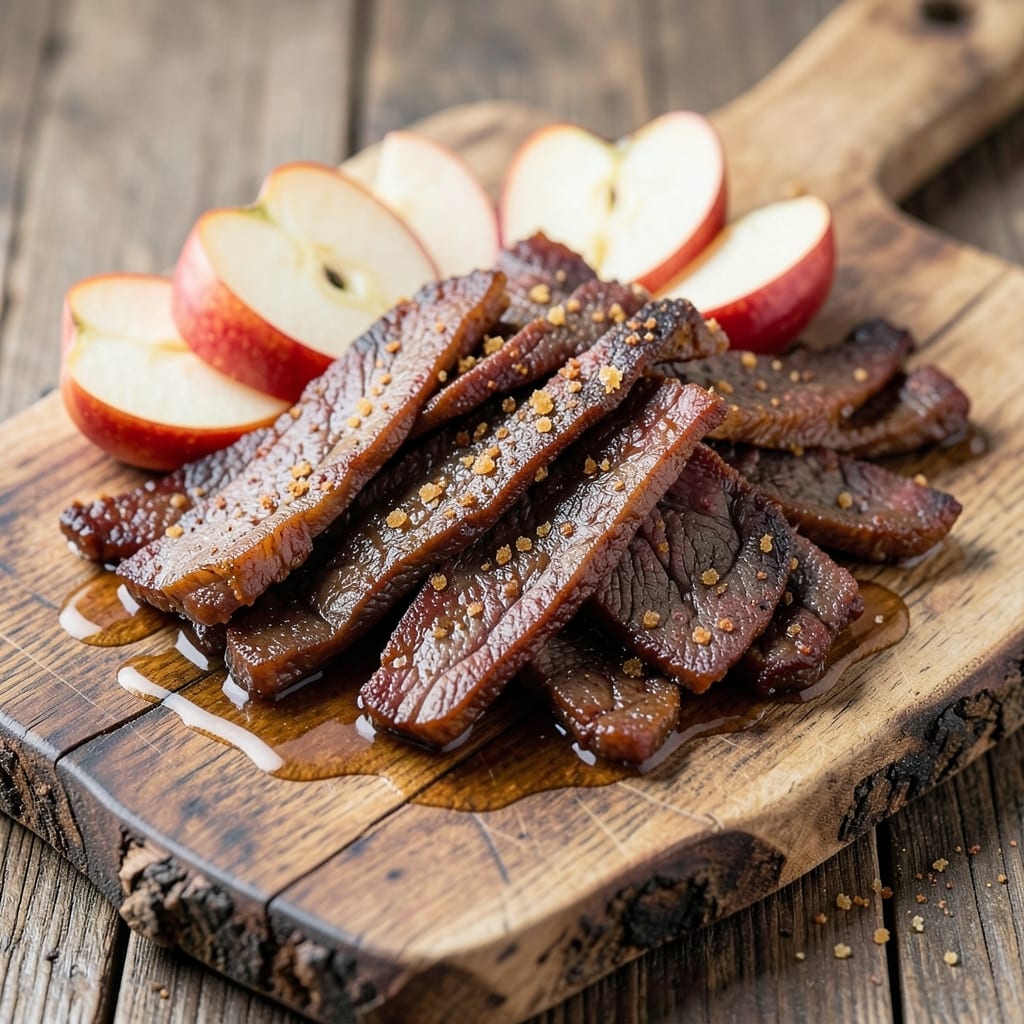
This apple beef jerky recipe transforms tough beef into tender, apple-caramelized chews with smoky depth and a perfect sweet-savory balance. The secret lies in a marinade that infuses apple cider and spices into thinly sliced beef, creating jerky with complex flavor and a satisfying chew. Unlike traditional jerky, this version avoids the harsh saltiness, replacing it with natural sweetness that pairs beautifully with the beef's richness.
The process begins with selecting the right cut—lean but not too tough—then slicing it thinly for even drying. A 3-day marinade (or overnight for quicker results) ensures the apple cider and spices penetrate deeply, while the drying method (oven, dehydrator, or smoker) determines the final texture. Safety is critical: proper slicing, low moisture, and acidity from the apple cider help prevent spoilage.
What you’ll end up with is jerky that’s flexible yet firm, with a glossy sheen from the apple caramelization and a smoky aroma that fills your kitchen. The sweetness of the apple complements the beef’s savory notes, making it irresistible as a snack or charcuterie board centerpiece. Each bite delivers a perfect harmony of textures and flavors.
Store properly in an airtight container to maintain freshness, and enjoy the convenience of a homemade snack that’s far superior to store-bought. This recipe is designed for foolproof results, whether you’re a beginner or an experienced jerky maker. Let’s get started!
Ingredients for apple beef jerky
Transform tough beef into apple-caramelized jerky with this balanced marinade of sweet, smoky, and savory ingredients.
| Ingredient | Amount | Notes |
|---|---|---|
| Lean Beef Top Round Roast 🥩 | 2 lb | Freezer-cold for thin slicing |
| Apple Cider 🍎 | 2 cups | Unpasteurized for better flavor |
| Brown Sugar 🍚 | ½ cup | Light or dark variety |
| Apple Cider Vinegar 🍶 | ¼ cup | For acidity and preservation |
| Smoked Paprika 🌶️ | 2 tbsp | For authentic smoky depth |
| Ground Black Pepper 🌶️ | 1 tbsp | Freshly cracked for intensity |
| Garlic Powder 🧄 | 1 tbsp | Freshly ground preferred |
| Onion Powder 🧅 | 1 tbsp | For aromatic base |
| Ground Cinnamon 🌿 | ½ tsp | Enhances apple flavor |
| Ground Cloves 🌿 | ¼ tsp | Use sparingly for warmth |
| Kosher Salt 🧂 | 1 ½ tsp | For seasoning balance |
| Honey 🍯 | 2 tbsp | For natural sweetness |
| Worcestershire Sauce 🍶 | 1 tbsp | For umami depth |
| Olive Oil 🫒 | 1 tbsp | For even coating |
The lean beef top round roast is critical—it must be lean but not too tough, as it dries beautifully without becoming rubbery. Purchase from a reputable butcher or high-quality grocery store like Whole Foods or Costco, where you can verify the meat's marbling and freshness. For best results, freeze the roast for 24 hours before slicing; this makes it easier to cut into thin, even strips (about 1/4-inch thick). If you're short on time, a sharp meat slicer or mandoline will save you effort, but a very sharp knife works too. The apple cider should be unpasteurized if possible—it retains more flavor, though pasteurized works in a pinch. Look for organic brands at specialty stores like Trader Joe's or local orchards for the freshest taste.
No apple cider vinegar? Substitute with lemon juice at the same amount, though the flavor profile will shift slightly. Running out of honey? Maple syrup works equally well, though it has a different mouthfeel. The Worcestershire sauce can be tricky—ensure it's vegetarian if you're avoiding anchovies. For a smokier profile, add 1/2 teaspoon of liquid smoke to the marinade, though it should be used sparingly to avoid overpowering the natural flavors. If you prefer less sweetness, reduce the brown sugar to 1/4 cup and add 1 teaspoon of cinnamon for warmth. For storage, keep the apple cider and vinegar in a cool, dark place—they'll last for up to a year unopened, though flavor degrades over time.
This jerky keeps exceptionally well due to the acidity from apple cider vinegar and low moisture content. Store finished jerky in an airtight container with a paper towel to absorb any excess moisture—this prevents sogginess and extends shelf life. In the fridge, it remains safe for up to 2 weeks, while freezing preserves it for up to 6 months. For long-term storage, vacuum-seal portions to maximize freshness. The smoky aroma intensifies as it dries, so store it away from other foods. If you notice any off smells or sliminess, discard it immediately—proper drying and acidity should prevent spoilage, but never risk it. Reheat in a 200°F oven for 5-10 minutes to restore crispness if it softens.
Why You'll Love This Recipe
- Fewer Ingredients, Bigger Flavor: The mix of apple cider and vinegar does all the work—no fancy marinades or hours of prep. Just slice the beef thin, toss it in those four ingredients, and let the oven handle the rest.
- Sweet-Savory Magic: That brown sugar and smoked paprika combo? It’s like beef jerky’s cooler cousin—tangy, smoky, and just sweet enough to make you forget it’s actually healthy. (Yes, even my picky husband asks for seconds.)
- Lunchbox Legend: Between us, this is the only jerky I’ll pack for my kids’ lunches. It stays chewy but tender, and the apple notes make it taste like a treat, not just protein. No more sad, dry store-bought jerky in here.
- Budget Meal Prep: A single roast feeds my family for days—slice it, dehydrate it, and boom, you’ve got a pantry staple that costs pennies per serving. Honestly, it’s the only way I justify buying top round anymore.
Step-by-step instructions for apple-caramelized beef jerky
Transform lean beef into tender, apple-kissed jerky with this precise method.
Slice the Beef to Perfect Thinness
Remove the 2 lb lean beef top round roast from the freezer and let it sit uncovered in the refrigerator for 1 hour to firm up slightly. This makes slicing easier without tearing the meat. Using a sharp boning knife, slice the beef against the grain into strips ¼-inch thick and 2-3 inches wide. You should end up with about 20-25 slices total.
For even drying, trim any excess fat or connective tissue from the slices. Arrange them on a wire rack set over a baking sheet lined with parchment paper, ensuring they don't overlap. This setup allows air to circulate freely around each piece, which is critical for uniform drying and flavor penetration.
Prepare the Apple-Caramel Marinade
In a medium saucepan, combine 2 cups apple cider, 0.5 cup brown sugar, 0.25 cup apple cider vinegar, 2 tbsp honey, and 1 tbsp Worcestershire sauce. Bring the mixture to a gentle simmer over medium heat and cook for 10-12 minutes, stirring occasionally, until it reduces by about one-third and becomes syrupy. You want the marinade to coat the back of a spoon but still flow freely.
Remove the pan from heat and whisk in 1 tbsp olive oil, 1.5 tsp kosher salt, 1 tbsp garlic powder, 1 tbsp onion powder, 2 tbsp smoked paprika, 1 tbsp ground black pepper, 0.5 tsp ground cinnamon, and 0.25 tsp ground cloves. Let the mixture cool to room temperature—this prevents the spices from burning when applied to the beef.
Coat and Cure the Beef
Transfer the cooled marinade to a shallow dish or zip-top bag. Add the sliced beef and turn to coat evenly, ensuring every piece is fully submerged in the mixture. Place the bag in the refrigerator and marinate for 12-24 hours, turning the beef occasionally to ensure even exposure. The acidity in the apple cider vinegar and the sugar in the marinade work together to tenderize the meat while infusing it with flavor.
After marinating, remove the beef from the liquid and pat it dry with paper towels. This step is crucial—any moisture left on the surface will prevent the jerky from drying properly. Arrange the slices back on the wire rack and return them to the refrigerator for an additional 1-2 hours to firm up slightly before dehydrating.
Dehydrate for Perfect Texture
Preheat your dehydrator to 160°F. Place the wire rack with the beef slices inside and dehydrate for 6-8 hours, checking periodically. The jerky is done when it reaches a leathery consistency and no longer feels moist to the touch. You can also test by bending a piece—it should snap but not be brittle.
For an oven alternative, preheat to 175°F and prop the oven door open with a wooden spoon to allow moisture to escape. Place the rack on the middle oven rack and bake for 4-6 hours, again checking for the proper texture. Once fully dehydrated, let the jerky cool completely before storing.
Store and Enjoy
Transfer the cooled jerky to an airtight container or resealable bag, removing as much air as possible to prevent spoilage. Store in a cool, dark place for up to 2 weeks, or freeze for up to 3 months. The apple-caramel flavor will deepen over time, making it even more delicious as it ages.
Slice the jerky into bite-sized pieces and enjoy as a snack, trail mix addition, or protein boost for salads and sandwiches. Each piece should be tender yet firm, with a perfect balance of sweet apple, smoky depth, and savory umami—proof that jerky can be both nutritious and indulgent.
Pro Tips For Making Apple Beef Jerky
- Freeze the Beef First: Trim the top round, then pop it in the freezer for 45 minutes before slicing—this makes thin, even strips without tearing. I used to struggle with ragged edges until I tried this; now my jerky looks pro every time. ---
- Reduce the Marinade Hard: Simmer the apple cider, vinegar, and brown sugar until it’s syrupy—about half the original volume. Thick marinade clings better to the meat and caramelizes faster in the dehydrator. (Yes, even if you’re impatient like me.) ---
- Slice Against the Grain: Cut the beef perpendicular to the muscle fibers—this keeps jerky chewy, not rubbery. I learned this the hard way after making jerky that snapped like dry pasta. A sharp knife and steady hand make all the difference. ---
- Dry It Slow First: Start the dehydrator at 145°F (63°C) for the first 3 hours to drive out moisture gently, then bump to 165°F (74°C). Rushing the low temp leads to sticky jerky—trust the process, even if it takes longer.
Pro cooking tips for apple beef jerky
Marinade Reduction
The key to flavor infusion is reducing your marinade to a syrupy consistency—this ensures every strand of beef absorbs maximum flavor. Simmer the apple cider mixture until it reduces by one-third, which typically takes 10-12 minutes over medium heat. Stir occasionally to prevent scorching, and aim for a thick, glossy coating that clings to the back of a spoon. This concentrated marinade penetrates deeper into the meat, creating that irresistible apple-caramelized taste. 🍎
Even Slicing Matters
Consistent thickness is non-negotiable for jerky—¼-inch slices dry evenly and develop that perfect leathery texture. Use a sharp boning knife and slice against the grain for tender results. If your slices vary in thickness, thinner pieces will dry faster and may become brittle. For precision, a mandoline slicer (like the OXO Good Grips) ensures uniformity every time. Pro tip: Freeze the beef for 24 hours beforehand to make slicing easier. 🔪
Dehydrator vs. Oven
Your drying method drastically affects texture. A dehydrator at 160°F delivers consistent results with minimal effort, taking 6-8 hours. For an oven alternative, preheat to 175°F and prop the door open with a wooden spoon to allow moisture escape. Expect 4-6 hours of drying time, but monitor closely—ovens can create hot spots. Test doneness by bending a piece: it should snap but not crumble. 🌡️
Acidity Balance
The apple cider vinegar in this recipe isn’t just for flavor—it’s a preservative. The acidity helps prevent spoilage by inhibiting bacterial growth, especially important for homemade jerky. If you’re concerned about safety, add an extra ½ teaspoon of vinegar per cup of liquid. The sweetness from the brown sugar and honey balances the acidity, creating that perfect sweet-savory harmony we all crave. 💡
Spice Layering
Layering spices is where the magic happens. Start with smoked paprika for depth, then add garlic and onion powders for aromatic base notes. The cinnamon and cloves enhance the apple’s warmth, while black pepper adds a subtle kick. Whisk them into the cooled marinade to prevent burning—hot spices can scorch the beef’s surface. For extra smokiness, add ½ teaspoon of liquid smoke to the marinade. 🌶️
Post-Drying Rest
Never skip the cooling phase after dehydrating. Let the jerky rest for at least 1 hour before storing—this allows flavors to meld and prevents condensation from forming in your storage container. Place slices on a wire rack in a single layer to cool completely. Once cooled, transfer to an airtight container with a paper towel to absorb any lingering moisture. This step is crucial for maintaining that perfect chew and preventing sogginess. ✨
Nutrition facts
Frequently asked questions
Can I use apple juice instead of apple cider in this recipe?
You can substitute apple juice, but the flavor will be less complex. Apple cider contains natural sugars and sediment that add depth, while juice is more refined. For best results, use unfiltered apple juice and add 1 teaspoon extra brown sugar per cup to compensate for the lost richness. The acidity level will also differ slightly, so taste the marinade before applying to the beef.
How do I know when the jerky is fully dehydrated?
Test for doneness by bending a piece—it should snap but not break completely. The jerky should also feel dry to the touch with no moisture remaining. If it bends too easily, it needs more time; if it crumbles, it's overdone. For extra precision, check the internal temperature with a meat thermometer—it should reach 145°F before cooling.
Can I make this jerky without a dehydrator?
Use your oven set to 175°F with the door slightly propped open to allow moisture to escape. Place the beef slices on a wire rack over a baking sheet and dehydrate for 4-6 hours, checking frequently. For even drying, rotate the rack halfway through. A smoker set to 160°F also works well, adding subtle smokiness to the apple flavor.
Why does my jerky turn out too salty?
This usually happens when the marinade reduces too much, concentrating the salt. To fix it, reduce the kosher salt to 1 teaspoon and add 1 extra tablespoon of apple cider to balance the flavors. Always taste the marinade before applying it to the beef. For future batches, measure carefully and avoid over-reducing the liquid.
How long can I marinate the beef for?
The ideal marinating time is 12-24 hours, but you can extend it to 48 hours for deeper flavor infusion. Beyond that, the acidity may start to break down the meat fibers, making it mushy. If using a shorter marinade time, ensure the beef is fully submerged and turn it occasionally for even exposure.