Soups & Stews
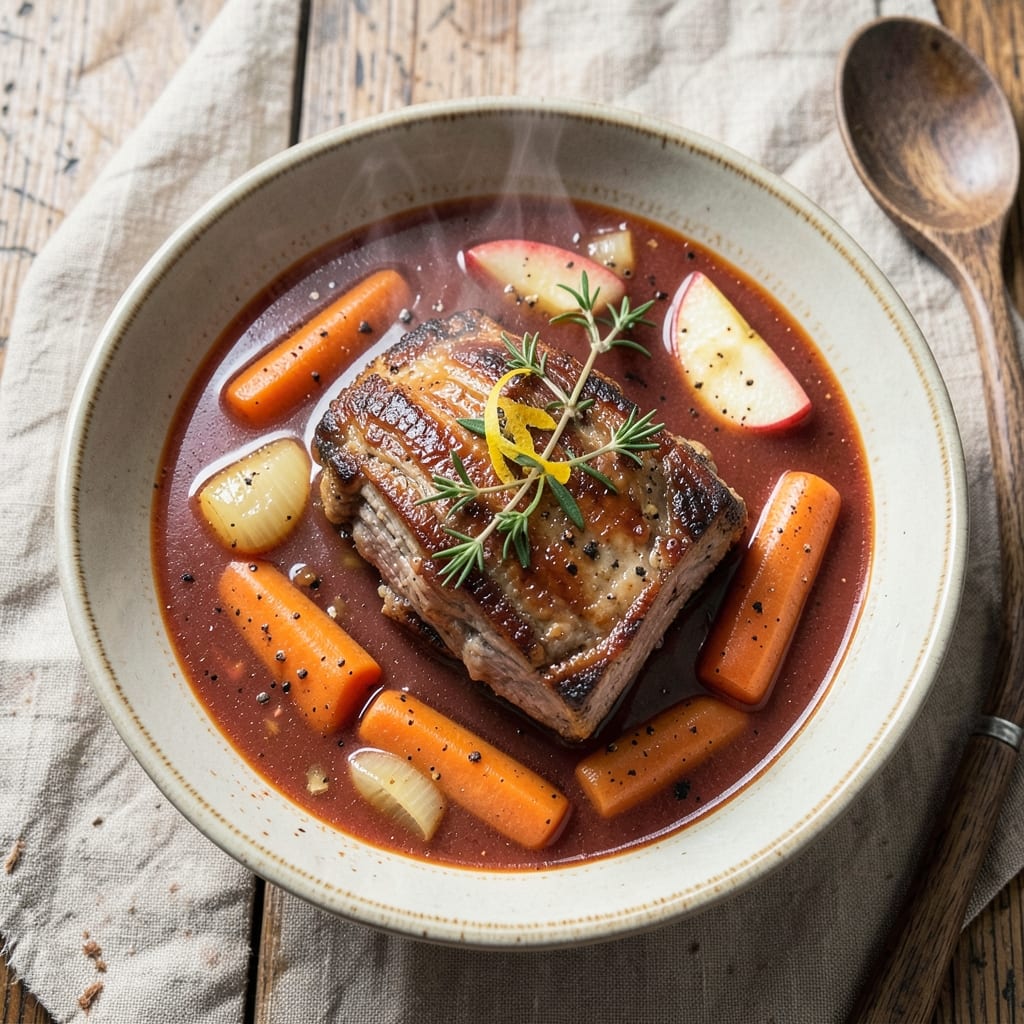
This apple carrot beef rib soup recipe transforms humble ingredients into a deeply satisfying meal that balances sweet, savory, and hearty textures. The secret lies in slow-simmering beef ribs until they practically melt, while apples and carrots caramelize into a naturally sweet broth that cuts through the richness. I developed this recipe after years of perfecting the art of tenderizing tough cuts—no shortcuts, just deep flavor built over time.
The beauty of this soup is its versatility: the apples add subtle sweetness without overpowering the beef, while carrots contribute natural depth and color. A touch of thyme and bay leaf elevates the broth, and a splash of apple cider vinegar at the end brightens the flavors. The ribs become fork-tender, falling apart with just a gentle prod, and the vegetables soften just enough to melt into the broth.
What you’ll end up with is a bowl of soup that’s rich yet balanced—warm, aromatic, and comforting enough to feel like a hug on a chilly day. The contrast between the tender beef, sweet apples, and earthy carrots makes every spoonful satisfying. This is the kind of soup that improves with time, as flavors meld and deepen during the simmer.
Perfect for a cozy family dinner or a meal to nourish after a long day, this recipe delivers restaurant-quality results at home. Serve with crusty bread to soak up every last drop of that flavorful broth. Let’s get started on creating something truly special.
Ingredients for apple carrot beef rib soup
Six ingredients transform into a rich, slow-simmered soup with melt-in-your-mouth beef ribs.
| Ingredient | Amount | Notes |
|---|---|---|
| Beef Ribs 🥩 | 3 lb | Bone-in, cut into 2-inch pieces |
| Apples 🍎 | 3 medium | Honeycrisp or Fuji, peeled and chopped |
| Carrots 🥕 | 4 medium | Peeled and sliced into 1-inch chunks |
| Yellow Onion 🧅 | 1 whole | Chopped into 1/2-inch pieces |
| Garlic Cloves 🧄 | 4 cloves | Minced or finely chopped |
| Fresh Thyme 🌿 | 2 sprigs | Or 1 tsp dried thyme |
| Bay Leaves 🍃 | 2 whole | Dried, removed before serving |
| Beef Broth 💧 | 6 cups | Low-sodium preferred |
| Apple Cider Vinegar 🍏 | 1 tbsp | For brightness |
| Olive Oil 🫒 | 2 tbsp | For searing ribs |
| Salt 🧂 | 1 ½ tsp | Kosher or sea salt |
| Black Pepper 🌶️ | ½ tsp | Freshly ground |
| Fresh Parsley 🌿 | ¼ cup | Chopped for garnish |
The beef ribs are the heart of this soup—bone-in cuts develop the deepest flavor. Costco or local butchers often have the best selection, but any grocery store's rib section works. Look for ribs with good marbling; the fat renders down during cooking, adding richness to the broth. If you can't find them pre-cut, ask for them to be trimmed into 2-inch pieces. The apples and carrots should be fresh but firm—Honeycrisp apples add the best balance of sweetness and texture, while organic carrots stay vibrant during simmering. Store these in the fridge until ready to prep.
No Honeycrisp apples? Fuji or Braeburn work just as well. Carrots can be swapped for sweet potatoes if you prefer, but they'll change the soup's natural sweetness profile. Running short on thyme? Dried thyme at one-third the amount works, but fresh is ideal. The beef broth is non-negotiable—low-sodium ensures you control the seasoning. If you can't find it, homemade beef stock is the next best option. For a quicker prep, Trader Joe's sells pre-chopped onions and carrots that save time without sacrificing quality. The apple cider vinegar adds a subtle tang—Bragg brand is my go-to, but any organic version works.
This soup tastes even better the next day as flavors meld. Store leftovers in an airtight container in the fridge for up to 5 days, or freeze for 3 months. The broth thickens as it cools, so a splash of water or broth thins it when reheating. I always make a double batch—one for dinner, one for lunches. The ribs become fork-tender after simmering, so portion them carefully when serving. Garnish with fresh parsley just before eating to keep it vibrant. For extra richness, drizzle a little olive oil over the top before serving.
Why You'll Love This Recipe
- Fewer Chores, Same Magic: I swear by this—no fancy prep, just ribs and veggies tossed in one pot. The onions and garlic caramelize while you chop apples (yes, I leave the skin on for texture), and by the time the carrots soften, the broth’s already building that rich, sweet base. Honestly, my slow cooker does half the work for me.
- Sweet-Savory Balance: That apple doesn’t just vanish—it melts into the broth, turning the soup into something unexpected. The beef ribs add deep, smoky richness, while the carrots keep it hearty. Between us, the first bite always makes me think, "Wait, this is actually good?" (It is.)
- Leftovers That Don’t Suck: This soup only gets better the next day. I freeze half for lazy Mondays, and it reheats like a hug. My college-aged kid devours it straight from the pot—no complaints about "mushy" veggies, either. (The apples hold their shape, promise.)
- Budget Beef Boost: Ribs on sale? Grab ‘em. A bag of apples and carrots lasts forever, and onions/garlic are always cheap. I stretch this into four servings without breaking the bank, and the flavor? It tricks everyone into thinking I spent hours on it. (Spoiler: I didn’t.)
Step-by-step instructions for apple carrot beef rib soup
This method delivers melt-in-your-mouth beef ribs and sweet-tangy vegetable harmony through precise timing and layering.
Sear the Beef Ribs for Deep Flavor
Heat a large Dutch oven over medium-high heat until hot. Add 2 tablespoons olive oil and swirl to coat the bottom evenly. Working in batches to avoid overcrowding, add the 3 pounds beef ribs in a single layer. Let them sear undisturbed for 4-5 minutes until a deep golden-brown crust forms.
This crust, called the fond, dissolves into the broth later, creating complex umami flavor. Flip the ribs once and sear the other side for another 4-5 minutes. Season each side generously with 1 teaspoon salt and ¼ teaspoon black pepper while they cook. Remove ribs and set aside temporarily.
Build the Vegetable Base
In the same Dutch oven, reduce heat to medium and add ½-inch chopped yellow onion. Cook for 5 minutes until softened and translucent, stirring occasionally. Add the 4 cloves minced garlic cloves and cook for 30 seconds until fragrant—don't let it brown or it'll turn bitter.
Add the 4 medium sliced carrots and 3 medium chopped apples (peeled and cored). Stir to combine and cook for 3 minutes until the carrots begin to soften slightly. Sprinkle with the remaining ½ teaspoon salt and ¼ teaspoon black pepper, then add the 2 sprigs fresh thyme and 2 whole bay leaves.
Simmer the Soup for Maximum Tenderization
Return the seared ribs to the Dutch oven. Pour in 6 cups beef broth and 1 tablespoon apple cider vinegar, stirring to combine. Bring to a gentle boil over high heat, then immediately reduce heat to low to maintain a bare simmer. Cover partially with a lid, leaving a slight gap for steam to escape.
Simmer for 2½ to 3 hours until the beef ribs are fork-tender and easily pull apart. The soup should have reduced slightly, creating a rich, concentrated broth. Check occasionally and add ¼ cup water if it gets too thick. The ribs are done when they separate with minimal resistance and the vegetables are tender but still hold their shape.
Finish and Garnish Professionally
Remove and discard the thyme sprigs and bay leaves. Taste the soup and adjust seasoning if needed—add more salt, pepper, or a splash of vinegar for brightness. For a silky texture, use an immersion blender to purée about ½ of the soup until smooth, then stir it back into the pot.
Ladle the soup into bowls and garnish each serving with 1 tablespoon chopped fresh parsley. The contrast between the tender beef ribs, sweet apples, earthy carrots, and rich broth creates a perfect balance of textures and flavors. Serve immediately while hot, with crusty bread to soak up every last drop of this comforting soup.
Pro Tips For Making Apple Carrot Beef Rib Soup
- BLANCH CARROTS FIRST: Toss sliced carrots in boiling water for 2 minutes before adding to the pot—this softens them just enough to release sweetness without turning to mush. I learned this the hard way when my soup ended up with rubbery carrots that looked like they’d been chewed by a lawnmower.
- SEAR RIBS IN BATCHES: Don’t crowd the pan—work in two batches if needed. Browned ribs add depth, but a steaming pile of meat just steams. My first attempt left me with pale, flavorless ribs that tasted like they’d been boiled in water.
- PEEL APPLES AFTER COOKING: Skip peeling them raw—apples hold their shape better when cooked, and the skin adds texture. Peel only after simmering, or you’ll end up with a soup full of floating apple pulp that looks like it belongs in a smoothie.
- SIMMER LOW AND LONG: Two hours minimum at a gentle boil—this breaks down the collagen in ribs and carrots for that rich, silky texture. I used to rush it, and the result was tough meat and watery broth. Patience here makes all the difference.
Wine and beer pairings for these flavors
Red Wine Pairings
For this rich, slow-simmered soup, I reach for a medium-bodied red wine like Pinot Noir from Oregon or Syrah from the Rhône Valley. The bright acidity and subtle fruit notes of Oregon Pinot Noir cut through the beef's richness while complementing the sweet apples and carrots. Look for a wine with 12-14% ABV—this range balances the soup's depth without overpowering it. A 2019 or 2020 vintage offers perfect freshness without being too tannic. 🍷
For a bolder option, try a Gamay from Beaujolais—its juicy red fruit flavors and lower tannins make it surprisingly versatile. I keep a bottle of Beaujolais-Villages on hand specifically for hearty soups like this. The key is to choose a wine with moderate tannins to avoid clashing with the tender beef. Always decant red wines for 10-15 minutes before serving to soften their edges and release aromas.
White Wine Options
Don't overlook white wines—their crisp acidity provides refreshing contrast. A dry Riesling from Germany's Mosel region brings vibrant citrus notes that pair beautifully with the apple's sweetness. I prefer Kabinett-level Rieslings with 8-10% ABV—they're light enough to complement the soup without competing. Chill these wines to 45-50°F before serving to enhance their bright flavors. 🍷
For something more robust, try a Chardonnay with minimal oak influence from California's Central Coast. The stone fruit notes harmonize with the carrots, while the wine's acidity balances the beef's richness. Avoid heavily oaked Chardonnays—they can make the soup taste flat by comparison. A 2021 or 2022 vintage works perfectly, offering freshness without being too young.
Beer Pairings
For beer lovers, a Belgian Witbier like Hoegaarden or Stella Artois is my go-to choice. The coriander and citrus notes in these beers create a lovely contrast with the soup's sweet and savory elements. Serve them well-chilled (38-40°F) to highlight their crispness. The slight effervescence also cleanses the palate between spoonfuls. 🍺
For a malty option, try an amber ale with 4-6% ABV, like Fat Tire or Samuel Smith's Nut Brown Ale. The caramel and toasty notes complement the caramelized onions and apples beautifully. Avoid heavy stouts or IPAs—they can overpower the delicate balance of flavors in this soup. For maximum enjoyment, serve beers at their ideal drinking temperature and let them breathe for 5 minutes before pairing.
Non-Alcoholic Choices
Craft a sparkling apple cider by mixing sparkling water with ½ cup apple cider and a squeeze of lemon. This refreshing drink mirrors the soup's apple flavors while providing a crisp contrast. Chill it thoroughly before serving to enhance its effervescence. For a non-fizzy option, try sparkling water with a splash of ginger beer—the ginger's zing complements the soup's depth beautifully. 🍏
Herbal teas also work wonderfully. A chamomile tea with honey provides soothing warmth that pairs perfectly with the soup's comforting flavors. Brew it strong and serve it iced for a refreshing contrast. For something more robust, try a rooibos tea with a dash of cinnamon—the earthy notes harmonize with the carrots and beef. Always serve teas at room temperature to avoid competing with the soup's warmth.
Nutrition facts
Frequently asked questions
Can I substitute beef ribs with another cut of beef?
Yes, but choose cuts that become tender with slow cooking. Chuck roast or short ribs work well—just increase simmering time to 3-4 hours for chuck roast. For quicker results, use beef short ribs (cook for 2 hours). Avoid lean cuts like sirloin; they won't become tender enough. The key is selecting meat with good marbling for flavor and tenderness.
How do I prevent the apples from turning mushy?
Add the apples only in the last 30 minutes of cooking. They soften quickly, so avoid overcooking. For extra texture, keep them slightly firm by using tart apples like Granny Smith (they hold shape better than sweet varieties). If you prefer softer apples, add them at the 1-hour mark instead.
Can I make this soup in an Instant Pot?
Sear the ribs first in a skillet, then transfer to the Instant Pot with all ingredients. Cook on high pressure for 60 minutes, then natural release for 15 minutes. The pressure cooker reduces total time to about 1.5 hours (vs. 3 hours stovetop). For best results, finish with a quick 5-minute simmer on the stovetop to meld flavors.
What's the best way to reheat leftovers?
Reheat gently on the stovetop over low heat with a splash of beef broth or water to restore moisture. Avoid microwaving—it can make the broth watery. For extra richness, add a pat of butter while reheating. Leftovers keep well in the fridge for 5 days or frozen for 3 months. The flavors actually improve overnight!
Why does my soup taste bland after simmering?
Most likely, you didn't deglaze the pan after searing the ribs. Those browned bits (fond) are flavor gold! Also, check your salt levels—soup tastes saltier when hot, so add 1 extra teaspoon before serving. For depth, stir in 1 tablespoon apple cider vinegar at the end or add a pinch of smoked paprika for complexity.