Main Courses
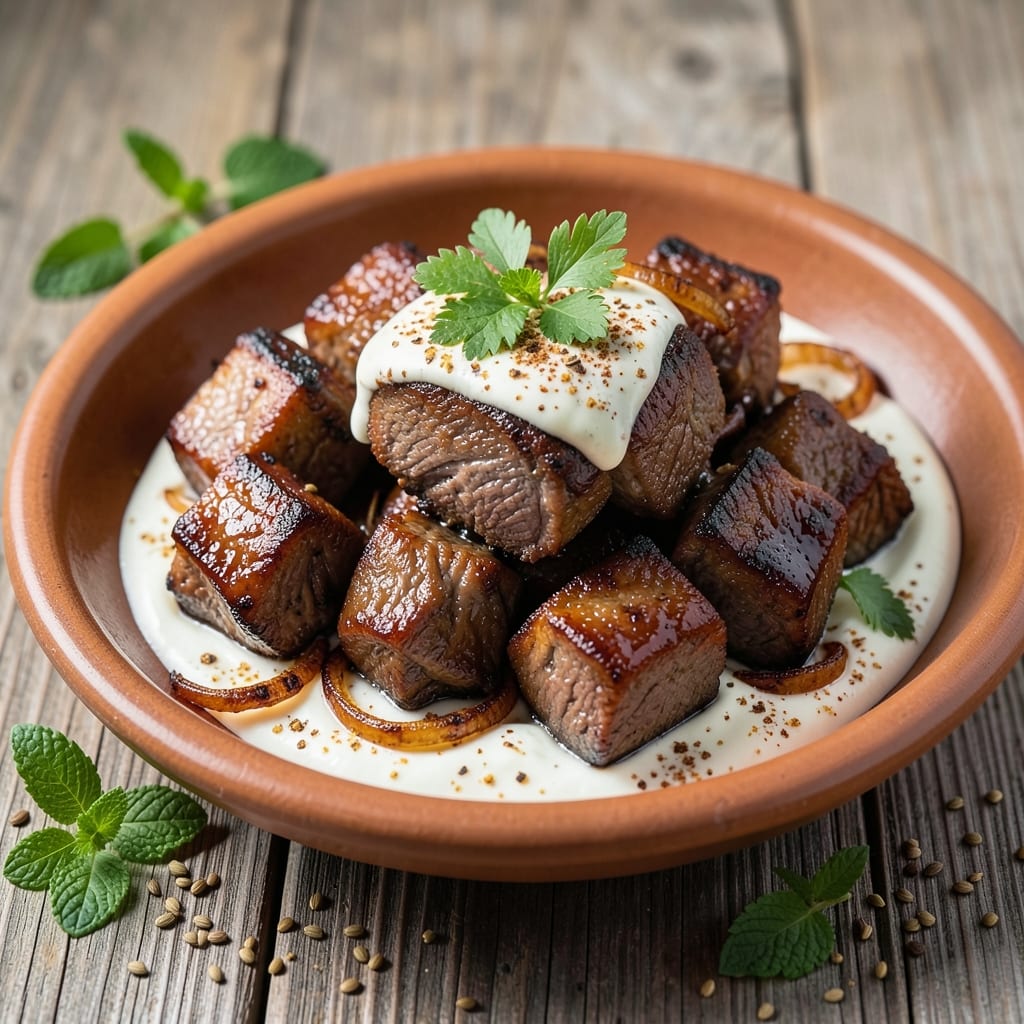
This Arab beef recipe transforms tough cuts into melt-in-your-mouth tenderness using a time-honored yogurt braise method. The secret lies in a marinade of ground spices and tangy yogurt that tenderizes the meat while infusing it with rich, aromatic flavors. I developed this recipe after years of perfecting the balance between slow-cooked richness and bright, fresh herbs that cut through the depth.
The process begins with a dry rub of cumin, coriander, and cinnamon, followed by a yogurt marinade that works overnight to break down the fibers. As the beef simmers in its own juices, the yogurt creates a velvety sauce that coats every bite. This technique ensures your beef will be fork-tender, with layers of spice that build complexity rather than overpower.
What you'll end up with is beef so tender it practically falls apart at the touch, bathed in a fragrant sauce that's equally at home over fluffy rice or with warm flatbread. The dish carries the warmth of Arab cuisine—earthy spices, tangy yogurt, and fresh herbs—without requiring hours of active cooking. The result is a restaurant-quality meal that feels like a home-cooked embrace.
Serve with a simple cucumber-tomato salad to balance the richness, or pair it with garlic yogurt sauce for dipping. The beauty of this recipe is its versatility—equally impressive for weeknight dinners or special gatherings. Let's create this tender, flavorful masterpiece step by step.
Ingredients for arab beef
Earthy spices, tangy yogurt, and tender beef—this Arab-inspired recipe delivers restaurant-quality tenderness with minimal effort.
| Ingredient | Amount | Notes |
|---|---|---|
| Beef Chuck Roast 🥩 | 2 ½ lb | Tough cut for braising, cut into 1.5-inch cubes |
| Plain Whole-Milk Yogurt 🥛 | 1 cup | Greek or regular, unsweetened |
| Ground Cumin 🌿 | 1 ½ tbsp | Toasted for deeper aroma |
| Ground Coriander 🍃 | 1 tbsp | Freshly ground preferred |
| Ground Cinnamon 🌶️ | ½ tsp | Sweet, not cassia |
| Salt 🧂 | 1 ½ tsp | Diamond Crystal kosher salt |
| Black Peppercorns 🌶️ | ½ tsp | Freshly cracked |
| Garlic Cloves 🧄 | 6 cloves | Peeled, roughly chopped |
| Onion 🧅 | 1 whole | Yellow, peeled, quartered |
| Fresh Parsley 🌿 | ¼ cup | Chopped, stems removed |
| Fresh Mint Leaves 🌿 | ¼ cup | Chopped, stems removed |
| Vegetable Oil 🫒 | 2 tbsp | For searing |
| Water 💧 | 1 ½ cups | For braising liquid |
| Lemon Juice 🍋 | 1 tbsp | Freshly squeezed |
The beef cut is everything here. Chuck roast from the butcher section—look for good marbling—breaks down beautifully during braising. Costco or Whole Foods carry excellent quality, but your local grocery store's chuck works too. Avoid sirloin or tenderloin; these cuts stay tough. For the yogurt, whole-milk Greek yogurt gives the best texture, but regular yogurt works in a pinch. The spices? Penzeys or bulk bins for the freshest ground cumin and coriander—these are the flavor anchors of the dish.
No cumin? Smoked paprika at half the amount adds depth, though it won't replicate the earthiness. Substituting coriander with equal parts cardamom gives a different but still aromatic profile. Fresh herbs? Dried parsley or mint at one-third the amount works, but fresh is ideal. The lemon juice can be swapped for vinegar if needed—apple cider vinegar adds subtle sweetness. For the onion, red or yellow both work, but yellow has a slightly sweeter base flavor that pairs well with the spices. If you're short on time, pre-chopped frozen onions save prep work without sacrificing flavor.
This braise tastes even better the next day as flavors meld. Store in an airtight container in the fridge for up to 5 days—the sauce thickens beautifully. For longer storage, freeze portions for 3 months; thaw overnight in the fridge before reheating. The leftovers reheat perfectly—simmer on the stove with a splash of water to restore moisture. I always make a double batch; the extra serves as a quick lunch for days or impresses guests when reheated gently. The herbs can be added fresh at the end if you're serving immediately, or stir them in during the last 5 minutes of reheating.
Why You'll Love This Recipe
- One-Pot Magic: I swear by this—just sear the beef, dump in the yogurt and spices, and let it slow-cook. No chopping, no fussing, no extra pans. The cumin and cinnamon do all the work while you sip tea.
- Rich Without Effort: That yogurt marinade? It’s the secret. The beef stays tender, the spices melt into the meat, and the cinnamon gives it this warm, almost sweet depth—like a hug in a bowl. Honestly, I’ve tried fancier cuts, but this chuck roast delivers every time.
- Leftovers That Shine: Make a double batch and thank me later. The flavors get even better the next day—perfect for wraps, salads, or just reheated with toasted bread. My kids beg for it, and I’ve sent it in lunches without a complaint.
- Budget-Friendly Feast: A chuck roast is cheap, and the spices cost pennies. You’re feeding a crowd for less than takeout, and it feels special. Between us, this is how I feed my book club on a tight budget—no one ever guesses how easy it was.
Step-by-step instructions for spiced yogurt-braised beef
Transform tough beef into melt-in-your-mouth perfection using this slow-braised technique.
Prepare and Sear the Beef
Cut the 2.5 lb beef chuck roast into 1.5-inch cubes, trimming any excess fat. In a large Dutch oven, heat the 2 tablespoons vegetable oil over medium-high heat until shimmering. Working in batches to avoid crowding, sear the beef cubes for 2-3 minutes per side until they develop a deep golden-brown crust. This step creates the Maillard reaction that builds rich flavor.
As you sear, remove the beef and set aside. The browning should be even and caramelized - if any pieces stick, they're not ready to flip. I press down gently on the cubes during the first minute to prevent curling, which ensures even contact with the pan. Keep the browned bits in the pot; they'll form the flavor base for the braise.
Build the Spice Base
In the same Dutch oven, add the quartered 1 whole onion and the 6 cloves roughly chopped garlic. Cook for 3-4 minutes until the onion softens and becomes translucent. Add the 1.5 tablespoons ground cumin, 1 tablespoon ground coriander, and 0.5 teaspoon ground cinnamon, stirring constantly for 30 seconds to toast the spices and release their aromas.
This is where the authentic Middle Eastern flavors develop. The spices should smell warm and earthy - if you don't smell anything, increase the heat slightly. Immediately add the 1.5 teaspoons salt and 0.5 teaspoon freshly cracked black peppercorns, mixing well to distribute evenly. The spices will darken slightly as they toast, which is perfect for this dish.
Create the Yogurt Sauce
Lower the heat to medium and carefully stir in the 1 cup plain whole-milk yogurt. Cook for 2-3 minutes, stirring constantly, until the yogurt begins to thicken slightly but doesn't curdle. This step is critical - if the yogurt separates or curdles, reduce the heat immediately and whisk vigorously to restore smoothness.
Add the 1.5 cups water and 1 tablespoon freshly squeezed lemon juice, stirring well to combine. The mixture should be a thick, creamy consistency with visible flecks of spices. Return the seared beef to the pot, submerging the cubes completely. The liquid should come about halfway up the sides of the beef pieces - if not, add 1-2 tablespoons more water.
Braise to Fall-Apart Tenderness
Bring the liquid to a gentle simmer, then immediately reduce heat to low. Cover the Dutch oven and transfer to a preheated 300°F oven. Braise for 2.5-3 hours, turning the beef occasionally and basting with the cooking liquid, until the meat is fork-tender and falling apart easily.
Check for doneness by inserting a fork into the thickest piece - it should slide in with minimal resistance. The beef should be dark brown and the cooking liquid reduced by about 25%. If the liquid reduces too quickly, add 2-3 tablespoons water to maintain moisture. The longer it cooks, the more flavorful the meat becomes.
Finish and Garnish
Remove the beef from the pot and transfer to a serving platter. Skim any excess fat from the surface of the cooking liquid, then stir in the 0.25 cup chopped fresh parsley and 0.25 cup chopped fresh mint leaves. Return the beef to the pot and spoon the herb-infused sauce over the top.
Let the beef rest for 5-10 minutes before serving. The sauce should coat the beef beautifully and the herbs should be visible throughout. Serve with warm flatbread or basmati rice to soak up every delicious bite of this rich, aromatic dish.
Pro Tips For Making Arab Beef
- Sear the Roast First: Hit that chuck roast with a screaming-hot pan—no rushing—until deep brown crust forms. I learned this the hard way; skipping the sear means flavor hiding in the sauce instead of clinging to the meat.
- Whisk Yogurt with Spices: Mix the yogurt with cumin, coriander, and cinnamon before coating the meat—let it sit 10 minutes. The spices dissolve better, and the marinade sticks like glue (yes, even if you’re impatient like me).
- Skip the Crowding: Don’t drown the beef in sauce while cooking—just enough to coat the bottom. I used to overdo it, and the yogurt turned grainy. A splash of water later, but why waste time?
- Rest Under Foil: After cooking, tent the roast with foil for 15 minutes. The residual heat keeps it juicy while you finish the sauce—no dry, sad slices here. (Your future self will thank you.)
Essential equipment for great arab beef
Dutch Oven
This is your workhorse for the entire process—searing, braising, and finishing. I recommend a 5-6 quart enameled cast iron Dutch oven like the Le Creuset Signature or Lodge Pre-Seasoned. The heavy base distributes heat evenly, preventing hot spots that can burn the yogurt sauce. The enameled coating protects against rust and makes cleanup effortless. If you don’t have one, a heavy-bottomed stainless steel pot with a tight-fitting lid works too. 🔥
Meat Thermometer
A meat thermometer is non-negotiable for perfect results. I use the ThermoWorks Smoke for its instant-read accuracy and durable probe. Insert it into the thickest piece of beef—aim for 195-200°F internal temperature for fall-apart tenderness. Without one, you risk overcooking or undercooking the meat. For budget options, the OXO Bluetooth is reliable and affordable.
Sharp Knife Set
Invest in a high-quality chef’s knife (like the Wüsthof Ikon) and a boning knife for precise cuts. The beef chuck needs clean, even 1.5-inch cubes—uneven pieces won’t cook uniformly. A sharpener (I use the Work Sharp Whetstone) keeps your blades in top condition. Dull knives crush meat fibers, leading to uneven cooking and less tender results.
Mixing Spoon
A wooden spoon (like the OXO Good Grips) is ideal for stirring the yogurt sauce without scratching the Dutch oven’s surface. Wood distributes heat gently and won’t react with acidic ingredients like metal might. Avoid plastic—it can melt under high heat. For extra precision, a silicon spatula works too, especially when scraping up browned bits from the bottom.
Fine-Mesh Strainer
Use this to skim excess fat from the finished sauce before garnishing. A stainless steel strainer (like the OXO Good Grips) works best—it’s durable and won’t retain flavors. Skimming fat ensures a cleaner, more elegant presentation while keeping the sauce rich. If you’re short on time, a paper towel works in a pinch, but it won’t be as effective. 💡
Nutrition facts
Frequently asked questions
Can I substitute lamb or chicken for the beef in this recipe?
While this recipe is designed for beef, you can adapt it for lamb using the same method. For chicken, reduce cooking time to 1.5-2 hours and use boneless thighs or drumsticks. The yogurt marinade works beautifully with lamb, but chicken benefits from a slightly shorter braise to prevent drying out.
Why does the yogurt sometimes curdle when cooking?
The yogurt may curdle if the heat is too high or if it's stirred too vigorously. Always lower the heat to medium-low when adding yogurt and stir gently with a wooden spoon. If it starts to separate, whisk vigorously and reduce heat immediately. The curdled yogurt will still work—just stir it back into a smooth sauce before adding the beef.
How can I make this dish faster without sacrificing tenderness?
For a quicker version, sear the beef as directed, then use a pressure cooker (like an Instant Pot) on high pressure for 45-50 minutes instead of braising. The high heat and pressure break down the meat fibers faster while keeping it moist. Skip the oven step entirely—just cook under pressure, then finish with the yogurt sauce on the stovetop.
What's the best way to reheat leftovers?
Reheat leftovers gently in a skillet over low heat with a splash of water or broth to restore moisture. Avoid microwaving, as it can make the sauce watery. For best results, warm the beef and sauce together for 5-7 minutes, stirring occasionally. The dish tastes even better the next day as flavors meld further.
Can I use dried herbs instead of fresh?
Yes, but use one-third the amount of dried herbs (e.g., 1 teaspoon dried parsley or mint instead of 0.25 cup fresh). Toast the dried herbs in the Dutch oven with the spices for 1 minute to enhance their flavor. Fresh herbs add vibrant color and brightness, but dried herbs work well in a pinch.