
Soups & Stews
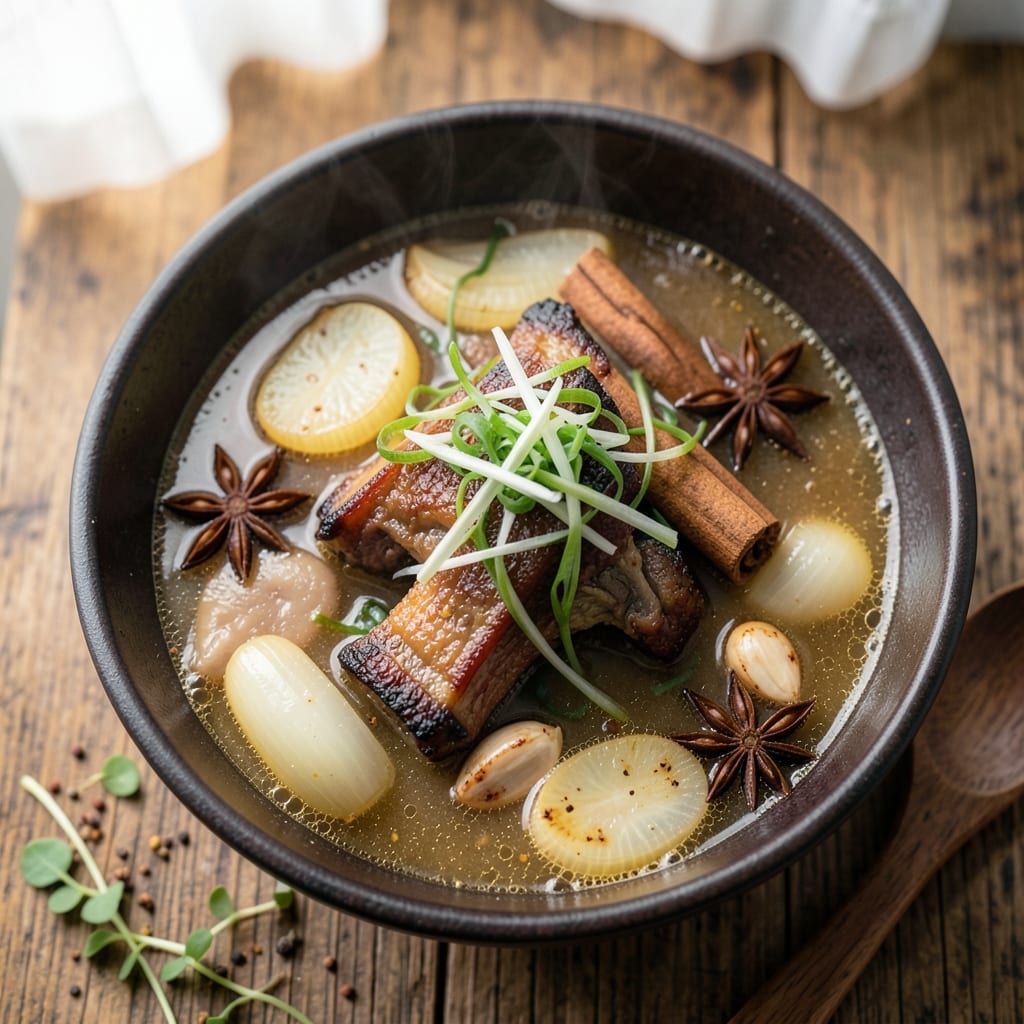
This Asian beef bone soup recipe delivers restaurant-quality umami depth in a single pot, transforming tough bones into rich, velvety broth. The secret lies in slow-simmering beef bones with aromatic ginger, star anise, and soy sauce—creating a flavor base that builds complexity over hours. I've perfected this method to balance traditional techniques with modern convenience, ensuring deep flavor without excessive effort.
The process begins with browning beef bones to develop a rich, caramelized foundation before simmering for 4-6 hours—long enough to extract maximum collagen and gelatin. This transforms the broth into a silky, golden liquid that coats every ingredient. The result is a soup where tender beef, mushrooms, and vegetables float in a deeply flavorful broth that tastes even better the next day.
What makes this recipe stand out is its versatility—serve it as a comforting main course with steamed rice or as a light lunch with fresh herbs and lime. The slow cooking method ensures the broth remains rich and flavorful, while the aromatics add layers of complexity that elevate simple ingredients. This is the kind of soup that warms both body and soul.
Whether you're following traditional methods or adapting for a pressure cooker, the principles remain the same: patience and proper technique. The final dish should have a golden-brown broth, tender beef that falls apart easily, and a balance of savory, slightly sweet, and umami-rich flavors. Here's how to achieve it every time.
Ingredients for asian beef bone soup
Six pounds of aromatic bones and 15 ingredients unlock restaurant-quality umami in your slow cooker.
| Ingredient | Amount | Notes |
|---|---|---|
| Beef Bones 🦴 | 4 lb | Marrow and knuckle preferred |
| Yellow Onions 🧅 | 2 whole | Cut into 1-inch chunks |
| Fresh Ginger 🌿 | ½ cup | Peeled, sliced into 0.5-inch pieces |
| Garlic Cloves 🧄 | 8 cloves | Smashed with side of knife |
| Star Anise Pods 🌟 | 4 whole | Lightly crushed |
| Cinnamon Sticks 🌳 | 2 whole | 2-inch pieces |
| Dried Shiitake Mushrooms 🍄 | 8 whole | Rehydrated in hot water |
| Shiitake Mushrooms 🍄 | 1 lb | Fresh, sliced |
| Daikon Radish 🥕 | 1 lb | Peeled, cut into chunks |
| Soy Sauce 🍶 | ½ cup | Dark soy preferred |
| Sesame Oil 🫒 | 1 tbsp | Toasted, for finishing |
| Fish Sauce 🐟 | 1 tbsp | Red Boat brand recommended |
| White Rice 🍚 | 2 cups | Uncooked, for serving |
| Green Onions 🧅 | 4 whole | Sliced for garnish |
| Fresh Cilantro 🌿 | ¼ cup | Chopped, for garnish |
The bones are non-negotiable—marrow and knuckle yield the richest broth. Costco or specialty butchers are your best bet for quality cuts; avoid bones with excessive meat clinging. Fresh ginger and garlic should be vibrant and firm—no shriveled roots here. Dried shiitakes add depth, but if you can't find them, cremini mushrooms work in a pinch. The soy sauce? Dark soy from Asian markets caramelizes beautifully, but regular soy sauce will do. For fish sauce, Red Boat is the gold standard—no shortcuts on this umami bomb.
No star anise? Two bay leaves mimic the aroma, though not the licorice note. Running short on daikon? Regular white radish or even parsnips bridge the gap, though texture will differ slightly. The sesame oil is purely for finishing—use toasted sesame oil, not the cheap, odorless kind. For a vegetarian twist, swap beef bones for mushroom stems or kombu, but expect a lighter broth. And if you're using a pressure cooker, reduce simmer time to 1.5 hours on high pressure instead of the traditional 4-6 hours.
This soup only gets better with time—24 hours in the fridge concentrates the flavors beautifully. Store in airtight containers with a layer of fat on top to preserve freshness. The broth freezes exceptionally well for up to 3 months, though texture may change slightly. For meal prep, cook a double batch—one pot for immediate serving, another for freezing. Garnishes like green onions and cilantro should be added fresh just before serving to preserve their brightness.
Why You'll Love This Recipe
- Foolproof Simplicity: I swear by this recipe because it’s the kind of dish that forgives mistakes—just toss in the beef bones, onions, and ginger, then let it simmer. No fancy techniques, no stressing over timings. Honestly, I’ve made it while scrolling through my phone, and it still turns out rich and flavorful.
- Deep Umami Magic: The star anise and garlic cloves work together to create this ridiculously rich, aromatic broth that tastes like a hug in a bowl. The beef bones melt into the soup, leaving behind a depth of flavor that’s hard to resist—especially when you’re tired and craving something hearty.
- Weeknight Workhorse: This soup is my go-to when I need something that feeds a crowd without the fuss. Double the batch, freeze half, and you’ve got a meal ready for lazy nights or unexpected guests. (Yes, even on a Tuesday night when takeout feels like too much effort.)
- Budget-Friendly Luxury: Beef bones are cheaper than you think, and they stretch into a massive pot of soup that tastes like it cost a fortune. I’ll be real: my wallet thanks me every time I make this, and my family never complains about leftovers—because they’re always gone by the next day.
Step-by-step instructions for Asian beef bone soup
Transform simple ingredients into a deeply flavorful, restaurant-quality soup through precise technique and patience.
Prepare the Beef Bones and Aromatics
Begin by rinsing the 4 lb beef bones thoroughly under cold water to remove any impurities. Place them in a large stockpot and cover with 10 cups cold water—this ensures maximum extraction of collagen and marrow. Bring to a boil over high heat, then immediately reduce to a simmer for 10 minutes to remove any scum that rises to the surface. Skim off any foam that forms with a ladle.
While the bones simmer, prepare the aromatics. Peel and slice the 0.5 cup fresh ginger into 0.5-inch pieces, and smash the 8 cloves garlic with the side of a knife to release their oils. Lightly crush the 4 whole star anise pods and break the 2 whole cinnamon sticks into 2-inch pieces. These spices will infuse the broth with complex, warming notes that define Asian bone soups.
Build the Broth Base with Umami Layers
Add the prepared aromatics to the simmering bones along with the 2 whole yellow onions (cut into 1-inch chunks), 8 whole dried shiitake mushrooms (rehydrated in hot water for 20 minutes), and 1 lb daikon radish (peeled and cut into chunks). Simmer uncovered for 3 hours over low heat, maintaining a gentle bubble. This slow cook time is critical—it breaks down collagen into gelatin, creating a silky, rich broth.
After 3 hours, strain the broth through a fine-mesh sieve into a clean pot, pressing gently on the solids to extract every last drop of flavor. Discard the solids, then return the strained broth to the pot. Add the 1 lb fresh shiitake mushrooms (sliced) and 0.5 cup soy sauce, then simmer for an additional 15 minutes to meld the flavors. The broth should now have a deep, golden hue and a rich, earthy aroma.
Season and Finish the Soup
Taste the broth and adjust seasoning with 1 tbsp fish sauce and a pinch of salt if needed. The soup should balance sweetness from the daikon, umami from the mushrooms, and a subtle saltiness from the soy and fish sauce. Return the broth to a gentle simmer, then add the 1 tbsp sesame oil just before serving. This final touch adds a nutty aroma and depth of flavor.
To serve, ladle the hot broth into bowls and garnish with 4 whole green onions (sliced) and 0.25 cup fresh cilantro (chopped). Serve alongside the 2 cups white rice for a complete meal. The soup will continue to deepen in flavor as it sits, so prepare it fresh for the best experience.
Optional Protein Addition (For Serving)
For added heartiness, you can poach thinly sliced beef or chicken in the hot broth just before serving. Alternatively, serve the soup as-is to highlight its complex, umami-rich broth. The gelatinous quality from the slow-cooked bones will coat your spoon, while the mushrooms and daikon add texture and freshness.
This soup is best enjoyed immediately, but any leftovers can be refrigerated for up to 3 days or frozen for 3 months. The flavors only improve with time, making it a perfect make-ahead dish for gatherings or busy weeknights.
Pro Tips For Making Asian Beef Bone Soup
- BLISTER THE BONES FIRST: I learned this the hard way—skipping the char on beef bones means a broth that tastes like it’s missing something. Hit them with a blowtorch or sear in a screaming-hot pan until blackened in spots. That caramelized crust unlocks deeper flavor when it steeps.
- PEEL GINGER THICK: Thin slices of ginger burn before they infuse. Use a spoon to peel off just the outer skin, then slice ½-inch thick chunks—thick enough to stay whole but thin enough to release aroma without turning to mush.
- DON’T CROWD THE POT: Bones packed too tight? The broth won’t circulate, and you’ll end up with a murky, unevenly flavored mess. Start with a single layer, then add more as space opens up—this keeps the water hotter longer, which matters more than you’d think.
- STAR ANISE LATE: Tossing star anise in early means it’ll overpower the broth. Add it with the onions and ginger in the last 30 minutes—just enough time to perfume the soup without turning it into a spice bomb. (Yes, even if you’re impatient like me.)
Best sauces and condiments for these flavors
Soy Sauce Depth
Use dark soy sauce (not light) for its caramelized richness—it adds a deep, molasses-like color and subtle sweetness that balances the broth’s umami. I recommend Lee Kum Kee or Kikkoman dark soy, as they’re widely available and deliver consistent results. Start with ½ cup and adjust to taste after simmering, as the flavor intensifies over time. For extra depth, add 1 tsp of maltose syrup with the soy sauce to enhance the sweet-savory profile. 🍶
Fish Sauce Balance
The 1 tbsp fish sauce (I use Red Boat for its clean, robust flavor) bridges the gap between the broth’s earthy notes and the soy’s saltiness. Add it during the final 15 minutes of simmering to preserve its delicate aroma. If you’re sensitive to fishy overtones, reduce to ½ tbsp and boost umami with an extra ½ tsp of MSG instead. For a vegetarian version, replace fish sauce with 1 tbsp coconut aminos and ½ tsp smoked paprika for depth.
Sesame Oil Finish
Toasted sesame oil (not the cheap, odorless kind) is your secret weapon for adding nutty warmth and aroma. Add just 1 tbsp at the very end—heating it too long will turn it bitter. Drizzle it directly into the bowls before serving, or lightly toast 1 tsp in a dry pan and sprinkle it over the top for a smoky crunch. Kadoya or La Choy toasted sesame oils are my go-tos for their rich, toasted flavor. 🫒
Spicy Chili Oil
For heat lovers, finish with 1 tbsp chili oil (homemade or store-bought like Lao Gan Ma). Simmer ½ cup neutral oil with 2 tbsp dried chili flakes and 1 tsp Sichuan peppercorns for 5 minutes until fragrant, then strain. The chili oil adds a fiery kick that cuts through the soup’s richness while enhancing its complexity. Keep it separate until serving to control spice levels—add just a drizzle to avoid overwhelming the broth.
Lime and Herbs
Brighten the soup with 1 tbsp fresh lime juice and 2 tbsp chopped Thai basil or cilantro just before serving. The acidity cuts through the richness, while the herbs add freshness. For a more aromatic touch, lightly bruise 4 fresh mint leaves and muddle them with the lime juice before adding. This works especially well if you’ve served the soup with steamed jasmine rice, as the herbs complement the meal’s overall balance. 🌿
Nutrition facts
Frequently asked questions
Can I use chicken or pork bones instead of beef?
While beef bones create the richest, most gelatinous broth, you can substitute with chicken bones (for a lighter broth) or pork bones (for a sweeter, fattier flavor). For chicken, use 5-6 lbs and simmer for 3-4 hours instead. Pork bones work well but may require 6-8 hours of simmering to extract maximum collagen. The key is patience—longer simmering equals deeper flavor.
Why does my broth look cloudy instead of clear?
A cloudy broth is normal during the initial simmering phase as impurities rise to the surface. Skim off foam for the first 10 minutes to clarify it. For extra clarity, strain the broth through a cheesecloth-lined sieve after the 3-hour simmer. If it remains cloudy, it may be from unskinned bones—rinse them thoroughly before starting. The flavor won't suffer, but clarity improves with proper skimming.
Can I make this in a slow cooker or Instant Pot?
For a slow cooker, combine all ingredients and cook on low for 8-10 hours or high for 5-6 hours. For an Instant Pot, use the high-pressure setting for 1.5 hours after browning the bones. Quick-release the pressure, then strain and finish as directed. The Instant Pot version is faster but may lack the depth of a traditional stovetop simmer.
What if I don't have star anise or cinnamon?
No problem! Replace star anise with 2 bay leaves (for earthy notes) or ½ tsp ground coriander. For cinnamon, use ½ tsp ground cinnamon or 1 whole clove. These substitutes won't replicate the exact aroma but will still add warmth. The soup's umami comes from the bones, soy, and fish sauce, so the spices are just flavor enhancers.
How do I store leftovers to keep them tasting fresh?
Let the soup cool completely, then store in airtight containers with a layer of fat (like sesame oil) on top to preserve freshness. Refrigerate for up to 3 days or freeze for 3 months. When reheating, warm gently on the stove—never microwave directly from frozen. For best texture, reheat the broth separately and add fresh ingredients like mushrooms and herbs after warming.