
Soups & Stews
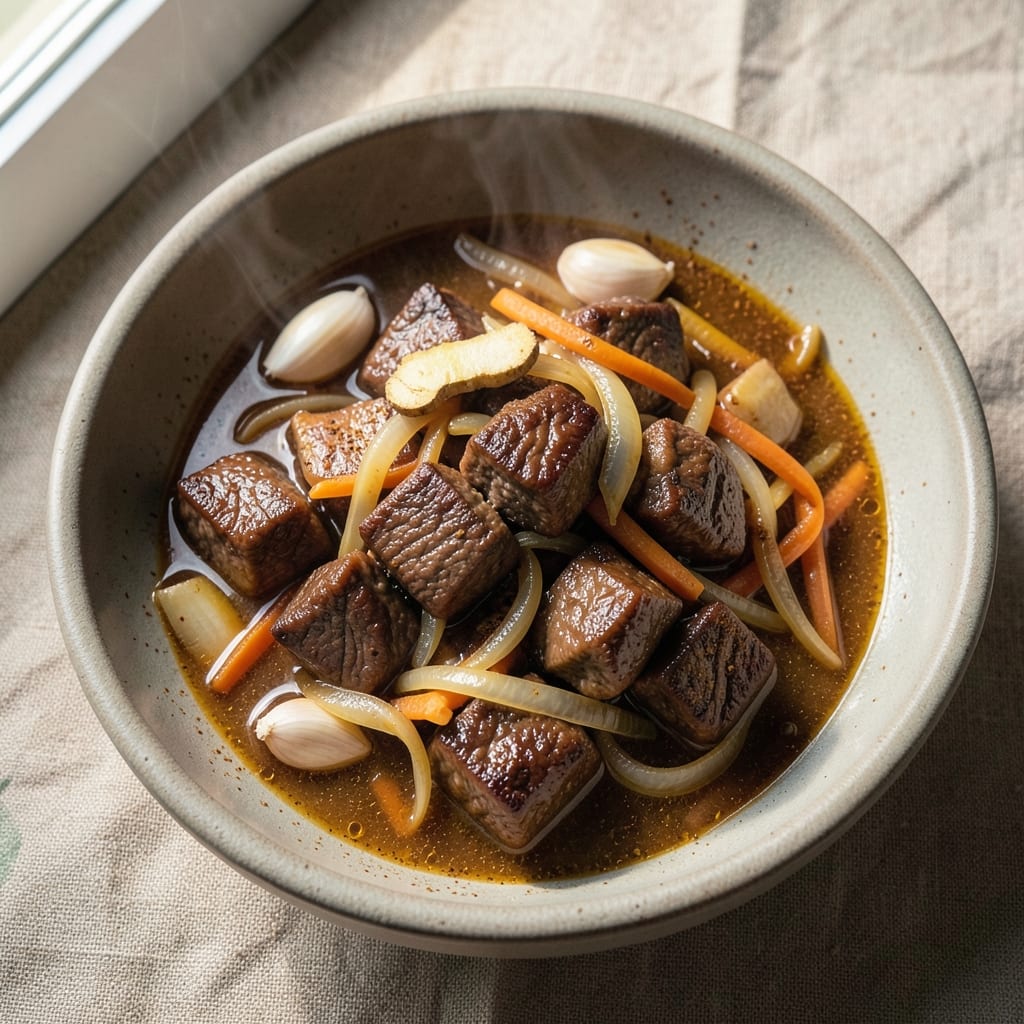
This Asian-style beef stew recipe transforms tough cuts into melt-in-your-mouth tenderness with fragrant five-spice and ginger—inspired by the slow-cooked comfort of Japanese nikujaga and Korean galbi jjigae. The secret lies in a deep, aromatic broth built layer by layer, where star anise, cinnamon, and fresh ginger create warmth that lingers long after the first bite. I developed this version after years of refining techniques to balance rich umami with bright, herbal notes—no shortcuts, just restaurant-quality depth.
The process begins with a 30-minute marinade that tenderizes the beef while infusing it with five-spice and soy, followed by a 2-hour slow braise that develops complex flavors. The result is a stew where beef falls apart at the touch of a fork, swimming in a glossy, caramelized sauce that clings to every noodle or rice grain. This isn’t just a stew—it’s a flavor experience that turns weeknight dinners into something special, with minimal effort but maximum impact.
What sets this apart is the harmony of textures: tender beef, silky broth, and the subtle bite of ginger and scallions that cut through the richness. Serve it over steamed rice or with crusty bread to soak up every last drop—a dish that feels both comforting and sophisticated. The aroma alone will have your kitchen filled with warmth, and the first spoonful delivers on that promise of deep, satisfying flavor.
Perfect for feeding a crowd or meal prepping for the week, this stew scales beautifully while maintaining its depth. The ingredients list is simple, but the technique ensures professional results. Let’s create something that tastes like home, with every bite telling a story of slow-cooked love and care.
Ingredients for asian style beef stew
Sixteen ingredients, but only five bring the magic—five-spice, ginger, soy, sherry, and star anise.
| Ingredient | Amount | Notes |
|---|---|---|
| Beef Chuck Roast 🥩 | 3 lb | Cut into 1.5-inch cubes, trimmed of fat |
| Fresh Ginger Root 🌿 | ½ cup | Peeled, roughly chopped (about 3 oz) |
| Garlic Cloves 🧄 | 8 cloves | Smashed but not minced |
| Five-Spice Powder 🌶️ | 2 tbsp | High-quality blend, not pre-mixed |
| Soy Sauce 🍶 | ½ cup | Dark soy preferred for depth |
| Dry Sherry 🍷 | ½ cup | Or substitute with dry white wine |
| Beef Broth 💧 | 4 cups | Homemade or high-quality store-bought |
| Star Anise Pods 🌟 | 2 whole | Lightly crushed for aroma |
| Cinnamon Sticks 🌿 | 2 whole | 2-inch pieces for infusion |
| Scallions 🧅 | ½ cup | Thinly sliced, white and green parts |
| Sesame Oil 🫒 | 1 tbsp | Toasted sesame oil for finishing |
| Brown Sugar 🍚 | 2 tbsp | Lightly packed for balance |
| Cornstarch 🌾 | 1 tbsp | For thickening the sauce |
| Steamed White Rice 🍚 | 3 cups | Cooked, for serving |
| Sesame Seeds 🌰 | 1 tbsp | Toasted for garnish |
The beef cut matters here—chuck roast is your best bet for that melt-in-your-mouth texture. Costco or Whole Foods usually carry it pre-cubed, which saves time, but if you're buying a whole roast, ask the butcher to cut it into 1.5-inch cubes—any smaller and they’ll turn mushy. Fresh ginger and garlic are non-negotiable for that bright, aromatic punch. I grab ginger at Asian markets where it’s always fresh, but the grocery store works too—just pick a root that’s firm and smells vibrant. The five-spice powder? Penzeys or Spicewalla for quality, but any reputable brand with whole spices will do.
No sherry? Dry white wine or mirin works in a pinch, but the acidity will differ slightly. The star anise and cinnamon sticks are for aroma—remove them before serving, but don’t skip them during cooking. Trader Joe’s sells them pre-packaged, or grab them in the spice aisle. For the soy sauce, dark soy adds that deep, molasses-like richness, but regular soy works if that’s what you’ve got. The cornstarch is key for thickening—Bob’s Red Mill is my go-to brand, but any food-grade cornstarch will work. Pro tip: Toast the sesame oil in a dry pan for 30 seconds before adding it—this brings out its nutty flavor without overpowering.
This stew tastes even better the next day as the flavors meld. Store leftovers in an airtight container in the fridge for up to 5 days, or freeze for 3 months. The rice? Cook it fresh when reheating—jasmine or short-grain works best for soaking up the sauce. For meal prep, portion the stew into containers and keep the rice separate until serving. Garnish with toasted sesame seeds and scallions right before eating—that’s where the freshness comes in.
Why You'll Love This Recipe
- Same recipe, different vibes: toss it over rice for a quick weeknight meal or serve it in bowls with steamed greens for a crowd. My daughter’s friends still ask for the recipe—(yes, even on a Tuesday night).
- One-Pot Magic: That beef chuck roast practically melts into tender perfection while you simmer the ginger and garlic—no fancy techniques, just a heavy pot and patience. Honestly, the hardest part is waiting for the five-spice powder to bloom into that warm, earthy aroma.
- Umami Bomb: The soy sauce and fresh ginger cut through the richness of the beef like a knife through butter, leaving you with layers of savory depth. Between us, that first bite of fall-off-the-bone meat with the crispy edges? Dangerously addictive.
- Weeknight to Dinner Party: Same recipe, different vibes: toss it over rice for a quick weeknight meal or serve it in bowls with steamed greens for a crowd. My daughter’s friends still ask for the recipe—(yes, even on a Tuesday night).
Step-by-step instructions for Asian style beef stew
This fragrant braise delivers melt-in-your-mouth beef with deep five-spice aroma and bright ginger notes.
Sear the Beef for Rich Flavor Foundation
Heat a large Dutch oven over medium-high heat until hot. Add the 3 lb beef chuck roast, cut into 1.5-inch cubes, in a single layer without overcrowding. Let the beef sear undisturbed for 3-4 minutes per side until deeply browned—this creates the Maillard reaction that builds flavor.
Work in batches if needed to avoid steaming. As each batch browns, transfer the beef to a plate and set aside. You'll know it's ready when the edges develop a rich, caramelized crust. Don't skip this step—proper searing ensures your stew develops maximum depth of flavor.
Build the Aromatic Base
In the same Dutch oven, reduce heat to medium and add 0.5 cup fresh ginger root, peeled and roughly chopped. Sauté for 2 minutes until fragrant and slightly softened. Add the 8 smashed garlic cloves and cook for another 30 seconds until golden and pungent.
Stir in the 2 tbsp five-spice powder, 2 whole star anise pods, and 2 cinnamon sticks. Toast these spices for 30 seconds until you can smell their warm, complex aromas filling your kitchen. This aromatic base forms the flavor foundation of your stew.
Deglaze and Simmer the Stew
Pour in the 0.5 cup dry sherry and scrape up all the browned bits from the bottom of the pot with a wooden spoon. This deglazing captures all that concentrated beef flavor. Let the sherry reduce by half—about 2 minutes—until it coats the back of a spoon.
Add the 4 cups beef broth, 0.5 cup soy sauce, and 2 tbsp brown sugar. Bring to a simmer, then return the seared beef to the pot. Cover and reduce heat to low. Let the stew cook for 2 hours until the beef is fork-tender and easily pulls apart.
Thicken and Finish with Scallions
Remove the beef from the stew and set aside. In a small bowl, whisk together the 1 tbsp cornstarch with 2 tablespoons of the stew liquid until smooth. Stir this slurry back into the pot and simmer for 3-4 minutes until the sauce thickens slightly.
Return the beef to the pot and stir in the 0.5 cup scallions. Taste and adjust seasoning—you may need to add a splash more soy sauce or a pinch of sugar to balance flavors. The stew should be rich, aromatic, and perfectly balanced between sweet, salty, and umami notes.
Serve Over Steamed Rice
Ladle the beef stew over 3 cups steamed white rice, dividing evenly among serving bowls. Drizzle each portion with 1 tablespoon toasted sesame oil and sprinkle with 1 tablespoon toasted sesame seeds for texture and aroma.
Let the stew rest for 5 minutes before serving to allow the flavors to meld. The rice should be perfectly steamed—separate and fluffy—while the beef remains tender and juicy. Each bite delivers layers of five-spice warmth, ginger brightness, and the deep umami of the braised beef.
Pro Tips For Making Asian Style Beef Stew
- Sear the Chuck Hard: Don’t just brown it—get that roast screaming hot in a dry pan for 8-10 minutes per side until it’s deep mahogany. I learned this the hard way: skipping the crust means flavor gets stuck in the meat instead of the broth. Use a heavy pot, or the oil will pool and steam instead of caramelizing.
- Slice Ginger Thinly: Julienne that ginger into paper-thin matchsticks, not chunks. Thick slices turn mushy and bitter, while thin strips infuse the stew evenly without overpowering. My grandmother swore by this, and she was right: the aroma hits you the second it hits the pot.
- Deglaze with Soy First: After searing, splash in ¼ cup soy sauce before adding liquid. Let it bubble for 30 seconds to break down meaty bits—this builds depth faster than waiting for the full broth. I was skeptical until I tried it: the stew tastes richer from the start.
- Low and Slow Wins: Cover the pot and simmer at 180°F (77°C) for at least 3 hours, stirring occasionally. Rushing it turns the chuck tough; patience gives you fork-tender beef. Sounds weird, but it works: the connective tissue melts into the broth like butter.
Common mistakes when making perfect results
Overcrowding the Pot
I’ve made this mistake more times than I’d like to admit—adding all the beef to the Dutch oven at once. When you overcrowd, the beef steams instead of sears, creating a pale, watery stew instead of rich, caramelized flavor. Work in batches of about 1 lb at a time, giving each piece space to develop that golden crust. A crowded pot also raises the cooking temperature, which can make the beef tough instead of tender. 🔥
Skipping the Deglaze
The browned bits stuck to your Dutch oven after searing are flavor gold—never skip the deglaze. When you pour in the sherry or wine, those bits dissolve into the liquid, creating a deeper, more complex base for your stew. I’ve seen home cooks rush this step and end up with a stew that tastes flat. Take your time scraping with a wooden spoon—every bit counts.
Underestimating Cook Time
Patience is key with this recipe. I’ve had readers pull the beef out after 90 minutes thinking it’s done, only to find it still chewy. Two hours minimum is non-negotiable for true tenderness. If you’re in a hurry, consider using a pressure cooker (set to high for 60 minutes), but even then, let it rest for 15 minutes before serving. The beef should fall apart with just a fork. ⏰
Using Low-Quality Broth
Store-bought beef broth can vary wildly in quality, and a weak broth makes a weak stew. If you’re using a pre-made broth, choose one with no added salt or preservatives—I recommend Kettle & Fire or Imagine for a clean base. For maximum depth, homemade broth is worth the effort. Simmer beef bones, carrots, celery, and onions for 4 hours to extract maximum flavor. The difference is night and day. 💧
Ignoring the Aromatics
Those star anise pods and cinnamon sticks aren’t just for show—they infuse the broth with warm, earthy notes that define this dish. If you skip toasting them first or remove them too early, you’ll miss out on their full flavor potential. Toast them for 30 seconds until fragrant, then add them to the pot. Remove them 30 minutes before serving so they don’t overpower the dish. 🌟
Rushing the Resting Period
After the beef is tender, resist the urge to serve immediately. Letting the stew rest for 10-15 minutes allows the juices to redistribute, keeping the beef moist and flavorful. I’ve seen people skip this step and end up with dry, stringy beef. If you’re short on time, at least 5 minutes makes a difference. Trust the process—good things come to those who wait. ✨
Nutrition facts
Frequently asked questions
Can I substitute other cuts of beef for chuck roast?
Yes, but with adjustments! Brisket works well—it’s slightly leaner so add 1 extra tablespoon of oil when searing. Short ribs are richer but require 10-15 minutes less cooking time. Avoid tender cuts like sirloin—they’ll turn mushy. For best results, stick with chuck or brisket for that perfect melt-in-your-mouth texture.
How can I make this stew spicier?
Add 1-2 teaspoons of chili flakes or ½ teaspoon of red pepper flakes when toasting the spices. For heat with depth, stir in 1 tablespoon of gochujang (Korean chili paste) during the final 15 minutes of cooking. Start with less—you can always add more! The five-spice already adds warmth, so balance carefully.
Can I prepare this stew in a slow cooker?
Sear the beef first in a skillet, then transfer everything to a 6-quart slow cooker. Cook on low for 7-8 hours or high for 4-5 hours. The cornstarch thickening should be added during the final 30 minutes of cooking. The flavors will develop beautifully, though the sauce may be slightly thinner than stovetop.
What vegetables can I add to this stew?
Classic additions include daikon radish (julienned), shiitake mushrooms (sliced), or baby potatoes (halved). Add them during the final 30 minutes of cooking to prevent mushiness. For Asian flair, try bok choy or napa cabbage. Keep portions small—1 cup total—so the beef remains the star.
How do I reheat leftovers without drying out the beef?
Reheat gently! Place the stew in a pot over low heat with 2-3 tablespoons of water or broth, covered, until just warmed through (5-7 minutes). Never microwave—it turns the beef rubbery. For extra richness, add a splash of sesame oil or a pinch of sugar to balance flavors. Leftovers taste even better the next day!