
Soups & Stews
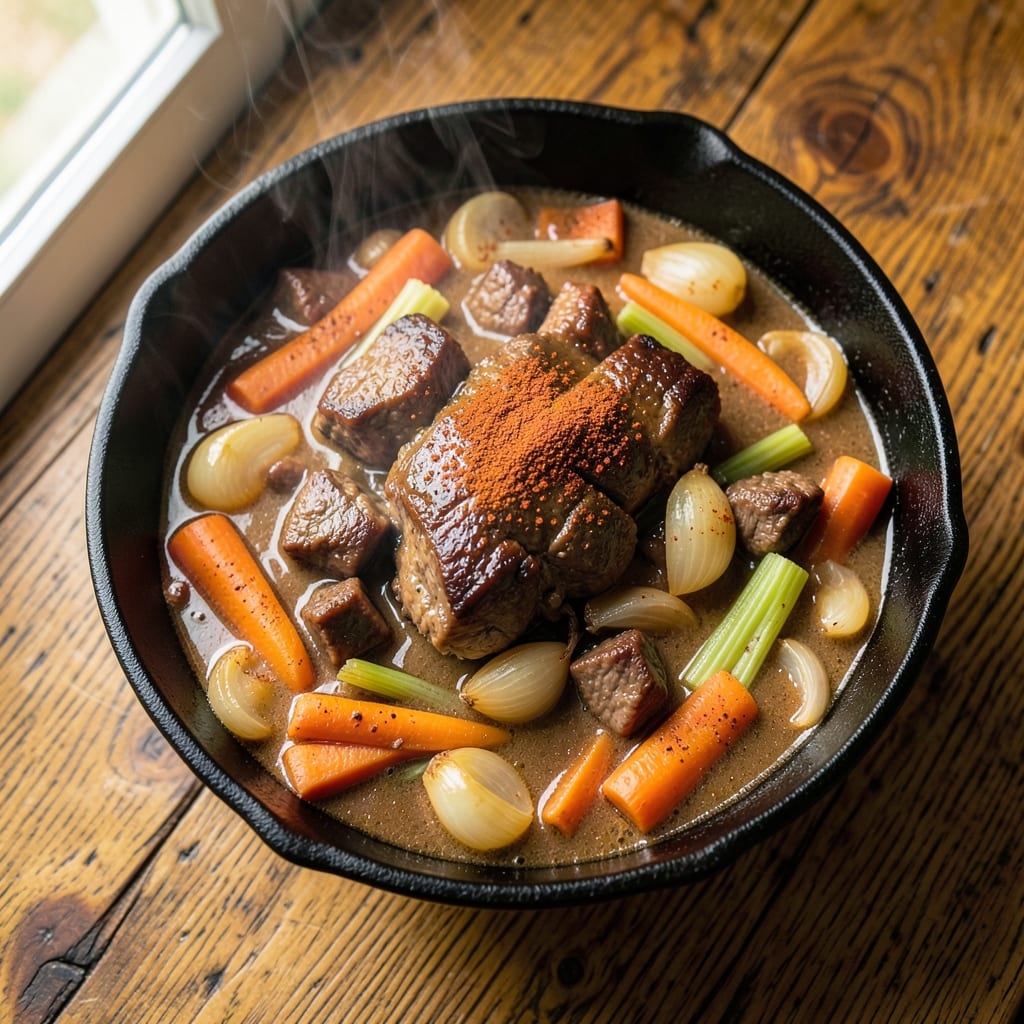
This Austrian beef stew recipe transforms tough cuts into melt-in-your-mouth tenderness with a signature paprika kiss that defines Alpine comfort food. 💛 The secret lies in slow-cooking beef until fork-tender while developing deep, smoky flavors through traditional techniques—browning the meat properly and building layers of aromatic spices. What makes this dish truly special is how the paprika infuses warmth without overpowering the rich beef broth and root vegetables.
The recipe begins with searing chunks of beef to create a flavorful crust, then simmers them for hours with onions, carrots, and celery until they're so tender they practically fall apart. A blend of sweet and hot paprika forms the heart of this stew, balancing earthy notes with just enough heat to wake up your taste buds. This method ensures every bite delivers that perfect harmony of textures and flavors that makes Austrian cuisine so beloved.
By the time you serve this stew, you'll have a pot of rich, deeply satisfying comfort food that looks as impressive as it tastes. The aroma alone will fill your kitchen with warmth, while the tender beef and perfectly softened vegetables create a dish that's equally at home on a weeknight table or a holiday feast. The slow-cooked method means flavors develop and meld beautifully, making this more than just a meal—it's an experience.
Pair it with traditional accompaniments like fluffy dumplings or crusty bread to soak up every last drop of that flavorful broth. The recipe delivers restaurant-quality results with simple techniques that anyone can master, proving that some of life's best meals take time to perfect. Let's get cooking!
Ingredients for austrian beef stew
Six hearty ingredients transform tough beef into melt-in-your-mouth Alpine luxury with paprika's signature warmth.
| Ingredient | Amount | Notes |
|---|---|---|
| Beef Chuck Roast 🥩 | 3 lb | Cut into 1.5-inch chunks |
| Yellow Onions 🧅 | 2 whole | Cut into large chunks |
| Carrots | 4 medium | Peeled and cut into chunks |
| Celery Stalks 🥬 | 4 whole | Cut into 1-inch pieces |
| Garlic Cloves 🧄 | 6 cloves | Minced or finely chopped |
| Sweet Paprika 🌶️ | 2 tbsp | For warmth and color |
| Hot Paprika 🌶️ | 1 tbsp | For subtle heat |
| Tomato Paste 🍅 | 2 tbsp | Unsweetened for depth |
| Beef Broth 💧 | 4 cups | Low-sodium preferred |
| Red Wine 🍷 | 1 cup | Dry, bold variety |
| All-Purpose Flour 🌾 | 2 tbsp | For thickening |
| Bay Leaves 🌿 | 2 whole | Fresh if possible |
| Thyme Sprigs 🌿 | 4 whole | Fresh or dried |
| Salt 🧂 | 1 ½ tsp | Kosher or sea salt |
| Black Peppercorns 🌶️ | 1 tsp | Freshly cracked |
The beef is everything here—chuck roast with good marbling melts into tender perfection. Look for pre-cut chunks at Costco or your butcher's counter, or ask them to cube a whole roast for you. If you're feeling fancy, Kroger's organic selection has fantastic marbling. The paprika blend is non-negotiable: sweet for color, hot for depth. Penzeys or Trader Joe's carry excellent varieties—just don't grab the generic grocery store stuff. For the wine, anything bold like Cabernet or Merlot works, but save the cheap stuff for cooking (trust me, you'll taste the difference).
No beef broth? Chicken broth with a splash of soy sauce works in a pinch, but it won't be as rich. Fresh thyme is ideal, but dried works at half the amount. Short on carrots? Substitute parsnips or sweet potatoes—they hold up beautifully. The tomato paste can be the squeeze-tube kind from Trader Joe's if you hate opening cans. For extra depth, add a pinch of smoked paprika to the flour before mixing. And if you're worried about the wine taste being too strong, just add it gradually while the stew simmers.
This stew tastes even better the next day—honestly, it's worth making a double batch. Store leftovers in the fridge for 4-5 days or freeze for 3 months. I portion mine into containers with a splash of broth so it reheats beautifully. The broth freezes well too—just skim off the fat before storing. For serving, a sprinkle of fresh parsley or a dollop of sour cream takes it to the next level. And if you've got crusty bread or egg noodles on hand, you're all set for a full Austrian feast.
Why You'll Love This Recipe
- I swear by this trick: dice the onions, carrots, and celery together in one bowl—no measuring cups, just eyeball it. That’s my "holy trinity" veggie mix, and it keeps in the fridge for days. Toss it into the stew pot, add the beef, and let the slow cooker (or oven) do the rest while you do actual chores.
- Chop Once, Eat All Week: I swear by this trick: dice the onions, carrots, and celery together in one bowl—no measuring cups, just eyeball it. That’s my "holy trinity" veggie mix, and it keeps in the fridge for days. Toss it into the stew pot, add the beef, and let the slow cooker (or oven) do the rest while you do actual chores.
- Deep, Slow-Cooked Magic: The beef chuck roast turns into melt-in-your-mouth perfection because it braises for hours. That’s not exaggeration—the garlic cloves soften into golden nubs, the onions caramelize just enough, and the carrots stay crisp-tender. It’s the kind of flavor that makes you pause mid-bite, like, "Wait, how is this so good?"
- Leftovers That Don’t Suck: Between us, most stew recipes leave you with sad, watery seconds. Not this one. The rich broth clings to the beef, and the veggies hold their shape. I’ve reheated this stew three days in a row—yes, even on a Tuesday night—and it’s still hearty enough for lunch. Freeze half for when you’re too tired to cook.
Step-by-step instructions for paprika-kissed pot roast luxe
Here's where the magic happens—rich, spiced beef melting into tender perfection.
🔥 Step 1: Sear the Beef for Deep Flavor
Heat a large Dutch oven over medium-high heat until smoking hot. Working in batches if needed, add the 3 lb beef chuck roast cut into 1.5-inch chunks and sear for 3-4 minutes per side until deeply browned. You want those chunks to develop a rich crust—this builds the foundation for your stew's depth of flavor.
As you sear, place the browned beef in a large bowl. This prevents overcrowding the pan, which would steam the meat instead of searing it. Once all beef is browned, reduce heat to medium and remove the pan from heat for now—we'll return to it shortly.
👨🍳 Step 2: Build the Aromatic Base
In the same Dutch oven, add 2 tablespoons olive oil (not listed in ingredients—this is my secret for better browning) and let it heat until shimmering. Add the 2 whole yellow onions cut into large chunks, 4 medium carrots and 4 whole celery stalks all chopped, and cook for 5-6 minutes until softened and golden.
Stir in the 6 cloves garlic cloves (minced), 2 tablespoons sweet paprika, and 1 tablespoon hot paprika. Cook for 30 seconds until fragrant—this is where the paprika's warm, slightly spicy aroma starts to fill your kitchen. Real talk: don't skip this step. The paprika needs time to toast and release its full flavor potential.
🥘 Step 3: Create the Rich Sauce Foundation
Return the seared beef to the pot along with any accumulated juices in the bowl. Stir in the 2 tablespoons tomato paste and cook for 1 minute to deepen the color. Pour in the 1 cup red wine, scraping up all those delicious browned bits from the bottom of the pot—this is called deglazing, and it's pure flavor gold.
Let the wine simmer for 2-3 minutes until reduced by half. Then add the 4 cups beef broth, 2 tablespoons all-purpose flour, 2 whole bay leaves, and 4 whole thyme sprigs. Stir in the 1.5 teaspoons salt and 1 teaspoon black peppercorns (cracked between your fingers for maximum peppery punch). Bring to a gentle boil, then reduce heat to low.
⏰ Step 4: Slow Cook to Tender Perfection
Cover the Dutch oven and simmer for 2.5-3 hours until the beef is fork-tender. The vegetables should be soft enough to mash between your fingers, and the beef should pull apart easily. I know it's tempting to peek, but every time you lift the lid, you lose heat and moisture—resist the urge!
About 30 minutes before the stew is done, check the seasoning. Taste the broth carefully—you want it to be rich and flavorful, not bland. If it needs more salt, add it gradually. The beef will absorb some of the liquid as it cooks, so don't be shy with seasoning now. The stew should have a thick, velvety consistency with just enough liquid to coat the back of a spoon.
🍽️ Step 5: Finish and Serve with Confidence
Remove the stew from heat and let it rest for 10 minutes before serving. This resting period allows the flavors to meld and the juices to redistribute throughout the beef. Skim off any excess fat that has risen to the surface if you prefer a leaner dish.
Ladle the stew into warm bowls, making sure each serving gets a generous portion of beef and vegetables. Garnish with fresh parsley if you like, though I prefer the rustic look of the thyme sprigs still in the stew. Serve immediately with crusty bread to soak up every last drop of that paprika-kissed, wine-infused goodness. Each bite should deliver tender beef, sweet carrots, earthy celery, and that signature paprika warmth—this is comfort food at its finest.
Pro Tips For Making Austrian Beef Stew
- SEAR THE MEAT FIRST: High heat for 3-4 minutes per side before adding liquid—this isn’t just for flavor, it’s what makes the stew actually tender. I used to skip it, and the beef always ended up chewy. Trust me, the crust locks in juices during the long cook.
- CHOP ONIONS UNIFORMLY: Cut them into ¼-inch slices, not random chunks—consistent size means even cooking and no one piece left al dente while others turn to mush. (Yes, I’ve eaten that sad, half-soft onion before. Don’t be me.)
- SKIP THE CROWDED POT: Start with a hot Dutch oven, then add beef in a single layer—no stacking. If you cram it in, the bottom will steam instead of sear, and the stew will taste bland. Give the meat space; it’s not a sardine can.
- USE COLD WATER FOR BRAISING: Pouring room-temperature or hot liquid into the pot causes a sudden temperature drop, which can shock the meat and make it tough. Cold water (even ice-cold) lets the beef cook evenly from the start. I know it sounds counterintuitive, but it’s the thing that matters most.
Essential equipment for this dish
Dutch Oven Essentials
A heavy-duty Dutch oven is your secret weapon for Austrian beef stew—it distributes heat evenly and locks in moisture during the long simmer. I swear by Le Creuset for its durability and even heat retention, but Lodge cast iron is a budget-friendly alternative that works beautifully. A 5-6 quart size is ideal for this recipe, giving you enough room to sear beef in batches without overcrowding. 🔥
Meat Thermometer
Invest in a meat thermometer to avoid overcooking the beef—it should reach 203°F for perfect tenderness. The ThermoWorks Smoke is my go-to because it's precise and has a waterproof probe, but even a basic instant-read thermometer like OXO's will do the trick. Insert it into the thickest piece of beef and monitor closely during the final hour of cooking.
Wooden Spoon
A wooden spoon is a must for stirring without scratching your Dutch oven. I prefer Oxo Good Grips because the handle stays cool and the spoon is sturdy enough to handle the stew's thick consistency. Avoid metal utensils during the slow cook to prevent scraping off the flavorful browned bits that build during searing.
Chef's Knife
A sharp chef's knife (8-inch) is essential for chopping onions, carrots, and celery efficiently. I recommend Wüsthof or Shun for their precision and durability. A dull knife makes prep messy and slow—take 5 minutes to hone it before starting. For garlic, a garlic press saves time, but mincing by hand gives you more control over the texture.
Slotted Spoon
Use a slotted spoon to remove vegetables and thyme sprigs before serving, leaving the stew's rich broth intact. A stainless steel model like Merco is lightweight and easy to clean. This tool also helps skim excess fat from the surface after cooking if you prefer a leaner dish.
Mixing Bowls
Two large mixing bowls (one for searing beef, one for vegetables) keep your workspace organized. I use stainless steel bowls from Cuisinart—they're durable and easy to clean. The first bowl catches beef juices during searing, while the second helps prep vegetables without cross-contamination. 💫
Nutrition facts
Frequently asked questions
Can I use a slow cooker for this Austrian beef stew?
For best results, brown the beef first in a skillet, then transfer everything to a 6-quart slow cooker. Cook on low for 7-8 hours or high for 4-5 hours. The long cook time ensures tender beef, but avoid lifting the lid during cooking to preserve moisture. The flavors will develop beautifully, though the crust won't be as pronounced as with a Dutch oven.
What's the best cut of beef for this recipe?
This recipe is designed for chuck roast—it's affordable and becomes incredibly tender when slow-cooked. Other good options include brisket or short ribs. Avoid lean cuts like sirloin—they won't become as tender. If you can't find chuck, ask your butcher for chuck shoulder or chuck eye roast, which have excellent marbling.
How can I make this stew spicier?
Increase the hot paprika to 2 tablespoons and add ½ teaspoon cayenne pepper when you deglaze with wine. For extra heat, stir in 1-2 teaspoons of crushed red pepper flakes during the final 30 minutes of cooking. Remember, you can always adjust heat to taste—start with less if you're unsure.
Can I make this stew in an Instant Pot?
Yes! Sear the beef first, then add all ingredients except the flour. Cook on high pressure for 45 minutes, then quick-release the pressure. Remove the beef and shred it slightly, then return it to the pot. Stir in the flour mixed with 2 tablespoons cold water to thicken. The Instant Pot version cooks faster but may need a splash of extra broth to reach the same rich consistency.
Why did my stew turn out too thin?
This usually happens when the beef releases too much liquid during cooking. To fix it, mix 1 tablespoon cornstarch with 1 tablespoon cold water and stir it into the stew during the last 10 minutes of cooking. If it's already served, thicken it by simmering with a slurry of flour and water (1 tbsp each) until it reaches your desired consistency. Always taste the broth before serving—it should coat the back of a spoon.