
Main Courses
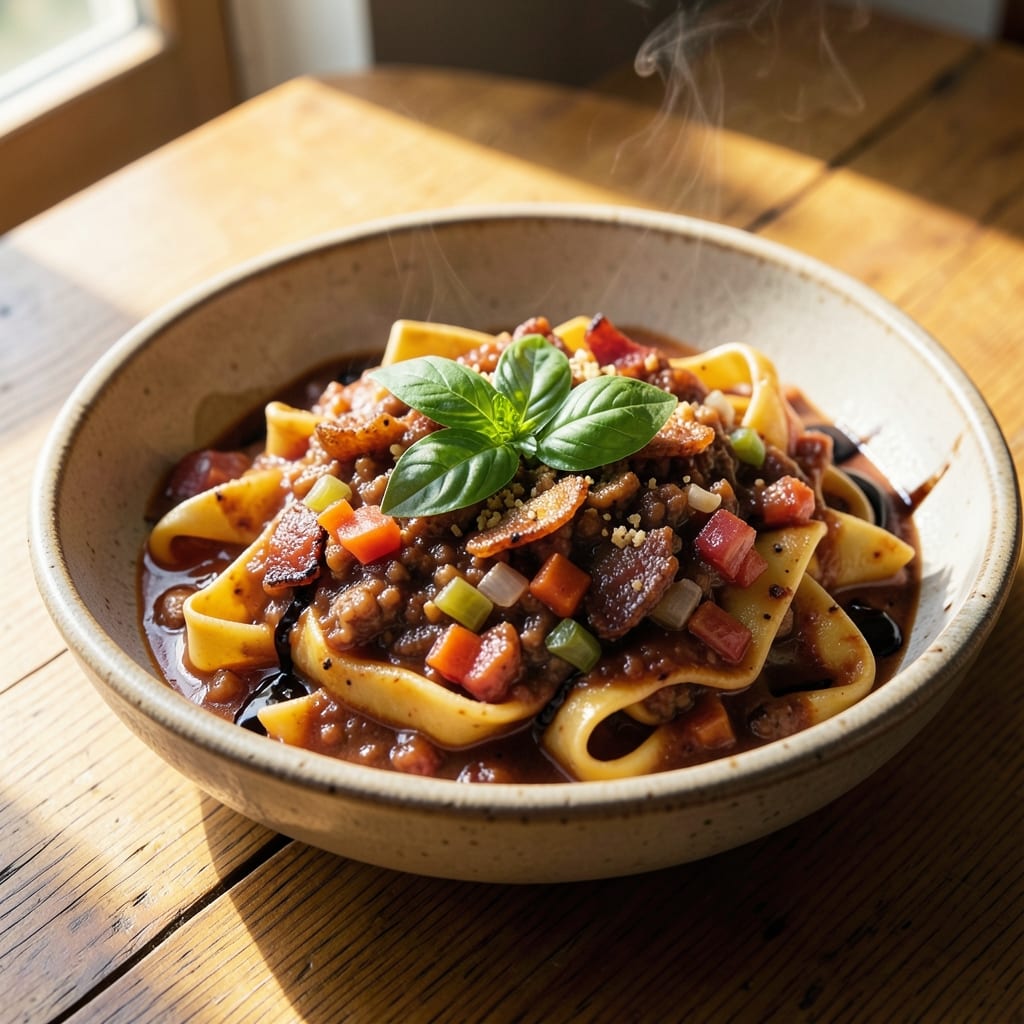
This authentic beef bolognese recipe brings the rich, slow-simmered flavors of Emilia-Romagna straight to your kitchen. 🔥 The secret lies in a long, gentle cook that transforms simple ingredients—ground beef, tomatoes, wine, and aromatic herbs—into a deeply flavorful sauce with layers of umami and depth. Unlike its quicker counterparts, this version stays true to tradition, where patience is key to developing that signature complexity. What sets this recipe apart is the technique: browning the beef first to build deep flavor, then simmering for hours to meld the ingredients into a velvety, hearty sauce. The addition of pancetta adds a smoky richness, while milk (yes, milk!) tenderizes the meat and balances the acidity of the tomatoes. This isn’t just a sauce—it’s a labor of love that rewards you with restaurant-quality results at home. By the time you’re done, you’ll have a slow-simmered bolognese so rich and aromatic it’ll have everyone asking for seconds. The texture is unctuous, the flavors balanced between sweet, savory, and slightly tangy, with just enough acidity to keep it vibrant. Serve it over freshly made tagliatelle or creamy risotto for the full Italian experience. The best part? This recipe scales beautifully, making it perfect for family dinners or gatherings. Let’s get cooking—your kitchen will thank you for the aroma alone.
Ingredients for authentic beef bolognese
Simple pantry staples transformed into restaurant-quality bolognese through slow simmering and patient love.
| Ingredient | Amount | Notes |
|---|---|---|
| Ground Beef 🥩 | 1 ½ lb | 80/20 fat ratio preferred |
| Pancetta 🥓 | ½ cup | Diced, not cured bacon |
| Onion 🧅 | 1 whole | Yellow or red, finely chopped |
| Carrot 🥕 | 1 whole | Peeled, finely chopped |
| Celery 🥬 | 1 whole | Stalk, finely chopped |
| Garlic Cloves 🧄 | 4 cloves | Peeled, minced |
| Canned San Marzano Tomatoes 🍅 | 2 cups | Crushed by hand |
| Whole Milk 🥛 | ½ cup | Full-fat for richness |
| Dry Red Wine 🍷 | ½ cup | Bold Cabernet or Chianti |
| Tomato Paste 🍅 | 2 tbsp | Squeeze tube preferred |
| Fresh Rosemary 🌿 | ¼ cup | Chopped, stems removed |
| Fresh Thyme 🌿 | ¼ cup | Leaves only, chopped |
| Bay Leaves 🌿 | 2 whole | Dried, removed before serving |
| Kosher Salt 🧂 | 1 ½ tsp | Diamond Crystal preferred |
| Freshly Ground Black Pepper 🌶️ | ½ tsp | Coarsely cracked |
The ground beef is non-negotiable—80/20 fat ratio gives you that melt-in-your-mouth texture. Costco or Whole Foods sell it pre-ground, but if you're buying a whole chuck roast, ask the butcher to grind it fresh. Pancetta adds that smoky depth (don't confuse it with bacon—it's leaner and more flavorful). For the aromatics, Italian markets often sell pre-chopped soffritto mixes, but chopping your own onion, carrot, and celery gives you that professional touch. Look for San Marzano tomatoes if you can find them—they're sweeter and less acidic than regular canned tomatoes.
No pancetta? Diced bacon works in a pinch, though it'll be saltier. Swap the red wine for beef broth plus a splash of balsamic vinegar if you're avoiding alcohol. Fresh herbs are ideal, but dried thyme at one-third the amount gets you close. The milk might seem odd, but it tenderizes the meat and balances the acidity—don't skip it. For tomato paste, those little squeeze tubes at Trader Joe's are perfect—they're concentrated and last forever. If you're making this ahead, freeze the sauce without the milk (add it back when reheating).
This sauce tastes even better the next day—plan ahead. Store in an airtight container in the fridge for up to 5 days or freeze for 3 months. I like to portion it into ziplock bags for easy reheating. When reheating, add a splash of water or broth to prevent it from thickening too much. The milk will separate slightly when cold—just stir it back in before serving. Leftovers make amazing sandwiches or pasta the next day.
Why You'll Love This Recipe
- No Chopping Chaos: I swear by this recipe because you can literally throw those onions, carrots, and celery into a food processor—yes, the whole root end and all—then pulse until tiny. That’s it. No crying over onions, no measuring cups of diced bits. The pancetta renders its own fat, so you don’t even need oil.
- Umami Bomb: Between the pancetta’s salty crisp and the slow caramelization of the beef, this sauce has layers. Honestly, the moment I taste that first spoonful of the reduced tomato base with the pancetta crumbles dissolved in it, I know dinner’s already won.
- Leftovers That Lie: I make this on Sunday, and by Wednesday, my family’s still begging for seconds. The flavor only deepens overnight, so those leftover portions? They’re basically a free upgrade. Plus, it reheats like a dream—no dry, sad pasta here.
- Budget-Friendly Luxury: Ground beef and pantry staples stretch forever, but the pancetta makes it feel fancy. I’ll be real: I buy it in bulk and freeze it, so every batch costs less than takeout. And since it’s just meat, veggies, and tomatoes, I can adjust portions without guilt.
Step-by-step instructions for authentic beef Bolognese
Here's how to build deep, rich flavor layer by layer—just like Nonna would make.
🍳 Step 1: Build the Flavor Base with Pancetta and Vegetables
Heat a heavy Dutch oven over medium-low heat and add the 0.5 cup diced pancetta. Cook for 5-6 minutes until the fat renders and the pancetta becomes golden brown and crispy. This fat is liquid gold—don't drain it.
Add the finely chopped onion, carrot, and celery (the classic "soffritto") and cook for 8-10 minutes until the vegetables soften and their edges turn translucent. Stir occasionally to prevent burning. This slow cooking develops their natural sweetness, which forms the backbone of your sauce.
Add the 4 minced garlic cloves and cook for just 30 seconds—garlic burns faster than you think. You'll know it's perfect when the kitchen fills with that irresistible aroma. Remove from heat temporarily while you prep the next ingredients.
🍳 Step 2: Brown the Beef and Toast the Herbs
Increase heat to medium-high and add the 1.5 lb ground beef, breaking it up with a wooden spoon. Cook for 5-6 minutes until the beef loses its raw color and develops a deep brown crust. This step is crucial—it creates the meaty depth that defines Bolognese.
Stir in the 2 tbsp tomato paste and cook for 2 minutes until it darkens slightly. This paste will deepen your sauce's color and intensify its flavor. Add the 0.25 cup chopped rosemary and 0.25 cup chopped thyme, along with the 2 whole bay leaves. Toast the herbs for 30 seconds to release their essential oils—this is where the authentic aroma comes from.
🍳 Step 3: Deglaze and Simmer with Wine and Tomatoes
Pour in the 0.5 cup dry red wine and scrape up all those browned bits from the bottom of the pot—this is called deglazing, and it captures all that concentrated flavor. Let the wine simmer for 3-4 minutes until it reduces by half and the alcohol cooks off.
Add the 2 cups crushed San Marzano tomatoes and 1.5 tsp kosher salt. Stir well to combine, then add the 0.5 cup whole milk. The milk might seem odd, but it balances the acidity and creates that signature silky texture. Bring the mixture to a gentle simmer.
⏰ Step 4: Slow-Simmer for Deep Umami Development
Reduce heat to low and let the Bolognese simmer uncovered for 2-2.5 hours. This isn't the time to rush—patience is key. Stir occasionally to prevent sticking, and add ½ cup water if the sauce gets too thick. You're looking for a sauce that coats the back of a spoon with a velvety consistency.
Taste and adjust seasoning with freshly ground black pepper—this is where you'll notice the umami depth developing. The longer it simmers, the more complex the flavors become. Remove the bay leaves before serving, as they're too tough to eat.
🍽️ Step 5: Rest and Serve with Pasta
Let the Bolognese rest for 15-20 minutes off the heat. This resting period allows the flavors to meld completely and the sauce to thicken slightly. The result should be rich, slightly glossy, and deeply flavorful—each spoonful should sing with umami.
Serve over freshly cooked al dente pasta (tagliatelle or pappardelle work perfectly). The sauce should cling beautifully to each strand, creating that iconic Bolognese experience. A sprinkle of fresh parsley adds a bright finish that cuts through the richness.
Pro Tips For Making Authentic Beef Bolognese
- CRISPY PANCETTA FIRST: Cook the pancetta until it’s golden brown and crisp—not just pink. That’s where the flavor lives, and skipping this step means your bolognese will taste like it’s missing something. (I used to rush it, and the dish always felt flat.)
- DICE THE SOFFRITTO SMALL: Chop the onion, carrot, and celery into tiny, even pieces—no bigger than 1/8-inch cubes. This ensures they cook down completely without turning mushy, giving you a smooth, rich base instead of a chunky one. (Yes, it takes longer, but it’s worth it.)
- LOW AND SLOW AFTER BROWNING: Once the beef is browned, drop the heat to medium-low and let it simmer uncovered. High heat later will make the sauce tough and greasy—this is where patience pays off. (I learned this after one disastrous, rubbery batch.)
- SALT THE MEAT BEFORE COOKING: Season the ground beef generously with salt before browning—it keeps it juicy and flavors every bite. Pancetta is salty enough, but the beef needs its own boost. (Trust me, the difference is noticeable.)
Flavor customization for authentic beef bolognese
Classic Umami Boost
For a deeper, meatier flavor, add 1 tbsp soy sauce or 1 tsp fish sauce when you deglaze with wine. These ingredients amplify the umami without overpowering the delicate balance. I swear by Kikkoman soy sauce for its clean, rich profile—just a splash makes a noticeable difference. 💛
Another trick is to stir in 1 tsp Parmesan rind during the final 30 minutes of simmering. It infuses the sauce with nutty depth that’s impossible to achieve any other way. Save the rind from your next block of Parmesan—it’s free and magical.
Herb Variations
Swap out the rosemary and thyme for fresh sage and oregano for a Tuscan twist. Use 1 tbsp chopped sage leaves and 1 tsp dried oregano instead. The sage adds a peppery brightness that pairs beautifully with the richness of the beef. I love this version when serving with creamy polenta.
For a Mediterranean touch, add ½ tsp ground cinnamon and ¼ tsp nutmeg when you toast the herbs. These warm spices complement the tomatoes and wine beautifully, adding an unexpected but delightful complexity. Trust me, it works.
Spice Level Adjustments
Add ½ tsp red pepper flakes when you deglaze with wine for a subtle kick. For more heat, stir in 1 tsp hot honey during the final 10 minutes of simmering. The sweetness balances the spice perfectly, creating a sauce that’s both bold and nuanced.
If you prefer smoky heat, swap the red pepper flakes for ½ tsp smoked paprika and add it with the tomato paste. The smokiness enhances the pancetta’s flavor and gives the sauce a depth that’s hard to resist. I’ve been known to double this amount for extra smokiness.
Vegetable Swaps
Replace half the ground beef with finely chopped mushrooms for a vegetarian-friendly version. Use 8 oz cremini mushrooms sautéed until golden before adding to the pot. They absorb the flavors beautifully while adding an earthy depth that mimics meat.
For a sweeter profile, add ½ cup diced fennel along with the onion, carrot, and celery. The licorice-like sweetness balances the acidity of the tomatoes and adds a refreshing twist. It’s a game-changer for those who love bold, aromatic flavors.
Wine Alternatives
If red wine isn’t your thing, use ½ cup beef broth plus 1 tbsp balsamic vinegar for the same depth of flavor. The vinegar adds acidity to mimic the wine’s tang, while the broth keeps the sauce rich and savory. It’s a non-alcoholic hack that works surprisingly well.
For a bold, fruity twist, swap the red wine for ½ cup dry white wine** like Pinot Grigio. The acidity brightens the sauce, and the citrus notes pair beautifully with the tomatoes. It’s a lighter but equally delicious variation that’s perfect for warmer weather.
Nutrition facts
Frequently asked questions
Why does authentic Bolognese use milk in the sauce?
The milk might seem unusual, but it tenderizes the beef and balances the acidity of the tomatoes, creating that signature silky texture. It also helps break down the proteins for a smoother sauce. Don't skip it—it's essential for authentic flavor!
Can I make this Bolognese in a slow cooker?
Yes! Brown the beef and pancetta in a skillet first, then transfer everything to your slow cooker. Cook on low for 6-7 hours instead of simmering on the stove. Add water as needed to keep it from getting too thick. The slow cooker method is perfect for hands-off cooking!
What's the difference between Bolognese and meat sauce?
Authentic Bolognese is a slow-simmered ragù with finely ground beef, wine, and milk for depth, while meat sauce often uses larger meat chunks, more tomato sauce, and less wine. The key difference is the texture—Bolognese is velvety and rich, while meat sauce tends to be chunkier and tomato-forward.
How do I fix Bolognese that's too thick?
Add ½ cup water or beef broth and simmer for 5-10 minutes to thin it out. If it's still too thick, try adding a splash of milk or cream. Stir well and let it simmer gently—don't rush it! The sauce should coat the back of a spoon but still be pourable.
What's the best pasta to serve with Bolognese?
Fresh egg pasta like tagliatelle or pappardelle works best—the wide noodles hold the rich sauce beautifully. For a rustic touch, try fettuccine or even lasagna noodles. Avoid thin spaghetti, as the sauce will slide right off!