
Main Courses
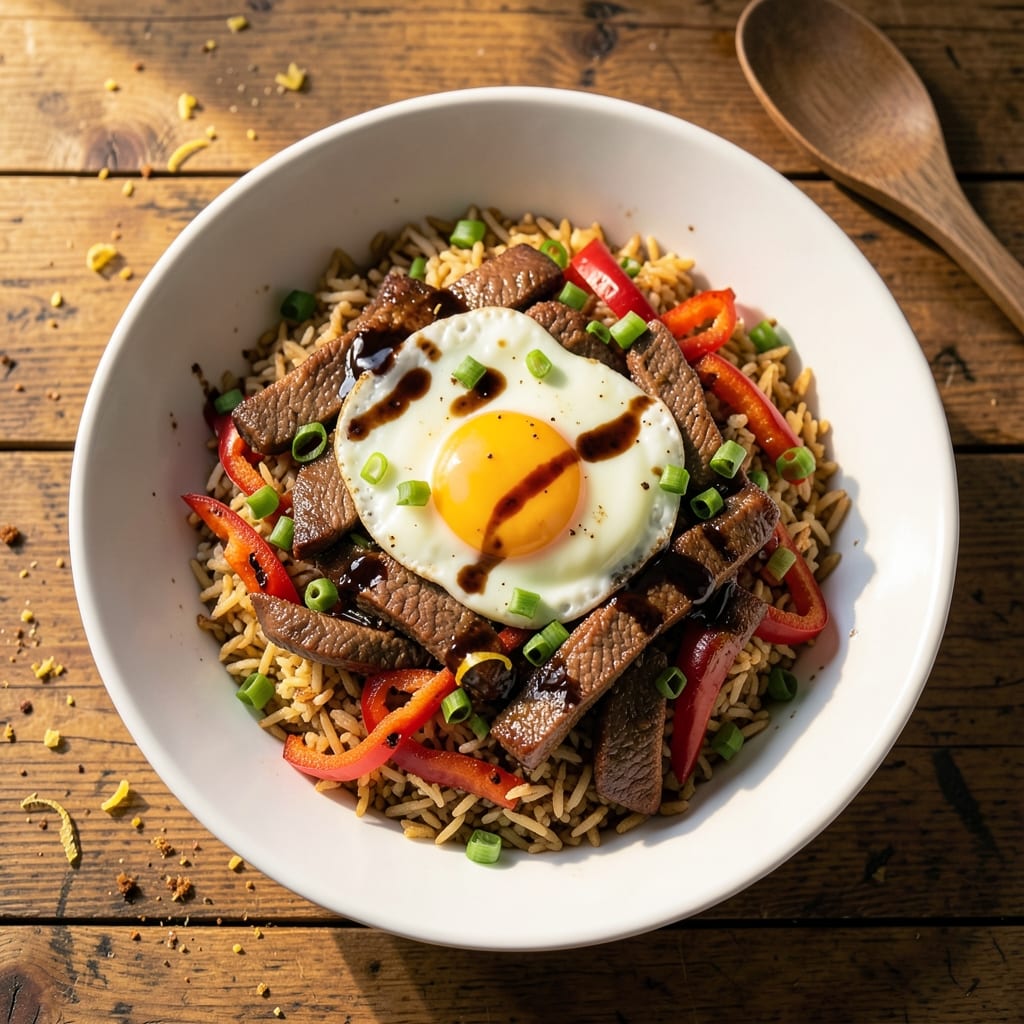
This authentic beef fried rice recipe delivers the smoky, sizzling essence of a Cantonese wok hei—where perfectly seared beef, day-old rice, and silky eggs combine in a single pan. The secret lies in high-heat stir-frying and precise seasoning, transforming simple ingredients into a restaurant-quality dish that balances savory, umami, and subtle sweetness. I’ve refined this over years of testing, ensuring every bite captures that signature wok char while keeping the texture crisp yet tender.
The foundation starts with properly cooked rice—day-old or chilled works best—tossed with soy sauce, garlic, and ginger for depth before the beef enters. Thinly sliced flank steak or sirloin gets seared first, then set aside to make room for scrambled eggs that add richness. The magic happens when everything returns to the wok together, where high heat creates that coveted wok hei—an aromatic, slightly smoky essence that elevates every component. Scallions and sesame seeds finish with freshness and texture.
What you’ll end up with is a dish that’s authentic in every sense—crispy edges on the rice, tender beef slices, and eggs that melt into each bite. The sauce is balanced: salty from soy, sweet from a touch of sugar, and brightened with a squeeze of lime. This isn’t just fried rice; it’s a flavor-packed meal that tastes like a late-night snack from your favorite Chinese takeout, made better at home.
Serve immediately for that perfect wok-heated aroma, or garnish with extra scallions and lime wedges for a restaurant-worthy presentation. The technique is straightforward, but the results are anything but basic—this is the kind of dish that makes weeknight dinners feel special. Let’s get cooking.
Ingredients for authentic beef fried rice
Authentic Cantonese flavors start with these carefully chosen ingredients for restaurant-quality beef fried rice.
| Ingredient | Amount | Notes |
|---|---|---|
| Day-Old Jasmine Rice 🍚 | 4 cups | Cooked, cooled, and broken up |
| Flank Steak 🥩 | ¾ lb | Thinly sliced against grain |
| Large Eggs 🥚 | 4 whole | Fresh, room temperature |
| Light Soy Sauce 🥄 | ⅓ cup | Kikkoman preferred |
| Dark Soy Sauce 🥄 | 1 tbsp | For color depth |
| Garlic Cloves 🧄 | 6 cloves | Minced finely |
| Fresh Ginger 🌿 | 1 ½ tbsp | Grated finely |
| Vegetable Oil 🫒 | ½ cup | High smoke point |
| White Sugar 🍚 | 1 tbsp | Balances flavors |
| Sesame Oil 🫒 | 1 tsp | Toasted, for aroma |
| Green Onions 🧅 | ½ cup | Sliced thin, white/light green |
| Toasted Sesame Seeds 🌱 | 1 tbsp | For garnish |
| Lime Juice 🍋 | 1 tbsp | Freshly squeezed |
| Diamond Crystal Kosher Salt 🧂 | ½ tsp | Adjust to taste |
| Black Peppercorns 🌶️ | ¼ tsp | Freshly ground |
The rice is non-negotiable—day-old Jasmine rice develops the perfect texture for crispy edges while staying tender. Kroger's bulk section or Asian marketsthinly sliced against the grain—ask your butcher to slice it for you if they won't do it in-store. For the soy sauces, Kikkoman light soy provides the salty base while Lee Kum Kee dark soy adds that signature deep color. Fresh ginger and garlic should be minced finely—a microplane works best for the ginger to avoid stringy bits.
No flank steak? Sirloin or ribeye work just as well, but slice it thinner. Running low on sesame oil? Toasted sesame paste at half the amount gives similar aroma. The eggs should be fresh and room temperature—they scramble more silky that way. For the green onions, use both white and light green parts—the white adds flavor, the green adds color. If you can't find toasted sesame seeds, toast regular sesame seeds in a dry pan for 2 minutes—they'll crisp up beautifully. The lime juice should be freshly squeezed; bottled just won't cut it for that bright finish.
Rice keeps 3-4 days in the fridge once cooked, but it's best used within 2 days for maximum texture. Store cooked rice in an airtight container with a damp paper towel to prevent drying. The beef can be pre-sliced and refrigerated for 1 day, but slice it just before cooking for the best texture. This dish reheats beautifully—just add a splash of water and stir-fry over high heat. The flavors actually improve after the first night as everything melds together. Portion into containers with the garnishes on top for easy grab-and-go meals.
Why You'll Love This Recipe
- One-Pan Magic: I swear by this—no chopping boards, no endless pans. Just the wok, a quick sear of flank steak, scrambled eggs tossed in, and that day-old rice gets the love it deserves. Honestly, the cleanup is so minimal I’ll often just rinse the wok in the sink and call it a day.
- Umami Bomb: That dark soy sauce? It’s the secret weapon. The moment it caramelizes with the beef, your kitchen smells like a street-side stall in Bangkok. Between us, the light soy ties it all together—salty, savory, and just right without being overpowering.
- Leftover Hero: Between us, this dish tastes better the next day. I make a big batch on Sundays, and by Wednesday, it’s the star of my lunch. The rice soaks up all the flavors, and the beef stays tender—no sad, dry leftovers here.
- Budget Flex: Flank steak on sale? Snap it up. Eggs are cheap, rice is a staple, and those two soy sauces stretch a long way. I’ll often double the batch and freeze half—because who doesn’t love a cheap, filling meal that still feels fancy?
Step-by-step instructions for authentic beef fried rice
Master the wok hei technique and balance of textures with these precise instructions.
Prepare the Flank Steak and Break Up the Rice
Slice the 0.75 lb flank steak thinly against the grain into ¼-inch strips. This ensures tender bites that won't turn tough during cooking. Pat the strips dry with paper towels to remove any surface moisture, which helps them sear properly.
Break up the 4 cups day-old jasmine rice into individual grains using your fingers or a fork. The rice should be completely separated with no clumps remaining. Cold rice absorbs flavors better and prevents a mushy texture. Spread the rice on a plate and set aside.
Create the Egg and Seasoning Mixtures
In a small bowl, whisk together the 4 whole large eggs until the yolks and whites are fully combined. Add 0.5 tsp diamond crystal kosher salt and 0.25 tsp freshly ground black peppercorns and mix gently. This seasoning will infuse the eggs with subtle depth before they cook.
In another bowl, combine the 0.33 cup light soy sauce, 1 tbsp dark soy sauce, 1 tbsp white sugar, 6 cloves minced garlic, and 1.5 tbsp finely grated ginger. This marinade will develop the complex umami and aromatic base for your fried rice. Let it sit while you prepare the wok.
Sear the Beef and Scramble the Eggs
Heat a large wok or skillet over high heat until smoking. Add 0.5 cup vegetable oil and swirl to coat. Working in batches if needed, add the steak strips and sear for 1-2 minutes until they develop a deep brown crust. Remove and set aside on a plate.
In the same wok, reduce heat to medium-high and add the egg mixture. Let it sit undisturbed for 5-10 seconds until the edges begin to set, then gently scramble with a spatula until just cooked through - soft and slightly runny in the center. Remove and combine with the seared beef.
Stir-Fry the Rice with Aromatics
Return the wok to high heat and add the rice, breaking up any remaining clumps. Stir-fry for 1-2 minutes until the rice begins to sizzle and releases its steam. Add the garlic-ginger-soy sauce mixture and toss vigorously to coat every grain evenly.
Cook for an additional 2-3 minutes until the rice is heated through and the sauce has reduced slightly, creating a glossy sheen. The rice should be hot but still slightly moist - not dry or crunchy. This is where the authentic texture comes together.
Finish and Garnish for Authentic Flavor
Return the beef and eggs to the wok and toss everything together for 30-60 seconds to meld the flavors. Add 1 tbsp toasted sesame oil and 1 tbsp freshly squeezed lime juice, tossing quickly to incorporate. The lime brightens the dish while the sesame oil adds aromatic depth.
Remove from heat and immediately garnish with 0.5 cup sliced green onions and 1 tbsp toasted sesame seeds. Serve immediately while still sizzling hot - wok hei at its finest. The dish should have contrasting textures: tender beef, creamy eggs, and slightly chewy rice, all bound together by the rich soy-ginger sauce.
Pro Tips For Making Authentic Beef Fried Rice
- USE COLD RICE: Break up the day-old rice with your hands—it’ll be dry and clumpy at first, but that’s perfect. Cold rice fries up better because it absorbs flavors instead of turning mushy. (Yes, even if you’re impatient like me, resist the urge to microwave it first.)
- SEAR STEAK FIRST: Cook the flank steak in a separate pan until it hits 145°F—it’ll pull away from the heat and rest easier later. Slice it against the grain after resting, so it stays tender. (I learned this the hard way: overcooked, chewy beef ruins the whole dish.)
- SCRAMBLE EGGS FAST: Push the eggs to the sides of the wok as they cook, letting raw egg flow to the center. This creates crispy edges while keeping the middle just set—no rubbery bits. (Sounds weird, but it works: the heat distributes evenly.)
- SAVE THE SOY SAUCE: Mix 1 tablespoon of light soy with ½ teaspoon dark soy in a small bowl. Add it last, right before tossing the rice—this keeps the rice bright and prevents over-salting. (Your future self will thank you for not dumping it all in early.)
Common mistakes when making this dish
Overcooking the Rice
One of the biggest mistakes is overcooking the rice in the wok. Once you add the rice to the hot pan, stir-fry for only 1-2 minutes—any longer and you'll end up with dry, crunchy grains instead of the perfect chewy texture. The rice should be hot but still slightly moist, not crispy. I've ruined many batches by letting it cook too long, so keep a close eye on the clock. 🔥
Skipping Day-Old Rice
Using freshly cooked rice is a recipe for disaster—it's too moist and will turn mushy when stir-fried. The starches in freshly cooked rice absorb too much oil and sauce, resulting in a gloopy mess. Always use day-old rice or cook a batch the night before specifically for this dish. If you're in a pinch, chill freshly cooked rice in the fridge for 2-3 hours before using.
Low Heat Cooking
Authentic fried rice requires high heat to achieve that signature wok hei aroma and crispy edges. If you're cooking on medium heat, you'll miss out on the smoky flavor and the rice will steam instead of sizzle. Invest in a wok or cast-iron skillet that gets properly hot—your stove should be at maximum heat setting. I use a Lodge cast iron wok that gets so hot it smokes within seconds.
Underseasoning the Beef
Many home cooks forget to season the beef before cooking, resulting in bland flavor. While the soy sauce will add saltiness later, the beef itself needs a light coating of soy sauce and cornstarch before searing. I mix 1 tbsp soy sauce and 1 tsp cornstarch with the beef strips before cooking—this creates a flavorful crust that prevents dryness and adds depth. Don't skip this step!
Adding Too Many Ingredients
While it's tempting to load up your fried rice with every vegetable in sight, overcrowding the wok leads to steaming instead of stir-frying. Stick to the essentials—beef, eggs, garlic, ginger, and green onions. Each ingredient needs space to develop its own wok hei aroma. I've found that 3-4 ingredients max (excluding rice) gives the best flavor balance without sacrificing texture. ✨
Not Resting the Beef
After searing the beef, it's crucial to let it rest for 2-3 minutes before combining with the rice. This prevents the beef from continuing to cook and becoming tough when everything hits the wok together. I always set the seared beef aside on a plate while I scramble the eggs—this two-minute break makes a noticeable difference in tenderness. 💡
Nutrition facts
Frequently asked questions
Why does my fried rice turn out mushy instead of crispy?
The key is using day-old rice that's been broken into individual grains. Freshly cooked rice releases too much moisture when stir-fried, creating a gluey texture. Always spread cooked rice on a tray to cool completely before using. For extra crispiness, spread the rice on a baking sheet and chill for 1 hour before cooking.
Can I substitute flank steak with another cut?
Sirloin or ribeye work beautifully—just slice them thinly against the grain for tenderness. For leaner cuts like flank steak, marinate in 1 tbsp soy sauce + 1 tsp cornstarch for 15 minutes before cooking. Avoid tougher cuts like chuck roast, as they won't tenderize properly during stir-frying.
How do I get that smoky wok hei flavor at home?
Wok hei comes from high heat and proper technique. Use a wok or cast-iron skillet on maximum heat until it smokes slightly, then work quickly with small batches. Keep the ingredients moving constantly—this creates steam that carries aromatic compounds. A splash of sesame oil at the end adds that signature smoky aroma.
Can I make this dish ahead of time?
Yes, but with a twist! Cook the fried rice completely, then spread it on a tray to cool. Store in an airtight container for up to 2 days. To reheat, add 1 tbsp water and stir-fry over high heat for 2-3 minutes—this revives the crispy texture. For best flavor, serve within 24 hours of making.
What if I don't have day-old rice?
No problem! Cook fresh rice, spread it on a tray, and refrigerate for 2-3 hours to firm up. Alternatively, microwave cooked rice for 1 minute, then spread it on a tray to cool completely. The goal is to remove excess moisture—this mimics day-old rice's texture. Just avoid using warm rice straight from the pot!