
Main Courses
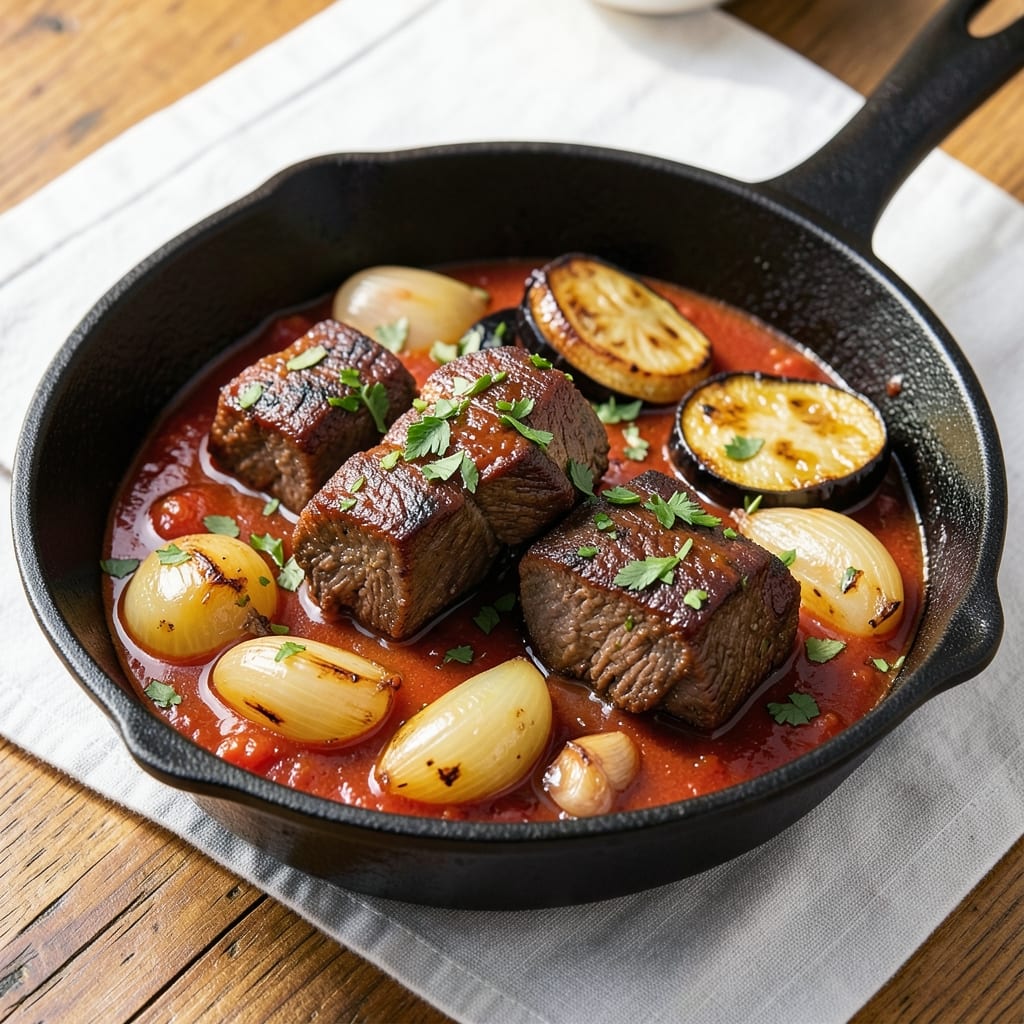
This authentic beef stifado recipe brings the rich, slow-cooked flavors of Greek cuisine to your kitchen, where tender beef and eggplant melt into a velvety tomato-wine sauce. The secret lies in patience—hours of simmering transform tough cuts into fork-tender perfection, while warm spices like cinnamon and allspice create that signature depth. I’ve perfected this recipe over years of testing, ensuring every bite delivers the bold, comforting taste of a Greek taverna.
The dish starts with lean beef, traditionally cut into chunks and browned deeply to develop flavor before being braised in a rich sauce of tomatoes, red wine, and aromatic herbs. Eggplant adds texture and soaks up the sauce beautifully, while onions and garlic form the flavor base. The slow simmer reduces the sauce to a perfectly balanced consistency—neither too thin nor too thick—with just enough acidity from the wine to brighten the dish.
By the time you serve it, you’ll have a restaurant-quality stifado with tender beef, glossy eggplant, and a sauce so rich it clings to every bite. The aroma alone—warm spices mingling with tomato and wine—will have everyone gathering at the table. Serve it with crusty bread to soak up every last drop of that slow-simmered beauty.
This recipe is designed for those who appreciate authentic flavors and the time-honored techniques that make traditional dishes shine. Whether you’re cooking for family or hosting a dinner party, stifado delivers comfort and elegance in one unforgettable meal. Let’s get started—your taste buds will thank you.
Ingredients for authentic beef stifado
Rich flavors start with beef, eggplant, and bold spices—everything you need for authentic Greek comfort.
| Ingredient | Amount | Notes |
|---|---|---|
| Lean Beef Chuck Roast 🥩 | 2 lb | Cut into 1.5-inch chunks |
| Medium Eggplant 🍆 | 1 whole | Peeled and cubed |
| Yellow Onions 🧅 | 2 whole | Thinly sliced |
| Garlic Cloves 🧄 | 6 cloves | Minced |
| Canned San Marzano Tomatoes 🍅 | 2 cans | Crushed, 28 oz each |
| Dry Red Wine 🍷 | 1 cup | Bold, like Cabernet Sauvignon |
| Olive Oil 🫒 | ¼ cup | Extra-virgin preferred |
| Ground Cinnamon 🌿 | ½ tsp | Freshly ground |
| Ground Allspice 🌶️ | ¼ tsp | For authentic warmth |
| Fresh Rosemary 🌿 | ¼ cup | Chopped, stems removed |
| Fresh Oregano 🍃 | ¼ cup | Chopped |
| Salt 🧂 | 1 ½ tsp | Kosher or sea salt |
| Black Pepper 🌶️ | ½ tsp | Freshly ground |
| Bay Leaves 🌿 | 2 whole | Dried |
| Fresh Parsley 🌿 | ¼ cup | Chopped, for garnish |
The beef is non-negotiable—chuck roast gives you that melt-in-your-mouth texture after hours of simmering. Costco or Whole Foods carry great cuts, but any butcher will help you find the perfect piece. Look for good marbling—it’s what turns tough meat into tender bites. Eggplant should be firm and heavy for its size, with no soft spots. Italian markets often have the best selection, but the regular grocery store works too. Fresh herbs? Trader Joe’s has great bundles, but if you’re growing your own, even better—just make sure the rosemary and oregano smell vibrant, not dried out.
No red wine? Substitute with beef broth plus 1 tbsp balsamic vinegar—it’ll give you that same tangy depth. Running low on fresh herbs? Dried oregano at half the amount works in a pinch, but nothing beats the fresh stuff. The tomatoes? San Marzano is ideal, but any good-quality canned tomatoes will do—just drain them well. For the spices, if you can’t find allspice, a pinch of cinnamon plus nutmeg gets you close. And if your eggplant is large, just halve it lengthwise before cubing—makes it easier to handle.
This dish tastes even better the next day—make extra if you can. Store in an airtight container in the fridge for 4-5 days, or freeze portions for 3 months. The sauce thickens as it cools, so you might need to add a splash of water or broth when reheating. Serve with warm crusty bread—I love a good sourdough—and you’ve got the perfect taverna-style meal. Leftovers? Even more delicious the second time around.
Why You'll Love This Recipe
- One-Pot Magic: I swear by this—just brown the beef, toss in everything else, and let it simmer. The eggplant melts into the sauce, so no chopping stress or extra pans. Honestly, the only thing I measure is the tomatoes, and even then, I eyeball it.
- Garlic Bomb: That moment when you crush fresh garlic into the onions? Pure flavor payoff. The San Marzano tomatoes add sweetness that balances the deep, savory beef, and the eggplant soaks up all the richness. It’s the kind of dish where every bite tastes like you spent hours, but you didn’t.
- Leftovers That Win: This stew only gets better after a day or two—like a cozy hug in a pot. I make a double batch because it’s perfect for lunches, freezer meals, or when friends drop by unannounced. (Yes, even on a Tuesday night.)
- Budget-Friendly Luxury: Lean chuck roast stretches across meals, and eggplant makes it feel special without the price tag. One can of tomatoes and a few cloves of garlic transform simple ingredients into something that tastes like a restaurant dish. My wallet and taste buds both thank me.
Step-by-step instructions for authentic beef stifado
This traditional Greek dish delivers rich, slow-simmered beef with deep tomato-wine flavors and aromatic herbs.
Sear the Beef for Maximum Flavor
Heat the 0.25 cup olive oil in a large Dutch oven over medium-high heat. Working in batches to avoid crowding, add the 2 lb lean beef chuck roast cut into 1.5-inch chunks and sear for 3-4 minutes per side until deeply browned. This step develops the deep, caramelized flavors that form the foundation of stifado.
As you sear, you'll notice the beef releases juices that sizzle in the pan—this is where all the magic happens. Don't rush this step; you want each piece to develop a rich crust. Once all the beef is browned, remove it from the pot and set aside on a plate.
Build the Aromatic Base
In the same Dutch oven, add the 2 whole yellow onions that have been thinly sliced. Cook over medium heat for 5-6 minutes until softened and beginning to caramelize. This is where the onions develop their sweet, jammy texture that balances the rich beef.
Add the 6 cloves minced garlic cloves and cook for 30 seconds until fragrant—this prevents the garlic from burning, which would make the entire dish bitter. Stir in the 0.5 tsp ground cinnamon and 0.25 tsp ground allspice, letting the spices toast for 1 minute to release their warm, earthy aromas.
Simmer the Tomato-Wine Sauce
Pour in the 1 cup dry red wine and scrape up any browned bits from the bottom of the pot using a wooden spoon. This deglazing step captures all the flavor you've built so far. Let the wine simmer for 3-4 minutes until reduced by half, then add the 2 cans crushed San Marzano tomatoes. Stir well to combine.
Bring the mixture to a gentle simmer, then add the seared beef back to the pot along with the 1.5 tsp salt, 0.5 tsp black pepper, and 2 whole bay leaves. The liquid should come about halfway up the beef chunks—if it's too thin, reduce the heat slightly to prevent boiling over.
Cook Until Tender and Flavor-Infused
Cover the pot and transfer to a 325°F oven. Simmer for 2-2.5 hours until the beef is fork-tender and easily pulls apart. The sauce should have thickened noticeably, coating the beef in a rich, velvety layer. Here's the thing—this slow cooking transforms tough beef into melt-in-your-mouth tenderness.
About 30 minutes before the beef is done, add the 1 whole medium eggplant that's been peeled and cubed to the pot. The eggplant will absorb the flavors beautifully, adding a subtle sweetness that complements the rich beef. Stir in the 0.25 cup chopped fresh rosemary and 0.25 cup chopped fresh oregano during the last 15 minutes of cooking to infuse their bright, herbal notes.
Finish and Serve with Fresh Herbs
Remove the beef and eggplant from the pot and transfer to a serving platter. Skim any excess fat from the sauce if desired, then adjust the seasoning with additional salt and pepper if needed. The sauce should be thick enough to coat the back of a spoon but still have a slight sheen.
Return the beef and eggplant to the pot and warm through for 2-3 minutes on the stovetop. Garnish generously with the 0.25 cup chopped fresh parsley just before serving. This classic Greek dish tastes best served immediately with crusty bread to soak up every last bit of that delicious sauce.
Pro Tips For Making Authentic Beef Stifado
- Sear the Chuck Roast Hard: High heat. Seriously, crank it up until the chuck forms a deep brown crust—this isn’t just for looks, it’s where the flavor hides. I used to rush this part, and the stew always tasted flat. Take your time; the meat will pull apart later, but that crust? Non-negotiable.
- Salt the Eggplant Like a Pro: Toss sliced eggplant with 1 teaspoon of salt per pound and let it sit for 20 minutes before draining. This pulls out the bitterness (yes, even in medium eggplant) and keeps it from turning to mush. Skip this, and you’ll regret it—trust me, I’ve made that mistake.
- Deglaze with a Splash of Wine: After browning the onions and garlic, pour in ½ cup of dry red wine (like Cabernet) and let it bubble for 2 minutes. This isn’t just for flavor—it lifts the stuck-on bits and adds depth. Water works in a pinch, but wine makes a real difference here.
- Simmer Low and Slow: Once everything’s in the pot, reduce heat to a gentle simmer (small bubbles, not a rolling boil) and cover partially. Stifado needs time—at least 2 hours—to let the beef melt and the flavors marry. I learned this the hard way after rushing and ending up with tough meat. Patience pays off.
Troubleshooting perfect results
Sauce Too Thin?
If your stifado sauce ends up watery, don’t panic—simmer uncovered for 10-15 minutes to reduce it naturally. For faster results, mix 1 tbsp cornstarch with 2 tbsp cold water, stir into the sauce, and simmer until thickened. I’ve found this trick works wonders without altering the dish’s authentic flavor. 💫
Beef Not Tender Enough
If your beef feels tough after 2.5 hours, extend the oven time by 30-60 minutes—it needs patience! Alternatively, add ½ cup warm beef broth to the pot, cover, and cook another 1 hour. The extra liquid helps break down collagen for melt-in-your-mouth results. Trust the process!
Eggplant Too Watery
Salting and draining eggplant before adding it to the pot solves this issue. Cut the eggplant, sprinkle generously with ½ tsp salt, and let it sit for 15 minutes. Rinse and pat dry thoroughly. This removes excess moisture, ensuring the eggplant absorbs the sauce instead of releasing water. 🍆
Sauce Too Acidic
A splash of 1 tbsp honey or 1 tsp sugar balances wine acidity beautifully. Stir gently and simmer for 2-3 minutes to let flavors meld. I’ve used this fix when the wine was particularly tart, and it always saves the dish. The sweetness rounds out the richness perfectly.
Spices Overpowering
If cinnamon or allspice taste too strong, add 1 extra can of tomatoes and simmer for 10 minutes to dilute the flavors. Fresh herbs like parsley or basil can also mellow the spices. Taste as you go—adjust gradually to avoid masking the dish’s depth. 🌿
Fat Floating on Top
Skimming excess fat with a spoon or fat separator keeps the sauce clean. For a leaner version, use a paper towel to blot the beef after browning. If you prefer richer flavor, leave a thin layer of fat—it adds depth to the sauce. I often leave mine, but skim if serving to health-conscious guests. 🥩
Nutrition facts
Frequently asked questions
What cut of beef works best for authentic stifado?
Lean beef chuck roast is the traditional choice—it develops incredible tenderness when slow-cooked. Look for well-marbled cuts with good fat distribution. If chuck isn't available, beef round or sirloin work in a pinch, though they may need extra time to become fork-tender.
Can I make stifado without red wine?
Replace the wine with 1 cup beef broth plus 1 tbsp balsamic vinegar for similar depth. The vinegar mimics wine's acidity, while the broth maintains the rich base. For extra flavor, add ½ tsp dried thyme to the broth before using it.
How do I know when the beef is perfectly tender?
The beef should easily pull apart with a fork and have a fork-tender texture. Test a piece after 2 hours—if it's still slightly resistant, return it to the oven for another 30 minutes**. The sauce should coat the beef completely, indicating it's absorbed enough liquid to become tender.
What's the best way to serve stifado?
Traditionally, stifado is served with warm crusty bread or orzo to soak up the sauce. For extra heartiness, pair it with roasted potatoes or a simple Greek salad. The dish tastes even better the next day, so make extra—it reheats beautifully in the oven at 350°F for 15-20 minutes.
Why does my stifado taste bland?
Blandness often comes from under-seasoning or insufficient browning. Double-check your salt and pepper, then taste the sauce before adding the beef. If needed, add ½ tsp smoked paprika or a pinch of cayenne for warmth. Always sear the beef deeply—this builds the foundation of flavor!