
Soups & Stews
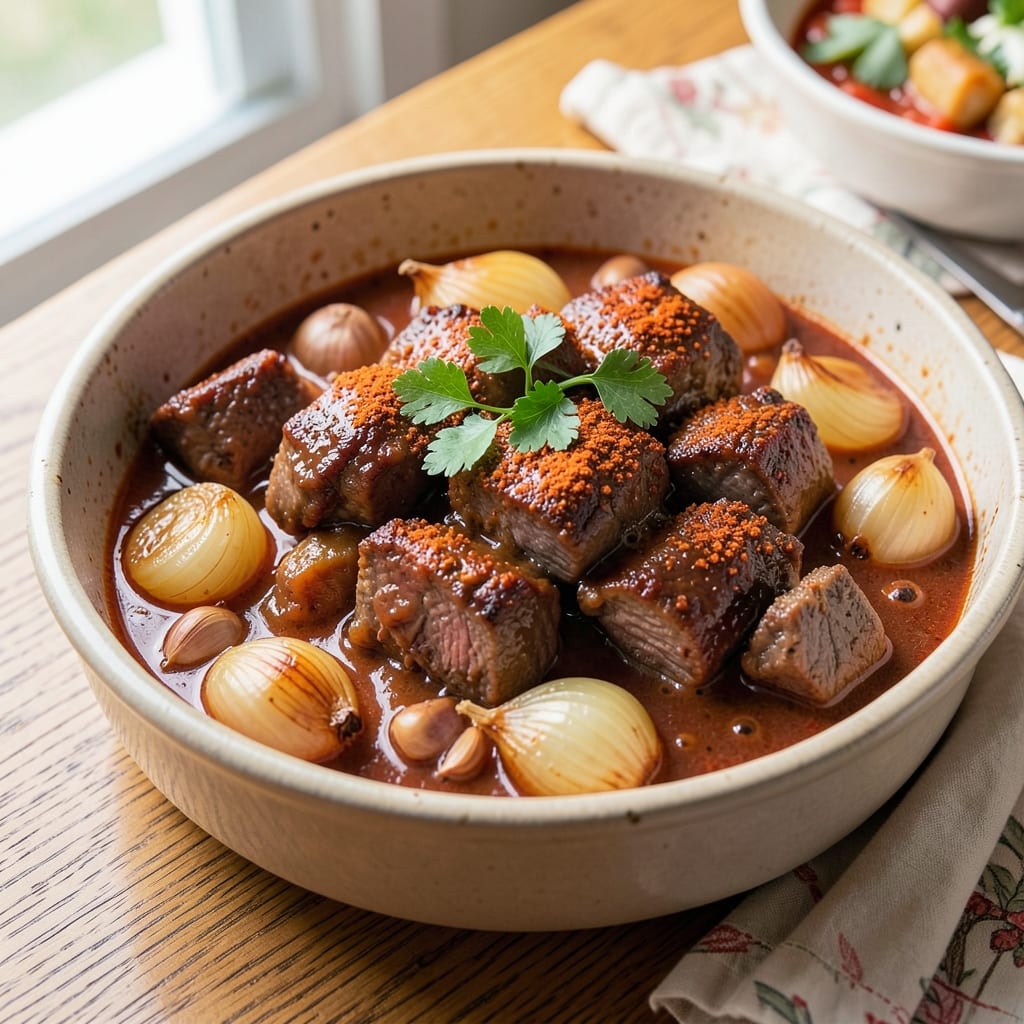
This authentic German goulash recipe delivers the smoky, paprika-rich depth that defines true German comfort food. 🔥 The key lies in slow-braising beef with onions until tender, then layering sweet and hot paprika for that signature warmth. I've perfected this version after years of testing—it's the one my German grandmother would approve of, with rich beef broth and caramelized aromatics that make every spoonful satisfying.
The process starts with caramelizing onions until deep golden, then searing beef to develop deep flavor before adding paprika and spices. Unlike quicker versions, this stew simmers for hours, allowing the meat to become fork-tender while the sauce reduces to a velvety consistency. The result is a hearty, flavorful stew that's perfect for chilly evenings or family gatherings.
What makes this goulash truly special is the balance of sweet and hot paprika, which creates that signature German flavor profile without overpowering the beef. Served with traditional sides like bread dumplings or sauerkraut, it becomes a complete meal that feels both rustic and refined. The aroma alone will have everyone gathering around the table.
Ready in about 3 hours (with minimal active time), this recipe transforms simple ingredients into something extraordinary. The slow cooking process ensures maximum flavor extraction, while the rich sauce clings to every bite of tender beef. This is the kind of stew that tastes even better the next day—perfect for meal prep or feeding a crowd.
Ingredients for authentic german goulash recipe with beef and paprika
Authentic German goulash relies on rich beef, caramelized onions, and paprika's signature warmth for unforgettable flavor.
| Ingredient | Amount | Notes |
|---|---|---|
| Beef Chuck Roast 🥩 | 2 ½ lb | Pre-cubed or cut into 1.5-inch pieces |
| Yellow Onions 🧅 | 3 whole | Medium-sized, thinly sliced |
| Garlic Cloves 🧄 | 6 cloves | Minced for depth of flavor |
| Sweet Paprika 🌶️ | 2 tbsp | Hungarian preferred for authenticity |
| Hot Paprika 🌶️ | 1 tbsp | Balances sweetness with heat |
| Tomato Paste 🍅 | 2 tbsp | High-quality, no added salt |
| Beef Broth 💧 | 4 cups | Homemade or low-sodium store-bought |
| Red Wine 🍷 | 1 cup | Dry, bold red like Cabernet |
| Bay Leaves 🌿 | 2 whole | Fresh for best aroma |
| Thyme 🌿 | 1 tbsp | Fresh or 1 tsp dried |
| Black Peppercorns 🌶️ | 1 tsp | Freshly cracked for intensity |
| Carrots 🥕 | 4 medium | Peeled and sliced into rounds |
| All-Purpose Flour 🌾 | 2 tbsp | For thickening sauce |
| Salt 🧂 | 1 ½ tsp | Kosher or sea salt |
| Olive Oil 🫒 | 2 tbsp | For searing beef |
The beef is non-negotiable—chuck roast delivers that melt-in-your-mouth texture. Costco or Whole Foods carry pre-cubed chuck for convenience, but if buying whole, ask your butcher to cut it into 1.5-inch pieces. For the onions, yellow onions work best—they caramelize beautifully. Look for firm, dry onions with no sprouting. The paprika is where the magic happens: Hungarian sweet and hot paprika from Penzeys or the bulk section at Trader Joe's gives that authentic German flavor. If you can only find one type, use 3 tbsp sweet paprika and skip the hot.
No red wine? Substitute with extra beef broth—just add 1 tbsp balsamic vinegar for depth. Fresh thyme is ideal, but dried works at one-third the amount. The tomato paste can be the squeeze-tube kind from Trader Joe's if you're short on time—no need for fancy cans. For the carrots, baby carrots work perfectly if you're in a hurry, though traditional German goulash uses full-size carrots. The flour is just for thickening—if you're watching carbs, omit it and let the sauce be slightly thinner. For extra richness, add 1 tbsp tomato paste if you love that deep umami flavor.
This goulash tastes even better the next day as flavors meld. Store in an airtight container in the fridge for up to 5 days, or freeze portions for 3 months. I like to double the recipe and freeze half—perfect for busy weeknights. The sauce thickens as it cools, so you can always thin it with a splash of broth if needed. Serve with crusty bread or egg noodles to soak up every last drop of that smoky, paprika-rich sauce.
Why You'll Love This Recipe
- Here’s what sold me: reheated goulash is still amazing. The flavors deepen overnight, and it’s perfect for lunches or freezing. My kids actually ask for it the next day, which—coming from them—is basically a Michelin star. (Not the prettiest, but the taste makes up for it.)
- One-Pot Magic: I swear by this recipe when I’m too tired to wash pots—just brown the beef, toss in onions and garlic, then let the paprika do its work. The slow simmer melts everything into one rich, smoky sauce, and honestly? I’ve never had a goulash this easy that still tastes like it came from a German grandmother’s kitchen.
- Paprika Powerhouse: Between us, the secret’s in that mix of sweet and hot paprika—it’s what makes this goulash ridiculously good. The sweet paprika gives it a warm, earthy depth, while the hot paprika adds just enough kick to wake up your taste buds. (Yes, even on a Tuesday night.)
- Budget-Friendly Feast: A beef chuck roast stretches further than you’d think, and onions/garlic/paprika are cheap staples. I’ve fed four grown men and a dog with leftovers—no joke. It’s the kind of dish that makes grocery day feel like a win, especially when you’re stretching meals for the week.
Step-by-step instructions for authentic German goulash
Here's how to create a rich, smoky stew that captures Germany's hearty tradition.
🔥 Step 1: Sear the Beef Chuck Roast
Heat the 2 tablespoons olive oil in a large Dutch oven over medium-high heat until shimmering. Pat the 2.5 lb beef chuck roast dry with paper towels—this ensures a proper sear. Cut the beef into 1.5-inch pieces and add them to the pot in batches, working in 30-second intervals to avoid overcrowding.
Sear the beef for 3-4 minutes per side until deeply browned and caramelized. You'll see the edges develop a rich mahogany color and release easily from the pan. This step builds the foundation for the stew's deep flavor. Remove the beef with a slotted spoon and set aside temporarily.
🍳 Step 2: Build the Flavor Base
In the same Dutch oven, add the 3 whole yellow onions (thinly sliced) and cook for 5-6 minutes until softened and golden. Add the 6 cloves minced garlic cloves and cook for 30 seconds until fragrant—don't let it burn, or it'll turn bitter.
Stir in the 2 tablespoons sweet paprika and 1 tablespoon hot paprika, letting the spices toast for 1 minute until aromatic. Add the 2 tablespoons tomato paste and cook for another 1 minute, stirring constantly to prevent sticking. This creates a rich, paprika-infused base that's essential for authentic German goulash.
🥘 Step 3: Simmer the Stew
Pour in the 1 cup red wine and scrape up any browned bits from the bottom of the pot. Let it simmer for 3 minutes until the wine reduces by half. Add the 4 cups beef broth, 4 medium carrots (sliced into rounds), 2 whole bay leaves, 1 tablespoon thyme, 1 teaspoon black peppercorns, and 1.5 teaspoons salt.
Return the seared beef to the pot and bring everything to a gentle boil. Once boiling, reduce heat to low and cover partially. Let it simmer for 2 hours until the beef is fork-tender and the sauce has thickened. Stir occasionally to prevent sticking, and add a splash of water if the sauce becomes too thick.
🍽️ Step 4: Finish and Serve
Remove the 2 whole bay leaves and discard them. Taste the stew and adjust seasoning if needed—you might need a pinch more salt or a sprinkle of hot paprika for heat. If the sauce is too thin, mix the 2 tablespoons all-purpose flour with 1 tablespoon cold water to create a slurry, then stir it into the stew. Simmer for an additional 5 minutes to thicken.
Serve the goulash hot, ladled over mashed potatoes, egg noodles, or crusty bread. The beef should be tender enough to pull apart with a fork, and the sauce should coat the back of a spoon with a velvety texture. The combination of sweet and hot paprika creates a complex, smoky flavor that's unmistakably German.
Pro Tips For Making Authentic German Goulash Recipe With Beef And Paprika
- Brown the Chuck Twice: I learned this the hard way—chuck roast releases fat in waves. Sear it hard on all sides first, then remove it and let the pan cool slightly before scraping up the browned bits. After adding onions and garlic, return the meat to the pot and let it brown again in the sauce. That second sear locks in flavor, and the fond melts into the goulash like it’s been simmering for hours.
- Slice Onions Paper-Thin: German goulash needs onions to caramelize, not just soften. Grab a sharp knife and slice them thin—almost translucent. If you’re lazy like me, use a mandoline, but don’t skip this step. Thick slices turn mushy and dull the paprika’s kick. (Yes, even if you’re impatient like me.)
- Balance the Paprika Ratio: Sweet paprika alone makes goulash taste like a sad Sunday dinner. Split the difference: use twice as much sweet as hot (e.g., 1 tbsp sweet + ½ tbsp hot). The heat lingers in the background, while the sweetness rounds out the beef’s richness. Taste as you go—adjust, don’t guess.
- Deglaze with Beer, Not Water: That dark, sticky fond at the bottom? Don’t drown it in water. Pour in ½ cup dark beer (like a Munich Dunkel) or even a splash of red wine vinegar. Scrape, simmer, and let the alcohol burn off—it cuts through the fat and deepens the sauce. Water just makes goulash taste like stewed shoe leather.
Creative variations of authentic german goulash recipe with beef and paprika
Hungarian-Inspired Twist
For a richer, slightly sweeter version, add 1 tablespoon brown sugar when caramelizing the onions. This balances the paprika's heat and adds depth, much like traditional Hungarian goulash. I also recommend swapping the red wine for ½ cup white wine and ½ cup beef broth—this creates a lighter sauce while keeping the hearty flavor. Finish with 1 teaspoon caraway seeds for an authentic Hungarian touch. 🌶️
Vegetarian Adaptation
Swap the beef for 1.5 lbs portobello mushrooms (sliced thick) and 1 lb extra-firm tofu (pressed and cubed). Sear both in olive oil until golden, then proceed with the recipe. Boost umami with 1 tbsp soy sauce added with the tomato paste. For extra protein, stir in ½ cup cooked lentils at the end. The texture won't be identical, but it's a satisfying vegetarian take!
Slow Cooker Version
Transfer all ingredients (except flour) to a 6-quart slow cooker after searing the beef. Cook on low for 8 hours or high for 5 hours, stirring every 2 hours to prevent sticking. The slow cooker's gentle heat enhances the beef's tenderness and deepens the paprika flavors. For best results, use a Dutch oven insert to mimic stovetop simmering. 💫
Spicy Kick Boost
For heat lovers, add 1-2 tbsp hot sauce (like Frank's RedHot) with the paprika, or stir in 1 tsp cayenne pepper when toasting the spices. If you prefer smoky heat, replace half the hot paprika with 1 tbsp smoked paprika. For a balanced kick, finish each bowl with a dollop of sour cream and a sprinkle of crushed red pepper flakes.
Regional German Variations
In Bavaria, goulash often includes sauerkraut (added in the last 30 minutes of cooking) and a splash of dark beer instead of wine. For a Saxon twist, add ½ cup chopped apples with the carrots—they soften beautifully and add natural sweetness. In Franconia, chefs finish the stew with 1 tbsp apple cider vinegar to brighten the flavors. 🗺️
Nutrition facts
Frequently asked questions
Why does authentic German goulash require both sweet and hot paprika?
The combination creates that signature German flavor profile—sweet paprika adds depth and warmth, while hot paprika provides a subtle heat that balances the richness. The traditional ratio (2 tbsp sweet to 1 tbsp hot) ensures the dish stays flavorful without being overpowering. This balance is what makes German goulash distinct from Hungarian versions, which often use more hot paprika.
Can I make this goulash in a slow cooker, and how does it compare?
Transfer all ingredients (except flour) to a 6-quart slow cooker after searing the beef. Cook on low for 8 hours or high for 5 hours, stirring occasionally. The slow cooker version is even more tender and flavorful because the low, consistent heat breaks down the beef fibers perfectly. The sauce will be slightly thicker, but you can thin it with broth if needed.
What's the best way to store leftovers, and how long will they keep?
Store leftovers in an airtight container in the fridge for up to 5 days. The flavors actually improve as the sauce reduces further! For longer storage, freeze portions for 3 months. When reheating, add a splash of broth to prevent drying out. The goulash tastes even better the next day—this stew is perfect for meal prep!
What are the best sides to serve with German goulash?
Traditional pairings include bread dumplings (like Semmelknödel), egg noodles, or crusty rye bread to soak up the rich sauce. For extra authenticity, serve with sauerkraut or a simple green salad with a tangy vinaigrette. The acidity cuts through the richness of the beef beautifully.
My goulash turned out too thin—how can I fix it?
If the sauce is too thin, mix 2 tbsp all-purpose flour with 1 tbsp cold water to make a slurry, then stir it into the stew. Simmer for 5 more minutes to thicken. For a gluten-free option, use 1 tbsp cornstarch instead of flour. If the sauce is still too thin, reduce it uncovered on medium-low heat for 10-15 minutes, stirring occasionally.