
Soups & Stews
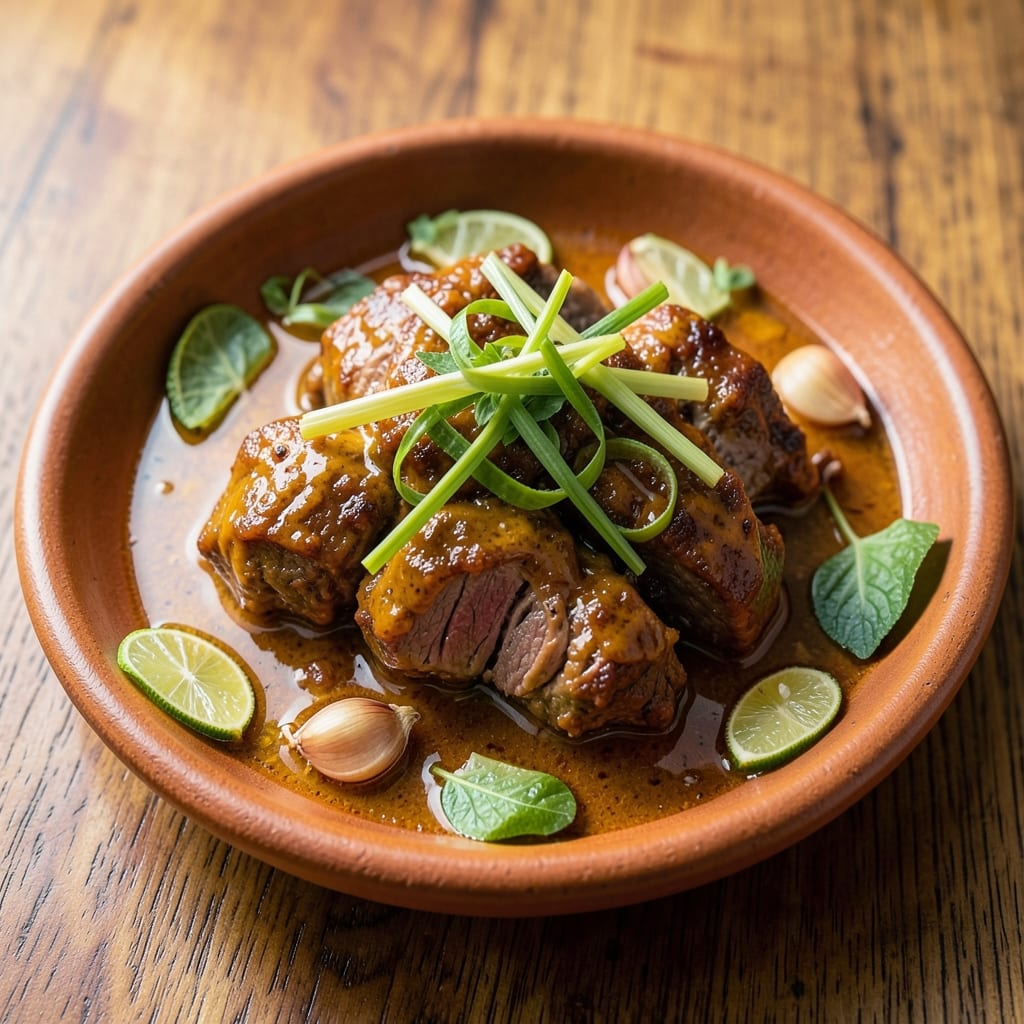
This authentic Indonesian beef rendang recipe transports you straight to West Sumatra’s kitchens with its rich, caramelized depth and tender beef. 🌟 The secret lies in hours of slow simmering, where coconut milk reduces into a velvety sauce infused with aromatic spices—turmeric, galangal, lemongrass, and kaffir lime leaves—that create layers of complexity. Unlike quick versions, this method delivers the signature dry, sticky texture that makes rendang unforgettable.
The process begins with a vibrant spice paste, ground fresh for maximum flavor, then cooked until fragrant before adding beef and coconut milk. Patience is key: the longer it simmers, the deeper the flavors develop, transforming tough cuts into melt-in-your-mouth perfection. This isn’t just a dish—it’s a labor of love that rewards you with a masterpiece worthy of celebration.
What sets this apart is the balance of sweet, spicy, and umami notes, achieved through careful spice blending and gradual reduction. The result? A dish that’s rich yet not heavy, fragrant enough to fill your home, and tender enough to fall apart at the touch of a fork. Serve it with steamed jasmine rice to soak up every last bit of that caramelized sauce.
For those new to Indonesian cuisine, this recipe breaks down the essential techniques—from making the spice paste to monitoring the reduction—so you can achieve restaurant-quality results at home. The aroma alone will have everyone gathering around the table, eager for a taste of Sumatra’s culinary heritage.
Ingredients for authentic indonesian beef rendang
Six aromatic spices and tender beef transform into Sumatra’s legendary slow-cooked masterpiece.
| Ingredient | Amount | Notes |
|---|---|---|
| Beef Chuck Roast 🥩 | 3 lb | Cut into 2-inch cubes |
| Coconut Milk 🥥 | 2 cans | Full-fat, 13.5 oz each |
| Turmeric Powder 🌿 | 2 tbsp | Freshly ground preferred |
| Galangal 🍃 | 1 piece | 3-inch, peeled and sliced |
| Lemongrass 🌿 | 1 stalk | 6 inches, bruised and cut |
| Kaffir Lime Leaves 🍋 | 4 whole | Bruised and torn |
| Shallots 🧅 | 6 whole | Peeled and finely chopped |
| Garlic Cloves 🧄 | 8 cloves | Peeled and minced |
| Ginger 🧄 | 1 inch | Fresh, peeled and sliced |
| Chili Paste 🌶️ | 2 tbsp | Red or sambal oelek |
| Brown Sugar 🍯 | ½ cup | Packed lightly |
| Salt 🧂 | 1 ½ tsp | Adjust to taste |
| Coconut Oil 🫒 | 2 tbsp | For cooking spice paste |
| Jasmine Rice 🍚 | 2 cups | Uncooked, for serving |
The beef is non-negotiable—chuck roast breaks down beautifully into fork-tender pieces. Look for well-marbled cuts at Costco or your local butcher if you want the best texture. Coconut milk? Full-fat cans only—the richness is essential. Galangal and kaffir lime leaves are the soul of this dish—find them at Asian markets or well-stocked grocery stores. If you can’t find fresh galangal, ginger works in a pinch, though it won’t be exactly the same. The shallots and garlic should be fresh—no pre-minced jars here.
No galangal? Double the ginger for a similar earthy kick. Kaffir lime leaves? Lime zest plus a splash of lime juice gets you close, though the aroma won’t be identical. The chili paste can be swapped for red pepper flakes plus a pinch of sugar if you’re avoiding heat. Brown sugar adds depth—white sugar works too, but it won’t caramelize as nicely. For the spice paste, toast the spices in coconut oil first—this step unlocks the flavors. The lemongrass and lime leaves can be bruised with the side of a knife to release their oils without overpowering.
This dish tastes even better the next day—plan ahead. Store leftovers in an airtight container for up to 5 days in the fridge, or freeze for 3 months. The sauce thickens as it cools, so a splash of coconut milk revives it if it gets too dry. Serve over jasmine rice—the grains should be long enough to soak up that rich sauce. If you make a double batch, freeze portions for lazy weeknights—just thaw and reheat gently.
Why You'll Love This Recipe
- One-Pot Magic: I swear by this—just toss everything in a single pot and let it simmer. No chopping boards, no extra dishes, and the beef practically falls apart on its own, so tender it melts at the touch of a fork.
- Deep Umami Bomb: That slow-cooked coconut milk and galangal paste? It’s where the magic happens. The beef soaks up all the earthy, spicy, slightly sweet flavors until every bite is rich and complex—like a hug in sauce form.
- Leftovers That Shine: Between us, this dish begs to be made in bulk. The flavors only get better the next day, and it reheats like a dream—perfect for lazy lunches or when you’re too tired to cook after a long week.
- Budget Stretch: A big cut of beef chuck and a can of coconut milk go a long way here. I’ve fed six people (plus my dog, who “accidentally” licked the pot) for under $20, and the leftovers keep us full for days without breaking the bank.
Step-by-step instructions for authentic Indonesian beef rendang
Here's how to create this slow-cooked masterpiece that balances rich spices with tender beef.
👨🍳 Step 1: Prepare the Spice Paste
In a food processor, combine the 6 whole shallots, 8 cloves garlic, 1-inch ginger, 1 piece galangal, 1 stalk lemongrass, 4 whole kaffir lime leaves, 2 tbsp chili paste, 2 tbsp turmeric powder, 1.5 tsp salt, and 0.5 cup brown sugar. Pulse until you get a smooth, thick paste—this is the aromatic base of your rendang.
I like to add a splash of water if it's too dry, but don't overdo it. The paste should be thick enough to cling to the beef later. This mixture carries all the complex flavors of Indonesia—earthy, spicy, and slightly sweet. Spread it on a plate and let it sit for 15 minutes while you prep the beef.
🔥 Step 2: Sear the Beef in Coconut Oil
Heat 2 tbsp coconut oil in a heavy pot or Dutch oven over medium-high heat. Add the 3 lb beef chuck roast cut into 2-inch cubes and sear until deeply browned on all sides—about 5-7 minutes. Don't crowd the pan or the beef will steam instead of develop that beautiful crust.
This step is crucial for building flavor through the Maillard reaction. You'll know it's ready when the beef releases easily from the pan and has a rich, caramelized color. Remove the beef and set it aside—we'll return it to the pot later.
🍳 Step 3: Cook the Spice Paste Until Fragrant
In the same pot, reduce heat to medium and add the spice paste. Stir constantly for 3-4 minutes until it darkens slightly and releases an intoxicating aroma. This is where all the magic happens—the spices should smell deep, earthy, and slightly smoky.
Here's the thing—don't walk away. The paste burns quickly, and burnt spices will ruin your rendang. If it starts to stick, add a splash of water to loosen it up. Once the paste is fully cooked, pour in 1 can of coconut milk and stir well to combine.
⏰ Step 4: Simmer the Rendang Low and Slow
Return the beef to the pot and add the remaining 1 can of coconut milk. Bring to a gentle simmer, then reduce heat to low and cover. Let it cook for 2 hours, stirring occasionally to prevent sticking. The liquid should reduce significantly, and the beef will start to break down.
After 2 hours, uncover the pot and increase heat to medium-low. Let it cook uncovered for another 1-2 hours until the sauce thickens to a rich, caramelized consistency. The beef should be fork-tender, and the sauce should coat the back of a spoon. This slow cooking is what makes rendang special—it develops deep, complex flavors that you can't rush.
🍽️ Step 5: Serve with Jasmine Rice
Once the rendang reaches the perfect consistency, transfer it to a serving dish. Let it rest for 10 minutes—this allows the flavors to meld even more. Serve the tender beef over 2 cups of steamed jasmine rice, spooning the rich, spiced sauce generously over the top.
Each bite should deliver perfectly tender beef with a glossy, caramelized sauce that's rich, slightly sweet, and packed with aromatic spices. The rice soaks up all that delicious sauce, making every mouthful a flavor explosion. Trust me, this is worth the time—your taste buds will thank you!
Pro Tips For Making Authentic Indonesian Beef Rendang
- Simmer Low and Slow: After burning my first batch of rendang trying to rush it, I learned: once the beef is tender and the sauce thickens, drop the heat to the lowest setting possible—just above a bare simmer. This isn’t about speed; it’s about letting the flavors meld over 2-3 hours. A lid helps, but leave it slightly ajar so the moisture can escape gradually (yes, even if you’re impatient like me). ---
- Grate, Don’t Chop Galangal: I used to slice galangal like ginger, but that leaves tough bits. Instead, grate it fresh—about 2 inches of root per 2 pounds of beef—so it blends seamlessly into the paste. If you’re short on time, freeze the grated galangal in an ice cube tray with a splash of coconut milk; it’ll thaw and release flavor instantly when added to the pot. ---
- Reduce Coconut Milk in Stages: Pouring in all the coconut milk at once dilutes the paste’s depth. Start with just 1 cup to build the base, then add the rest in 30-minute intervals as the sauce reduces. This keeps the paste’s aromatic punch sharp and prevents a watery, milky finish. (Your future self will notice the difference.) ---
- Brown the Beef First: Skipping the sear means missing the Maillard reaction—the thing that matters most for that deep, caramelized flavor. Cut the chuck into 2-inch chunks, pat them dry, and brown in batches over medium-high heat with 1 tablespoon of oil. Don’t crowd the pan, or you’ll steam the meat instead of searing it. It’s worth the extra 10 minutes.
Wine and beer pairings for these flavors
Indonesian Red Wine
For a bold yet balanced pairing, reach for a Pinotage from South Africa—its dark fruit and earthy notes mirror rendang’s depth while cutting through the richness. I love Delaire Graff’s vintage, which has a smoky finish that complements the caramelized sauce beautifully. Serve slightly chilled (55-60°F) to enhance its complexity without overwhelming the dish’s aromatic spices. 🍷
Spiced White Wine
Aromatic whites like Viognier or Gewürztraminer surprise with their ability to stand up to spicy foods. Try a French Condrieu Viognier—its floral and apricot notes harmonize with the lemongrass and galangal in rendang. The slight sweetness also balances the heat from the chili paste. Serve at 50-55°F to let the wine’s brightness shine through.
Malaysian Craft Beer
For beer lovers, a Malaysian pale ale like Bintang Super or Tiger Superlight offers a crisp, refreshing contrast. The light maltiness cleanses your palate between rich bites, while its subtle hop bitterness tempers the dish’s sweetness. If you prefer something bolder, a honey-lager from Indonesia’s Anak Tunggal> adds floral notes that echo the galangal and turmeric.
Herbal Infusions
Elevate your pairing with herbal teas like jasmine green tea or lemongrass-infused iced tea. The floral and citrus notes enhance rendang’s aromatic profile without competing. I often serve a cup of hot pandan tea alongside—its vanilla-like sweetness complements the caramelized sauce perfectly. For a non-alcoholic cocktail, mix coconut water> with a splash of lime and muddled mint. 🌿
Sweet Contrast
Balance the dish’s heat and richness with a coconut sorbet or mango sticky rice on the side. The cool, sweet contrast refreshes your palate between bites. For a boozy twist, serve a rum-infused coconut cream—just mix 1 oz dark rum> with ½ cup coconut cream**> and a pinch of salt. Drizzle lightly over the rendang for a tropical touch.
Nutrition facts
Frequently asked questions
Why does authentic rendang need such a long cooking time?
The slow cooking transforms tough beef into tender perfection while allowing the coconut milk to reduce into a rich, caramelized sauce. This 4-5 hour process develops deep, complex flavors through gradual evaporation and spice infusion—what makes traditional rendang so special. The longer it cooks, the more concentrated and aromatic the spices become.
Can I substitute beef with chicken or tofu?
While beef is traditional, you can adapt this for chicken (use 3 lb thighs) or tofu (extra-firm, pressed). Chicken cooks faster (3 hours total), but tofu needs 2 extra hours to absorb flavors. For tofu, marinate it first in the spice paste for 30 minutes before slow cooking. The texture will differ, but the sauce remains delicious.
What's the secret to getting that signature caramelized sauce?
Three keys: low and slow heat, uncovered final cooking, and patience. After 2 hours of covered simmering, increase heat slightly and cook uncovered until the sauce thickens to a glossy, sticky consistency. Stir occasionally to prevent burning—this gradual reduction creates the signature dry, caramelized texture.
How do I know when the beef is fully tender?
Test with a fork or skewer—it should slide in easily with no resistance. The beef should also fall apart when pulled gently with tongs. If using a meat thermometer, aim for 203°F (well-done). Remember: the longer it cooks, the more flavorful it becomes, so don't rush this step.
Can I make rendang in an Instant Pot?
Yes! Use the Sauté function for the spice paste, then cook on High Pressure for 45 minutes with 1 cup liquid. After pressure releases, uncover and cook on Sauté mode for 30-45 minutes to thicken the sauce. The texture will be slightly different but still delicious—just monitor closely to avoid over-reducing.