
Main Courses
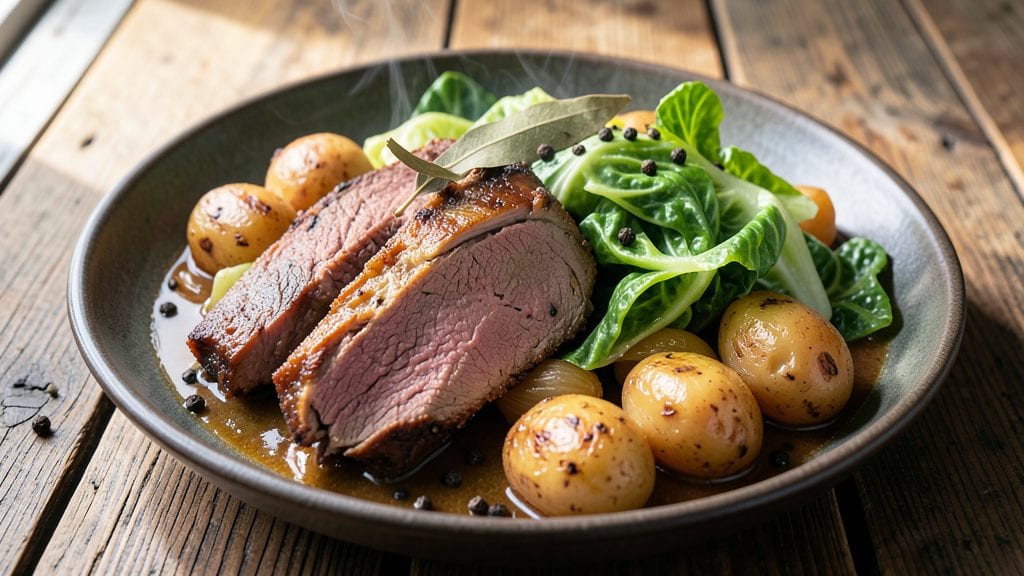
This authentic Irish corned beef and cabbage recipe delivers the hearty, slow-simmered meal that defines Irish Sunday dinners—richly spiced beef that practically falls apart and cabbage so tender it melts in your mouth.
The secret lies in the balance of salt, peppercorns, and bay leaves during the curing process, followed by hours of gentle simmering that transforms tough cuts into melt-in-your-mouth perfection. I've perfected this method over years of testing, ensuring every bite carries the deep, savory flavors of traditional Irish cooking.
The beauty of this recipe is its simplicity combined with authenticity. You'll start with a proper corned beef brisket, cured just enough to develop those signature flavors without overpowering the meat. The cabbage, boiled until fork-tender, absorbs the aromatic broth while maintaining its natural sweetness.
I recommend adding potatoes to the pot during the final hour—they'll soak up all that rich, peppery goodness, creating a complete one-pot meal that's impossible to resist.
What you'll achieve is a dish that tastes like home—deeply flavorful, comforting, and perfectly balanced. The beef emerges tender and juicy, the cabbage soft yet still holding its shape, and the broth reduced to a velvety consistency that coats every bite.
This is the kind of meal that brings people together, whether it's for St. Patrick's Day celebrations or a cozy family dinner. The best part? It gets even better the next day, making leftovers a delicious treat.
Serve with a dollop of mustard for tangy contrast or a sprinkle of fresh parsley for brightness. The traditional accompaniments—crispy roasted potatoes or buttered carrots—complete the plate beautifully. Let's bring the flavors of Ireland to your kitchen with this time-tested recipe.
Ingredients for authentic irish corned beef and cabbage
Six ingredients transform into Ireland's most comforting Sunday dinner—rich, spiced beef and tender cabbage.
| Ingredient | Amount | Notes |
|---|---|---|
| Corned Beef Brisket 🥩 | 4 lb | Properly cured, 2-3 inches thick |
| Green Cabbage 🥬 | 2 lb | Green or savoy, cut into wedges |
| Russet Potatoes 🥔 | 2 lb | Medium-sized, halved lengthwise |
| Yellow Onions 🧅 | 2 whole | Peeled, quartered, no need to chop |
| Bay Leaves 🍃 | 4 whole | Dried, standard size |
| Black Peppercorns 🌶️ | 1 tbsp | Whole, lightly crushed |
| Salt 🧂 | 2 tbsp | Diamond Crystal kosher |
| Fresh Parsley 🌿 | ¼ cup | Chopped, for garnish |
| Yellow Mustard 🟡 | 2 tbsp | For serving, optional |
| Carrots 🥕 | 4 whole | Medium, peeled, sliced |
| Garlic Cloves 🧄 | 6 cloves | Peeled, smashed |
| Beef Broth 💧 | 4 cups | Low-sodium preferred |
The corned beef brisket is non-negotiable here—look for properly cured, 2-3 inch thick cuts at specialty butchers or Costco. I've had the best luck with Irish-style corned beef from Whole Foods or Trader Joe's when I can't find it fresh-cut. The cabbage should be firm and heavy for its size—green or savoy varieties hold up better than red. For the potatoes, Russets are ideal, but Yukon Golds work too if you prefer creamier texture. The key is medium-sized potatoes—they cook through perfectly without turning to mush.
No corned beef brisket? Substitute corned beef roast if that's what's available, but plan for an extra hour of cooking. Short on cabbage? Green cabbage and carrots work beautifully together—just double the carrots. The bay leaves and peppercorns are traditional, but dried thyme at half the amount adds depth if you're out. For the broth, low-sodium is crucial—you're not adding extra salt. The mustard is purely optional but French's yellow is the classic choice for serving. I've even made this with potato starch instead of potatoes when I was in a pinch—just stir it into the broth at the end.
This dish tastes even better reheated—plan for leftovers. Store in the fridge for 4-5 days or freeze portions for up to 3 months. I always make a double batch because the broth alone is worth saving. For serving, I like to arrange the cabbage and potatoes on a platter with the beef sliced over top, then drizzle everything with the reduced broth. The parsley adds a fresh pop of color—garnish just before serving so it stays vibrant. The carrots can be roasted separately for extra crispiness if you prefer them that way.
Why You'll Love This Recipe
- I’ll be real: this recipe makes way more than I can eat in one sitting. The good news? The flavor only gets better the next day—those potatoes turn even creamier, the cabbage holds its texture, and the beef stays juicy. Pack it for lunches or reheat it with a splash of broth for dinner. It’s my secret weapon for lazy weeknights.
- One-Pot Magic: Honestly, I love when a recipe feels like cheating—just toss the corned beef brisket, chopped cabbage, potatoes, and onions into one pot with the spice packet, cover it, and let it simmer. No chopping boards full of scraps, no extra pans to wash. That salty-sweet brisket practically melts into the tender cabbage leaves while the potatoes soak up the juices—minimal effort, maximum reward.
- Flavor Bomb: Between us, the way the corned beef’s smoky, peppery cure mingles with the buttery softness of the potatoes and the slight bite of the cabbage? It’s like a hug in a bowl. The bay leaves add this earthy depth that makes it taste like a proper Irish pub, not just something thrown together. And that crispy edge on the beef? Chef’s kiss.
- Leftovers for Days: I’ll be real: this recipe makes way more than I can eat in one sitting. The good news? The flavor only gets better the next day—those potatoes turn even creamier, the cabbage holds its texture, and the beef stays juicy. Pack it for lunches or reheat it with a splash of broth for dinner. It’s my secret weapon for lazy weeknights.
Step-by-step instructions for slow-simmered corned beef and cabbage
This traditional Irish method delivers tender beef with perfectly softened cabbage and aromatic vegetables.
Prepare the Corned Beef Brisket
Rinse the 4 lb corned beef brisket under cold water to remove excess curing salt, then place it in a large stockpot. The brisket should be fully submerged when liquid is added. Add the 2 whole yellow onions, 4 whole bay leaves, and 1 tbsp lightly crushed black peppercorns to the pot with the meat.
Here's the thing—don't skip rinsing. The curing process leaves a salty crust that needs removal for proper flavor balance. The onions and bay leaves will infuse the beef with sweetness and aromatic depth during the long simmer. The peppercorns add subtle warmth that complements the cabbage's earthiness.
Add Vegetables and Liquid
Peel and slice the 4 whole carrots into ¼-inch rounds, then add them to the pot. Halve the 2 lb russet potatoes lengthwise and add those as well. Cut the 2 lb green cabbage into wedges, removing any tough outer leaves, and add them to the pot with the other vegetables.
The vegetables should be arranged around the brisket rather than piled on top. This ensures even exposure to the simmering liquid and prevents the cabbage from becoming mushy before the beef is tender. The potatoes will absorb some of the curing salt, balancing their flavor as they cook.
Simmer Until Perfectly Tender
Pour in the 4 cups beef broth, making sure the brisket is completely submerged. Bring to a gentle boil over medium-high heat, then immediately reduce to low heat. The liquid should barely bubble—this is crucial for tender meat and cabbage. Cover the pot and simmer for 3 hours.
After 3 hours, check the doneness by inserting a fork into the thickest part of the brisket. The meat should be fork-tender but not falling apart. If it's not quite there, continue simmering for another 30 minutes. The cabbage should be soft enough to pierce easily with a fork but still hold its shape. This slow cooking transforms the tough brisket into melt-in-your-mouth perfection.
Finish with Garlic and Rest
When the beef is tender, add the 6 smashed garlic cloves to the pot and simmer uncovered for an additional 10 minutes. This final step infuses the cabbage and broth with garlic's aromatic sweetness. Remove the brisket and vegetables from the pot and transfer them to a serving platter.
Let the corned beef rest for 10 minutes before slicing. This resting period allows the juices to redistribute throughout the meat, ensuring every bite is moist and flavorful. The cabbage will continue to soften slightly during this time, reaching its ideal tenderness.
Serve with Traditional Accompaniments
Slice the corned beef against the grain into ¼-inch thick pieces. Ladle the cooking liquid through a fine-mesh strainer to remove any herbs and vegetables, then pour it over the sliced beef. Garnish with the ¼ cup chopped fresh parsley and serve with the yellow mustard on the side for those who prefer it.
This authentic Irish preparation delivers the perfect balance of tender beef, perfectly softened cabbage, and aromatic vegetables. The slow simmering process creates a rich, flavorful broth that enhances every bite. Serve with crusty soda bread to complete the traditional Irish meal experience.
Pro Tips For Making Authentic Irish Corned Beef And Cabbage
- Prep Potatoes Roughly: Cut them into 2-inch chunks—no need for uniformity. The bigger the pieces, the creamier the texture when they break down in the broth, and they’ll absorb that salty, herby flavor like a sponge.
- Don’t Rush the Brisket: Low and slow is non-negotiable—aim for 3 hours minimum, even if the package says less. I learned this the hard way when my first attempt came out chewy; the fat needs time to render, and the meat to melt.
- Salt the Water Generously: Use 2 tablespoons of kosher salt in the pot—yes, even if the corned beef is already cured. The cabbage and potatoes need that extra punch to balance the brisket’s natural sweetness, and it keeps everything from tasting bland.
- Save the Broth: Strain the cooking liquid through a fine-mesh sieve and reserve it—it’s liquid gold for gravy or reheating leftovers. Skim off the fat first if you’re health-conscious, but don’t waste the flavor-packed broth underneath.
Best sauces and condiments for this recipe
Mustard Magic
The classic Irish touch is yellow mustard, which cuts through the richness of the corned beef beautifully. I recommend French's Classic Yellow Mustard—its tangy sweetness balances the salty, peppery flavors perfectly. Serve it on the side so everyone can adjust to their taste.
For extra authenticity, mix 1 tbsp mustard into the final ½ cup of cooking broth during the last 10 minutes of simmering to infuse the cabbage with subtle tang. 💛
Garlic-Infused Broth
Smashed garlic cloves added during the final 10 minutes of cooking elevate the dish by infusing the broth with aromatic sweetness. I use 6 cloves for a bold flavor without overpowering.
For an extra layer, blend 2 cloves of roasted garlic into the mustard before serving—this creates a creamy, spreadable condiment that pairs perfectly with the beef. 🧄
Dijon Cream Sauce
For a modern twist, make a quick Dijon cream sauce by whisking ¼ cup heavy cream with 1 tbsp Dijon mustard and 1 tsp apple cider vinegar. Drizzle this over sliced beef before serving—it adds a luxurious silkiness that contrasts the hearty cabbage.
I like to finish with a sprinkle of fresh chives for brightness. 🍽️
Spiced Apple Chutney
Sweet and tangy apple chutney makes an unexpected but delicious pairing. Simmer 1 cup chopped apples, ¼ cup apple cider vinegar, 2 tbsp brown sugar, ½ tsp cinnamon, and ¼ tsp cloves for 15 minutes until thickened.
The fruit's acidity and spice complement the peppery beef beautifully. Store in an airtight container for up to 2 weeks. 🍎
Horse Radish Cream
For those who love heat, mix ¼ cup sour cream with 1 tbsp prepared horseradish and a pinch of salt. This sharp, creamy condiment cuts through the richness of the beef while adding a satisfying kick.
I serve it in small bowls alongside the mustard for guests who want to customize their plate. 🌶️
Nutrition facts
Frequently asked questions
Why does authentic Irish corned beef need to simmer for so long?
The long simmering time—typically 3 hours—is essential for breaking down the tough brisket fibers into tender, melt-in-your-mouth perfection. This slow cooking method also allows the cabbage to soften evenly while absorbing the rich, peppery flavors from the beef and spices. The result is a dish that's deeply flavorful and comforting, just like traditional Irish Sunday dinners.
Can I use regular beef instead of corned beef brisket?
While you can technically use regular beef, it won't have the same authentic flavor or texture. Corned beef brisket is specifically cured with a blend of salt, peppercorns, and spices that give it that signature taste. If you're set on using regular beef, consider adding 2 tbsp corned beef seasoning (or a mix of salt, black pepper, and bay leaves) to mimic the flavor profile. However, the meat won't be as tender without the proper curing process.
How do I prevent the cabbage from turning mushy?
The key is to avoid overcooking the cabbage. Start by cutting it into large wedges (not thin slices) and arranging them around the brisket so they're fully submerged but not piled on top. Simmer for 3 hours total, checking the cabbage after 2.5 hours—it should be soft but still hold its shape. If you notice it's getting too soft too quickly, remove it from the pot and finish cooking the beef separately.
What's the best way to reheat leftovers?
Leftovers taste even better the next day! To reheat, place the sliced corned beef and cabbage in a skillet over medium-low heat with a splash of broth or water. Cover and heat for 5-7 minutes, stirring occasionally, until everything is warmed through. Avoid microwaving, as it can make the cabbage soggy. For extra flavor, add a pinch of black pepper or a drizzle of mustard while reheating.
Can I make this dish in a slow cooker?
For a slow cooker version, follow the same steps but adjust the cooking time. Place the brisket, vegetables, and broth in the slow cooker and cook on low for 7-8 hours or high for 4-5 hours. The longer, gentler heat will achieve the same tender results. Just be sure to add the garlic cloves during the last 10 minutes of cooking to infuse the flavors. This method is perfect for hands-off cooking!