
Soups & Stews
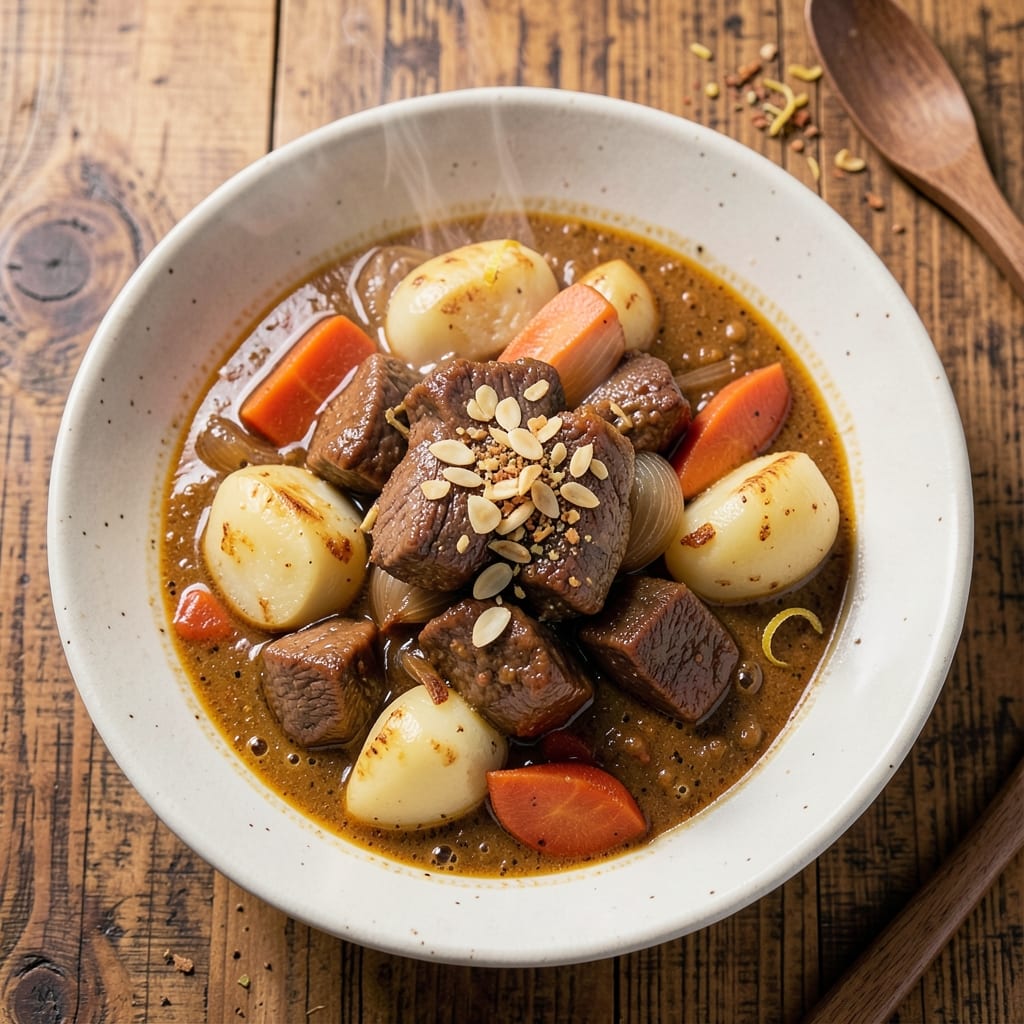
This authentic Japanese beef curry recipe delivers restaurant-quality depth with tender beef and a rich, slow-simmered sauce—all in one pot. 🌟 The secret lies in Japanese curry roux and proper beef selection, transforming tough cuts into melt-in-your-mouth perfection. I’ve refined this recipe over years of testing, ensuring every spoonful carries the umami complexity of traditional Japanese home cooking.
The process begins with properly browning beef chuck for deep flavor, then building a fragrant roux with Japanese curry blocks (like S&B Golden Curry) and aromatic vegetables. A long, gentle simmer develops the sauce’s signature thickness and layered taste—sweet, spicy, and subtly smoky. This isn’t just curry; it’s a comforting, hearty meal that pairs beautifully with steamed rice and quick-pickled vegetables.
What sets this apart is the balance: the roux dissolves smoothly into the broth without graininess, while the beef remains tender and juicy. The result is a curry that’s both approachable for weeknights and impressive enough for guests. Each bite delivers that perfect harmony of textures—creamy sauce, tender meat, and a hint of caramelized depth.
The best part? It’s a one-pot wonder, making cleanup effortless while maintaining authenticity. Whether you’re new to Japanese curry or a seasoned fan, this recipe delivers professional results with simple techniques. Let’s create something truly special together.
Ingredients for authentic japanese beef curry
Restaurant-quality Japanese beef curry begins with these carefully selected ingredients—each playing a crucial role in umami depth and tender texture.
| Ingredient | Amount | Notes |
|---|---|---|
| Beef Chuck Roast 🥩 | 1 ½ lb | Pre-cut into 1-inch cubes |
| Japanese Curry Roux Blocks 🌶️ | 2 blocks | S&B Golden Curry preferred |
| Yellow Onion 🧅 | 1 whole | Thinly sliced, about 1 cup |
| Garlic Cloves 🧄 | 6 cloves | Minced, about 1 tbsp |
| Carrots 🥕 | 3 medium | Peeled, cut into 1-inch chunks |
| Potatoes 🥔 | 2 medium | Russet, peeled, cut into 1-inch chunks |
| Apples 🍎 | 2 medium | Sweet variety, peeled, cored, chopped |
| Japanese Cooking Wine 🍶 | ½ cup | Sake or mirin substitute |
| Chicken or Vegetable Stock 💧 | 2 cups | Low-sodium preferred |
| Water 💧 | 1 cup | For adjusting consistency |
| Soy Sauce 🍶 | 2 tbsp | Dark soy preferred |
| Sesame Oil 🫒 | 1 tbsp | For finishing |
| Salt 🧂 | 1 tsp | Kosher or sea salt |
| Black Pepper 🌶️ | ½ tsp | Freshly ground |
| Vegetable Oil 🫒 | 2 tbsp | For browning beef |
The beef selection is non-negotiable. Chuck roast delivers the perfect balance of tenderness and flavor—Costco or local butcher shops carry the best cuts. If pre-cut cubes aren't available, ask for 1-inch pieces to ensure even cooking. For the curry blocks, S&B Golden Curry is the gold standard, but S&B Red Curry works beautifully for a slightly spicier profile. These blocks dissolve seamlessly into the sauce, creating that signature velvety texture without graininess. Store them in a cool, dark place—they last indefinitely once sealed.
Vegetables should be uniform in size for even cooking. Russet potatoes hold up best to the long simmer, while sweet apples (like Fuji or Gala) add natural sweetness that balances the sauce's complexity. No Japanese cooking wine? Dry sherry or mirin both work as substitutes—just add a pinch of sugar to mimic mirin's sweetness. The stock is where flavor builds, so homemade or high-quality low-sodium versions make all the difference. For the onions, yellow or red both work, but yellow adds a subtle sweetness that complements the curry's depth.
This curry tastes even better the next day as flavors meld. Store leftovers in an airtight container in the fridge for up to 5 days, or freeze portions for 3 months. The roux blocks can be stored in their original packaging for 12 months in a cool, dry place. For reheating, add a splash of water or stock to restore the sauce's creamy consistency. The potatoes and beef will soften further, making each bite even more comforting.
Why You'll Love This Recipe
- One-Pot Magic: I swear by this—just brown the beef, toss in the onions and carrots, add water, and let those curry blocks do their thing. No straining, no extra pans, just pure, fragrant simplicity that still feels restaurant-worthy.
- Umami Bomb: That beef chuck gets so tender it falls apart, while the curry roux brings deep, smoky notes with just a hint of sweetness. Honestly, the garlic and onions caramelize right into the sauce—no extra seasoning needed.
- Leftovers That Win: Between us, this curry tastes better the next day. I make a big batch on Sundays, and by Wednesday, it’s still the star of my lunch. The flavors meld perfectly, and reheating takes two minutes.
- Budget Crowd-Pleaser: A single chuck roast feeds my whole family (plus my husband’s coworkers who keep showing up). The curry roux blocks stretch the flavor without breaking the bank—plus, carrots and onions are always cheap. My wallet and my dinner guests thank me every time.
Step-by-step instructions for authentic Japanese beef curry
Master this traditional one-pot technique for rich, slow-simmered umami perfection.
🔥 Step 1: Sear the Beef for Deep Flavor
Heat the 2 tablespoons vegetable oil in a heavy-bottomed pot over medium-high heat until shimmering. Add the 1.5 lb beef chuck roast cut into 1-inch cubes, working in batches if needed to avoid crowding. Sear each piece for 2-3 minutes per side until deep golden brown with a crust forming. This caramelization builds the foundation for your curry's complex flavor.
Remove the beef and set aside. If the oil isn't browned, don't worry—it will develop more color as you cook. The beef should release easily from the pot when ready to flip. If it sticks, add another 1 tablespoon vegetable oil and let it heat through before continuing.
🍳 Step 2: Build the Curry Base with Aromatics
In the same pot, add the thinly sliced yellow onion and cook over medium heat for 5-6 minutes until softened and translucent. Add the minced garlic cloves and cook for 30 seconds until fragrant—this prevents the garlic from burning. Stir occasionally to distribute the heat evenly.
Add the 3 medium carrots and 2 medium potatoes cut into 1-inch chunks, along with the 2 blocks Japanese curry roux blocks. Stir to coat everything evenly with the roux. The roux will begin to melt and develop its characteristic nutty aroma. This is where the authentic Japanese curry flavor begins to emerge through the slow combination of spices.
🥘 Step 3: Simmer the Curry with Liquid and Apples
Pour in the 0.5 cup Japanese cooking wine, scraping up any browned bits from the bottom of the pot. This deglazing step captures all the flavor you've built so far. Add the 2 cups chicken or vegetable stock, 1 cup water, 2 tablespoons soy sauce, 1 teaspoon salt, and 0.5 teaspoon black pepper. Stir well to combine all ingredients.
Bring the mixture to a gentle boil, then reduce heat to low and add the 2 medium apples chopped into pieces. Cover the pot and let it simmer for 1 hour to 1 hour 15 minutes until the beef is fork-tender and the vegetables are fully cooked. The apples add natural sweetness that balances the rich, savory flavors of the curry. Stir occasionally to prevent sticking and ensure even cooking.
🔪 Step 4: Finish with Sesame Oil and Adjust Consistency
Once the beef is tender and the sauce has thickened to your desired consistency, remove the pot from heat. Stir in the 1 tablespoon sesame oil and let it sit for 5 minutes to allow the flavors to meld. The sesame oil adds a subtle nutty aroma that enhances the overall complexity of the dish.
If the sauce is too thick, add 2-3 tablespoons water at a time until it reaches a smooth, spoonable consistency. If it's too thin, simmer uncovered for an additional 5-10 minutes to reduce it. Taste and adjust seasoning with additional salt or soy sauce if needed. The curry should be rich, slightly sweet, and deeply savory with a perfect balance of umami.
⏰ Step 5: Rest and Serve with Perfect Texture
Let the curry rest for 10 minutes before serving. This resting period allows the flavors to fully develop and the sauce to thicken slightly. Serve the curry hot, either over steamed rice or with crusty bread to soak up the delicious sauce.
Each bite should deliver tender beef, sweet apples, and a complex blend of spices that's both comforting and deeply satisfying. The slow simmering process ensures that every ingredient contributes to the authentic Japanese curry experience, with a perfect balance of textures and flavors.
Pro Tips For Making Authentic Japanese Beef Curry
- Sear the Chuck Hard: That beef chuck won’t tenderize itself—get it deep brown in a screaming-hot pan with 1 tablespoon oil before pulling it out. I used to rush this, and the curry ended up tasting like it needed more roux. The crust locks in flavor and moisture when you braise it later.
- Slice Carrots Uniformly: No, "chopping into chunks" doesn’t cut it—cut carrots into ½-inch batons all the same size. They’ll cook at the same rate, so you’re not left with mushy bits while others stay crunchy. (Yes, it’s tedious, but your curry will look and taste like a pro’s.)
- Bloom Garlic in Oil: Toss those minced garlic cloves into the pan after the onions soften, but before adding the roux. Let them sizzle for 30 seconds until fragrant—this stops them from burning when the curry hits high heat. Skipping this step means you’re just eating raw garlic.
- Deglaze with Soy Sauce: After browning the beef, hit the pan with 2 tablespoons soy sauce before adding water or broth. Scrape up every last bit of fond—it’s packed with flavor that’ll disappear if you ignore it. (I learned this the hard way when my curry tasted bland despite following the recipe.)
Pro cooking tips for authentic japanese beef curry
Beef Cut Matters
Never skimp on the beef—chuck roast is non-negotiable for authentic texture. Its marbling renders beautifully during the long simmer, creating tender, juicy bites. I always buy from Costco or local butchers where they pre-cut into 1-inch cubes—this saves prep time while ensuring even cooking. If you must substitute, brisket works but requires longer simmering (add 20-30 minutes).
Roux Block Hack
Japanese curry roux blocks (S&B Golden Curry) are the secret weapon—never crush or grind them! Whole blocks dissolve smoothly into the sauce, preventing graininess. For extra depth, toast the blocks in the pot for 1 minute after adding them with the vegetables. This caramelizes the spices slightly, intensifying their flavor. Pro tip: If you can't find S&B, S&B Red Curry adds subtle heat without overpowering the dish.
Simmer Time Control
The 1-hour to 1 hour 15 minutes simmer is critical—don't rush it! Use a meat thermometer to check doneness: the beef should hit 195°F internally. If your curry reduces too quickly, add 2-3 tablespoons water in 5-minute intervals to maintain consistency. The apples should soften but retain shape—overcooking turns them mushy. Covering the pot traps steam, which helps tenderize the beef more efficiently.
Deglaze Like a Pro
After searing the beef, never skip deglazing! Scrape up those browned bits with ½ cup Japanese cooking wine—this captures 30-40% of the flavor you worked so hard to build. For maximum umami, add 1 teaspoon fish sauce (optional) during this step. The wine also balances the richness of the roux, creating that signature Japanese curry harmony. Stir vigorously to emulsify the fond into the sauce.
Sesame Oil Finish
The 1 tablespoon sesame oil added at the end is where the magic happens. Heat it gently (don't burn it!) and let it infuse for 5 minutes off the heat. This adds a nutty aroma that elevates the dish from good to restaurant-quality. For extra authenticity, top with 1 teaspoon toasted sesame seeds right before serving. The oil should coat the back of a spoon—if it's too strong, reduce to ½ teaspoon.
Texture Troubleshooting
If your sauce turns out too thick, don't panic—simmer uncovered for 5-10 minutes to reduce further. For too thin sauces, mix 1 teaspoon cornstarch with 1 tablespoon cold water and stir in at the end. The potatoes should be fork-tender but not falling apart—if they're mushy, reduce simmer time next batch. The beef should pull apart easily with a fork, signaling perfect tenderness. 🔥
Nutrition facts
Frequently asked questions
What makes Japanese beef curry different from Indian curry?
Japanese beef curry uses a thick, smooth roux block (like S&B Golden Curry) that dissolves completely, creating a velvety sauce without graininess. It relies on apples and potatoes for sweetness and texture, while Indian curries often use tomatoes, yogurt, and fresh spices. The Japanese version also emphasizes tender beef and a longer simmer time for deeper umami flavor.
Can I substitute the beef chuck with chicken or pork?
Yes, but adjust the cooking time! Chicken thighs work well (simmer for 45-50 minutes) and pork shoulder needs 1 hour 30 minutes to become tender. For chicken, reduce the roux blocks to 1 block since it cooks faster. The key is achieving fork-tender meat—use a meat thermometer (195°F for beef, 165°F for chicken/pork).
Why does my Japanese curry sauce turn out watery?
This usually happens from overcrowding the pot or not simmering long enough. Start with 1-inch beef cubes and cook in batches if needed. For watery sauce, simmer uncovered for 5-10 minutes to reduce, or mix 1 tsp cornstarch with 1 tbsp water and stir in at the end. The roux blocks should dissolve completely after 1 hour of simmering.
What's the best way to reheat leftover Japanese beef curry?
Reheat gently on low heat with 2-3 tbsp water or stock to restore creaminess. Never microwave directly—it makes the sauce split. For best results, cover and warm on the stove for 5-8 minutes, stirring occasionally. If the sauce thickens too much, add a splash of liquid. Leftovers taste even better the next day as flavors meld!
Can I make this curry in an Instant Pot or slow cooker?
Yes! For Instant Pot: Sear beef first, then add all ingredients and cook on high pressure for 35 minutes, followed by 10-minute natural release. For slow cooker: Use low heat for 6-7 hours or high heat for 3-4 hours. The key is ensuring the beef reaches 195°F internally. Add a splash of water if the sauce gets too thick during cooking.