
Main Courses
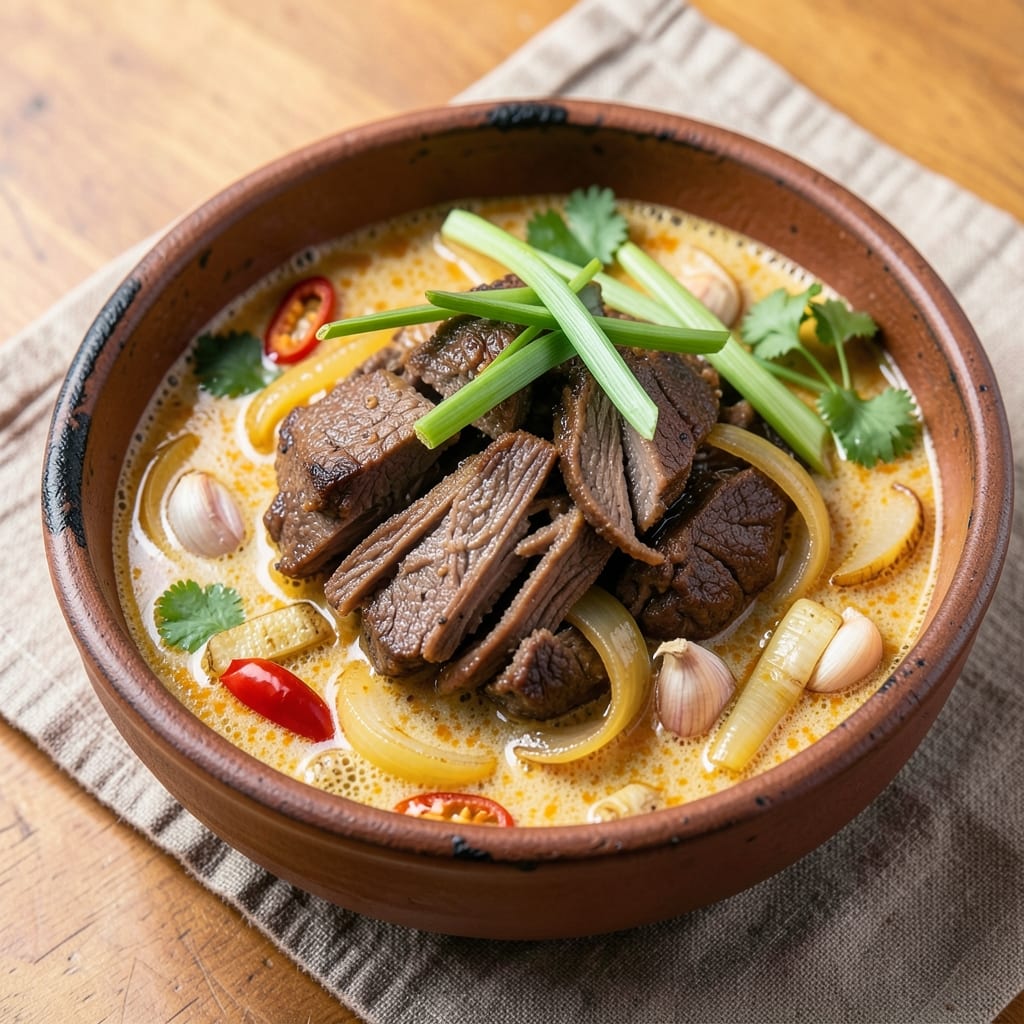
This authentic Malaysian beef rendang transforms tough beef into melt-in-your-mouth tenderness through slow-cooked coconut milk and aromatic spices. 🌟 The dish’s signature caramelized sauce and complex flavors make it a centerpiece of Malaysian celebrations, where hours of simmering build layers of depth that no shortcut can replicate. What sets this recipe apart is the balance of heat, sweetness, and umami—achieved through meticulous spice toasting and gradual reduction.
The process begins with dry-roasting whole spices until fragrant, then blending them into a fragrant paste that forms the foundation of the sauce. Coconut milk, rich and creamy, carries these spices while tenderizing the beef over 3-4 hours of gentle simmering. This slow cooking isn’t just about time—it’s about patience, allowing the meat to absorb flavors until it’s fork-tender and the sauce thickens into a glossy, caramelized masterpiece.
By the end, you’ll have a dish that’s restaurant-quality at home, with beef that falls apart at the touch and a sauce so deeply flavorful it pairs perfectly with steamed jasmine rice. The aroma alone will transport you to a bustling Malaysian kitchen, where rendang is served family-style and passed around with pride. This is the version that earns respect—no shortcuts, just tradition.
Serve it with cucumber slices, ketupat (rice cakes), or even fresh lime wedges to cut through the richness. The leftovers? Even better the next day, as flavors meld further. Let’s bring this iconic dish to your table—properly, authentically, and with the care it deserves.
Ingredients for authentic malaysian beef rendang
Six aromatic spices, tender beef, and hours of slow simmering—this is the heart of Malaysian tradition.
| Ingredient | Amount | Notes |
|---|---|---|
| Beef Chuck Roast 🥩 | 3 lb | Cut into 2-inch chunks, trimmed of fat |
| Coconut Milk 🥥 | 2 cans | Full-fat, 13.5 oz each, unsweetened |
| Yellow Onions 🧅 | 3 whole | Medium, thinly sliced |
| Garlic Cloves 🧄 | 10 cloves | Whole, peeled |
| Galangal 🌿 | 1 piece | 3-inch, peeled and sliced (or substitute ginger) |
| Turmeric Powder 🌶️ | 1 tbsp | Freshly ground preferred |
| Coriander Seeds 🌿 | 1 tbsp | Toasted until fragrant |
| Cumin Seeds 🌿 | 1 tbsp | Toasted until fragrant |
| Star Anise 🌟 | 2 whole | Lightly crushed |
| Cinnamon Sticks 🌳 | 2 whole | 2-inch pieces |
| Cardamom Pods 🌿 | 4 whole | Lightly crushed |
| Kaffir Lime Leaves 🍋 | 4 whole | Bruised to release oils (or 2 tbsp lime zest) |
| Sambal Oelek 🔥 | 2 tbsp | Adjust for heat preference |
| Palm Sugar 🍯 | ½ cup | Or dark brown sugar |
| Jasmine Rice 🍚 | 3 cups | Uncooked, for serving |
| Vegetable Oil 🫒 | ¼ cup | For toasting spices |
The spices are non-negotiable here. Whole spices like star anise, cardamom, and cinnamon need to be toasted in oil until fragrant—this unlocks their full depth. Penzeys or Asian markets are your best bet for authentic whole spices; don’t settle for pre-ground. Galangal is the secret weapon—substitute ginger if you can’t find it, but it won’t be the same. The beef? Chuck roast is key—it’s tough enough to transform into melt-in-your-mouth perfection. Look for good marbling at Whole Foods or your local butcher, and cut it into even chunks so it cooks uniformly.
No galangal? Ginger at double the amount works in a pinch, though purists will notice the difference. Running low on kaffir lime leaves? Bruise regular lime zest instead—it won’t be identical, but it’ll save the dish. For heat, sambal oelek is ideal, but red curry paste at half the amount gives a similar kick. The coconut milk should be full-fat—no substitutions here. And if you’re short on time, use canned coconut milk with the highest fat content you can find (the first layer is the creamier part). Palm sugar is worth hunting down at an Asian grocery, but dark brown sugar works if you’re in a hurry—just reduce the liquid slightly to compensate.
This dish tastes even better the next day, as flavors meld into a symphony. Store leftovers in an airtight container for up to 5 days in the fridge, or freeze for 3 months—the sauce actually improves with time. I like to portion it into containers with a side of rice so lunches are ready to grab. The rice should be steamed separately and served alongside—jasmine rice is traditional, but basmati works too. For extra presentation, garnish with fresh cilantro or lime wedges just before serving.
Why You'll Love This Recipe
- One-Pot Magic: I swear by this—just toss everything in one pot, walk away, and come back to that rich, caramelized aroma. No chopping boards full of scraps, no multiple pans burning your hands. The galangal and coconut milk do the heavy lifting while you sip tea.
- Deep Umami Bomb: Between us, the slow-cooked beef gets so tender it melts. That crispy, dark brown crust? Pure satisfaction—it’s where the garlic, onions, and spices turn into something ridiculously good. Honestly, the first bite makes me forget I’m not in a Malaysian warung.
- Leftovers That Beg: This dish improves the next day. I’ve reheated portions for lunch, packed it for work, and even frozen half for lazy Sundays. The flavors meld even more, and the texture? Still perfect. (Yes, even on a Tuesday night.)
- Budget Feast: A chunk of beef and a can of coconut milk stretch into meals for days. I’ll be real: my grocery bill doesn’t flinch, but my freezer does—because this feeds a crowd without breaking the bank. Plus, galangal lasts forever if you freeze it.
Step-by-step instructions for authentic Malaysian beef rendang
Here's the traditional method that delivers tender, aromatic beef bathed in rich coconut-spice sauce.
🔥 Step 1: Toast the Spices for Maximum Flavor
Heat the 0.25 cup vegetable oil in a large pot over medium heat. Add the 1 tbsp coriander seeds and 1 tbsp cumin seeds, toasting for 2-3 minutes until fragrant and lightly golden. Here's the thing—don't walk away; you want them to just barely color, not burn.
Add the 2 whole star anise, 2 whole cinnamon sticks, 4 whole cardamom pods, and 1 piece galangal (peeled and sliced). Toast for another 1 minute until the spices release their essential oils. Remove from heat immediately and let cool for 5 minutes—this prevents the spices from burning when you add them to the beef.
🍳 Step 2: Sear the Beef in Spice-Infused Oil
Increase heat to medium-high and add the 3 lb beef chuck roast cut into 2-inch chunks. Sear for 4-5 minutes until the beef develops a deep brown crust. I press down gently on the beef during the first minute—this prevents it from curling and ensures even contact with the pan.
Remove the beef and set aside. Pour out all but 1 tablespoon of the spice oil from the pot, leaving behind the aromatic residue. This golden paste is packed with flavor that will infuse your rendang.
👨🍳 Step 3: Build the Spice Paste and Cook the Aromatics
Return the pot to medium heat and add the 3 whole yellow onions (thinly sliced) and 10 cloves garlic cloves (peeled). Cook for 5-6 minutes until the onions soften and turn translucent. Stir frequently to prevent burning.
Add the 1 tbsp turmeric powder, 2 tbsp sambal oelek, and 0.5 cup palm sugar. Stir for 1 minute until the sugar dissolves and the mixture becomes fragrant. This is where the magic happens—the spices meld together to create the complex flavor profile of authentic rendang.
🥘 Step 4: Simmer the Beef in Coconut Milk
Pour in the 2 cans coconut milk, stirring to combine with the spice paste. Return the beef to the pot and bring to a gentle simmer. Here's the critical part: reduce heat to low and cover partially, leaving a 2-inch gap for steam to escape. Simmer for 1.5 hours, stirring occasionally to prevent sticking.
After 1.5 hours, add the 4 whole kaffir lime leaves (bruised) and continue simmering uncovered for another 1.5 hours until the sauce reduces significantly and coats the back of a spoon. The beef should be fork-tender, and the sauce will have thickened into a glossy, caramelized glaze.
⏰ Step 5: Finish and Serve with Jasmine Rice
Remove the kaffir lime leaves and adjust the seasoning if needed—add a splash of water if the sauce is too thick. Here's the traditional touch: let the rendang rest for 10 minutes before serving. This allows the flavors to meld completely.
Serve immediately with 3 cups jasmine rice for the perfect balance of tender beef and aromatic sauce. The rendang should have a deep reddish-brown color with a rich, complex aroma that combines sweet, spicy, and herbal notes. Each bite delivers perfectly tender beef in a sauce that's both sweet and savory—a true taste of Malaysia.
Pro Tips For Making Authentic Malaysian Beef Rendang
- CRUSH THE GALANGAL: Buy fresh—none of that jarred nonsense. Peel it like ginger, slice it thin (1/4-inch), and blanch in boiling water for 30 seconds first. This softens it without turning your paste into mush, and trust me, your rendang won’t taste like a spice museum if you skip this.
- SIMMER LOW AND SLOW: After the initial sear, drop the heat to the lowest setting your stove offers—like, "will-it-boil-water" low. Rendang needs 3-4 hours to develop its depth, and rushing it just makes the coconut milk separate. Cover it loosely (lid ajar) to let moisture escape slowly.
- SALT THE COCONUT MILK: Stir in 1/2 teaspoon of salt with the coconut milk at the start. This seasons the sauce from the ground up, not just the beef. I learned this the hard way—my first rendang tasted bland because I salted the meat alone.
- SKIP THE PRE-CHOP ONIONS: Dice the onions after the beef has browned, not before. Toss them in raw when you add the paste—this keeps them crisp and adds a fresh bite. Pre-chopping them turns them into sad, mushy bits by the end. (Yes, even if you’re impatient like me.)
Serving suggestions for leftovers
Rice Pairing Essentials
Steamed jasmine rice is the traditional base for rendang, absorbing the rich coconut-spice sauce beautifully. Cook 3 cups uncooked jasmine rice with 3.5 cups water for perfectly fluffy grains. I like to cook it in a rice cooker for even heat distribution, but a pot with a tight lid works too. For extra authenticity, add a pinch of salt to the water and a kaffir lime leaf while steaming. 🍚
Fresh Vegetable Sides
Bright, crisp vegetables balance the richness of rendang perfectly. Try sliced cucumbers tossed with 1 tbsp lime juice, ½ tsp salt, and a pinch of chili flakes. Another great option is blanched green beans with 1 tsp soy sauce and 1 tsp sesame oil. These sides cut through the sauce while adding freshness.
Traditional Garnishes
Finish your rendang with fresh herbs and citrus for vibrant presentation. Sprinkle cilantro leaves over the top just before serving, and serve with lime wedges on the side. The acidity brightens each bite, while the herbs add a fresh herbal note. For extra flair, add crushed peanuts—about ¼ cup—for crunch and depth.
Beverage Pairings
Cool drinks complement the spicy-sweet flavors beautifully. Iced sweet tea with lemon slices is a classic choice, balancing the heat. For something stronger, try a light lager like Singha or a Malaysian gin and tonic with fresh lime. Avoid heavy wines—they’ll overpower the dish’s delicate balance. 🍹
Family-Style Serving
Rendang is meant to be shared! Serve in a large communal dish with extra rice at the center. Use banana leaves for an authentic touch—simply place the rice and rendang on the leaf, fold, and serve. This keeps everything warm and adds to the festive atmosphere. Guests can help themselves, creating a true Malaysian dining experience.
Leftovers Strategy
Rendang tastes even better the next day as flavors deepen. Store leftovers in an airtight container in the fridge for up to 5 days. Reheat gently on the stove with 2 tbsp water to prevent drying. For quick lunches, portion with rice into containers. The sauce will thicken further, making it perfect for sandwiches or wraps too! 💡
Nutrition facts
Frequently asked questions
Why does authentic rendang require such a long cooking time?
The 3-4 hour simmer isn't just about cooking—it's about transforming tough beef into melt-in-your-mouth perfection through slow moisture breakdown. The extended time allows spices to infuse deeply, while the gradual reduction creates that signature caramelized sauce. Patience is key to achieving the rich, complex flavors that define this Malaysian classic.
Can I substitute any of the traditional spices?
While you can make adjustments, some spices are irreplaceable. Galangal adds a citrusy depth—substitute with ginger at double the amount. Kaffir lime leaves are essential for authentic aroma, but bruised regular lime zest works in a pinch. For heat, sambal oelek is ideal, though red curry paste at half the amount gives similar results. The whole spices (star anise, cardamom) are critical for that complex flavor profile.
What's the secret to getting that perfect caramelized sauce?
The sauce develops through three key steps:
- Simmering uncovered for the last 1.5 hours to reduce moisture,
- Using palm sugar which caramelizes beautifully, and
- Letting it rest for 10 minutes before serving. The sugar helps create that glossy, deep reddish-brown color while adding subtle sweetness that balances the spice. Don't rush this step!
Is it better to make rendang in a Dutch oven or slow cooker?
A Dutch oven is ideal for even heat distribution and better control over the simmering process. However, you can adapt it for a slow cooker by using the low setting for 6-8 hours instead. For best results, sear the beef first in a separate pan before transferring. The slow cooker method works well but lacks the caramelization you get from stove-top reduction. For restaurant-quality results, stick with the Dutch oven.
How do I know when the beef is tender enough?
The beef should be fork-tender with no resistance when pierced—it should fall apart easily. After 3 hours of simmering, test a piece by pressing with a fork. If it crumbles, it's ready. The sauce should also coat the back of a spoon and have thickened significantly. Overcooking can make the beef mushy, so aim for just before it reaches this perfect texture.