
Main Courses
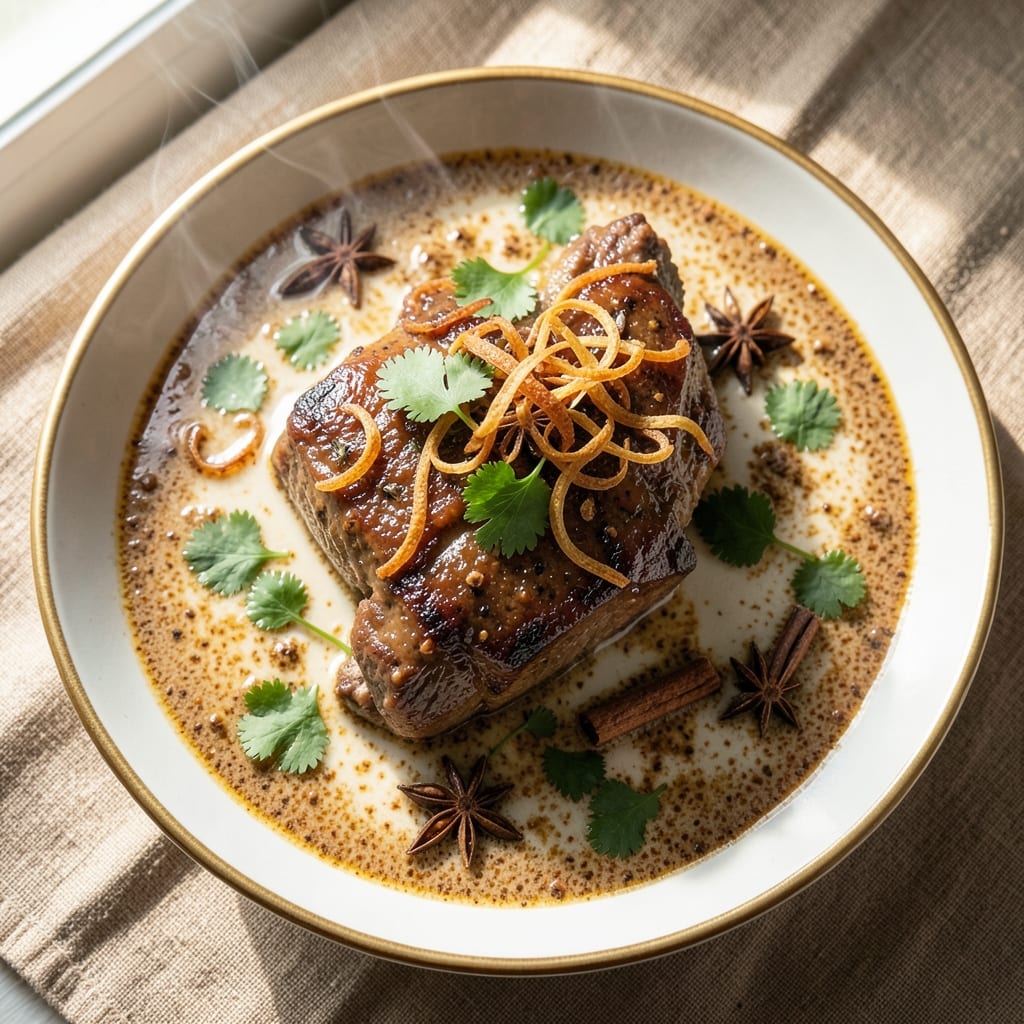
This authentic Thai beef Massaman curry brings the rich, aromatic flavors of Southern Thailand right to your kitchen. 🌟 The signature blend of sweet, spicy, and creamy notes—with tender beef, fragrant spices, and a velvety coconut-peanut sauce—makes this dish unforgettable. I’ve perfected the balance of ingredients to deliver that restaurant-quality depth in one pot, ensuring every bite is packed with complex flavors.
The secret to a truly authentic Massaman lies in the slow simmering of spices like cinnamon, cardamom, and star anise, which infuse the coconut milk with warmth and depth. Unlike other Thai curries, this one is milder in heat but bold in richness, thanks to the addition of peanuts and a touch of tamarind for brightness. The beef becomes melt-in-your-mouth tender, while the sauce clings to every strand of rice, creating a dish that’s as satisfying as it is flavorful.
What sets this recipe apart is the attention to detail—from toasting the spices to balancing the sweetness of the coconut milk with the tangy kick of tamarind. The result is a curry that’s creamy, aromatic, and deeply comforting, perfect for a weeknight dinner or a special gathering. Serve it over steamed jasmine rice to soak up every last drop of that luscious sauce.
Ready to master this Thai classic? Let’s dive into the ingredients and steps that will transform your kitchen into a little slice of Bangkok.
Ingredients for authentic thai beef massaman curry
These aromatic ingredients transform simple beef into restaurant-quality Massaman curry.
| Ingredient | Amount | Notes |
|---|---|---|
| Beef Chuck Roast 🥩 | 1 ½ lb | Cut into 1-inch cubes |
| Coconut Milk 🥥 | 1 can | Full-fat, 13.5 oz can |
| Peanut Butter 🥜 | ½ cup | Natural, unsweetened |
| Massaman Curry Paste 🌶️ | 3 tbsp | Store-bought or homemade |
| Star Anise 🌟 | 2 whole | Lightly crushed |
| Cinnamon Sticks 🌿 | 2 whole | 2-inch pieces |
| Cardamom Pods 🌿 | 4 whole | Lightly crushed |
| Tamarind Paste 🍋 | 2 tbsp | Or substitute lime juice |
| Brown Sugar 🍚 | ½ cup | Packed light brown sugar |
| Fish Sauce 🍶 | 1 tbsp | Red Boat preferred |
| Onion 🧅 | 1 whole | Yellow, chopped |
| Garlic Cloves 🧄 | 4 cloves | Minced |
| Peanuts 🥜 | ½ cup | Roasted, unsalted |
| Salt 🧂 | 1 tsp | Adjust to taste |
| Black Pepper 🌶️ | ½ tsp | Freshly ground |
The coconut milk is non-negotiable—full-fat only for that rich, velvety texture. Thai Kitchen or Aroy-D brand cans are my go-tos, but any full-fat will work. For the beef, chuck roast is key—it stays tender while absorbing all those amazing flavors. Most grocery stores carry it pre-cubed, which saves time. If you're feeling adventurous, toast your whole spices (star anise, cinnamon, cardamom) in a dry pan for 30 seconds—this releases their oils and makes the curry taste like you spent hours simmering. Penzeys Spices has great quality whole spices if you want to splurge.
No Massaman paste? Mix 2 tbsp curry powder, 1 tsp coriander, 1 tsp cumin, and 1/2 tsp turmeric—it won't be identical, but you'll still get close. Peanut butter is essential here, but natural, unsweetened only—no sugar or additives. Tamarind paste can be tricky to find; substitute lime juice plus a pinch of salt if needed. The fish sauce adds umami depth—Red Boat is the gold standard, but any reputable brand works. For the peanuts, roast your own in a dry pan for 3-4 minutes to enhance their flavor—store-bought roasted peanuts work too, but fresh is better.
This curry tastes even better the next day as flavors meld. Keeps 4-5 days in the fridge, or 3 months frozen. I always make double batches—freeze half for lazy weeknights. For serving, steamed jasmine rice is traditional, but basmati works too. Garnish with fresh cilantro if you've got it, or a sprinkle of chopped peanuts for crunch. The sauce thickens as it cools, so add a splash of coconut milk if it gets too stiff when reheating.
Why You'll Love This Recipe
- One-Pot Magic: I swear by this recipe because it’s literally one pan, one stir, and done. The beef chuck roast practically melts into tender perfection while the curry paste and star anise work their aromatic spell—no chopping, no fuss, just deep flavor with minimal effort.
- Rich, Nutty Depth: The peanut butter isn’t just an afterthought—it’s the secret weapon. When it blends with the coconut milk and Massaman paste, you get this unexpectedly luxurious balance: sweet, spicy, and earthy all at once. That first bite? Pure satisfaction.
- Leftovers That Beg for More: This curry tastes better the next day, honestly. The flavors meld into something even richer, and it reheats like a dream. I’ve taken it to potlucks, packed it for lunch, and even frozen portions—every time, someone asks for the recipe.
- Budget-Friendly Feast: Beef chuck roast is affordable, and the other ingredients stretch far. A single batch feeds four heartily, and the leftovers? They’re my go-to for lazy nights. Plus, the curry paste and star anise make it feel special without breaking the bank.
Step-by-step instructions for authentic Thai beef Massaman curry
This rich, nutty curry delivers restaurant-quality depth with simple kitchen techniques.
🍳 Step 1: Sear the Beef for Maximum Flavor
Heat a large Dutch oven over medium-high heat until hot. Add the 1.5 lb beef chuck roast cut into 1-inch cubes in a single layer, letting them sear undisturbed for 3-4 minutes until deeply browned on all sides. This step builds the foundation of flavor through the Maillard reaction.
I like to work in batches if needed—don't overcrowd the pan or the beef will steam instead of sear. Once all pieces are golden brown, transfer them to a plate and set aside. You'll notice the beef releases easily when properly seared, and the pan develops a beautiful caramelized crust that we'll incorporate into the sauce later.
👨🍳 Step 2: Build the Aromatic Base
In the same Dutch oven, reduce heat to medium and add 1 whole chopped onion and 4 minced garlic cloves. Cook for 5-6 minutes until the onions soften and turn translucent, stirring occasionally. This step develops the sweetness of the onions while infusing the garlic's aromatic oils.
Add the 3 tbsp Massaman curry paste and cook for another 2 minutes, stirring constantly to prevent burning. The paste contains complex spices that need time to bloom and release their flavors. Here's where it gets good—you'll smell that signature combination of cinnamon, cardamom, and star anise that defines Massaman curry.
🥘 Step 3: Simmer with Spices and Coconut Milk
Pour in the 1 can coconut milk, scraping up any browned bits from the bottom of the pot. Add the 2 lightly crushed star anise, 2 cinnamon sticks, 4 lightly crushed cardamom pods, 2 tbsp tamarind paste, 0.5 cup brown sugar, 1 tbsp fish sauce, 1 tsp salt, and 0.5 tsp black pepper. Return the beef to the pot and bring to a gentle simmer.
Partially cover the pot and simmer for 1 hour on low heat, stirring occasionally. This long cooking time allows the beef to become fork-tender while letting all the spices meld together. You'll know it's ready when the beef easily pulls apart with two forks and the sauce has thickened slightly. The aroma should be intoxicating—sweet, spicy, and nutty all at once.
🔥 Step 4: Finish with Peanut Butter and Peanuts
Increase heat to medium and stir in the 0.5 cup peanut butter until completely melted and smooth. The sauce will thicken noticeably as the peanut butter combines with the coconut milk. Simmer for another 5-7 minutes to let the peanut flavor meld with the other spices.
Remove the cinnamon sticks and star anise (discard them) and stir in the 0.5 cup roasted peanuts. Taste and adjust seasoning if needed—you might want to add a splash more fish sauce for saltiness or a touch of sugar to balance any tartness from the tamarind. The final sauce should be rich, velvety, and perfectly balanced between sweet, spicy, and nutty flavors.
Pro Tips For Making Authentic Thai Beef Massaman Curry
- CRUST THE BEEF FIRST: Pat the chuck roast dry, then sear it in a screaming-hot pan with 1 tablespoon of oil until deep brown—this isn’t just for looks. The crust locks in flavor and keeps the meat from turning mushy when it braises later. I used to skip this, and the curry always tasted like it needed more depth.
- STIR IN PEANUT BUTTER LAST: Add the peanut butter when the curry is already simmering, not at the start—it burns faster than you’d think. Whisk it in slowly and let it melt completely into the sauce, then give it a quick taste. If it’s too thick, a splash of warm water or coconut milk thins it out perfectly.
- DON’T SKIP THE STAR ANISE: Toss the whole star anise into the pot early and let it steep—it’s the backbone of Massaman’s aromatic depth. After 20 minutes, fish it out before serving (yes, even if you forget, it’s not toxic, just less elegant). My first attempt without it tasted like a missed opportunity.
- USE TWO CANS OF COCONUT MILK: Split the coconut milk—add one can to bloom the paste, then the second later to balance richness. The first can breaks down the paste’s oils, while the second prevents the sauce from curdling. I learned this the hard way when my curry separated into a sad, greasy mess.
Regional styles of this dish
Southern Thai Roots
Massaman curry originated in the Patani region of Southern Thailand, blending Persian, Malay, and Thai flavors. The name comes from the Malay word "masakan," meaning "cooking," reflecting its fusion heritage. This curry was traditionally made by Muslim communities, using spices like cinnamon and cardamom brought by Persian traders. The dish became a royal favorite in Bangkok during the Ratanakosin era (1782-1932), where it was served at palace banquets.
The key to its authenticity lies in the slow-cooked beef and the balance of sweet, spicy, and creamy elements. Unlike other Thai curries, Massaman is milder in heat but richer in texture, thanks to the peanut-coconut sauce. The original recipe included potatoes, but modern versions often omit them to highlight the beef's tenderness. 🌶️
Malay Influence
The dish's signature peanut-coconut sauce comes from Malay culinary traditions, where peanuts were a staple. In Malaysia, a similar curry called "masak masin" (sour curry) uses tamarind and peanuts, showing the cross-cultural exchange. The star anise and cinnamon in Massaman reflect Persian influences, while the fish sauce ties it to Thai cooking. This fusion makes Massaman unique among Thai curries—creamy yet aromatic, sweet yet savory.
In Malaysia, you'll find "Massaman-style" curries with potatoes and sometimes even chicken, but the Thai version focuses on beef and deeper spice layers. The tamarind paste adds that signature tangy brightness, distinguishing it from other coconut-based curries like Green or Red. 🍋
Modern Adaptations
While traditional Massaman curry is beef-centric, modern versions often include chicken, potatoes, or even tofu for vegetarian adaptations. Some chefs add eggplant or bell peppers for texture, but purists argue these dilute the dish's nutty, spiced richness. The peanut butter (a Western addition) has become essential in contemporary recipes, though traditionalists prefer grinding fresh peanuts for a smoother texture.
In Bangkok street markets, you'll find simpler versions with fewer spices, while high-end restaurants elevate it with slow-braised beef and homemade curry pastes. The key adaptation? Balancing sweetness—some cooks adjust sugar levels based on tamarind sourness or coconut milk freshness. 🥥
Regional Variations
In Patani and Yala provinces, Massaman is often spicier with extra chili paste, reflecting the region's love for heat. Meanwhile, Bangkok versions lean sweeter, with more brown sugar and less tamarind. The Southern Thai style also includes dried shrimp or fermented fish for umami depth, while Northern Thai adaptations might swap cinnamon for cloves or nutmeg.
For a vegetarian twist, replace beef with mushrooms or jackfruit, but traditionalists insist the beef's fat renders into the sauce, creating its signature velvety texture. The peanut-to-coconut ratio also varies—some recipes use equal parts, while others prioritize coconut for creaminess. 🌱
Nutrition facts
Frequently asked questions
Why does this Massaman curry taste sweeter than other Thai curries?
The signature sweetness comes from the combination of brown sugar and tamarind paste, balanced by the rich peanut-coconut sauce. Unlike spicier Thai curries, Massaman prioritizes a mild, aromatic sweetness with warm spices like cinnamon and cardamom. The slow cooking caramelizes the sugars naturally for that signature depth.
Can I make this curry without peanut butter?
Yes, but the texture and flavor will differ. For authenticity, use 0.5 cup ground roasted peanuts instead—simmer them with the coconut milk to create a smoother sauce. If you must substitute, try cashew butter (1:1 ratio) for creaminess, but the nutty depth will be less pronounced.
How do I adjust the spice level?
Massaman is naturally mild, but if you want heat, add 1-2 tbsp chili paste (like Thai bird's eye) with the curry paste. For extra spice, stir in 1-2 sliced Thai chilies at the end. Remember: the peanut butter tempers any heat, so add chilies gradually.
What's the best way to reheat leftovers?
Gently reheat on low heat with a splash of coconut milk to restore creaminess. Avoid microwaving—it can make the sauce oily. For best texture, reheat covered for 5-7 minutes, stirring occasionally. The curry tastes even better the next day as flavors meld!
Can I substitute beef with chicken or tofu?
Chicken works well (use 1.5 lb bone-in thighs for similar texture), but tofu may absorb too much sauce. For tofu, use extra-firm blocks pressed and pan-fried first. Traditionalists prefer beef for its fat content, which enriches the sauce. The cooking time should be 20-25 minutes for chicken instead of 1 hour.