
Soups & Stews
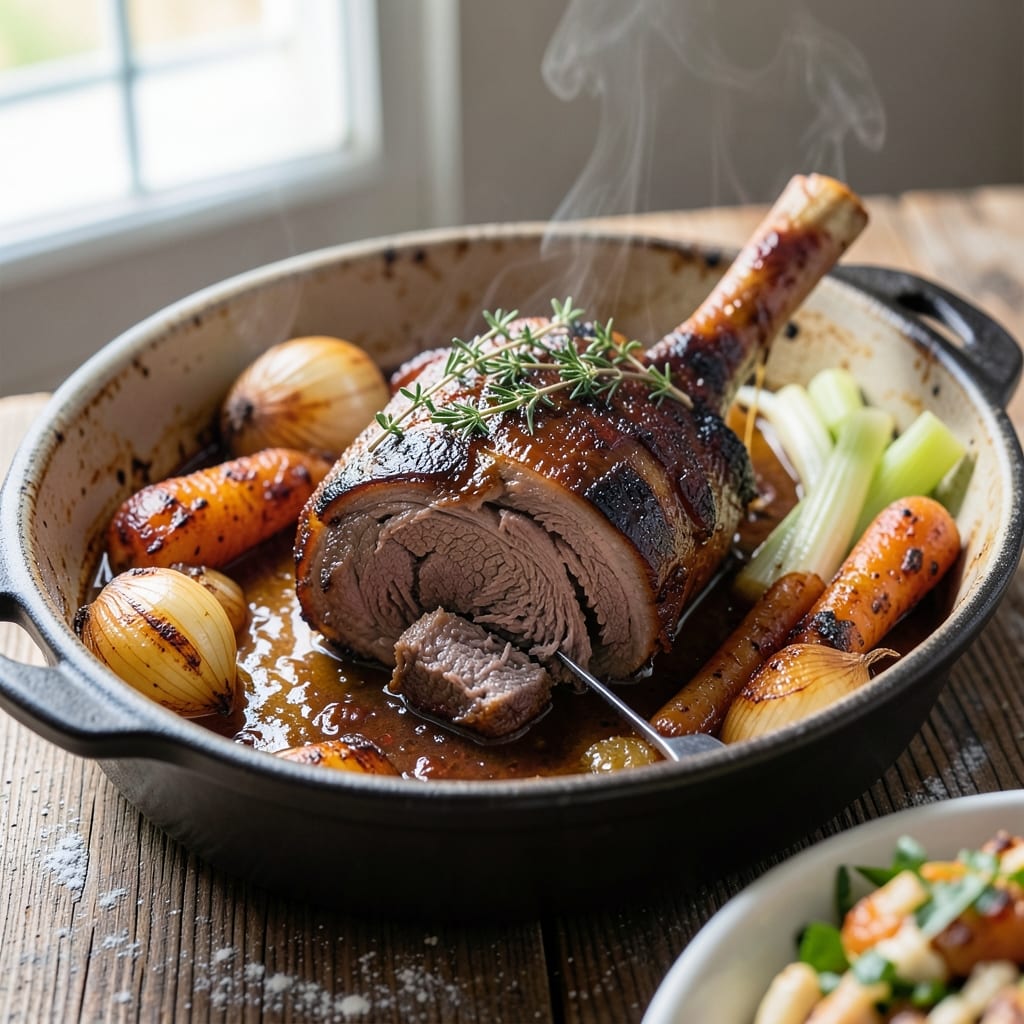
This baked beef shank recipe transforms tough cuts into melt-in-your-mouth perfection with a deep, caramelized fond that elevates every bite. The slow-braising process breaks down connective tissue, creating tender meat infused with rich, savory flavors—ideal for a hearty weeknight dinner or special occasion. What sets this dish apart is the balance of technique and simplicity, ensuring restaurant-quality results without requiring advanced skills.
The process begins with a sear to develop deep flavor, followed by a slow bake that allows the meat to become fork-tender while developing a glossy, caramelized crust. Aromatic vegetables and herbs infuse the dish with layers of complexity, while red wine and broth create a velvety sauce that clings to every bite. The key lies in patience—letting the beef cook low and slow until it practically falls apart.
By the end, you’ll have deeply flavorful beef shank with a surface so caramelized it’s practically edible, paired with a sauce so rich it coats every forkful. The dish pairs beautifully with crusty bread, roasted potatoes, or a simple green salad, making it versatile enough for any meal. The aroma alone will have everyone gathered at the table, eager for the first taste.
Perfect for feeding a crowd or meal prepping for the week, this recipe delivers restaurant-quality comfort food with minimal effort. The slow-cooked method ensures maximum tenderness, while the caramelized fond adds depth that can’t be replicated with quicker techniques. Let’s get started on creating this showstopping dish.
Ingredients for baked beef shank
Transform tough beef shank into melt-in-your-mouth perfection with these carefully selected ingredients.
| Ingredient | Amount | Notes |
|---|---|---|
| Beef Shank 🥩 | 3 lb | Bone-in, cut into 2-inch pieces |
| Yellow Onions 🧅 | 2 whole | Cut into 1-inch chunks |
| Carrots 🥕 | 4 whole | Peeled, cut into 2-inch pieces |
| Celery Stalks 🌿 | 4 whole | Cut into 2-inch pieces |
| Garlic Cloves 🧄 | 8 cloves | Smashed, not minced |
| Dry Red Wine 🍷 | 1 cup | Bold Cabernet Sauvignon preferred |
| Beef Broth 💧 | 2 cups | Low-sodium preferred |
| Tomato Paste 🍅 | 2 tbsp | Smooth, not chunky |
| Fresh Thyme 🌿 | ¼ cup | Leaves only, stems removed |
| Fresh Rosemary 🌿 | ⅛ cup | Needles only, finely chopped |
| Olive Oil 🫒 | ¼ cup | Extra-virgin for searing |
| All-Purpose Flour 🌾 | 2 tbsp | For dredging meat |
| Kosher Salt 🧂 | 1 ½ tsp | Diamond Crystal preferred |
| Ground Black Pepper 🌶️ | 1 tsp | Freshly cracked |
| Balsamic Vinegar 🍶 | 1 tbsp | For deglazing |
The beef shank is non-negotiable here—look for cuts with visible marbling at Whole Foods or your local butcher. Costco often carries pre-cut shanks for convenience, but if buying whole, ask for bone-in pieces around 2 inches thick. The yellow onions, carrots, and celery form the aromatic trifecta; don't peel the carrots if you're in a hurry, just scrub them well. Garlic should be fresh—if it smells like vinegar, toss it. For the red wine, any bold Cabernet Sauvignon will do, but avoid sweet varieties like Merlot. Beef broth should be low-sodium to control seasoning balance, and tomato paste from a San Marzano can adds depth without bitterness.
No red wine? Dry sherry or beef broth with 1 tbsp balsamic vinegar works in a pinch. Fresh herbs can be swapped for dried at one-third the amount—though nothing beats the aroma of fresh thyme and rosemary. Olive oil must be extra-virgin for searing; don't skimp on quality here. The flour is just for dredging, but if you're gluten-sensitive, use cornstarch instead. Balsamic vinegar adds complexity when deglazing the pan, but apple cider vinegar can substitute if needed. For the kosher salt, Diamond Crystal dissolves more easily than Morton's—trust me on this.
Store raw beef shank in the coldest part of your fridge and use within 3 days. Once cooked, this dish reheats beautifully—4-5 days in the fridge or 3 months frozen. The sauce thickens as it cools, so add a splash of broth when reheating. Portion into containers for easy lunches, and save the caramelized fond for toast or eggs—it's restaurant-worthy on its own.
Why You'll Love This Recipe
- One-Pot Magic: I swear by this—just toss everything in one dish, season it right, and walk away. No chopping boards to scrub, no pots to stack. The onions caramelize while the shank tenderizes, and honestly? That’s my kind of cooking.
- Rich, Deep Satisfaction: That beef shank? It falls apart like it’s been slow-cooking for hours, but with half the effort. The garlic and onions melt into the meat, creating this unmistakable, savory depth that makes every bite feel like a hug.
- Weeknight to Weekend: Make a big batch on Sunday, and you’ve got meals for days. Freeze half if you’re feeling extra, or serve it over mashed potatoes for a fancy-feeling dinner that’s still easy. My college-aged son even asks for seconds—rare.
- Budget Hero: Beef shanks are cheaper than steaks but pack just as much flavor. A single cut feeds four, and the veggies (onions, carrots, celery) stretch the meal further. I’ll be real: it’s my go-to for stretching groceries without sacrificing taste.
Step-by-step instructions for slow-braised beef shank
A slow-braised beef shank transforms tough cuts into melt-in-your-mouth perfection. Here's how to develop that deep, caramelized fond and rich sauce.
Sear the Beef Shank for Maximum Flavor
Pat the 3 lb beef shank completely dry with paper towels—this ensures a proper sear. Heat 0.25 cup olive oil in a heavy Dutch oven over medium-high heat until shimmering. Working in batches if needed, add the beef shank and sear for 4-5 minutes per side until deeply browned, developing that essential Maillard reaction.
Don't rush this step. You'll know it's ready when the meat releases easily from the pan and the surface is deep golden brown. Transfer the seared shank to a plate and set aside. The browned crust will form the foundation of your sauce, so resist the urge to wipe out the pan—those bits are pure flavor.
Build the Aromatic Base with Vegetables and Herbs
In the same Dutch oven, add 2 whole yellow onions, 4 whole carrots, and 4 whole celery stalks, all cut as specified. Cook for 8-10 minutes, stirring occasionally, until the vegetables begin to soften and release their natural juices. This process, called sweating, extracts their sweetness and forms the flavor base.
Add the 8 smashed garlic cloves, 0.25 cup fresh thyme, and 0.125 cup finely chopped fresh rosemary. Stir for 1 minute until fragrant—this releases the essential oils that will infuse the braising liquid. Sprinkle the 2 tbsp all-purpose flour over the vegetables and stir for 1 minute to cook off the raw flour taste.
Deglaze and Develop the Braising Liquid
Pour in the 1 cup dry red wine and scrape up all the browned bits from the bottom of the pan using a wooden spoon. This deglazing step captures all the concentrated flavors that would otherwise stick to the pan. Let the wine simmer for 3-4 minutes until reduced by half and slightly thickened.
Add the 2 tbsp tomato paste and stir for 1 minute to cook off the raw tomato flavor. Pour in the 2 cups beef broth and bring to a gentle simmer. The liquid should come about halfway up the sides of the beef shank pieces. Season with 1.5 tsp kosher salt and 1 tsp ground black pepper, then return the shank to the pot, bone-side up.
Braise Until Fork-Tender
Cover the Dutch oven tightly with a lid and transfer to a 325°F preheated oven. Braise for 2.5-3 hours until the beef is fork-tender and the meat easily separates from the bone. The cooking time may vary slightly depending on your oven, so check periodically after the initial 2 hours.
Here's the thing—your kitchen will smell incredible during this time. The aroma of caramelizing vegetables and simmering wine will fill your home, signaling that the transformation is happening. When the meat is tender enough to pierce with a fork with minimal resistance, it's ready. If the liquid reduces too much before the meat is done, add a splash of water or broth to maintain the proper braising level.
Finish with Balsamic Vinegar and Rest
Remove the beef shank from the pot and set it aside to rest. Strain the braising liquid through a fine-mesh sieve into a clean saucepan, pressing on the vegetables to extract all their flavor. Return the strained liquid to the pot and add the 1 tbsp balsamic vinegar. Simmer over medium heat for 5-7 minutes until slightly thickened.
Slice the beef shank against the grain into ½-inch thick pieces and serve immediately with the reduced braising sauce spooned over the top. The sauce should coat the back of a spoon with a velvety texture and rich, complex flavors. Each bite should deliver tender, melt-in-your-mouth beef with a deep, caramelized fond that clings to every strand.
Pro Tips For Making Baked Beef Shank
- SEAR THE SHANK FIRST: Skip the slow start—hit the shank with a screaming-hot pan until deep brown crust forms. I learned this the hard way: rushing straight to the oven means flavorless, pale meat. Take your time here; the Maillard reaction is non-negotiable for that rich, caramelized depth.
- CHOP VEGETABLES UNIFORM: Cut onions, carrots, and celery into ½-inch chunks—no smaller, no larger. My grandmother swore by this, and she was right: even cooking matters. Lumpy pieces turn mushy; tiny bits disappear into nothing. Aim for consistency, or you’ll end up with a stew instead of a braise.
- DON’T SKIP THE DEGLAZE: After searing the shank, scrape up every browned bit with wine (or broth) and let it bubble for 2 minutes. I know, I know—it’s an extra step—but this builds flavor. Ignore it, and your sauce will taste like sad, watered-down broth.
- BAKE COVERED THEN UNCOVERED: Start with the lid on for 2 hours, then crack it open for the last 30 minutes. This traps steam to tenderize the shank early, then lets the surface crisp. I was skeptical until I tried it—suddenly, the meat had both melt-in-your-mouth texture and a golden crust. Magic, really.
Dietary considerations for this recipe
Gluten-Free Adaptations
This recipe is naturally gluten-free if you skip the 2 tbsp all-purpose flour used for dredging. Instead, lightly coat the beef shank with cornstarch or arrowroot powder before searing—just 1 tbsp will create a light crust. The sauce remains rich and flavorful without gluten, thanks to the wine and broth base. Always check your beef broth label for hidden gluten, as some brands use wheat-based thickeners. 🌾
Low-Carb Modifications
For a lower-carb version, reduce the vegetables to just 1 yellow onion and 2 carrots, keeping the celery for bulk. Replace the 2 tbsp tomato paste with 1 tbsp sugar-free tomato paste (like Imagine brand) to maintain depth without excess carbs. The beef shank itself is naturally low-carb, making this dish perfect for keto or carnivore diets. Just watch your wine intake—dry reds have minimal carbs, but some sweet varieties add up.
Dairy-Free Considerations
This recipe is already dairy-free, but if serving alongside creamy sides, opt for dairy-free butter (like Miyoko’s) or nutritional yeast for a cheesy flavor. The braising liquid is naturally rich without dairy, thanks to the red wine and beef broth base. Always double-check your beef broth for dairy additives, though most low-sodium options are dairy-free. The caramelized fond adds depth without needing dairy enhancements. 🥛
Allergen-Friendly Swaps
For nut allergies, ensure your beef broth is nut-free (some brands use soy or nut-based thickeners). If avoiding sulfites, use a sulfite-free red wine like Freixenet Cordon Negro or a sulfite-free beef broth (check Imagine Foods or Pacific Foods brands). The recipe’s core ingredients—beef, vegetables, and herbs—are typically allergen-free, but always verify labels when substituting. The balsamic vinegar is usually safe, but some brands add sulfur dioxide.
Protein-Packed Boost
Want to increase protein? Add ½ cup cooked lentils or ½ cup crumbled tempeh to the braising liquid during the final 30 minutes of cooking. Both absorb the flavors beautifully while adding fiber and plant-based protein. For a meatier boost, include ½ lb pork shoulder alongside the beef shank—it cooks at the same rate and enhances the sauce’s richness. Just adjust seasoning slightly for the extra protein. 💪
Nutrition facts
Frequently asked questions
Can I substitute beef shank with another cut of beef?
While beef shank is ideal due to its connective tissue and flavor, you can use chuck roast or short ribs as substitutes. These cuts have similar fat content and braise well, though the texture will differ slightly. Trim excess fat from the chuck roast and cut it into 2-inch pieces for even cooking. Short ribs will yield more gelatinous sauce but require slightly less braising time (2-2.5 hours).
Why does my beef shank turn out tough instead of tender?
Tough beef shank usually results from either insufficient cooking time or too high heat. This dish requires 2.5-3 hours at 325°F—don't rush it! The connective tissue needs time to break down. Also, ensure your Dutch oven has a tight lid to trap steam. If the liquid reduces too quickly, add ½ cup water or broth during cooking. The meat should be fork-tender, with no resistance when pierced.
Can I make this recipe without red wine?
Replace the 1 cup red wine with 1 cup beef broth plus 1 tbsp balsamic vinegar for depth. For extra richness, add 1 tbsp soy sauce or 1 tsp Worcestershire sauce. The wine's acidity helps tenderize the meat and develop the sauce, but these substitutes work well. If using dry sherry, reduce the broth by ¼ cup since sherry is slightly thicker.
How do I reheat leftover beef shank without drying it out?
Reheat leftovers gently to preserve moisture. Place the beef shank and sauce in an oven-safe dish, cover with foil, and warm at 300°F for 20-30 minutes until heated through. For stovetop reheating, simmer on low heat with 1-2 tbsp beef broth to prevent drying. Never microwave—it turns the meat rubbery. The sauce will thicken further when reheated, so add a splash of broth if needed.
What's the best way to use the caramelized fond?
The rich, caramelized fond at the bottom of your Dutch oven is pure flavor gold! Use it to make fond-based gravy by deglazing with ½ cup beef broth, or spread it on toasted baguette slices with a sprinkle of Parmesan cheese. For extra decadence, mix it into scrambled eggs or mac and cheese. Store the fond in the fridge for up to 1 week or freeze it in ice cube trays for future use.