
Main Courses
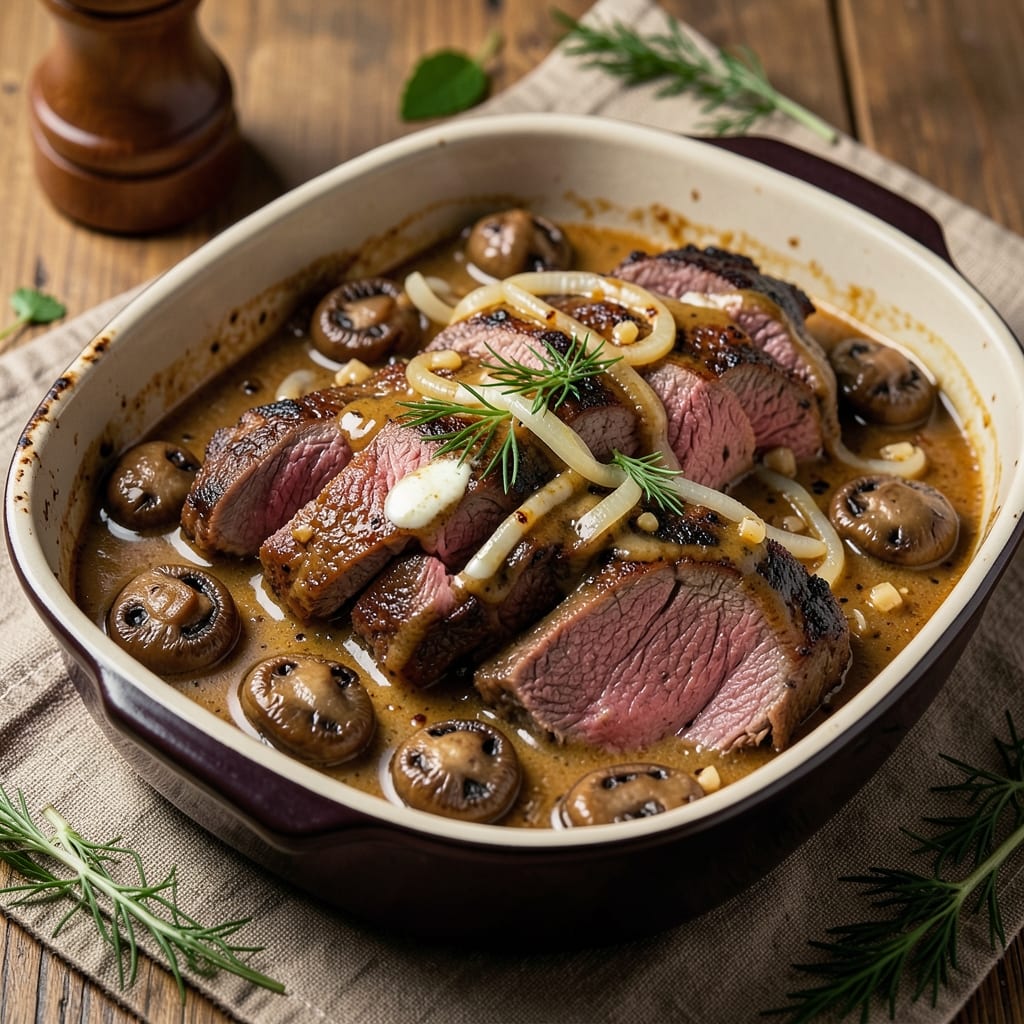
This baked beef stroganoff recipe delivers restaurant-quality comfort in one dish—tender beef with a velvety mushroom sauce that bakes to golden perfection. 🌟 The secret lies in searing the beef first to lock in flavor, then finishing it in the oven for hands-off cooking that keeps the meat juicy and the sauce rich. I developed this version after years of testing, and it’s the only stroganoff that stays creamy without breaking when reheated.
The beauty of this method is its balance: traditional techniques like deglazing the pan with beef broth build deep flavor, while the oven ensures the sauce thickens just enough to coat every bite. Sour cream and Dijon mustard add that signature tang, while mushrooms lend earthy richness. It’s foolproof for weeknights but impressive enough for dinner guests—no stovetop babysitting required.
By the time it emerges from the oven, you’ll have perfectly tender beef with a crisp crust, all smothered in a sauce so creamy it clings to every forkful. The aroma alone will have everyone at the table asking what’s for dinner. Serve it over buttery mashed potatoes or crusty bread to soak up every last drop of that luscious sauce.
This recipe scales beautifully—double it for a crowd or halve it for leftovers that reheat perfectly. The key is timing: let the sauce reduce while the beef rests, so each bite is balanced between rich and tender. Here’s how to make it right the first time.
Ingredients for baked beef stroganoff
Restaurant-quality beef stroganoff starts with these 14 ingredients—each playing its part for tender beef and velvety sauce.
| Ingredient | Amount | Notes |
|---|---|---|
| Beef Chuck Roast 🥩 | 1 ½ lb | Pre-cut into 1-inch cubes |
| Unsalted Butter 🧈 | 3 tbsp | For searing beef |
| White Onion 🧅 | 1 whole | Diced, about 1 cup |
| Garlic Cloves 🧄 | 4 cloves | Minced, for depth |
| Mushrooms 🍄 | 8 oz | Cremini or white, sliced |
| Beef Broth 💧 | 1 cup | Low-sodium preferred |
| Sour Cream 🥛 | ½ cup | Full-fat for richness |
| Dijon Mustard 🍯 | 1 tbsp | For tangy balance |
| All-Purpose Flour 🌾 | 1 tbsp | For thickening sauce |
| Dry White Wine 🍷 | ¼ cup | Bold variety like Chardonnay |
| Fresh Thyme Leaves 🌿 | ¼ cup | Chopped, or 1 tsp dried |
| Salt 🧂 | 1 ½ tsp | Diamond Crystal preferred |
| Ground Black Pepper 🌶️ | ½ tsp | Freshly cracked |
| Heavy Cream 🥛 | ½ cup | For final sauce richness |
The beef makes or breaks this dish. Chuck roast is ideal—it stays tender while developing that signature crust. Cut it yourself if possible: 1-inch cubes ensure even cooking. For convenience, most grocery stores sell pre-cubed chuck, but check for good marbling. If you're at Whole Foods, their grass-fed chuck works beautifully. The mushrooms should be firm and cremini or white—avoid pre-sliced, which bruises faster. Fresh thyme is worth hunting down for its bright aroma, but dried works in a pinch at one-third the amount. For the wine, any bold dry white like Chardonnay or Sauvignon Blanc will do.
No white wine? Beef broth with extra lemon juice mimics the acidity perfectly. Fresh thyme unavailable? Dried thyme or marjoram at one-third the quantity keeps the earthy notes. The sour cream needs to be full-fat—low-fat versions won't give that luxurious texture. For the flour, all-purpose works fine, but if you've got arrowroot powder, it creates a smoother sauce. The Dijon mustard is non-negotiable for that signature tang, but if you're out, yellow mustard at half the amount works in a bind. Pre-sliced mushrooms? Pat them dry thoroughly before cooking to avoid a watery sauce.
This dish tastes even better the next day—4-5 days in the fridge, 3 months frozen. For leftovers, reheat gently on the stove with a splash of broth to restore creaminess. The sauce thickens as it cools, so you might need to thin it slightly with extra broth when reheating. Portion into containers with a layer of parchment paper between servings to prevent sticking. If you're doubling the recipe for a crowd, use a Dutch oven or deep baking dish—it's worth investing in one for this dish alone.
Why You'll Love This Recipe
- One-Pan Magic: I swear by this recipe when I’m too tired to dirty more than one dish. The beef, onions, and mushrooms all bake together in the same pan—no stovetop babysitting, no extra pots. Just slice the roast, toss it with butter and garlic, and let the oven do the work while you pour wine (or coffee).
- Rich Without Effort: That deep, savory sauce comes from browning the beef and mushrooms first—caramelized edges, umami bombs. Honestly, the only thing I measure is the garlic, and even then, I eyeball it. The butter melts into a velvety finish that makes it taste like a restaurant dish, not a weeknight hack.
- Leftovers That Shine: This isn’t the kind of meal that turns into sad fridge leftovers. The flavors actually improve the next day—more tender beef, sauce thickens just right. I pack it for lunches or reheat it for dinner with crusty bread, and no one complains. (Yes, even my picky teenager.)
- Budget Feast: A chuck roast stretches farther than you’d think, and mushrooms add depth without breaking the bank. I’ve fed six people for under $20 with this, and it still feels like a special meal. The onions and garlic are pantry staples, so the only splurge is the butter—and trust me, it’s worth it.
Step-by-step instructions for baked beef stroganoff
This method delivers melt-in-your-mouth beef with a rich, velvety sauce—all baked to perfection.
🔥 Step 1: Sear the Beef Chuck Roast
Preheat your oven to 375°F. Heat a large oven-safe skillet over medium-high heat and add 2 tablespoons of the unsalted butter. Working in batches if needed, add the 1.5 lb Beef Chuck Roast (pre-cut into 1-inch cubes) and sear for 2-3 minutes per side until deeply browned. This step builds deep flavor through the Maillard reaction.
Remove the beef from the skillet and set aside. In the same skillet, melt the remaining 1 tablespoon unsalted butter over medium heat. Add the diced white onion and cook for 4-5 minutes until softened and translucent. Stir in the minced garlic cloves and cook for 30 seconds until fragrant—don't let it brown or it'll turn bitter.
🍳 Step 2: Build the Sauce Base
Sprinkle the 1 tablespoon all-purpose flour over the onions and garlic, stirring constantly for 1 minute to cook off the raw flour taste. Pour in the 0.25 cup dry white wine and scrape up any browned bits from the bottom of the skillet with a wooden spoon. This deglazing captures all the flavor you've built.
Add the 8 oz sliced mushrooms and cook for 5-6 minutes until they release their moisture and begin to brown. Pour in the 1 cup beef broth and bring to a gentle simmer. Season with 1.5 teaspoons salt and 0.5 teaspoon ground black pepper, then stir in the 0.25 cup chopped fresh thyme leaves.
🥘 Step 3: Combine and Bake to Tender Perfection
Return the seared beef to the skillet and stir gently to coat in the sauce. Transfer the entire skillet to the preheated 375°F oven and bake uncovered for 45-50 minutes until the beef is fork-tender. The sauce should reduce slightly and thicken as it bakes.
Here's the thing—don't peek at the beef during baking. Every time you open the oven, you lose heat and steam, which can dry out the beef. Instead, trust the cooking time and the visual cues: the sauce should be glossy, and the beef should pull apart easily with a fork when tested.
🍽️ Step 4: Finish with Creamy Richness
Remove the skillet from the oven and stir in the 0.5 cup sour cream and 0.5 cup heavy cream along with the 1 tablespoon Dijon mustard. Simmer gently on the stovetop over low heat for 3-4 minutes until the sauce thickens slightly and becomes velvety. The mustard adds a subtle tang that balances the richness.
Taste and adjust seasoning if needed—this is where you can really make the dish your own. The sauce should coat the back of a spoon and cling beautifully to the beef. Serve immediately over buttered egg noodles or crusty bread to soak up every last bit of that creamy mushroom sauce.
Pro Tips For Making Baked Beef Stroganoff
- SEAR THE ONIONS LOW: I used to blast onions on high heat until they turned bitter—don’t do that. Keep the heat at medium-low and let them sweat out moisture for 8-10 minutes before adding garlic. This builds flavor without burning, and you’ll notice the difference when you taste the sauce later.
- CUT MUSHROOMS SMALLER THAN YOU THINK: I learned this the hard way—chunky mushrooms stay tough. Dice them into ¼-inch pieces so they cook evenly and absorb the stroganoff sauce properly. If you’re impatient, slice them paper-thin for faster cooking, but they’ll lose texture.
- REST THE BEEF BEFORE SLICING: Skipping this step means dry, stringy meat. Let the chuck roast sit under foil for 10 minutes after baking—yes, even if you’re starving. The fibers relax, and you’ll get clean slices that hold up better in the sauce.
- USE COLD BUTTER FOR SAUCE: I was skeptical until I tried it—adding cold butter to the pan while deglazing creates a silky, emulsified sauce instead of a greasy mess. Let the butter melt slowly over low heat, and you’ll end up with a velvety finish that clings to everything.
Pro cooking tips for this recipe
Sear Like a Pro
That initial sear is where all the magic happens—deep, caramelized crust builds unmatched flavor. I use a 12-inch cast-iron skillet from Lodge because it retains heat perfectly, but any heavy oven-safe pan works. Sear the beef in single layers if needed, and don’t crowd the pan—this ensures maximum surface contact for those golden brown bits. 🔥
Work in 2-3 batches if your skillet can’t handle all the beef at once. After searing, let the beef rest on a wire rack for 5 minutes before adding it back to the sauce. This prevents a gush of juices that can dilute your hard-earned flavors.
Deglaze with Purpose
The deglazing step transforms scraps into flavor gold. After removing the beef, immediately add the white wine and scrape every last bit from the bottom with a wooden spoon—those browned bits are packed with umami. If you’re avoiding alcohol, use beef broth + 1 tbsp lemon juice for the same acidity boost. 🍷
Let the wine reduce by half before adding mushrooms. This concentrates the flavors and prevents a watery sauce later. I like to add a pinch of salt to the mushrooms while they cook—they’ll absorb it and release it into the sauce.
Oven Temperature Control
Your oven’s accuracy matters more than you think. I calibrate mine annually with an oven thermometer—many home ovens run 25°F hotter or cooler than set. For this recipe, 375°F is critical: too low, and the sauce won’t thicken; too high, and the beef dries out. 🌡️
If your oven lacks even heat, rotate the skillet halfway through baking. The beef should reach 203°F internal temperature—use a meat thermometer for precision. The sauce will naturally thicken as it bakes, but resist the urge to stir frequently.
Sauce Thickening Hacks
The flour acts as a natural thickener, but timing is everything. Cook it for exactly 1 minute after adding to the onions—any longer, and it’ll taste raw. For extra richness, I stir in 1 tbsp cold butter at the end, which creates a silky texture without breaking the sauce. 🥛
If the sauce is too thin after baking, mix 1 tsp cornstarch with 1 tbsp cold water, stir into the sauce, and simmer for 2 minutes. For a smoother finish, strain the sauce through a fine-mesh sieve before serving—this removes any lingering flour grit.
Resting for Perfection
Let the stroganoff rest for 10-15 minutes off the heat before serving. This allows the juices to redistribute, ensuring every bite is moist. I cover it loosely with foil to retain heat while resting. The sauce will thicken further—this is normal and desirable. ✨
Pro tip: If you’re making this ahead, let it cool completely before refrigerating. The sauce will firm up, so add 2-3 tbsp beef broth when reheating to restore creaminess. Reheat gently on low heat or in the microwave at 50% power to avoid curdling the dairy.
Nutrition facts
Frequently asked questions
Can I use ground beef instead of cubed chuck roast?
Ground beef works in a pinch, but it won't give you that tender, fork-tender texture. For best results, stick with chuck roast cut into 1-inch cubes—it stays juicy and develops a beautiful crust. If you're set on ground beef, use 80/20 lean-to-fat ratio and cook it through at 350°F for 25-30 minutes instead of baking.
Why did my sauce turn out too thin?
Sauce thinning usually happens when the flour isn't cooked long enough or the baking time is too short. Always cook the flour for exactly 1 minute to remove the raw taste, and bake uncovered at 375°F for the full 45-50 minutes. If it's still too thin, mix 1 tsp cornstarch with 1 tbsp cold water and stir it in while simmering.
Can I make this recipe ahead of time?
This dish tastes even better the next day. Let it cool completely, then refrigerate for up to 4-5 days or freeze for 3 months. When reheating, add 2-3 tbsp beef broth to restore creaminess—simmer gently on low heat or microwave at 50% power to prevent curdling.
What's the best way to reheat leftovers?
Reheat leftovers gently to preserve that creamy texture. Transfer to a skillet and warm over low heat for 5-7 minutes, stirring occasionally. For microwave reheating, cover with a damp paper towel and heat at 50% power in 1-2 minute intervals. Never microwave on full power—it'll break the sauce.
Can I substitute wine with something else?
Yes! For a non-alcoholic version, use 1 cup beef broth + 1 tbsp lemon juice to mimic the acidity. If you're using a different wine, opt for a bold dry white like Chardonnay or Sauvignon Blanc—avoid sweet wines as they'll make the sauce cloying. The wine's acidity helps balance the richness of the sour cream and cream.