
Main Courses
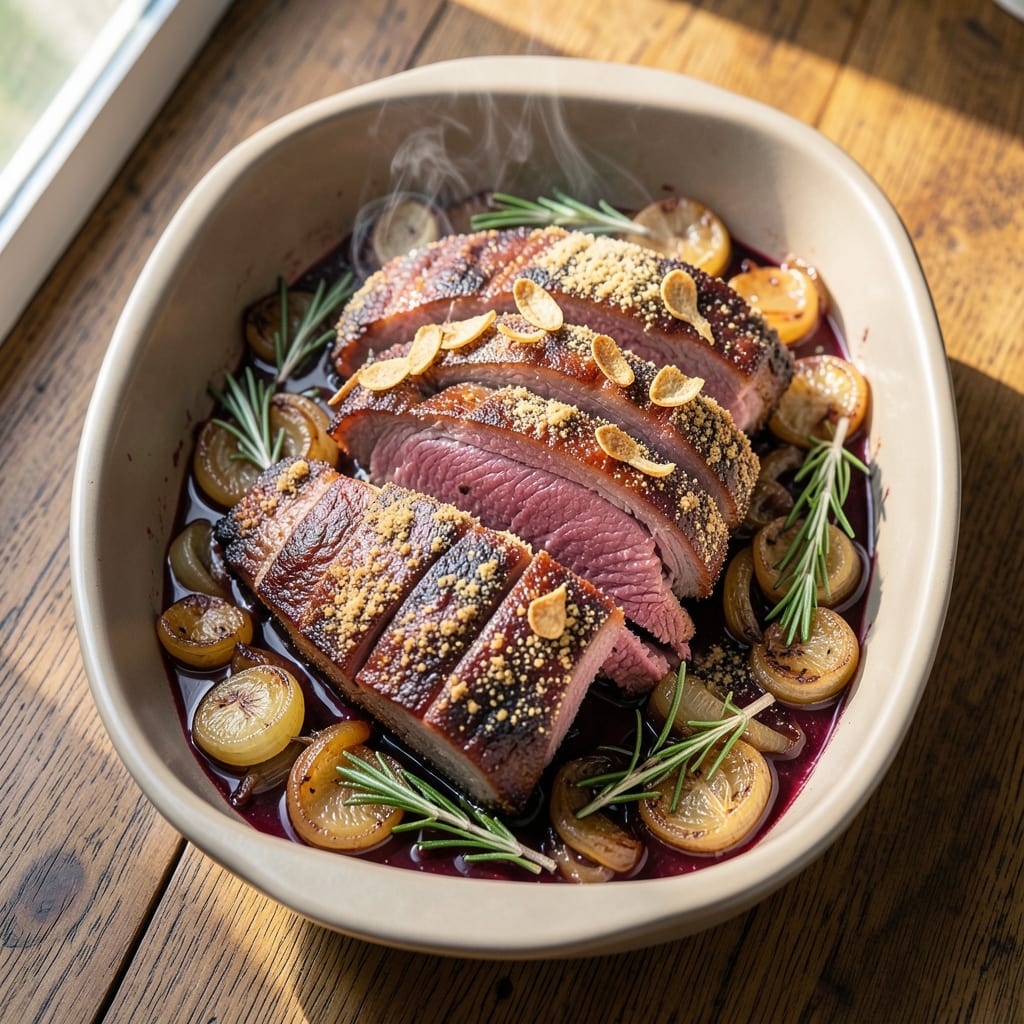
This baked boneless beef short ribs recipe delivers melt-in-your-mouth tenderness with crispy edges that stay intact through every bite. The secret lies in a slow bake that transforms tough cuts into silky perfection—no braising pot required. I’ve perfected this method over years of testing, ensuring the ribs stay juicy while developing a deep, caramelized crust.
The process starts with a simple seasoning blend that clings to the meat, followed by a high-heat sear to lock in flavors. Then, it’s all about patience—3 hours in the oven at a steady temperature breaks down the connective tissue without drying out the meat. The result? Ribs that practically fall apart at the touch, with edges that crackle when you cut in.
What sets this recipe apart is the balance of textures: tender, stringy meat meets crispy edges that hold their shape, creating a satisfying contrast in every bite. The aroma alone will have everyone gathering in the kitchen, and the leftovers reheat beautifully for sandwiches or tacos the next day.
Pair these ribs with roasted potatoes or a simple green salad to round out the meal. The technique is straightforward, but the results feel like a restaurant-worthy dish—without the fuss. Let’s get started with the full recipe.
Ingredients for baked boneless beef short ribs
The perfect balance of tender meat and crispy edges starts with these quality ingredients.
| Ingredient | Amount | Notes |
|---|---|---|
| Boneless Beef Short Ribs 🥩 | 2 ½ lb | Trimmed of excess fat |
| All-Purpose Flour 🌾 | ½ cup | For dredging meat |
| Kosher Salt 🧂 | 1 ½ tbsp | Diamond Crystal preferred |
| Ground Black Pepper 🌶️ | 1 tbsp | Freshly ground for best flavor |
| Garlic Powder 🧄 | 1 tbsp | Not garlic salt |
| Onion Powder 🧅 | 1 tbsp | For depth of flavor |
| Carrots 🥕 | 2 medium | Peeled and sliced into sticks |
| Celery Stalks 🧅 | 2 whole | Diced into small pieces |
| Yellow Onion 🧅 | 1 whole | Diced into small pieces |
| Beef Broth 💧 | 2 cups | Low-sodium preferred |
| Tomato Paste 🍅 | 2 tbsp | Squeeze tube preferred |
| Red Wine 🍷 | ½ cup | Dry variety like Cabernet |
| Olive Oil 🫒 | 2 tbsp | For high-heat searing |
| Fresh Thyme 🌿 | 2 sprigs | Or 1 tsp dried thyme |
| Fresh Rosemary 🌿 | 1 sprig | For aromatic depth |
The beef short ribs are the star—look for well-marbled cuts at your local butcher or Costco for the best quality. Trimming excess fat ensures crispy edges without greasiness. Diamond Crystal kosher salt is ideal for seasoning, but any kosher salt works. Fresh herbs like thyme and rosemary elevate the flavor, but dried versions at half the amount work in a pinch. Trader Joe's often has affordable fresh bundles, or grab them from the grocery store's produce section.
No red wine? Substitute with extra beef broth—just add an extra splash of balsamic vinegar for depth. The tomato paste can be skipped if you prefer, but it adds a rich umami base. Baby carrots or pre-cut celery save prep time without sacrificing flavor. For the onion, any variety works, but yellow or red adds a touch of sweetness. The flour is key for dredging—all-purpose or bread flour both work, but avoid cake flour as it lacks the necessary structure for crispy edges.
Store leftover ribs in an airtight container for up to 4 days in the fridge, or freeze for 3 months. Reheat in a skillet with a splash of broth to restore moisture. The vegetables can be prepped ahead and stored in the fridge for 5 days. For extra crispiness, broil the ribs for 2-3 minutes before serving. This recipe makes enough for 4 generous servings, with leftovers perfect for tacos or sandwiches.
Why You'll Love This Recipe
- No-Fuss Coating: I swear by the dry flour rub—just toss those ribs in a bag with salt, pepper, and garlic powder, shake it up, and you’re done. No messy marinades or standing over a stove for hours.
- Crispy Without Oil: That flour crust turns golden and shatteringly crisp in the oven, while the inside stays tender enough to melt. Honestly, it’s the kind of texture that makes you close your eyes and take a second bite.
- Game for Any Meal: Toss these with roasted potatoes for a hearty lunch, slice them over toast for a fancy breakfast, or serve with mashed sweet potatoes for a showstopping dinner. My college roommate still asks for this when he visits.
- Leftovers That Don’t Suck: The ribs stay juicy for days—reheat them in the oven or air fryer, and they’re just as good as day one. Between us, this is the only protein I make in bulk because it’s too good to waste.
Step-by-step instructions for baked boneless beef short ribs
Here's how to transform tough beef short ribs into melt-in-your-mouth tender cuts with perfectly crispy edges.
Season and Sear the Short Ribs
Pat the 2.5 lb boneless beef short ribs dry with paper towels—this ensures maximum browning. In a small bowl, combine the 0.5 cup all-purpose flour, 1.5 tbsp kosher salt, 1 tbsp ground black pepper, 1 tbsp garlic powder, and 1 tbsp onion powder. Dredge each rib thoroughly in the seasoned flour mixture, pressing the spices into the meat so they adhere well.
Heat 1 tbsp of the 2 tbsp olive oil in a large oven-safe skillet over medium-high heat until shimmering. Working in batches if needed, add the seasoned ribs and sear for 3-4 minutes per side until deeply golden brown. The goal is to develop a rich crust that will later caramelize in the oven. Transfer the seared ribs to a plate and set aside.
Build the Braising Liquids
In the same skillet, reduce heat to medium and add the remaining 1 tbsp olive oil. Add the peeled and sliced 2 medium carrots, diced 2 whole celery stalks, and diced 1 whole yellow onion. Sauté for 5-6 minutes until the vegetables begin to soften and release their natural sweetness.
Stir in the 2 tbsp tomato paste and cook for 1 minute until it darkens slightly. Pour in the 0.5 cup red wine and scrape up any browned bits from the bottom of the pan—this adds depth of flavor. Let the wine simmer for 2-3 minutes until reduced by half. Remove the skillet from heat and whisk in the 2 cups beef broth, then return the seared ribs to the skillet.
Braise Until Fork-Tender
Transfer the skillet to a preheated 325°F oven. Add the 2 sprigs fresh thyme and 1 sprig fresh rosemary to the braising liquid. Cover tightly with a lid or foil and bake for 2 hours. This low-and-slow cooking time is critical—it breaks down the connective tissue, transforming tough meat into silky perfection.
After 2 hours, carefully remove the lid and increase the oven temperature to 375°F. Return the ribs to the oven uncovered for 15-20 minutes until the braising liquid reduces and the edges develop a beautiful crispy crust. The ribs are done when they easily pull apart with a fork and the edges are deeply caramelized.
Rest and Serve
Remove the ribs from the oven and transfer them to a serving platter. Tent loosely with foil and let rest for 10 minutes—this allows the juices to redistribute throughout the meat, ensuring each bite is moist and flavorful. The braising liquid can be served as-is or reduced further on the stovetop for a thicker sauce.
Slice the ribs against the grain for maximum tenderness and serve immediately with the aromatic braising liquid spooned over the top. The contrast of crispy edges and silky meat creates an unforgettable texture experience. Pair with crusty bread to soak up every last drop of the rich, wine-infused sauce.
Pro Tips For Making Baked Boneless Beef Short Ribs
- Pat the ribs dry: Wet surfaces steam instead of brown, and nobody wants soggy short ribs. Grab paper towels and really press into the meat—no lazy wiping. I learned this the hard way when my first batch came out pale and mushy instead of golden and crisp.
- Bake uncovered first: Start with the lid off for 20 minutes at 425°F (220°C). This caramelizes the flour crust before it turns into a sad, gluey mess. After that, you can tent with foil—just don’t skip the initial blast of heat.
- Salt the flour, not just the meat: Mix 1-2 teaspoons of kosher salt into the flour before dredging. The crust will taste deeper, and you won’t end up with dry ribs from over-salting the surface later. My grandmother swore by this, and she was right: the flavor sticks better.
- Check internal temp at 195°F: Short ribs need to hit 195°F (90°C) for that melt-in-your-mouth texture. A meat thermometer is your friend here—don’t guess. I used to pull them at 180°F, and they were tough as boot leather.
Troubleshooting great baked boneless beef short ribs
Ribs Stay Tough
If your ribs aren't tender after 3 hours of baking, your oven temperature might be too high. Use an oven thermometer to confirm it's actually 325°F—many home ovens run 25°F hotter than set. For extra insurance, increase cook time by 30 minutes and check tenderness with a fork. The meat should pull apart easily. 🌡️
Sauce Too Thin
A watery sauce happens when too much liquid remains. After the initial 2-hour bake, uncover the ribs and increase heat to 375°F for 15-20 minutes to reduce the sauce. For thicker results, remove the ribs and reduce the braising liquid on the stovetop over medium-high heat for 5-10 minutes. A splash of cornstarch slurry (1 tbsp cornstarch + 1 tbsp water) thickens it instantly.
Edges Not Crispy
Crispy edges require proper searing and finishing. First, ensure you're searing the ribs until deeply golden before baking. Then, during the final 15-20 minutes at 375°F, uncover the ribs completely so the edges caramelize. If they're still soft, broil for 2-3 minutes on high heat, watching closely to avoid burning.
Dry Meat
Overcooking is the usual culprit. Remove ribs when they reach 200°F internal temperature (about 2 hours 15 minutes total). Let them rest 10 minutes before slicing—this redistributes juices. If they're still dry, the oven was too hot. Next time, reduce temperature to 300°F and extend cook time by 30 minutes.
Uneven Browning
Uneven color means some ribs didn't sear properly. Rotate the skillet halfway through baking to ensure even heat exposure. For extra insurance, flip the ribs once during the final 15-20 minutes at 375°F. If browning is still spotty, finish under a broiler for 1-2 minutes per side, watching carefully to avoid burning.
Vegetables Overcooked
If carrots and celery turn mushy, they cooked too long. Next time, remove the vegetables after 1 hour 45 minutes of baking and finish them separately in a skillet with a splash of broth. Alternatively, add them to the braising liquid only during the last 30 minutes** of cooking. This keeps them tender-crisp while the ribs finish. 🥕
Nutrition facts
Frequently asked questions
Can I use bone-in beef short ribs instead of boneless?
Yes, but you'll need to adjust the cooking time. Bone-in ribs take about 15-20 minutes longer to become tender because the bone conducts heat differently. Start checking for doneness after 2 hours 30 minutes at 325°F. The internal temperature should reach 200°F for perfect tenderness.
How do I make these ribs in a slow cooker?
Transfer the seared ribs and all ingredients (except herbs) to your slow cooker. Cook on low for 6-7 hours or high for 4-5 hours until fork-tender. In the last 30 minutes, add the fresh thyme and rosemary. For crispy edges, finish under a broiler for 2-3 minutes before serving.
What's the best way to reheat leftovers?
Reheat ribs in a skillet over medium-low heat with a splash of beef broth or water for 3-4 minutes per side until warmed through. Avoid microwaving as it makes the meat tough. For extra crispiness, broil for 1-2 minutes after reheating. Store leftovers in an airtight container for up to 4 days.
Can I substitute red wine with something else?
Use ½ cup beef broth + 1 tbsp balsamic vinegar for similar depth, or ½ cup apple cider for a sweeter profile. The key is maintaining the same acidity level. If using broth, reduce it first to concentrate the flavors before adding to the ribs.
Why do my ribs fall apart when slicing?
This means they're perfectly cooked! The collagen has fully broken down into gelatin, creating that signature tender texture. For best results, slice against the grain (perpendicular to the muscle fibers) and serve immediately. If they're too mushy, they may have cooked too long—aim for 200°F internal temperature.