
Soups & Stews
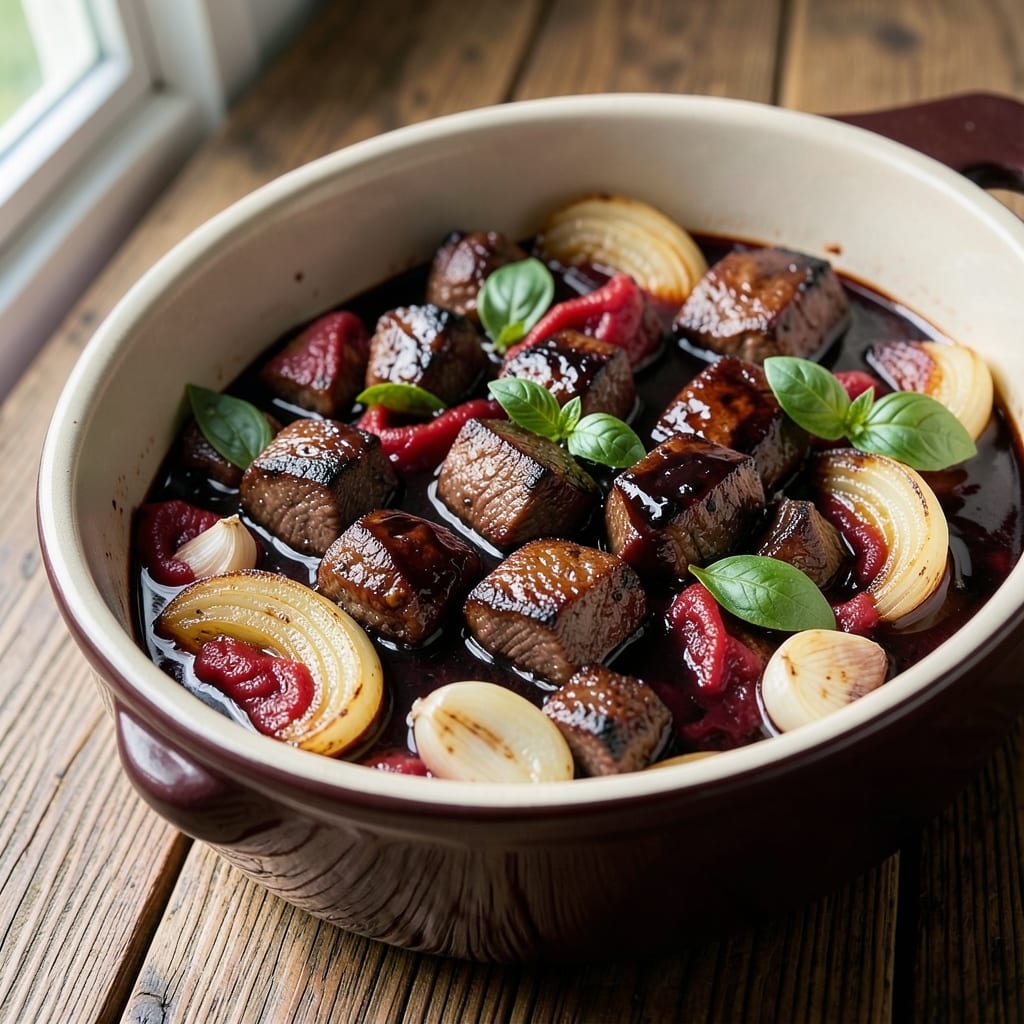
This balsamic braised beef recipe transforms tough cuts into melt-in-your-mouth tenderness through a slow, 3-hour simmer that develops deep caramelized flavors. The secret lies in a rich balsamic reduction—sweet, tangy, and complex—that coats every bite, turning simple beef chuck into a restaurant-worthy centerpiece. Professional chefs rely on this technique for its foolproof results, and now you can recreate it at home with just a Dutch oven and patience.
The process begins with searing the beef to lock in juices, then braising it in a flavorful liquid of red wine, tomatoes, and aromatic herbs. As it simmers, the balsamic vinegar reduces into a glossy, syrupy glaze that clings to the beef, creating a sauce so rich it deserves its own bowl. This method is ideal for weeknight dinners or special occasions—just let the slow cooker do the work while you prepare sides like creamy mashed potatoes or crusty bread to soak up every last drop.
What makes this recipe stand out is the balance of textures and flavors: fork-tender beef with a glossy, caramelized crust, paired with a sauce that’s both sweet and tangy. The long braising time ensures even cooking and maximum flavor infusion, while the balsamic reduction adds a depth that store-bought sauces can’t match. Serve it family-style with roasted vegetables or over polenta for a hearty, satisfying meal that feels indulgent yet simple to prepare.
For those short on time, a pressure cooker can cut the cooking time to under an hour without sacrificing flavor—though purists will argue the slow method yields the best results. Either way, the outcome is the same: restaurant-quality braised beef that tastes even better the next day. Let’s get started on creating a dish that’s sure to become a household favorite.
Ingredients for balsamic braised beef
Restaurant-quality braised beef starts with these 14 ingredients—simple but powerful.
| Ingredient | Amount | Notes |
|---|---|---|
| Beef Chuck Roast 🥩 | 2 ½ lb | 2-inch cubes, bone-in preferred |
| Dry Red Wine 🍷 | 1 ½ cups | Bold variety like Cabernet Sauvignon |
| Balsamic Vinegar 🍶 | ½ cup | Aged, high-quality preferred |
| Tomato Paste 🍅 | 2 tbsp | Smooth, no sugar added |
| Yellow Onion 🧅 | 1 whole | Large, chopped into half-moons |
| Garlic Cloves 🧄 | 6 cloves | Peeled, smashed with side of knife |
| Fresh Thyme Sprigs 🌿 | 4 whole | Or 1 tsp dried thyme |
| Fresh Rosemary 🌿 | 1 tbsp | Chopped, plus sprigs for garnish |
| Beef Broth 💧 | 2 cups | Low-sodium preferred |
| Olive Oil 🫒 | 2 tbsp | Extra-virgin for searing |
| Salt 🧂 | 1 ½ tsp | Kosher or sea salt |
| Black Pepper 🌶️ | 1 tsp | Freshly ground preferred |
| Carrots 🥕 | 2 whole | Medium, cut into chunks |
| Fresh Parsley 🌿 | ¼ cup | Chopped, for garnish |
The beef makes or breaks this dish, so don't skimp. Chuck roast is ideal—look for well-marbled cuts at Whole Foods or your local butcher shop. If you can't find chuck, bottom round works too, but it'll be slightly leaner. The wine should be bold—Cabernet Sauvignon or Merlot from a reliable store like Trader Joe's or Total Wine. For the balsamic, aged varieties like San Marzano or Barilla create that signature depth. Fresh herbs elevate the dish, so grab thyme and rosemary from the grocery store's produce section—look for vibrant green sprigs, not wilted ones.
No red wine? Beef broth with 1 tbsp balsamic vinegar works in a pinch, though the flavor won't be identical. Fresh thyme is ideal, but dried thyme at one-third the amount gets you close. The tomato paste can be substituted with 1 cup crushed tomatoes, though it'll dilute the sauce slightly. For the carrots, baby carrots or celery work just as well. If you're prepping ahead, sear the beef a day in advance and refrigerate it—just add the braising liquid when ready to cook. The beef cubes should be uniform—aim for 1.5 to 2 inches for even cooking.
This dish tastes even better the next day, so plan ahead. Store leftovers in an airtight container in the fridge for up to 5 days, or freeze for 3 months. The sauce thickens as it cools, so reheat with a splash of water or broth. For serving, garnish with fresh parsley and rosemary sprigs right before eating—it adds a pop of color and freshness. The beef reheats beautifully, whether you're serving it over mashed potatoes, polenta, or crusty bread. Double the recipe if you're feeding a crowd—it's that good.
Why You'll Love This Recipe
- One-Pot Magic: I swear by this recipe when I’m too tired to scrub a million dishes—just sear the beef, dump everything in the same pot, and walk away. The red wine and balsamic vinegar do all the work while you sip something stronger (or just relax).
- Deep, Rich Taste: That beef chuck roast? It turns buttery after hours of slow braising, while the balsamic vinegar and tomato paste create a glossy, tangy sauce that clings like a hug. Honestly, my picky husband actually licks his plate.
- Leftovers for Days: Between us, this dish only gets better the next day. I’ll make a double batch on Sunday, freeze half, and still have hearty lunches all week—no sad takeout nights. The flavors meld into pure comfort.
- Budget Feast: A chuck roast stretches forever, and red wine + balsamic vinegar make this feel fancy without the grocery bill. I’ve fed six people for under $30, and no one ever guesses it’s not a restaurant meal.
Step-by-step instructions for balsamic braised beef
Transform tough chuck roast into melt-in-your-mouth beef with this slow-cooked method.
Sear the Beef for Maximum Flavor
Heat a heavy Dutch oven over medium-high heat until very hot. Add the 2 tablespoons olive oil and let it shimmer for 30 seconds. Working in batches if needed, add the 2.5 lb beef chuck roast cut into 2-inch cubes, bone-in preferred. Sear undisturbed for 3-4 minutes per side until deeply browned—this creates the flavor foundation.
Don't rush this step. You want a rich, caramelized crust on each piece. If your pan gets crowded, work in batches and set the first batch aside. Season the seared beef with 1 teaspoon salt and ½ teaspoon black pepper right after searing while it's still hot.
Build the Flavor Base with Aromatics
Remove the seared beef and set aside. In the same Dutch oven, add 2 tablespoons olive oil if needed and reduce heat to medium. Add the 1 whole yellow onion chopped into half-moons and cook for 5-6 minutes until softened and golden. Add the 6 cloves garlic smashed with the side of your knife and cook for 30 seconds until fragrant.
Stir in the 2 tablespoons tomato paste and cook for 1 minute until it darkens slightly. This step develops depth that you can't get from just raw ingredients. Add the 4 whole fresh thyme sprigs and 1 tablespoon chopped fresh rosemary, stirring to combine.
Deglaze and Simmer the Braise
Pour in the 1.5 cups dry red wine and scrape up all the browned bits from the bottom of the pot with a wooden spoon. This deglazing captures all the flavor you've built so far. Let it simmer for 3-4 minutes until reduced by half, then add the 0.5 cup balsamic vinegar and 2 cups beef broth.
Return the beef to the pot along with any accumulated juices. Bring to a gentle boil, then reduce heat to low to maintain a bare simmer. Cover partially with a lid and add the 2 whole carrots cut into chunks. This is where patience pays off—braising at 300°F for 3 hours transforms tough meat into tender perfection.
Finish with Caramelized Balsamic Glaze
After 2.5 hours of braising, remove the lid and increase heat to medium-high. Let the liquid reduce uncovered for 30-45 minutes until it thickens into a glossy, caramelized sauce. You're looking for a syrupy consistency that coats the back of a spoon. Stir occasionally to prevent burning.
Taste and adjust seasoning with additional ½ teaspoon salt and ½ teaspoon black pepper if needed. The sauce should be rich, slightly tangy, and perfectly balanced. Remove the thyme sprigs and rosemary sprigs before serving, though you can leave them in if you prefer a more rustic presentation.
Rest and Serve with Fresh Herbs
Let the braised beef rest for 10-15 minutes before serving. This allows the juices to redistribute throughout the meat. Skim any excess fat from the surface if desired, though I like to leave some for flavor. Ladle the beef and sauce over mashed potatoes, polenta, or crusty bread to soak up every last bit of that luxurious sauce.
Garnish each serving with ¼ cup chopped fresh parsley just before serving to brighten the rich flavors. The beef should be fork-tender with a deep, caramelized crust, and the sauce should cling beautifully to each bite. This dish tastes even better the next day as the flavors continue to meld.
Pro Tips For Making Balsamic Braised Beef
- SEAR THE ONIONS FIRST: I used to toss chopped onions straight into the pot with the wine and vinegar, but they’d just turn mushy—no flavor, no texture. Instead, cook them in a dry pan with a pinch of salt until deeply golden (about 8-10 minutes), then deglaze with the wine. That caramelized base carries the whole dish.
- USE HALF THE WINE: I was skeptical until I tried it—adding the full bottle of wine makes the sauce watery and dull. Start with just 1 cup, reduce it by half, then add the balsamic vinegar. The alcohol burns off, and the sauce thickens properly without tasting like you’re drinking cooking wine.
- DON’T SKIP THE TOMATO PASTE TOAST: Splashing in the tomato paste after browning the beef? Big mistake. Cook it in the same pan for 2-3 minutes until it darkens slightly—this removes the raw taste and deepens the flavor. It’s the thing that makes the sauce actually taste like tomato, not just sweetened vinegar.
- LOW AND SLOW ISN’T LOW ENOUGH: I learned this the hard way—simmering at 200°F (93°C) for 4 hours gives you tender beef, but the sauce turns into a sad, thin glaze. Push it to 275°F (135°C) for the last 30 minutes. The beef stays juicy, and the sauce reduces into a glossy, sticky finish—no sad puddle left in the pot.
Best sauces and condiments for this balsamic braised beef
Balsamic Reduction
The star of this dish is the balsamic reduction—a glossy, syrupy glaze that forms as the vinegar and wine simmer down. I recommend using aged balsamic vinegar (like Barilla or San Marzano) for its deep, caramelized sweetness. Start by adding ½ cup balsamic vinegar and 1.5 cups dry red wine to the Dutch oven after deglazing. Let it reduce uncovered for 30-45 minutes on medium-high heat until it thickens to a spoon-coating consistency. 🍷
For extra depth, stir in 1 tablespoon brown sugar during the final 10 minutes of reduction. This enhances the caramelization without overpowering the tangy-sweet balance. The sauce should coat the beef beautifully, creating a sticky, flavorful crust. If it reduces too quickly, add 1-2 tablespoons beef broth to maintain moisture.
Herb-Infused Oil
Brighten the dish with a simple herb-infused oil drizzled over the finished beef. Heat 2 tablespoons olive oil with 1 tablespoon chopped fresh rosemary and 1 tablespoon chopped fresh thyme in a small saucepan over low heat for 3-4 minutes. Strain out the herbs and drizzle over the braised beef just before serving. This adds a fragrant, aromatic finish that cuts through the richness. 🌿
Mustard Cream Sauce
For a creamy twist, mix ¼ cup sour cream with 1 tablespoon Dijon mustard and 1 tablespoon balsamic reduction in a small bowl. Spoon this over individual servings of braised beef for a tangy, velvety contrast. The mustard adds a subtle kick, while the sour cream balances the richness. Serve immediately to prevent curdling.
Garlic Butter Sauce
Elevate the dish with a quick garlic butter sauce. Melt 2 tablespoons butter in a small pan over low heat, then add 2 minced garlic cloves and cook for 30 seconds until fragrant. Pour this over the braised beef and toss gently to coat. The buttery richness complements the balsamic tang perfectly, adding a luxurious finish. 🧈
Caramelized Onion Topping
Add texture and sweetness with caramelized onions. Sauté 1 large onion (thinly sliced) in 1 tablespoon olive oil over low heat for 25-30 minutes until deep golden brown. Pile these onto the braised beef before serving for a sweet, jammy contrast. The onions soak up the balsamic sauce beautifully, creating a decadent bite.
Nutrition facts
Frequently asked questions
Can I use a slow cooker instead of a Dutch oven?
For a slow cooker version, sear the beef first in a skillet, then transfer it to the slow cooker with all the braising ingredients. Cook on low for 6-8 hours or high for 3-4 hours, then finish by reducing the sauce on the stovetop. The texture will be slightly different but still delicious.
What's the best cut of beef for this recipe?
The ideal cuts are chuck roast or bottom round—they're tougher cuts that benefit from slow cooking. Look for well-marbled beef with visible fat for maximum flavor. If you can't find chuck, stew meat works too, though it may be slightly leaner. Never use tender cuts like filet mignon—they'll turn mushy.
How do I prevent the sauce from getting too acidic?
Balance the tanginess by adding 1 tablespoon brown sugar or 1 teaspoon honey during the final 10 minutes of cooking. You can also reduce the balsamic vinegar to ¼ cup if you prefer a milder flavor. Taste as you go and adjust with a pinch of salt or a splash of beef broth. The goal is a harmonious sweet-tangy balance.
Can I make this recipe ahead of time?
This dish tastes even better the next day! Store leftovers in an airtight container in the fridge for up to 5 days. The flavors deepen as the sauce continues to meld. Reheat gently on the stovetop with a splash of water or broth to restore moisture. For freezing, portion the beef and sauce separately and freeze for up to 3 months.
What if my beef isn't tender enough after 3 hours?
Check your heat level—it should be a gentle simmer, not a rolling boil. If the beef is still tough, add ½ cup hot water or broth and cook uncovered for another 30-60 minutes at a lower temperature. Avoid high heat, which can make the meat tough. For extra insurance, use a meat thermometer—the internal temp should reach 203°F for perfect tenderness.