
Soups & Stews
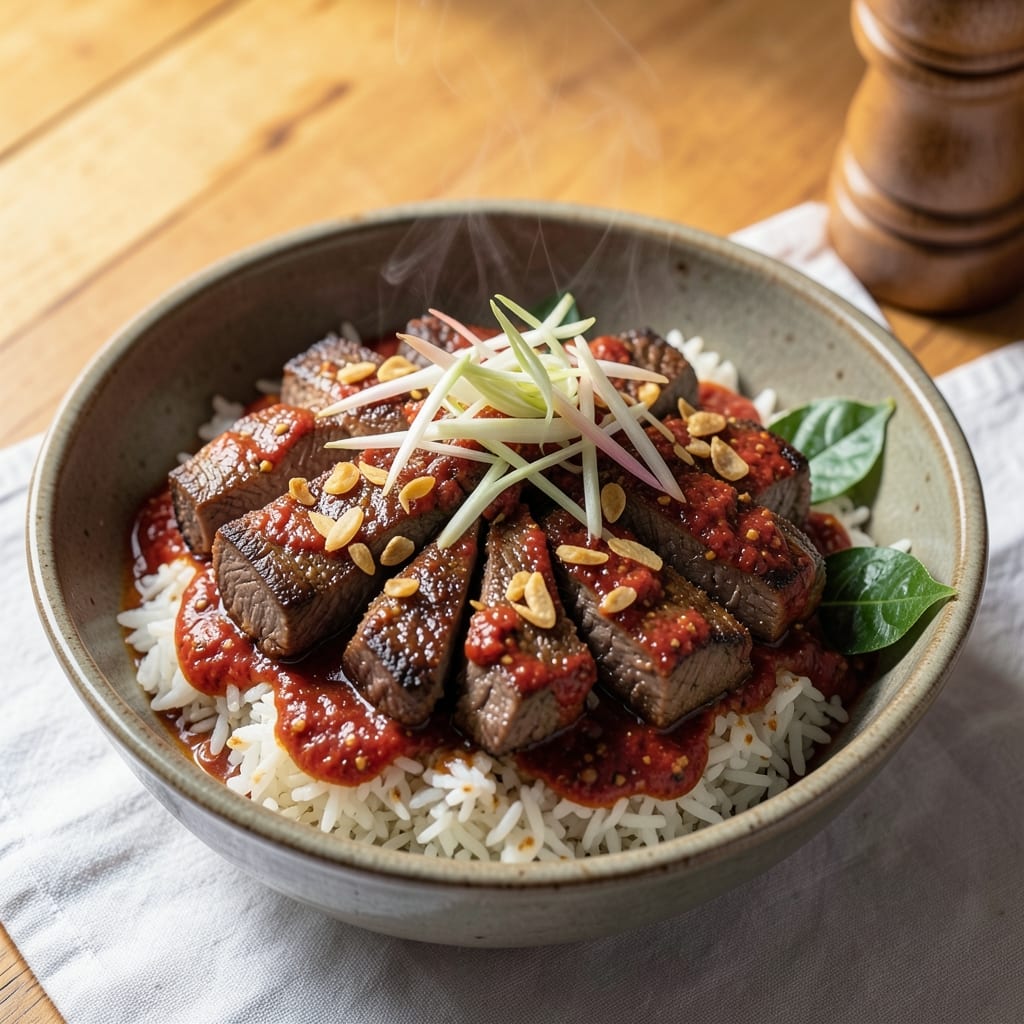
Bangkok-style beef curry transforms a simple weeknight dinner into a fragrant, spice-kissed experience straight from Thailand's bustling streets. This recipe captures the essence of authentic Thai flavors—bold, aromatic, and perfectly balanced between heat and richness—without requiring specialized ingredients. The secret lies in a layered marinade and slow-braised technique that tenderizes the beef while building complex, caramelized flavors in the coconut milk base.
What sets this apart from takeout versions is the two-stage cooking process: first marinating the beef in lemongrass, galangal, and kaffir lime leaves, then simmering it in a rich coconut curry until the meat falls apart. The result is tender beef swimming in a velvety sauce with just the right amount of spice—never overwhelming, always satisfying. This method delivers restaurant-quality depth with minimal effort, making it perfect for both weeknight dinners and special occasions.
The dish pairs beautifully with steamed jasmine rice and a simple cucumber salad to balance the richness. Fresh herbs like Thai basil and cilantro add brightness at the end, while a squeeze of lime elevates every bite. The aroma alone will transport you to Bangkok's vibrant street food scene, where this curry is a beloved staple. Ready in about 1 hour, it's a dish that feels indulgent yet remains approachable for home cooks.
This recipe also includes variations for heat preferences and ingredient substitutions, ensuring it works for your table. Whether you're serving a crowd or meal prepping for the week, the flavors only improve with time. Let's bring the taste of Bangkok to your kitchen with this foolproof method that rivals any takeout experience.
Ingredients for bangkok beef
Authentic Thai flavors start with these bold, aromatic ingredients that bring Bangkok's streets to your kitchen.
| Ingredient | Amount | Notes |
|---|---|---|
| Beef Chuck Roast 🥩 | 1 ½ lb | Cut into 1-inch cubes |
| Coconut Milk 🥥 | 13 ½ oz | Full-fat canned preferred |
| Red Curry Paste 🌶️ | 2 tbsp | Store-bought or homemade |
| Lemongrass 🌿 | 1 whole | White part only, bruised |
| Galangal Root 🌿 | 1 piece | 3-inch, peeled and sliced |
| Kaffir Lime Leaves 🍋 | 4 whole | Bruised for aroma |
| Garlic Cloves 🧄 | 6 cloves | Minced for marinade |
| Fish Sauce 💧 | 1 tbsp | Red Boat preferred |
| Brown Sugar 🍯 | 2 tbsp | Light or dark |
| Thai Basil Leaves 🌿 | ¼ cup | Fresh, torn by hand |
| Cilantro Leaves 🌿 | ¼ cup | Fresh, chopped |
| Lime Juice 🍋 | 2 tbsp | Freshly squeezed |
| Vegetable Oil 🫒 | 1 tbsp | For searing |
| Salt 🧂 | 1 tsp | Kosher or sea salt |
| Black Pepper 🌶️ | ½ tsp | Freshly ground |
The beef is non-negotiable—chuck roast delivers that signature fall-apart texture. Look for well-marbled cuts at Whole Foods or your local butcher. For the galangal and kaffir lime leaves, Asian markets are your best bet—freshness is key here. Galangal should smell citrusy and ginger-like; if it's musty, skip it. Lemongrass should be vibrant green with no brown spots. The red curry paste? Maesri or Mae Ploy are the gold standards, but any quality brand works. Fish sauce is essential for umami depth—Red Boat is widely available and consistently excellent.
No galangal? Ginger at half the amount works in a pinch, though it won't replicate the unique citrusy flavor. Kaffir lime leaves unavailable? Lime zest plus a bay leaf offers a similar aromatic punch. For heat preferences, adjust the curry paste—start with 1 tbsp and add more to taste. The coconut milk should be full-fat for that velvety texture; light versions won't deliver the same richness. Fresh herbs are ideal, but dried Thai basil at one-third the amount works if you're in a bind. The lime juice should be freshly squeezed—bottled versions lack the bright acidity needed to cut through the richness.
Marinated beef keeps for 24 hours in the fridge, allowing flavors to meld beautifully. The cooked curry reheats wonderfully—3-4 days in the fridge or 3 months frozen. For meal prep, portion into airtight containers with a layer of coconut milk on top to preserve freshness. The herbs should be added fresh just before serving to maintain their vibrant flavor. If making ahead, store them separately and stir in at the end.
Why You'll Love This Recipe
- One-Pot Magic: I swear by this recipe when I’m too tired to wash extra bowls—the beef and curry paste brown together, then simmer with coconut milk until it’s rich and velvety. No straining, no fuss, just deep flavor in one pot.
- Flavor Bomb: That first bite? The red curry paste and galangal root hit like a warm hug—spicy, fragrant, and balanced by the creamy coconut milk. The lemongrass adds a bright zing that makes it feel like a restaurant dish, not a weeknight meal.
- Leftover Goldmine: This beef gets better the next day—tender enough to shred for tacos, sandwiches, or even a quick stir-fry. I make a double batch on Sundays because reheating it is my go-to lazy dinner fix.
- Budget Stretch: A chuck roast is cheap, and this recipe feeds four for under $20. The coconut milk and curry paste might seem pricier, but a little goes a long way, and the leftovers stretch into lunches without breaking the bank.
Step-by-step instructions for authentic Bangkok beef curry
Master this Thai street-food favorite with deep flavors and tender beef every time.
Prepare the Aromatic Base
In a large Dutch oven, heat the 1 tablespoon vegetable oil over medium-high heat until shimmering. Add the 6 cloves garlic cloves and cook for 30 seconds until fragrant—don't let them brown. Add the 2 tablespoons red curry paste and stir continuously for 1 minute to toast the spices and deepen their aroma.
Next, add the 1 piece galangal root (peeled and sliced), 4 whole kaffir lime leaves, and 1 whole lemongrass (bruised white part only). Cook for 2 minutes until the galangal softens slightly and the leaves begin to release their citrusy aroma. This aromatic foundation is where the curry's complexity begins—don't rush this step.
Sear the Beef for Depth of Flavor
Push the aromatics to one side of the pot and add the 1.5 lb beef chuck roast (cut into 1-inch cubes) in a single layer. Let the beef sear undisturbed for 3-4 minutes until it develops a deep golden crust. This step is crucial—it locks in juices and creates a rich fond at the bottom of the pot.
Once the first side is browned, stir the beef and continue searing for another 2-3 minutes until all pieces are well-coated with the aromatic spices. Remove the beef and set aside temporarily. The residual fat in the pot will help build the curry's velvety texture.
Build the Curry Sauce
Return the seared beef to the pot and pour in the 13.5 oz coconut milk. Stir to combine, then add the 1 tablespoon fish sauce, 2 tablespoons brown sugar, 1 teaspoon salt, and 0.5 teaspoon black pepper. Bring to a gentle simmer over medium heat, then reduce to low heat and cover partially.
Let the curry simmer for 45-50 minutes, stirring occasionally, until the beef is fork-tender and the sauce has thickened slightly. The coconut milk should coat the back of a spoon but remain silky—not gluey. Here's where the magic happens: the galangal and lemongrass infuse their flavors while the coconut milk develops a rich, creamy consistency.
Finish with Fresh Herbs and Brightness
Remove the lemongrass, galangal root, and kaffir lime leaves (they've done their job). Stir in the 0.25 cup thai basil leaves and 0.25 cup cilantro leaves, followed by the 2 tablespoons lime juice. Taste and adjust seasoning—you might need an additional ½ teaspoon fish sauce or ½ teaspoon brown sugar to balance sweetness and saltiness.
Let the curry sit off heat for 5 minutes before serving. This resting period allows the flavors to meld completely. The finished curry should have a vibrant red hue from the spices, a rich coconut aroma, and a perfect balance of heat, sweetness, and umami. Serve over steamed jasmine rice to soak up every delicious bite.
Pro Tips For Making Bangkok Beef
- Sear the Chuck First: Hit that roast with a screaming-hot pan—no rushing—until it’s deep brown in spots. I learned this the hard way: skipping the sear means flavor stuck in the middle instead of coating every bite. Use about 2 tablespoons of oil, and don’t crowd the pan; work in batches if needed. ---
- Bruise the Galangal: Smash that galangal root with the flat side of your knife before slicing—yes, even if it looks ugly. It releases oils and aroma that’ll make your curry taste like a proper Bangkok street stall, not a sad approximation. Skip this, and you’re missing half the soul of the dish. ---
- Simmer Low and Long: After adding coconut milk, drop the heat to a bare simmer—think tiny bubbles, not rolling. I used to rush it, and the curry turned greasy. Let it cook for at least 2 hours (covered) so the beef melts like butter, not chews like shoe leather. Patience here is non-negotiable. ---
- Strain the Coconut Milk: Save 10 minutes and skip the gritty texture by straining the coconut milk through a fine-mesh sieve into a clean bowl. The sediment clogs your curry and makes it look unprofessional. I know, I know—it’s a pain, but your future self will notice the difference.
Best sauces and condiments for this dish
Coconut Milk Variations
The full-fat canned coconut milk in this recipe is non-negotiable for that signature velvety texture, but you can experiment with variations. For a lighter option, blend 1 cup light coconut milk with ½ cup heavy cream—this maintains richness while cutting calories slightly. If you prefer a more intense coconut flavor, try 14 oz Thai coconut milk (like Aroy-D brand) instead of regular canned milk. For a dairy-free option, use full-fat coconut cream (the thick part from the can) mixed with 2 tbsp water to achieve the same consistency. 🥥
Spice Level Adjustments
Thai curries balance heat with sweetness and acidity—adjust to your preference. For mild heat, reduce the red curry paste to 1 tbsp and add 1 tsp brown sugar to balance. For medium heat, use the full 2 tbsp paste and add 1 tbsp lime juice at the end. For spicy lovers, increase the paste to 3 tbsp and add 1 tsp chili flakes or ½ tsp cayenne. Always taste before serving—you can tone down heat with more lime or coconut milk, but you can’t remove excess spice once added. 🌶️
Umami Boosters
Fish sauce is the secret weapon for umami depth, but if you’re avoiding it, try these substitutes: 1 tbsp soy sauce (for a salty kick) or 1 tbsp mushroom powder (for earthy richness). For extra depth, add 1 tsp oyster sauce or 1 tbsp fermented black beans (like Thai taokow) during the simmer. If you love complexity, toast 1 tsp coriander seeds and 1 tsp cumin seeds in the oil with the garlic for a nutty aroma. These tweaks elevate the curry without altering its Thai soul. 💡
Herb and Garnish Ideas
Fresh herbs brighten the curry at the end—don’t skip them! For a classic Thai touch, use Thai basil and cilantro as written. For a modern twist, add mint leaves or green onions. If you can’t find Thai basil, Italian basil works in a pinch (though it’s less anise-like). Garnish with crushed peanuts for crunch or lime zest for extra zing. For a restaurant-style finish, drizzle with chili oil or a swirl of hoisin sauce on top. 🌿
Sweetness Balance
The brown sugar in this recipe caramelizes during simmering, adding depth, but you can swap it for other sweeteners. Try 1 tbsp honey for floral notes or 1 tbsp palm sugar (common in Thai cooking) for a deeper caramel flavor. For a healthier option, use 1 tbsp maple syrup or 1 tbsp agave. If your curry tastes too sweet, balance it with extra fish sauce or lime juice. The key is harmony—sweetness should complement, not overpower, the spices. 🍯
Acidity Brighteners
Lime juice cuts through the richness, but you can play with other acids for variety. Tomato paste (1 tbsp) adds tanginess and depth, while pineapple juice (2 tbsp) introduces a tropical sweetness. For a tangy twist, stir in 1 tbsp tamarind paste or 1 tsp rice vinegar at the end. If your curry lacks brightness, squeeze in extra lime or add 1 tsp vinegar. The acidity should feel refreshing, not overpowering—think of it as the curry’s palate cleanser. 🍋
Nutrition facts
Frequently asked questions about Bangkok beef curry
What makes this Bangkok beef curry different from regular Thai beef curry?
This recipe captures the authentic Bangkok street food style with key differences: it uses chuck roast for tender, fall-apart texture, marinates with lemongrass, galangal, and kaffir lime leaves for complex aroma, and simmers longer for deeper flavor development. The sauce balances spicy, sweet, and umami elements uniquely to Bangkok's version, which often includes a touch of palm sugar and fish sauce for that signature depth.
Can I use a different cut of beef instead of chuck roast?
While chuck roast is ideal for its marbling and tenderness, you can substitute with brisket or stew meat for similar results. Avoid lean cuts like sirloin—they won't become tender enough. For quick cooking, use ribeye steak (cut into strips) and reduce simmering time to 20-25 minutes. The key is choosing a cut with enough fat to stay moist during cooking.
How do I adjust the spice level for picky eaters?
Start with 1 tbsp red curry paste instead of 2, then add 1 extra tbsp brown sugar and 1 tbsp lime juice to balance. For extra mildness, strain out some of the chili particles after cooking. If needed, stir in 1 tbsp coconut milk at the end to dilute the spice. Remember, you can always add more spice later, but you can't remove it once added.
What's the best way to store and reheat leftovers?
Store in an airtight container in the fridge for up to 4 days or freeze for 3 months. To reheat, warm gently on the stove over low heat with a splash of water or coconut milk to prevent drying. For best texture, reheat only until warmed through—overcooking makes the sauce separate. The flavors actually improve after resting overnight!
Can I make this curry in a slow cooker?
Yes! Sear the beef first as directed, then transfer everything to the slow cooker. Cook on low for 6-7 hours or high for 3-4 hours, adding 2 tbsp water if it gets too thick. The slow cooking enhances tenderness, but you may need to adjust seasoning at the end since flavors concentrate differently. The sauce will be even creamier!