
Soups & Stews
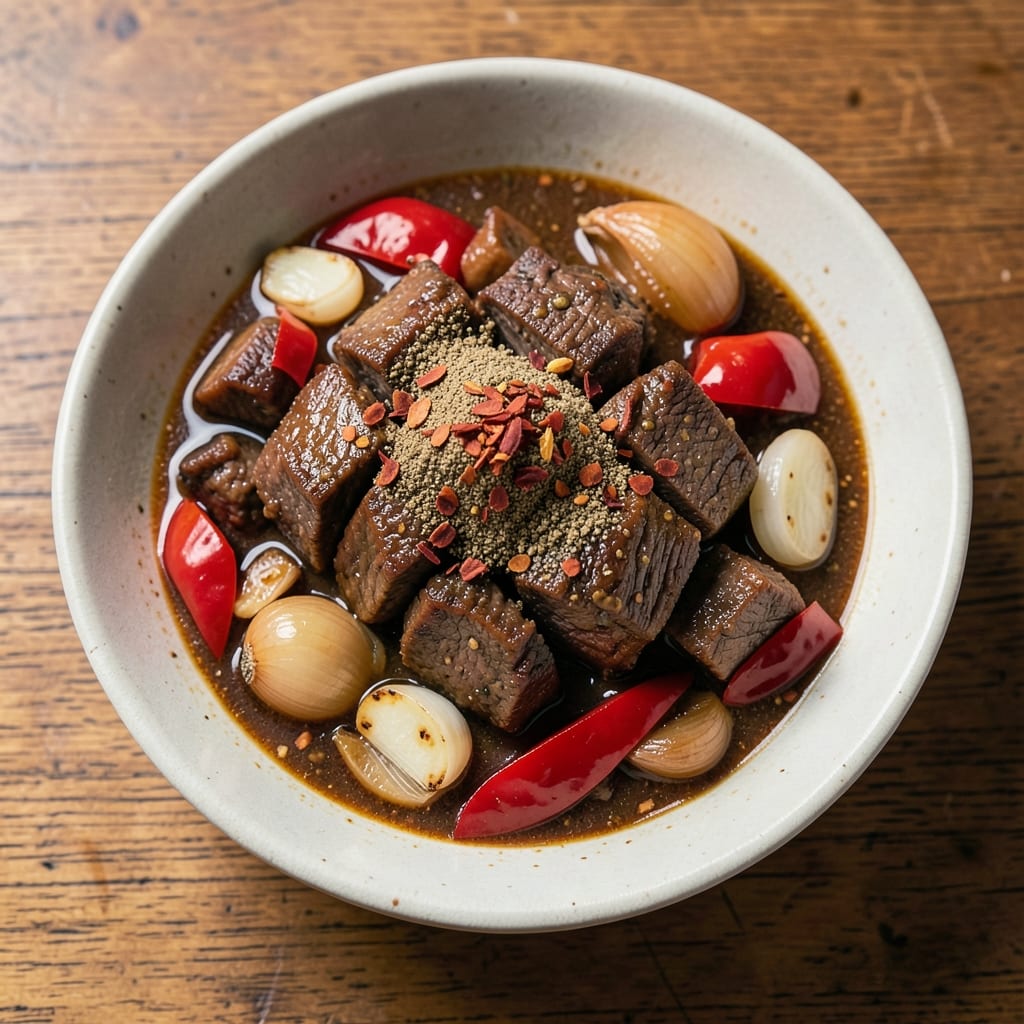
This Bangladeshi Chinese beef chili recipe delivers a spicy-sweet fusion that bridges two culinary worlds in one unforgettable dish. 🔥 The secret lies in balancing bold Bengali spices with wok-hei smokiness, creating a sauce that's both complex and addictive. I developed this after years of experimenting with regional techniques—where fiery chili powder meets caramelized soy and sweet fermented bean paste.
The result is tender beef chunks swimming in a glossy, deeply aromatic sauce that's sweet, spicy, and slightly tangy all at once. What makes this recipe special is the layered approach: first charring the aromatics for smoky depth, then simmering with traditional Bengali spices before finishing with Chinese-style sweetness. It's the kind of dish that disappears faster than you can say "second helping."
Perfectly paired with steamed jasmine rice or fluffy naan, this chili transforms an ordinary meal into a flavor explosion. The sauce clings to every bite of beef while maintaining perfect tenderness, and the garnishes—fresh cilantro, fried shallots, and lime wedges—add freshness that cuts through the richness. This isn't just chili; it's a culinary conversation between two cultures.
Ready in about 45 minutes, this recipe delivers restaurant-quality results without requiring advanced techniques. The key is patience—letting the flavors meld and the beef become fork-tender. Whether you're feeding a crowd or treating yourself to a bold weeknight dinner, this fusion chili will leave everyone asking for the recipe.
Ingredients for bangladeshi chinese beef chili
Bold spices meet wok-hei smokiness in this fusion chili's essential ingredients—where tradition and technique collide.
| Ingredient | Amount | Notes |
|---|---|---|
| Chuck Roast Beef 🥩 | 2 ½ lb | Cut into 1.5-inch cubes |
| Yellow Onions 🧅 | 2 whole | Thinly sliced, 1 large and 1 medium |
| Garlic Cloves 🧄 | 8 cloves | Minced, skin-on for extra flavor |
| Fresh Ginger 🌿 | 2 tbsp | Finely grated, peeled |
| Dried Red Chili Powder 🌶️ | 2 tbsp | Kashmiri or Kashmiri blend preferred |
| Ground Cumin 🌿 | 1 ½ tbsp | Toasted for deeper aroma |
| Ground Coriander 🌿 | 1 tbsp | Freshly ground preferred |
| Turmeric Powder 🌶️ | ½ tsp | Bright yellow, high quality |
| Garam Masala 🌿 | 1 tsp | Freshly ground, store-bought fine |
| Light Soy Sauce 🥄 | ½ cup | Kikkoman preferred for balance |
| Dark Soy Sauce 🥄 | 2 tbsp | For deep color and umami |
| Sweet Fermented Bean Paste 🍶 | ¼ cup | Doubanjiang or hoisin sauce |
| Brown Sugar 🍚 | ¼ cup | Packed, light brown preferred |
| Tomato Paste 🍅 | 2 tbsp | San Marzano preferred |
| Fresh Cilantro 🌿 | ⅓ cup | Chopped, stems included |
| Green Onions 🧅 | 4 whole | Thinly sliced, white and green parts |
| Lime Wedges 🍋 | 2 whole | For serving, Mexican limes preferred |
| Vegetable Oil 🫒 | ½ cup | High smoke point for charring |
| Salt 🧂 | 1 ½ tsp | Diamond Crystal preferred |
| Black Pepper 🌶️ | ½ tsp | Freshly cracked, coarse grind |
The beef selection is critical—chuck roast delivers the ideal texture, breaking down into tender chunks while absorbing the complex sauce. For the best results, source from a butcher shop rather than pre-cubed supermarket packages, as you'll achieve more even cooking. The yellow onions should be firm and dry-skinned, while the garlic and fresh ginger need to be vibrant and pungent, with no signs of sprouting or mold. Penzeys Spices or Burlap & Barrel are excellent sources for high-quality Kashmiri chili powder and garam masala, though the bulk bins at Whole Foods or Trader Joe's offer solid alternatives at a fraction of the cost. Toast your ground cumin and coriander in a dry pan for 30 seconds before measuring to unlock deeper flavors—this subtle step transforms ordinary spices into aromatic powerhouses.
Substitutions should preserve the dish's balance. No chuck roast? Swap for brisket or short ribs, but increase cooking time by 15-20 minutes. Missing doubanjiang? Hoisin sauce works in a pinch, though it lacks the fermented funk. Light soy sauce unavailable? Tamari or even extra-light soy sauce will do, though the color will be slightly paler. Fresh ginger can be substituted with ground ginger at half the amount, but the texture and depth will differ noticeably. For the sweet fermented bean paste, gochujang adds heat while hoisin leans sweeter—adjust to taste. Tomato paste can be omitted entirely if you prefer a deeper umami profile, but it adds a subtle acidity that rounds out the flavors. Fresh cilantro is non-negotiable for garnish, but if you must use dried, one tablespoon will suffice—though it lacks the bright, citrusy contrast of fresh.
This chili develops richer flavors with time, so reheat gently on low heat with a splash of water to restore moisture. Store in airtight containers for up to 5 days in the refrigerator, though the sauce will continue to deepen in character. For longer storage, freeze in portion-sized containers for up to 3 months—thaw overnight in the fridge before reheating. The fresh cilantro and lime wedges should be added just before serving, as they wilt quickly when exposed to heat. Garnish with fried shallots for an extra layer of texture if you're feeling ambitious, though they're optional. The sauce clings beautifully to steamed jasmine rice or naan, so prepare extra—this dish disappears faster than you can say "second helping."
Why You'll Love This Recipe
- One-Pot Magic: The chuck roast practically melts in its own juices while the onions caramelize—no extra pans, no fuss. Just slice, sear, and let the ginger-chili paste work its flavor spell while you stir occasionally. (Yes, even on a Tuesday night.)
- Flavor Bomb: That deep, smoky kick from the dried red chili powder meets the bright punch of fresh ginger—like a spicy hug for your taste buds. The beef stays tender but chewy, soaking up all the umami goodness like a flavor sponge.
- Leftover Hero: Tastes even better the next day, honestly. I make a double batch on Sundays and reheat portions for lunches—just add a splash of water and a quick stir. My kids fight over it, and I don’t even pretend to care.
- Budget Powerhouse: Chuck roast stretches for miles in this dish, and the spices cost pennies. You’re basically getting a restaurant-quality chili for half the price—plus, the leftovers keep your wallet happy for days. (Between us, this is how I feed my whole family for under $15.)
Step-by-step instructions for Bangladeshi Chinese beef chili
Master this bold fusion with precise technique—where smoky spices meet sweet-savory depth.
🔥 Step 1: Char the Aromatics for Maximum Flavor
Heat the 0.5 cup vegetable oil in a heavy-bottomed Dutch oven over medium-high heat until shimmering. Add the 2 whole yellow onions (thinly sliced) and cook for 8-10 minutes, stirring occasionally, until deeply caramelized with dark brown edges. This step develops complex sweetness that forms the sauce's foundation.
Remove half the onions and set aside for garnish. Add the 8 cloves garlic cloves (skin-on) and 2 tbsp fresh ginger (finely grated), cooking for 1-2 minutes until garlic turns golden and fragrant. Watch carefully—ginger burns quickly at this stage. Immediately add the 2 tbsp dried red chili powder and 1.5 tbsp ground cumin, stirring constantly for 30 seconds to toast the spices and release their essential oils.
🍳 Step 2: Build the Spice-Sweet Base
Push the charred aromatics to the sides and add the 2.5 lb chuck roast beef (cut into 1.5-inch cubes). Sear undisturbed for 3-4 minutes until deep brown crust forms on all sides. This Maillard reaction creates the dish's signature umami depth.
Return the onions to the pot, then add 0.5 cup light soy sauce, 2 tbsp dark soy sauce, 0.25 cup sweet fermented bean paste, and 0.25 cup brown sugar. Stir vigorously to combine, scraping up any browned bits from the bottom. Let the mixture bubble for 2-3 minutes until the sugars begin to caramelize slightly—this balances the heat with sweetness.
🥘 Step 3: Develop the Complex Sauce
Reduce heat to medium-low and add 1 tbsp ground coriander, 0.5 tsp turmeric powder, 1 tsp garam masala, 2 tbsp tomato paste, 1.5 tsp salt, and 0.5 tsp black pepper. Stir well and pour in 1 cup water (measured separately). Bring to a gentle simmer, then partially cover and cook for 45-50 minutes, stirring occasionally, until the beef is fork-tender and the sauce thickens to a glossy consistency.
Here's the critical checkpoint: The sauce should coat the back of a spoon when stirred. If it's too thin, uncover and simmer for another 5-10 minutes. The beef should pull apart easily when pierced with a fork but still hold together when served. This balance ensures maximum tenderness without mushiness.
🔪 Step 4: Finish with Fresh Herbs and Acid
Remove the Dutch oven from heat and stir in the 0.33 cup fresh cilantro (chopped, stems included) and 4 whole green onions (thinly sliced). Let the mixture steep for 5 minutes—this allows the herbs to infuse their bright flavors without wilting completely. The dish should smell vibrant with layers of spice, sweetness, and herbal notes.
Taste and adjust seasoning: Add more light soy sauce for saltiness, brown sugar for sweetness, or dried red chili powder for heat. The final dish should deliver a perfect balance where each element—spicy, sweet, umami, and fresh—is distinct yet harmonious. Serve immediately with the reserved caramelized onions sprinkled on top and the 2 whole lime wedges on the side for brightness.
Pro Tips For Making Bangladeshi Chinese Beef Chili
- BLANCH THE ONIONS FIRST: I used to fry onions until they caramelized, but that’s a slow, greasy mess for this dish. Instead, throw sliced onions into boiling water for 2 minutes—just enough to soften them. Drain, then add them straight to the pan with garlic and ginger. They’ll brown faster, and the flavor stays cleaner.
- SALT THE MEAT BEFORE SEARING: Chuck roast loves salt, but don’t skip it before browning. Pat the beef dry, then season generously with salt and pepper before hitting the pan. That crust isn’t just for looks—it locks in moisture as the chili simmers. (Yes, even if you’re impatient like me.)
- LOW AND SLOW AFTER SEARING: Once the beef is browned and the onions are cooking, drop the heat to medium-low. This isn’t a race—let it bubble gently for at least 45 minutes. I learned this the hard way: rushing it turns the chili into a dry, tough mess. Cover the pot halfway through to keep steam in.
- USE GINGER-GARLIC PASTE: Minced fresh ginger and garlic burn faster than you think. Save time and avoid bitter flavors by blending them into a smooth paste with a splash of water. Add it all at once when the onions are soft—no waiting for separate layers to cook. (Your future self will thank you.)
Essential equipment for bangladeshi chinese beef chili
Dutch Oven Essentials
A heavy-bottomed Dutch oven is non-negotiable for this recipe—its thick base distributes heat evenly, preventing hot spots that could burn your aromatics or create uneven cooking. I swear by a Le Creuset 5.5-quart (it’s pricey but lasts forever) or a Lodge pre-seasoned cast iron for budget-friendly results. The deep sides also help develop that signature glossy sauce without overflowing. 🔥
High-Smoke Oil
Use vegetable oil with a smoke point of 400°F+—Avocado oil or refined peanut oil are my top picks for charring onions and garlic without bitter flavors. Avoid olive oil (it burns easily) or butter (it adds unnecessary richness). A 32-ounce bottle of Crisco works in a pinch if you’re prepping for a crowd—just measure out what you need and store the rest.
Precision Tools
A meat thermometer is your best friend here—insert it into the thickest beef chunk to monitor 160°F internal temperature (it’ll rise to 170°F while resting). For spice control, a small fine-mesh strainer helps sift toasted cumin and coriander cleanly. And don’t skip a wooden spoon (or heatproof silicone) to stir without scratching your Dutch oven’s seasoning.
Optional Upgrades
For wok-hei smokiness, a small charcoal burner (like the Char-Broil Classic) placed under the Dutch oven while simmering adds authentic depth—just crack the lid slightly for 5 minutes. A mandoline speeds up thin onion/ginger prep, but a sharp chef’s knife works just as well with patience. And if you love crispy garnishes, a deep-fry thermometer ensures your fried shallots hit 375°F for perfect crunch.
Budget-Friendly Swaps
No Dutch oven? A large stainless-steel pot with tight-fitting lid (like All-Clad) works—just stir more frequently to prevent sticking. Skip the mandoline and use a microplane for ginger (it’s faster than grating). For soy sauces, store-brand versions (like Great Value) are fine—just taste and adjust. The key is balancing heat, not fancy gear.
Nutrition facts
Frequently asked questions
What makes this dish a fusion of Bangladeshi and Chinese flavors?
This recipe blends Bangladeshi spices like garam masala and Kashmiri chili powder with Chinese techniques such as charring aromatics and using sweet fermented bean paste (doubanjiang). The result is a balance of bold, layered spices with the umami depth of Chinese-style braising.
Can I make this recipe without a Dutch oven?
Yes! Use a large stainless-steel pot with a tight lid instead. Stir more frequently to prevent sticking, and reduce heat slightly to avoid burning. The cooking time may increase by 5-10 minutes, but the flavors will still develop beautifully.
How can I adjust the spice level for sensitive eaters?
Reduce the dried red chili powder to 1 tbsp and omit the doubanjiang (or use 1 tbsp hoisin sauce instead). For extra mildness, add 1 tbsp honey or brown sugar to balance any residual heat. Always taste as you go!
What’s the best way to store leftovers?
Let the chili cool completely, then transfer to airtight containers. It keeps in the fridge for 4-5 days or freezes for 3 months. Reheat gently on low heat with 2 tbsp water to restore moisture—never microwave directly from frozen.
Can I substitute beef with another protein?
For best results, stick with chuck roast or brisket—they’re fatty enough to stay tender. In a pinch, use pork shoulder (adjust cooking time by +10 minutes) or lamb leg** (reduce spices by 20% to avoid overpowering). Chicken thighs work too, but reduce simmering time to 30 minutes to prevent drying.