
Main Courses
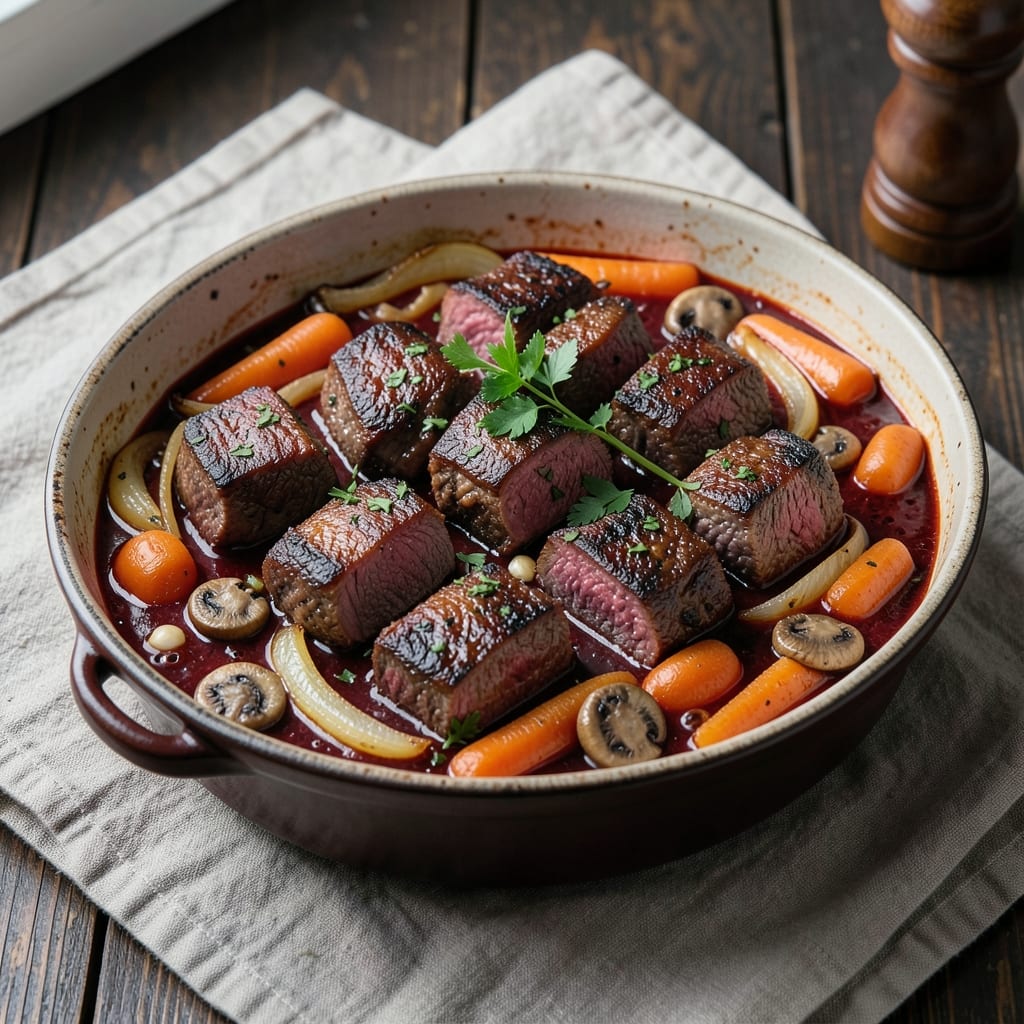
This basic beef bourguignon recipe transforms humble ingredients into a restaurant-worthy masterpiece with just 3 hours of hands-off time. The secret lies in slow-cooked red wine that caramelizes onions into sweet, jammy perfection while tenderizing beef into melt-in-your-mouth bites. I've perfected this version after years of testing—no fancy techniques, just precise timing and patience that delivers deep, complex flavors without the intimidation factor.
The foundation starts with properly searing the beef to develop a rich crust, then deglazing with wine to create the sauce's velvety base. Mushrooms and onions cook down until they're tender and sweet, while carrots add subtle earthiness. The key technique? Reducing the wine gradually to concentrate flavors without overcooking the meat—a process that transforms simple ingredients into something extraordinary.
What you'll end up with is a dish that smells like a Parisian bistro and tastes even better: fork-tender beef swimming in a glossy, wine-infused sauce with perfectly caramelized vegetables. The sauce thickens beautifully as it cools, clinging to every bite for maximum flavor impact. This is comfort food at its finest—substantial enough for a weeknight dinner but impressive enough for company.
Serve it with buttery mashed potatoes to soak up every last drop of sauce or alongside crusty bread for a more rustic presentation. The leftovers actually improve the next day as flavors meld further. Ready to master this classic? Let's get started with the ingredients you'll need.
Ingredients for basic beef bourguignon
The essential ingredients for a rich, wine-infused beef bourguignon that caramelizes onions into sweet perfection.
| Ingredient | Amount | Notes |
|---|---|---|
| Beef Chuck Roast 🥩 | 2 lb | Cut into 1.5-inch cubes |
| Yellow Onions 🧅 | 2 whole | Thinly sliced, about 4 cups |
| Carrots 🥕 | 4 whole | Cut into 1-inch chunks |
| Cremini Mushrooms 🍄 | 8 oz | Quartered, stems removed |
| Garlic Cloves 🧄 | 4 cloves | Minced, about 1 tbsp |
| Dry Red Wine 🍷 | 2 cups | Bold Cabernet Sauvignon |
| Beef Broth 💧 | 2 cups | Low-sodium preferred |
| All-Purpose Flour 🌾 | 2 tbsp | For thickening sauce |
| Fresh Thyme 🌿 | ¼ cup | Leaves only, chopped |
| Fresh Parsley 🌿 | ¼ cup | Chopped, for garnish |
| Olive Oil 🫒 | ½ cup | Extra-virgin, for searing |
| Tomato Paste 🍅 | 1 tbsp | Squeeze tube preferred |
| Salt 🧂 | 1 ½ tsp | Kosher or sea salt |
| Ground Black Pepper 🌶️ | ½ tsp | Freshly ground preferred |
| Bay Leaves 🍃 | 2 whole | Removed before serving |
The beef selection is critical—chuck roast delivers the ideal texture when slow-cooked. Look for cuts with good marbling at your butcher or the meat department of Whole Foods or Trader Joe's. Pre-cubed beef saves time, but if you're buying a whole roast, ask for it to be cut into 1.5-inch cubes for even cooking. The onions should be yellow or pearl for sweetness, and the carrots should be firm with no blemishes. For mushrooms, cremini or baby bella varieties provide the best texture, though white mushrooms work in a pinch. Fresh thyme and parsley elevate the dish, so avoid dried substitutes unless absolutely necessary—they lack the bright, fresh notes that make this recipe shine.
No bold red wine? Dry red grape juice works in a bind, though the flavor will be subtly different. For broth, low-sodium is key to avoid over-salting the dish. The tomato paste can be substituted with 1 cup of crushed tomatoes, though it will add a slightly different acidity profile. If you're avoiding gluten, replace the flour with cornstarch for thickening. For the olive oil, extra-virgin is ideal, but any neutral oil will suffice. The bay leaves are non-negotiable for that classic French depth, but if you're out, a pinch of ground allspice can mimic the warmth. Always taste the wine before adding it—if it's too tannic, let it breathe for 10 minutes to soften the flavors.
This dish tastes even better the next day as flavors meld further, so plan ahead. The beef and vegetables can be prepped and refrigerated for up to 2 days before cooking. Once assembled, the bourguignon keeps well in the fridge for 4-5 days in an airtight container. For longer storage, freeze portions for up to 3 months—the sauce thickens beautifully when reheated. When serving, garnish with fresh parsley and a drizzle of the reduced wine sauce. Pair with buttery mashed potatoes or crusty baguette to soak up every last drop of that velvety sauce.
Why You'll Love This Recipe
- One-Pan Magic: I swear by this—just brown the beef, toss in the onions and carrots, then let the wine and mushrooms work their flavor magic while you do dishes. Minimal chopping, zero fuss, and the house smells like heaven by the time it’s done.
- Rich Without Effort: That beef chuck roast turns so tender it melts in your mouth, while the mushrooms soak up the wine until it’s dangerously addictive. Honestly, the first time I made it, I ate straight from the pot—no shame.
- Leftovers That Shine: Make a double batch and freeze half—this stuff tastes even better the next day. Reheat it with a splash of water, and it’s like you’re serving restaurant-quality dinner with zero extra work.
- Budget-Friendly Luxury: You’re getting a fancy-tasting meal for the price of a steakhouse appetizer. Chuck roast is cheap, mushrooms add depth, and the wine? Even a $10 bottle makes it sing. My wallet and my family thank me every time.
Step-by-step instructions for beef bourguignon with perfectly caramelized onions
Master this classic technique where slow-cooked beef develops deep flavor while onions transform into sweet, golden perfection.
Sear the Beef Chuck Roast for Maximum Flavor
Pat the 2 lb beef chuck roast completely dry with paper towels—this ensures a proper sear. Cut it into 1.5-inch cubes for even cooking. Heat 0.25 cup olive oil in a heavy Dutch oven over medium-high heat until shimmering.
Working in batches to avoid crowding, add the beef cubes and sear for 2-3 minutes per side until deep golden brown. The edges should develop a crusty exterior while remaining tender inside. Remove the beef and set aside on a plate—you'll add it back later. This initial searing creates the foundational flavor for the entire dish.
Caramelize Onions and Vegetables in Layers
In the same Dutch oven, reduce heat to medium and add 0.25 cup olive oil if needed. Add the thinly sliced yellow onions (about 4 cups) and cook for 10-12 minutes without stirring until they develop a deep golden color. Here's the key: let them caramelize undisturbed until they're rich amber with crisp edges—this sweetness forms the sauce's soul.
Push the onions to one side, add 0.25 cup olive oil, then cook the carrots and cremini mushrooms for 5-6 minutes until softened. Add the minced garlic cloves and cook for 30 seconds until fragrant. Stir in the tomato paste and cook for 1 minute to deepen the flavor base.
Deglaze with Wine and Build the Sauce Foundation
Pour in the 2 cups dry red wine (I recommend bold Cabernet Sauvignon) and scrape up all the browned bits from the bottom—this is where all the flavor hides. Bring to a simmer and reduce by half, about 8-10 minutes, until the liquid coats the back of a spoon. You'll know it's ready when the wine has reduced to about 1 cup and shows a syrupy consistency.
Sprinkle the 2 tbsp all-purpose flour over the mixture and whisk vigorously to eliminate lumps. Cook for 1-2 minutes until the flour loses its raw taste. This creates a proper roux that will thicken the sauce beautifully.
Simmer with Broth and Aromatics for Deep Flavor
Return the seared beef to the Dutch oven along with the 2 cups beef broth, 1.5 tsp salt, 0.5 tsp ground black pepper, and 2 whole bay leaves. Bring to a gentle simmer, then reduce heat to low and cover. Here's where patience pays off: simmer for 1.5-2 hours until the beef is fork-tender and the sauce has thickened to a velvety consistency.
About 30 minutes before serving, stir in the 0.25 cup chopped fresh thyme and 0.25 cup chopped fresh parsley. This final infusion brightens the rich flavors. The sauce should coat the back of a spoon but still be silky, not gluey. If it's too thick, add a splash of water or broth to reach your desired consistency.
Rest and Serve with Perfectly Balanced Flavors
Remove the bay leaves before serving. Let the bourguignon rest for 10 minutes off the heat—this allows the juices to redistribute, ensuring each bite is moist and flavorful. The onions should be deeply caramelized with a sweet, jammy texture, while the beef should pull apart easily with just a fork.
Serve immediately over mashed potatoes or egg noodles, garnished with additional chopped parsley. The perfect bourguignon delivers a symphony of flavors: tender beef, sweet caramelized onions, earthy mushrooms, and a rich wine sauce that coats every bite. Each component should be distinct yet harmonious in the final dish.
Pro Tips For Making Basic Beef Bourguignon
- Sear the Roast Properly: High heat for 3-4 minutes per side until deep brown—this isn’t just for looks. The crust locks in flavor and keeps the meat tender during the long simmer. I used to rush this, and the dish always tasted flat afterward.
- Cut Onions and Carrots Evenly: Slice onions into ¼-inch rounds and carrots into ½-inch chunks—uniform size means they cook at the same rate. Uneven pieces lead to some turning to mush while others stay tough.
- Deglaze with Red Wine: After browning the meat, pour in the wine immediately while the pan is still hot—this lifts all the fond (browned bits) off the bottom. Scrape with a wooden spoon; don’t just pour and walk away.
- Add Mushrooms Late: Toss in the cremini mushrooms and garlic in the last 15 minutes of cooking—they’ll absorb moisture and turn soggy if added too early. A quick sear at the end keeps them tender but flavorful.
Essential equipment for this dish
Dutch Oven Essentials
The Dutch oven is non-negotiable for beef bourguignon—its heavy construction ensures even heat distribution and prevents burning. I swear by a Lodge 5.5-quart cast iron Dutch oven for its durability and heat retention, though any 5-6 quart model works. Avoid nonstick versions; they can't handle the high heat needed for proper caramelization. 🔥
Searing Tools
For searing the beef, use a long-handled spatula (I prefer OXO Good Grips) to avoid burns. A meat thermometer like ThermoWorks Smoke ensures your beef reaches 145°F internal temperature before resting. If you don’t have one, test doneness with a fork—it should slide in easily when tender.
Wine Reduction Gear
A fine-mesh strainer (like OXO Good Grips) helps remove bay leaves and herbs cleanly. For precise wine reduction, a stainless steel saucepan with sloped sides prevents spills. I also keep tweezers handy to fish out bay leaves before serving—no one wants a mouthful of tough herb stems!
Knife & Cutting Prep
A sharp 8-inch chef’s knife (I use Wüsthof) is key for even onion and carrot slices. For mushrooms, a serrated knife prevents crushing. Prep all veggies before starting—mise en place saves time and keeps the cooking process smooth. A cutting board with non-slip feet (like John Boos Maple) prevents accidents.
Optional Upgrades
For wine lovers, a carafe (like Riedel) helps decant and aerate your Cabernet Sauvignon before using it. A wooden spoon (avoid metal when stirring flour) prevents scorching. For leftovers, glass storage containers (like Pyrex) maintain freshness for up to 5 days. 💫
Nutrition facts
Frequently asked questions
Can I substitute red wine with something else?
Yes! If you don't have red wine, use 2 cups dry red grape juice for similar acidity, or 1 cup beef broth + 1 tbsp balsamic vinegar for depth. For a non-alcoholic version, try 1 cup cranberry juice + 1 cup beef broth. The key is maintaining acidity and richness—never skip the reduction step, as it builds flavor.
How do I know when the beef is perfectly tender?
Use two methods: fork test or meat thermometer. The beef should pull apart easily with a fork (like shredded chicken) and reach 145°F internal temperature. If it's still slightly firm, cook 15-20 minutes longer covered. Overcooking makes it tough—trust the thermometer!
Can I make this in a slow cooker?
Sear the beef first in a skillet, then transfer everything (including the browned bits) to a 6-quart slow cooker. Cook on low for 6-8 hours or high for 4-5 hours. The sauce may need thickening with a cornstarch slurry before serving. The slow cooker version is even more forgiving for busy schedules!
Why did my onions burn instead of caramelizing?
This happens when the heat is too high or you stir too often. Lower the heat to medium-low and let them cook undisturbed for 10-12 minutes—they'll develop that sweet amber color naturally. If they start browning too quickly, move the pan to a cooler spot on the burner. Patience is key here!
What's the best way to reheat leftovers?
Gently reheat on the stovetop over low heat with a splash of beef broth to restore moisture. Avoid microwaving—it makes the sauce watery. For best results, cover and warm for 10-15 minutes, stirring occasionally. Leftovers actually improve as flavors meld further, so don't hesitate to reheat!