
Main Courses
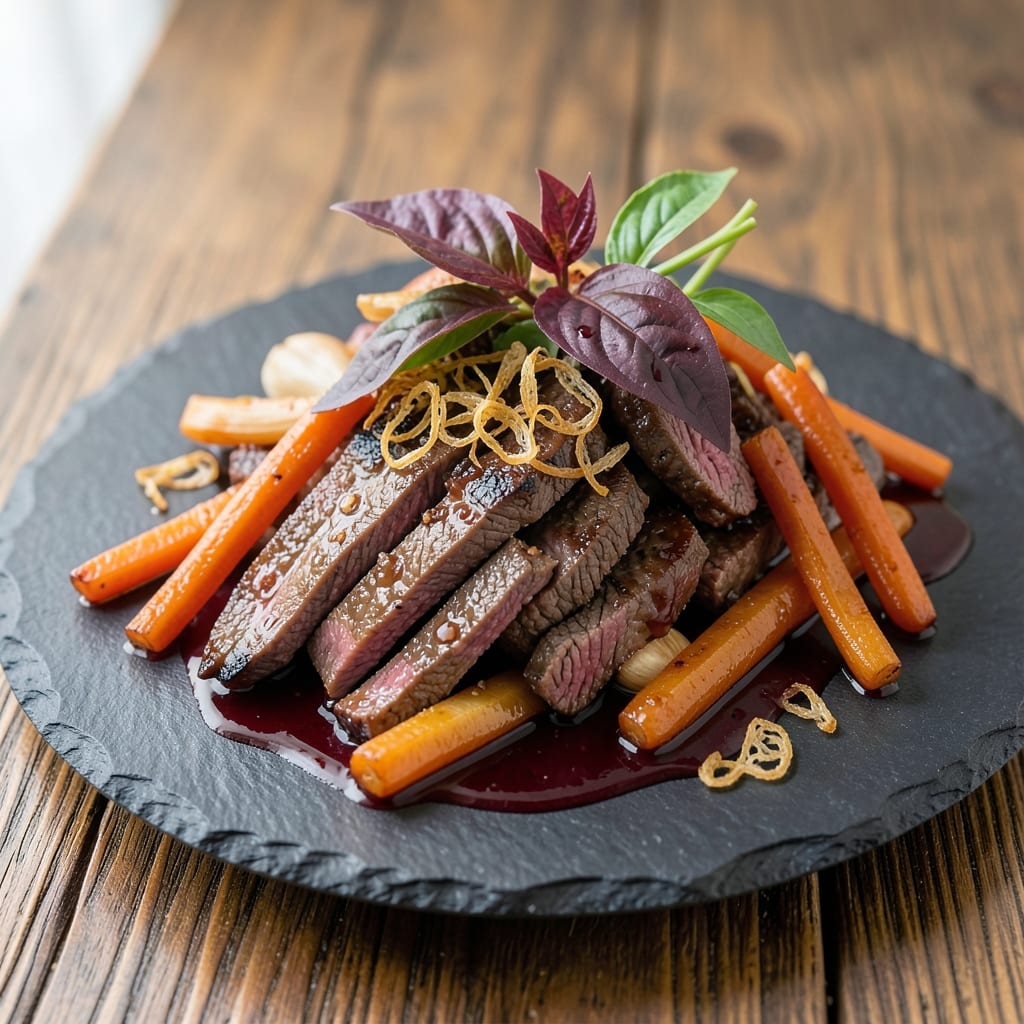
This basil beef stir fry recipe delivers restaurant-quality wok-seared beef with bright Thai basil and a savory-sweet sauce that balances umami perfectly. 🔥 The secret lies in proper marinating and high-heat stir-frying, transforming tender beef strips into caramelized bites with a fragrant herb finish. I developed this version after years of testing—it’s the one that finally earned me compliments from even the most critical stir-fry skeptics.
The foundation starts with thinly sliced beef marinated in a blend of soy sauce, brown sugar, and garlic, which tenderizes while building deep flavor. A quick sear in a hot wok creates that signature wok hei—smoky aroma and charred edges—before adding fresh Thai basil at the very end to preserve its vibrant color and aroma. The sauce, a balance of fish sauce, oyster sauce, and a touch of honey, adds complexity without overpowering the beef.
What you’ll end up with is a dish that’s bold yet refined: perfectly seared beef strips with glossy, caramelized edges, all coated in a glossy sauce that’s tangy, sweet, and just slightly salty. The Thai basil adds a peppery brightness that cuts through the richness, while the wok hei aroma transforms your kitchen into a tiny Cantonese restaurant. This isn’t just stir-fry—it’s a technique that elevates simple ingredients into something extraordinary.
Serve it over steamed jasmine rice or with a side of blistered green beans to soak up every last drop of that fragrant sauce. The leftovers reheat beautifully, making this the ultimate weeknight solution for a meal that feels like a celebration. Let’s get cooking—this recipe is about to become your new favorite.
Ingredients for basil beef stir fry
Restaurant-quality stir-fry starts with these 14 ingredients—bold flavors and proper technique make all the difference.
| Ingredient | Amount | Notes |
|---|---|---|
| Flank Steak 🥩 | 1 ½ lb | Thinly sliced against grain |
| Thai Basil Leaves 🌿 | 1 cup | Fresh, stems removed |
| Soy Sauce 🍶 | ½ cup | Kikkoman preferred |
| Brown Sugar 🍯 | 2 tbsp | Packed, light brown |
| Garlic Cloves 🧄 | 6 cloves | Minced, aromatic |
| Fish Sauce 🍶 | 2 tbsp | Red Boat brand |
| Oyster Sauce 🍶 | 2 tbsp | Lee Kum Kee |
| Honey 🍯 | 1 tbsp | Wildflower preferred |
| Sesame Oil 🫒 | 1 tbsp | Toasted, for aroma |
| Neutral Oil 🫒 | 2 tbsp | Avocado or vegetable |
| Green Onions 🧅 | 4 whole | Thinly sliced, white/green |
| Jasmine Rice 🍚 | 1 ½ cups | Uncooked, long grain |
| Ground Black Pepper 🌶️ | ½ tsp | Freshly cracked |
| Diamond Crystal Kosher Salt 🧂 | ½ tsp | For seasoning |
The beef is non-negotiable here. Flank steak slices beautifully against the grain, delivering that signature tender bite. Grab it from the butcher counter—Costco or Whole Foods carry high-quality cuts. Look for good marbling and ask for it sliced thinly (about 1/8-inch thick). If you're slicing yourself, freeze the meat for 30 minutes first—it's easier to handle. The Thai basil? Asian markets have the freshest, but any grocery store's herb section will do. Just make sure the leaves are bright green and fragrant—no wilted stems allowed.
No fish sauce? Soy sauce plus a pinch of sugar mimics some of the umami, though it won't be identical. Running short on oyster sauce? Hoisin sauce at half the amount adds sweetness but loses that deep savory note. The honey can be swapped for maple syrup if you're avoiding it, though it'll taste slightly different. For the oil, avocado oil has the highest smoke point, which is crucial for that proper wok hei. If you're using vegetable oil, make sure it's neutral—no buttery or nutty flavors. The sesame oil goes in last for aroma, so don't skimp on the toasted variety.
Marinate the beef for at least 30 minutes—overnight is even better. Store leftovers in airtight containers for 3-4 days in the fridge, or freeze for 3 months. The rice reheats beautifully—just add a splash of water and microwave. For extra flavor, toss the reheated beef with a drizzle of sesame oil and a pinch of sugar. This dish tastes even better the next day as the flavors meld together. Make a double batch—it disappears fast around here.
Why You'll Love This Recipe
- One-Pan Magic: I swear by this recipe—just one skillet, a few minutes of slicing, and you’re done. The steak caramelizes right alongside the garlic and basil, so you’re not stuck scrubbing multiple pans while dinner burns.
- Sweet-Savory Balance: That brown sugar in the sauce? It’s the secret weapon. The soy and garlic give it depth, but the basil’s bright, peppery kick cuts through—like a little flavor party in your mouth.
- Leftover Hero: Between us, this tastes better the next day. The flavors meld even more, and it reheats like a dream. Pack it for lunch or freeze portions—your future self will thank you.
- Budget Date Night: Flank steak is affordable, and a handful of basil leaves stretch further than you’d think. Serve it over rice or noodles, and suddenly you’ve got a restaurant-quality meal without the price tag. (Yes, even on a Tuesday night.)
Step-by-step instructions for wok-seared umami beef with fresh herbs
Here's how to transform simple ingredients into a restaurant-quality stir fry with bold flavors and aromatic herbs.
👨🍳 Step 1: Prep the Flank Steak and Rice
Slice the 1.5 lb flank steak thinly against the grain using a sharp knife—this ensures tender bites. Arrange the slices on a plate and sprinkle evenly with the 0.5 tsp Diamond Crystal Kosher Salt and 0.5 tsp Ground Black Pepper. Let it sit at room temperature for 15 minutes while you prepare everything else.
Rinse the 1.5 cups jasmine rice under cold water, then combine with 3 cups water in a pot. Bring to a boil, then reduce heat to low, cover, and simmer for 15 minutes until all liquid is absorbed. Keep warm while you cook the stir fry—it'll be ready just in time to serve.
🍳 Step 2: Build the Flavor Base
Heat a wok or large skillet over high heat until smoking, then add 2 tbsp neutral oil. Swirl to coat the pan, then add the 6 cloves minced garlic cloves and stir for 30 seconds until fragrant but not browned. Immediately add the 1.5 lb sliced flank steak in a single layer—don't overcrowd the pan.
Sear the beef for 1-2 minutes until it develops a deep brown crust, then remove and set aside. In the same pan, add the 0.5 cup soy sauce, 2 tbsp fish sauce, 2 tbsp oyster sauce, 2 tbsp packed brown sugar, and 1 tbsp honey. Stir constantly for 1 minute until the mixture thickens slightly and coats the bottom of the pan.
🥘 Step 3: Finish with Herbs and Aromatics
Return the beef to the wok and add 1 tbsp toasted sesame oil. Toss everything together for 30 seconds to coat the beef in the sauce. Stir in the 1 cup fresh Thai basil leaves and 4 whole sliced green onions, tossing gently just until the basil wilts slightly—don't overcook or it'll turn bitter.
Taste and adjust seasoning—you might need a splash of water or an extra pinch of salt to balance the flavors. The sauce should be glossy with a perfect harmony of sweet, salty, and umami notes. Remove from heat immediately to preserve the bright herb flavors.
🍽️ Step 4: Serve Over Steamed Rice
Divide the warm jasmine rice among plates, then spoon the beef and sauce generously over the top. Garnish with additional sliced green onions and a drizzle of sesame oil for extra aroma. Serve immediately while the beef is still sizzling hot—this dish tastes best fresh off the wok.
Each bite should deliver tender beef with a perfect sear, bright basil flavor, and a glossy sauce that clings to every strand of rice. The contrast between the aromatic herbs and rich umami sauce makes this stir fry truly special—don't wait to enjoy it!
Pro Tips For Making Basil Beef Stir Fry
- Slice Against the Grain: Flank steak’s stubborn fibers will fight you if you don’t cut it properly. Angle those slices at a 45-degree bias—thin but not paper-like—so they stay tender when they hit the wok. I used to over-slice and end up with chewy strips; now I measure my knife strokes against the grain’s direction.
- Salt the Steak First: Don’t wait until the stir-fry to season the meat. Pat the flank steak dry, then hit it with 1 teaspoon of salt and let it sit for 10 minutes. This guarantees the seasoning penetrates, and the sugar in your sauce won’t burn before the meat caramelizes. (Yes, even if you’re impatient like me.)
- Crush Garlic with a Knife: Mincing garlic for stir-fry is a waste of time. Smash 3-4 cloves flat with the heel of your knife, then chop into rough slivers—this releases more flavor without turning to mush. I learned this the hard way when my garlic turned to paste and vanished into the sauce.
- Add Basil at the End: Thai basil wilts faster than you think. Toss it in only during the last 30 seconds of cooking, right after the sugar caramelizes. If you add it too early, it’ll turn to sad, limp leaves instead of bright, aromatic bursts. (Pro move: Keep a small bowl of ice water nearby to shock the leaves if you need to prep ahead.)
Troubleshooting perfect results
Beef Too Tough?
If your beef turns out chewy instead of tender, you likely sliced against the grain incorrectly. Freeze the steak for 30 minutes before slicing to firm it up, then cut perpendicular to the muscle fibers—they run diagonally across the flank. A sharp knife is non-negotiable; a dull blade crushes fibers. For extra tenderness, marinate the beef for at least 2 hours in the fridge before cooking. 🔪
Sauce Too Thin?
Your sauce might be watery if you didn’t reduce it enough. After removing the beef, simmer the sauce uncovered for 1-2 extra minutes to thicken it. If it’s still too thin, mix 1 tsp cornstarch with 1 tbsp water, stir into the sauce, and cook for 30 seconds until it glistens. For a glossier finish, add ½ tsp sesame oil at the end. 🍶
Basil Losing Color?
Overcooking the basil turns it dark and bitter. Add it only at the very end and stir for no more than 10 seconds—just enough to wilt slightly. If you’re worried about freshness, store basil in a glass of water in the fridge like flowers, and it’ll last 5-7 days. For extra vibrancy, add a pinch of sugar (½ tsp) when tossing with the beef. 🌿
Wok Hei Missing?
That smoky, aromatic wok hei comes from high heat and proper oil. Use a carbon steel or cast iron wok—they retain heat better than nonstick. Heat the wok until it smokes slightly, then add oil. If your pan isn’t hot enough, the beef will steam instead of sear. For extra aroma, crack a dried chili or star anise into the oil before adding garlic. ⚡
Rice Too Dry?
Jasmine rice can dry out if left uncovered. After cooking, spread a damp towel over the pot and seal with foil to trap steam. For reheating, add 1 tbsp water per cup of rice and microwave for 1 minute. If your rice is still dry, try brown rice (it stays moist longer) or cook it with ½ cup less water for a firmer texture. 🍚
Flavor Too Salty?
If the dish tastes overly salty, balance it with acidity—add 1 tbsp rice vinegar or ½ lime’s worth of juice to brighten the flavors. For a sweeter contrast, stir in 1 tsp honey or 1 tsp sugar. If the sauce is the issue, dilute it with 1-2 tbsp water and reduce again to concentrate the flavors. Taste as you go! 💡
Nutrition facts
Frequently asked questions
Can I substitute sweet basil for Thai basil?
Yes, but expect a milder flavor. Thai basil has a distinct anise-like aroma and slightly peppery taste that complements the rich beef sauce. If using sweet basil, add ½ tsp ground white pepper or 1 tsp fish sauce to mimic the depth. For authenticity, look for Thai basil at Asian markets or use holy basil as a close alternative.
What's the best way to slice flank steak thinly?
Freeze the steak for 30 minutes first to firm it up, then slice against the grain at a 45-degree angle for paper-thin strips. Use a sharp chef's knife and keep your fingers tucked—thin slices are safer than you think! For extra control, wrap the steak in plastic wrap before slicing. Aim for ⅛-inch thickness or thinner for perfect stir-fry texture.
How do I make this vegetarian?
Replace the beef with 1.5 lbs extra-firm tofu (pressed and cubed) or 1 lb shiitake mushrooms (sliced). Marinate the tofu in the same sauce for 20 minutes, then pan-fry until golden. For mushrooms, sear them first to develop flavor. Add 1 tbsp soy sauce to the sauce to compensate for lost umami. The basil and sweet-savory sauce will still shine!
Can I make this ahead of time?
Yes! Cook the beef and sauce as directed, then cool completely and store in an airtight container for 3-4 days in the fridge. Reheat gently in a skillet with 1 tsp water to prevent drying. For the basil, add fresh leaves just before serving—it wilts beautifully when reheated. The rice reheats best separately with a splash of water. Flavors actually improve overnight as the sauce melds!
What sides pair best with this dish?
Jasmine rice is classic, but try these for variety: steamed bok choy (adds freshness), crispy rice noodles (for a Thai-inspired twist), or blistered green beans (for texture contrast). For a heartier meal, serve with egg fried rice or coconut rice. The key is balancing textures—something crisp or chewy complements the tender beef beautifully.