
Soups & Stews
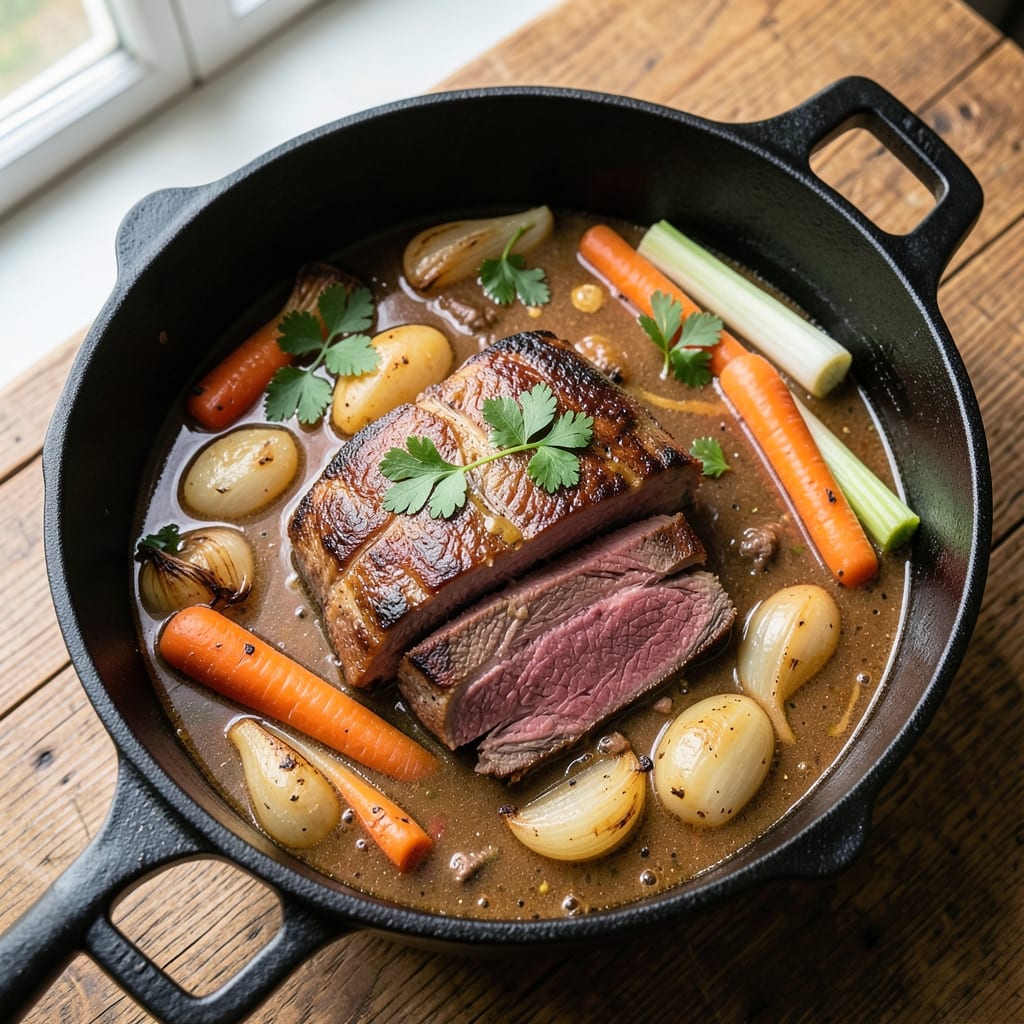
This Bavarian beef stew recipe transforms tough cuts into melt-in-your-mouth tenderness through slow simmering and caramelized root vegetables. The secret lies in a rich base of dark beer and aromatic vegetables that infuse the beef with deep, savory flavors over hours of gentle cooking. What begins as a simple assembly of ingredients becomes a hearty, comforting dish that captures the essence of Bavarian tradition.
At the core of this recipe is the braising technique, where beef chuck roast breaks down into fork-tender pieces while absorbing the flavors of onions, carrots, and celery. The addition of dark beer—traditionally used in Bavarian cuisine—adds a malty depth that balances the sweetness of the caramelized onions and the earthiness of the root vegetables. This method ensures every bite delivers both richness and complexity, making it a dish that feels both rustic and refined.
The result is a stew with a velvety gravy that clings to each piece of beef, creating a harmonious blend of textures and flavors. The slow simmering process not only tenderizes the meat but also develops a deep, aromatic broth that enhances the natural flavors of the ingredients. Served with traditional semmelknödel or crusty bread, this stew becomes a centerpiece for any meal, offering warmth and satisfaction in every spoonful.
Whether you're preparing this for a cozy family dinner or a gathering with friends, this Bavarian beef stew delivers the comfort and richness that defines classic German cuisine. The recipe is designed to be approachable yet impressive, ensuring that even home cooks can achieve restaurant-quality results with careful attention to technique and time.
Ingredients for bavarian beef stew
Sixteen ingredients for a stew that tastes like home—rich, tender, and full of caramelized depth.
| Ingredient | Amount | Notes |
|---|---|---|
| Beef Chuck Roast 🥩 | 3 lb | With good marbling for tenderness |
| Yellow Onions 🧅 | 2 whole | Sliced into 1/4-inch rounds |
| Carrots 🥕 | 4 whole | Cut into 1-inch chunks |
| Celery Stalks 🥬 | 4 whole | Cut into 1-inch pieces |
| Dark Beer 🍺 | 1 ½ cups | Like Schwarzbier or Dunkel |
| Beef Broth 💧 | 2 cups | Low-sodium preferred |
| Tomato Paste 🍅 | 2 tbsp | For depth of flavor |
| Garlic Cloves 🧄 | 6 cloves | Minced for aromatic base |
| Fresh Thyme 🌿 | 2 sprigs | Or 1 tsp dried thyme |
| Fresh Parsley 🌿 | ¼ cup | Chopped for garnish |
| Bay Leaves 🍃 | 2 whole | For aromatic depth |
| Olive Oil 🫒 | 2 tbsp | For searing beef |
| All-Purpose Flour 🌾 | 2 tbsp | For thickening gravy |
| Salt 🧂 | 1 ½ tsp | Kosher or sea salt |
| Black Peppercorns 🌶️ | 1 tsp | Freshly cracked |
The beef chuck roast is non-negotiable here—look for cuts with visible marbling at Costco or Whole Foods for the best quality. If you're buying a whole roast, ask the butcher to trim excess fat. For the beer, Schwarzbier or Dunkel are traditional choices, but any dark lager will work. If you can't find dark beer, substitute with beef broth and a splash of balsamic vinegar. The onions, carrots, and celery form the aromatic base—buy fresh, firm vegetables for the best flavor. Garlic and thyme are essential for that authentic Bavarian taste, so don't skip them.
No dark beer? Beef broth with 1 tbsp balsamic vinegar mimics the malty depth. Fresh thyme is ideal, but dried thyme at one-third the amount works in a pinch. For the tomato paste, San Marzano is the gold standard, but any quality brand will do. If you're using pre-sliced onions or baby carrots, they're fine—just adjust the quantity slightly. The flour is just for thickening the gravy, so all-purpose works perfectly. If you're sensitive to gluten, you can use cornstarch instead, but it won't have the same depth of flavor.
This stew tastes even better the next day as the flavors meld. Store leftovers in an airtight container in the fridge for up to 5 days. For longer storage, freeze portions for up to 3 months. I like to portion it into individual containers so it's ready for quick lunches. The gravy thickens as it cools, so you can always thin it with a splash of broth or beer when reheating. Serve with crusty bread or semmelknödel for the full Bavarian experience.
Why You'll Love This Recipe
- One-Pot Magic: I swear by this—just chuck everything into a Dutch oven, turn on the heat, and walk away. The beer and onions caramelize while you’re still debating what to watch on TV. Minimal chopping, zero fuss.
- Beer-Braised Bliss: That dark beer isn’t just an ingredient—it’s the secret weapon. It melts into the beef, turning tough chuck into fork-tender perfection with a deep, malty richness. Honestly, the first bite makes you question why you ever bought pre-made gravy.
- Leftovers That Win: Between us, this stew only gets better the next day. The flavors meld into something even richer, and reheating it? Just a splash of broth, 10 minutes, and suddenly you’ve got dinner for three nights with almost no extra effort.
- Budget-Friendly Feast: A single chuck roast and a six-pack of beer stretch to feed four (or five if someone’s hungry). Carrots and celery bulk it up without breaking the bank—plus, it’s the kind of dish that makes you look like a cooking hero without the grocery bill to prove it.
Step-by-step instructions for Bavarian beef stew
This method delivers deep, caramelized flavors through slow simmering and proper layering.
Sear the Beef Chuck Roast for Rich Foundation
Pat the 3 lb Beef Chuck Roast dry with paper towels—this ensures maximum browning. Heat 2 tbsp Olive Oil in a heavy Dutch oven over medium-high heat until shimmering. Place the roast in the pot, searing on all sides until deeply browned, about 8-10 minutes total. The goal is to develop a flavorful crust that will dissolve into the stew as it cooks.
Once browned, remove the roast and set it aside. You'll notice the pan has released some rendered fat—this is essential for building flavor. Don't wipe it clean; those browned bits will form the base of your stew's depth. Here's the thing—if you see the fat smoking excessively, reduce heat slightly to prevent burning while maintaining that rich sear.
Sauté the Aromatic Vegetables
In the same Dutch oven, add 2 whole Yellow Onions (sliced into ¼-inch rounds), 4 whole Carrots (cut into 1-inch chunks), and 4 whole Celery Stalks (cut into 1-inch pieces). Cook over medium heat for 8-10 minutes, stirring occasionally, until the vegetables begin to soften and develop a golden hue. You'll smell their natural sweetness intensifying—this is your cue that they're ready for the next stage.
After the vegetables soften, stir in 6 cloves Garlic Cloves (minced) and 2 tbsp Tomato Paste. Cook for another 2 minutes until the garlic becomes fragrant and the tomato paste darkens slightly. This step creates a flavorful base that will infuse the entire stew. If the mixture sticks to the bottom, add 1-2 tbsp of the dark beer to deglaze and lift those flavorful browned bits.
Build the Liquid Base
Pour in 1.5 cups Dark Beer and 2 cups Beef Broth, scraping up any browned bits from the bottom of the pot. Add 2 whole Bay Leaves, 2 sprigs Fresh Thyme, 1.5 tsp Salt, and 1 tsp Black Peppercorns (freshly cracked). Return the seared beef roast to the pot, making sure it's fully submerged in the liquid. Bring everything to a gentle simmer over medium-low heat.
Here's where patience pays off: cover the pot and let it simmer for 2 hours without lifting the lid. You want the beef to become fork-tender and the vegetables to melt into the sauce. The dark beer will add a malty depth, while the beef broth ensures the stew remains rich and flavorful. If the liquid reduces too quickly, add a splash of water or broth to maintain the proper consistency.
Thicken the Stew and Finish
After the beef is tender, remove it from the pot and set it aside. Strain the cooking liquid through a fine-mesh sieve into a clean pot, pressing on the vegetables to extract all their flavors. Return the strained liquid to the Dutch oven and stir in 2 tbsp All-Purpose Flour to thicken the stew. Simmer for 5-7 minutes until the sauce reaches your desired consistency—it should coat the back of a spoon but still be smooth.
Return the beef to the pot and let it heat through for 2-3 minutes. Stir in 0.25 cup Fresh Parsley (chopped) just before serving to brighten the flavors. The final stew should be rich, deeply flavored, and perfectly balanced between the tender beef, caramelized vegetables, and aromatic herbs. Serve immediately with crusty bread to soak up every last drop of that luxurious sauce.
Pro Tips For Making Bavarian Beef Stew
- Sear the Chuck Hard: That beef chuck needs a deep, dark crust before the beer bath—don’t skimp on time. Hit the pan with medium-high heat, let it sit undisturbed for 3-4 minutes per side until it’s got a good brown seal, then flip. I used to rush this and wondered why my stew never had that rich, caramelized depth.
- Cut Onions Like a Pro: Dice those yellow onions into even ¼-inch pieces—no big chunks hiding in your stew. The smaller they are, the faster they soften and sweeten into the beer. (Yes, even if you’re impatient like me, resist the urge to go too fine—you’ll end up with mush.)
- Deglaze with Beer Early: As soon as you pull the beef out, pour in that dark beer right away while the pan’s still hot. Scrape every bit of browned bits off the bottom—those are flavor bombs. If you wait, you’ll lose half the taste to lazy cleanup.
- Skip the Pre-Cooked Carrots: Toss whole carrots and celery stalks in raw—no need to soften them first. They’ll break down perfectly during the long simmer, and you’ll avoid that sad, mushy texture that ruins the texture contrast. (Your future self will thank you.)
Perfect pairings for this dish
Crusty Bread Pairing
Nothing enhances Bavarian beef stew like a warm, crusty loaf of bread to soak up that rich gravy. I recommend a sourdough baguette or rye bread—both pair beautifully with the stew's deep flavors. For extra authenticity, try a German-style pretzel or dark rye loaf from your local bakery. These breads complement the malty beer notes and add a satisfying crunch to each bite. 🥖
Semmelknödel Tradition
The ultimate Bavarian side is semmelknödel, soft bread dumplings made from stale bread, milk, and eggs. These pillowy dumplings absorb the stew's flavors perfectly. If you're short on time, potato dumplings (Kartoffelknödel) are another great option—they hold up well to the hearty stew. For a shortcut, I sometimes use store-bought bread dumplings (found in the freezer section of many grocery stores).
Pickled Vegetable Contrast
Bright, tangy pickles cut through the richness of the stew beautifully. Try German-style dill pickles or sauerkraut for a traditional touch. I also love adding quick-pickled red onions (slice onions thin, soak in vinegar, sugar, and salt for 30 minutes) to add a sharp, refreshing bite. These pickled elements balance the stew's richness and add a satisfying crunch. 🥒
Dark Beer or Wine
A sip of dark beer (like the one used in the stew) enhances the meal perfectly. For a non-alcoholic option, try a non-alcoholic dark lager or a sparkling apple cider. If you prefer wine, a German Spätburgunder (Pinot Noir) or Dornfelder pairs wonderfully with the stew's depth. The wine's acidity cuts through the richness while complementing the beef's savory notes. 🍷
Garnish with Fresh Herbs
Finish your plate with a sprinkle of fresh parsley or chives to add a pop of color and brightness. I also like adding a few thinly sliced radishes for a peppery crunch. These fresh elements elevate the dish and make it look as delicious as it tastes. A final drizzle of high-quality olive oil adds another layer of richness. 🌿
Creamy Potato Side
For a comforting side, serve the stew with creamy mashed potatoes or buttered egg noodles. The soft texture contrasts nicely with the stew's hearty components. If you want something lighter, roasted Brussels sprouts with a touch of bacon add a smoky, slightly bitter contrast that pairs wonderfully with the stew. 🥔
Nutrition facts
Frequently asked questions
Can I substitute beef broth for the dark beer in this recipe?
Yes, but you'll need to adjust the flavor. Use 2 cups beef broth plus 1 tablespoon balsamic vinegar to mimic the malty depth of dark beer. The vinegar adds complexity that plain broth lacks. For best results, try a non-alcoholic dark lager if available—it provides authentic flavor without alcohol.
How do I know when the beef is fully tender?
Use the fork test: pierce the thickest part of the beef roast. If it slides in easily with no resistance and the meat flakes apart, it's perfectly tender. For 3 lb roasts, this typically takes 2-2.5 hours of simmering. If you're unsure, cut into a small piece—it should be fork-tender, not chewy.
What's the best way to reheat leftovers?
Reheat gently in a pot over low heat with a splash of beef broth or beer to restore moisture. Avoid microwaving as it can make the gravy watery. For best texture, warm for 10-15 minutes until heated through. The stew tastes even better the next day as flavors meld!
Can I make this stew in a slow cooker?
Sear the beef first, then transfer everything to your slow cooker. Cook on low for 8 hours or high for 5-6 hours. The slow cooker's gentle heat works perfectly for tenderizing the beef. Just add the flour slurry at the end to thicken the gravy.
Why did my stew turn out too thin?
This usually happens when the liquid reduces too quickly. Next time, simmer uncovered for the first 30 minutes to reduce excess liquid, then cover. For thickening, mix 1 tbsp flour with 2 tbsp cold water and stir into the stew at the end. Simmer 5 minutes until thickened.