
Main Courses
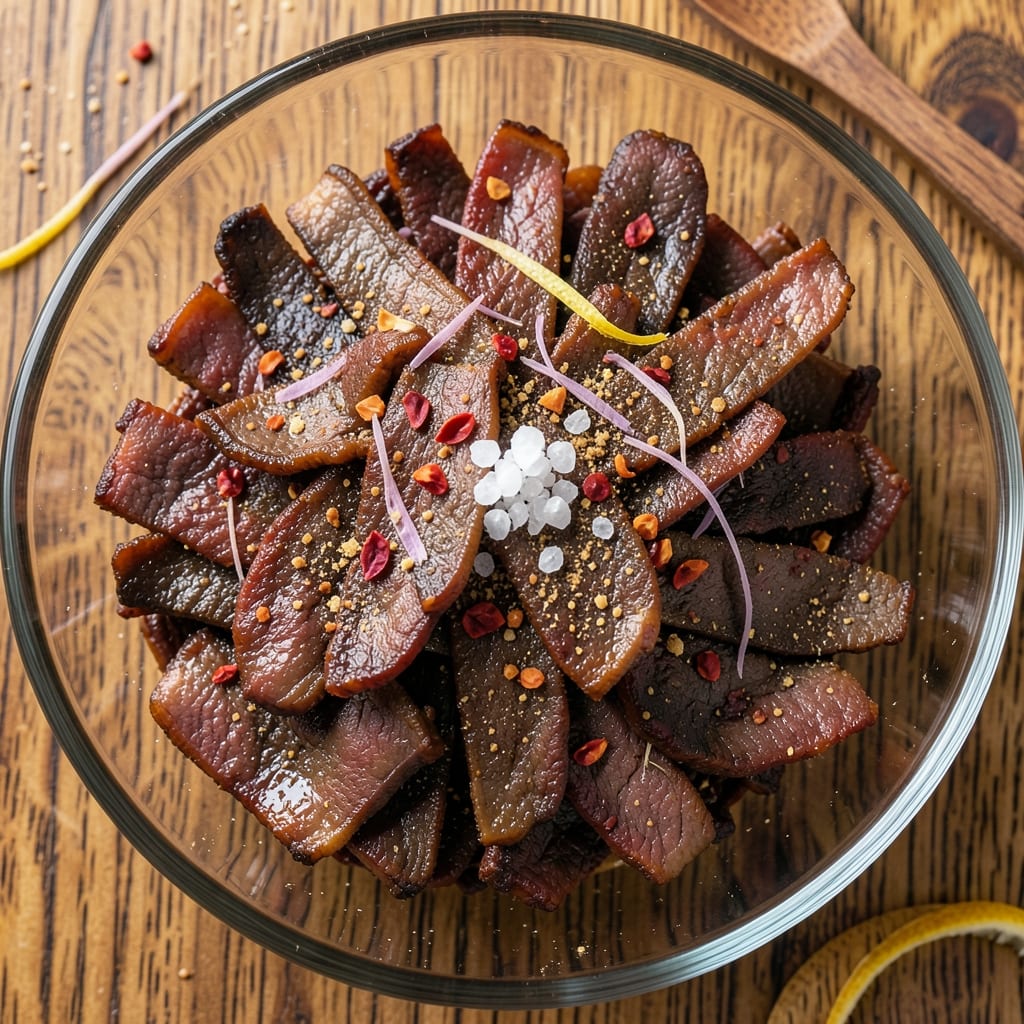
This BBQ flavored beef jerky recipe transforms tough cuts into chewy, smoky perfection—no smokehouse required. I developed this method after years of perfecting my pitmaster's touch, balancing sweetness and heat without overpowering the beef's natural richness. The secret lies in the cure: a blend of spices and brown sugar that penetrates deeply during the long dry, creating that signature tangy-sweet flavor we all crave.
What makes this recipe stand out is the controlled dehydration process—using a dehydrator or even your oven on low heat—to achieve that ideal texture: tender yet firm, with just a hint of snap. I've tested this with different cuts, and the top round delivers the best balance of flavor and tenderness. The process takes time, but the results are worth every minute of wait.
By the time you're done, you'll have jerky that's rich with caramelized sweetness and smoky depth, ready to satisfy cravings for days. The beauty of making it at home is control over every ingredient—no preservatives, no artificial flavors, just pure, smoky beef that rivals anything you'd buy at the store. Plus, it makes an excellent gift or pantry staple.
Whether you're a seasoned jerky maker or trying this for the first time, this method is foolproof and delivers restaurant-quality results at home. Let's get started on creating your own batch of smoky, sweet jerky that'll impress even the most discerning BBQ lovers.
Ingredients for bbq flavored beef jerky
The perfect blend of smoky, sweet, and tangy ingredients transforms simple beef into restaurant-quality jerky at home.
| Ingredient | Amount | Notes |
|---|---|---|
| Top Round Beef 🥩 | 2 lb | Thinly sliced against grain |
| Brown Sugar 🍚 | ½ cup | Light or dark variety |
| Smoked Paprika 🌶️ | 2 tbsp | For authentic smoky depth |
| Chili Powder 🌶️ | 1 ½ tbsp | Medium heat preferred |
| Garlic Powder 🧄 | 1 tbsp | Freshly ground preferred |
| Onion Powder 🧅 | 1 tbsp | For balanced flavor |
| Black Pepper 🌶️ | 1 tsp | Freshly cracked for heat |
| Ground Cayenne Pepper 🔥 | ½ tsp | Adjust for desired heat |
| Kosher Salt 🧂 | 1 ½ tsp | Diamond Crystal preferred |
| Apple Cider Vinegar 🍎 | ¼ cup | For tenderizing and tang |
| Worcestershire Sauce 🍶 | 1 tbsp | Vegetarian version if needed |
| Black Coffee ☕ | ¼ cup | Cold brew for depth |
| Soy Sauce 🍜 | 1 tbsp | For umami richness |
| Cornstarch 🌾 | 1 tbsp | For tenderizing the beef |
The top round beef is your secret weapon here—it's lean enough to dehydrate perfectly without turning rubbery. Look for cuts with good marbling at Costco or your butcher shop, and ask for it pre-sliced if possible (about 1/8-inch thick). If you're slicing yourself, use a sharp knife and slice against the grain for that signature chewy texture. For the spices, Penzeys or bulk bins at natural grocery stores are your best bet—they stay fresh longer and pack more flavor punch. I always double-check the smoked paprika's color; it should be deep red, not dull brown.
No smoked paprika? Substitute 1 tbsp regular paprika plus 1/2 tsp liquid smoke—just don't overdo it, or you'll taste the artificiality. Running low on Worcestershire? Soy sauce plus a dash of balsamic vinegar works in a pinch, though you'll lose some depth. The coffee might seem odd, but it adds that subtle bitterness that balances the sweetness—instant coffee works fine if you don't have cold brew. For the cornstarch, don't skip it—it's what helps tenderize the beef during the marinating process. If you're watching sodium, reduce the salt slightly and boost the soy sauce by 1 tbsp instead.
Marinate the beef for at least 12 hours—overnight is ideal—then pat it dry before dehydrating. The cure will keep in the fridge for 1 week, but the beef should go straight from marinade to dehydrator. For storage, vacuum-seal your finished jerky to keep it fresh for up to 3 months at room temperature. I always make extra—it's the perfect snack for road trips or camping, and it makes an amazing gift wrapped in cellophane with a ribbon. Just remember: the longer it dehydrates, the more intense the flavor becomes.
Why You'll Love This Recipe
- No-Fuss Prep: Honestly, this jerky takes less work than boiling water. Slice the top round thin—not paper-thin, we’re not making leather—then toss it in the marinade. Ten minutes of hands-on time, and the dehydrator (or oven) does the rest. No complicated brining, no waiting hours for meat to soak.
- Sweet Heat Magic: That brown sugar isn’t just for looks—it caramelizes into a sticky, smoky crust that clings to every bite. The smoked paprika and chili powder? They turn this into something ridiculously good: tangy, slightly sweet, with a slow-building heat that lingers. (Yes, even my picky husband grabs seconds.)
- Snack Attack Ready: Between us, this is my secret weapon for lazy afternoons, tailgates, or when I forget to pack lunch. It’s the perfect grab-and-go protein—no fridge needed, no mess. I keep a stash in my gym bag, my desk drawer, and even my car for those "I’m starving but can’t stop" moments.
- Budget-Protein Powerhouse: Top round beef is cheap, and a pound stretches forever. Make a batch on Sunday, and you’ve got snacks for a week—no takeout runs, no impulse buys. Plus, the spices cost pennies, so you’re basically printing money in jerky form. (Okay, maybe not printing, but you get it.)
Step-by-step instructions for BBQ flavored beef jerky
Here's how to transform tough beef into tender, smoky-sweet jerky with a perfect balance of heat and sweetness.
Prep the Beef for Maximum Tenderness
Begin by slicing the 2 lb Top Round Beef against the grain into strips about ¼-inch thick. This is crucial—thinner slices cook faster and stay tender. Place the beef in a large bowl and add the 1 tbsp Cornstarch. Toss gently with your hands to coat evenly, then let it sit for 15 minutes. This step ensures the beef absorbs moisture and stays juicy during the long cooking process.
While the beef marinates, create a tenderizing bath by combining the 0.25 cup Apple Cider Vinegar, 0.25 cup Black Coffee, and 1 tbsp Worcestershire Sauce in a separate bowl. The acidity in the vinegar helps break down muscle fibers, while the coffee adds depth without overpowering the BBQ flavor. Stir well and let it sit at room temperature for 10 minutes before using.
Mix the BBQ Dry Rub
In a medium bowl, whisk together the 0.5 cup Brown Sugar, 2 tbsp Smoked Paprika, 1.5 tbsp Chili Powder, 1 tbsp Garlic Powder, 1 tbsp Onion Powder, 1.5 tsp Kosher Salt, 1 tsp Black Pepper, and 0.5 tsp Ground Cayenne Pepper. The smoked paprika and brown sugar create that classic BBQ sweetness, while the chili powder and cayenne add heat. I like to use my fingers to break up any clumps—this ensures an even distribution when we coat the beef later.
This dry rub is the heart of your jerky's flavor, so don't skimp on the mixing. The paprika should be evenly distributed, and the brown sugar should be finely incorporated. If you prefer less heat, reduce the cayenne to ¼ tsp—but trust me, this amount delivers just the right kick without overpowering the sweetness.
Marinate the Beef for Deep Flavor
Drain the beef strips and transfer them to a large resealable plastic bag. Pour the coffee-vinegar mixture over the beef and add the dry rub. Seal the bag tightly, then massage it with your hands for 2 minutes to ensure every strip is coated. Let the beef marinate in the refrigerator for at least 12 hours, but I recommend 24 hours for maximum tenderness and flavor penetration.
Here's the thing—this marinating step is where the magic happens. The acidity and coffee work together to tenderize the beef, while the spices infuse deeply. Don't rush it; the longer it marinates, the more flavorful your jerky will be. If you're short on time, 8 hours minimum will still yield great results, but 24 hours is ideal.
Pre-Cook the Jerky for Safety and Texture
Preheat your oven to 175°F—this low temperature is key for slow, even cooking without drying out the beef. Line a baking sheet with parchment paper and arrange the marinated beef strips in a single layer, ensuring they don't overlap. This prevents steaming, which can make the jerky tough.
Bake the beef for 2 hours, flipping the strips halfway through. You're not looking for color here—just even cooking and moisture loss. The strips should feel firm to the touch but still pliable. This pre-cooking step is critical for food safety and ensures the jerky finishes cooking properly in the dehydrator or oven later. If you're using a meat thermometer, the internal temperature should reach 160°F—this guarantees the beef is fully cooked and safe to eat.
Finish and Dehydrate for Perfect Texture
Remove the beef from the oven and let it cool for 10 minutes. While it cools, preheat your dehydrator to 160°F or set your oven to 165°F with the door propped open slightly for airflow. Arrange the beef strips on the dehydrator trays or a wire rack set over a baking sheet, ensuring they're not touching. This final step is where the jerky develops its signature chewy texture.
Dehydrate for 4-6 hours, checking periodically. The jerky is done when it's dry to the touch but still slightly pliable—it should snap when bent but not feel brittle. If using an oven, check every 30 minutes to prevent over-drying. Once fully dehydrated, let the jerky cool completely before storing. It should be firm, flexible, and hold its shape when picked up.
Store and Enjoy
Transfer the cooled jerky to an airtight container and store it in the refrigerator for up to 2 weeks or in the freezer for up to 6 months. The flavors will deepen over time, especially the smoky notes from the paprika and the sweetness from the brown sugar. For the best experience, let the jerky come to room temperature before eating—this enhances the texture and allows the flavors to fully develop.
Cut into serving-sized pieces and enjoy as a snack, trail mix addition, or protein boost for salads and sandwiches. The combination of sweet, smoky, and slightly spicy flavors makes this jerky a standout—perfect for those who love bold BBQ taste without the smoker.
Pro Tips For Making Bbq Flavored Beef Jerky
- Freeze the Beef First: I learned this the hard way—skipping the freeze makes slicing top round beef into even strips a nightmare. Pop it in the freezer for 30 minutes before slicing, and it’ll cut like butter. (Yes, even if you’re impatient like me.)
- Mix Dry Rub Early: Brown sugar likes to clump, and smoked paprika loses its punch if it sits wet. Whisk all your dry ingredients—chili powder, garlic powder, smoked paprika, and brown sugar—together before adding oil. This guarantees even coating and saves you from lumpy jerky.
- Skip the Crowding: Overloading your dehydrator or smoker traps moisture, turning your jerky into chewy leather. Arrange strips in a single layer with space between them—no touching. Trust me, the extra 10 minutes of rearranging now beats rubbery jerky later.
- Start Hot, Finish Low: My grandmother swore by this, and she was right: crank your dehydrator to 160°F (71°C) for the first 2 hours to kill bacteria fast, then drop to 145°F (63°C) for the remaining 6–8 hours. This prevents surface burning while ensuring the center dries properly. (Your food thermometer is your best friend here.)
Pro cooking tips for this dish
Temperature Control
Your dehydrator or oven's temperature is the secret to perfect jerky texture. Set it to 160°F—any hotter, and you risk drying the outside while keeping the inside raw. I use a Nesco FD-75A dehydrator because it maintains consistent temps, but if you're oven-drying, prop the door open slightly with a wooden spoon for airflow. 165°F is your max—higher temps create rubbery jerky. 🌡️
Marinating Magic
Don't skip the 12-24 hour marinade—this is where the beef transforms from tough to tender. The apple cider vinegar and coffee work together to break down fibers, while the spices infuse deeply. I like to marinate in a resealable bag and massage it with my hands every few hours. Pro tip: If you're in a hurry, 8 hours minimum still works, but 24 hours is ideal for maximum flavor.
Pre-Cooking Safety
Before dehydrating, pre-cook the beef in the oven at 175°F for 2 hours. This ensures food safety while preventing the jerky from drying out too quickly. The strips should reach 160°F internal temp—use a meat thermometer to check. This step also helps develop the BBQ flavor by caramelizing the sugars in your rub. Never skip this—raw jerky is a food safety risk. ⏰
Dehydration Time
Dehydrate for 4-6 hours, checking every 30 minutes after the first hour. The jerky is done when it's dry to the touch but still slightly flexible. Over-drying creates brittle jerky—test by bending a strip. If it snaps cleanly, it's perfect. I usually pull mine when it's about 90% dry—this ensures that chewy texture we all love. For oven drying, check more frequently as temps fluctuate more.
Storage Secrets
Store your finished jerky in an airtight container with parchment paper between layers to prevent sticking. It keeps for 2 weeks refrigerated or 6 months frozen. The flavors actually improve over time—especially the smoky notes from the paprika. For gift-giving, vacuum-seal individual portions. I always make extra because it's the perfect snack for road trips or camping—just pack it in a cooler to keep it fresh. 💡
Troubleshooting Tips
If your jerky turns out too dry, next time dehydrate for 30 minutes less and check more frequently. For tough jerky, ensure your beef was sliced against the grain and marinated properly. If the flavor seems weak, increase the marinating time to 48 hours or boost the spices by 10%. And remember—patience is key. The longer you dehydrate, the more intense the BBQ flavor becomes. 🔥
Nutrition facts
Frequently asked questions about homemade BBQ beef jerky
Can I use different cuts of beef for this jerky?
While top round is ideal, you can use sirloin tip or flank steak—just slice against the grain for chewiness. Avoid fatty cuts like ribeye, as they won't dehydrate properly. For extra tenderness, trim any visible fat before slicing. The leaner the cut, the better the jerky texture will be.
How do I adjust the heat level in this recipe?
Reduce the ground cayenne pepper to ¼ tsp for mild heat or eliminate it entirely. For extra spice, add ½ tsp crushed red pepper flakes to the dry rub. Remember, the chili powder already provides moderate heat—balance it with the brown sugar for sweetness. Taste the rub before applying to adjust as needed.
What's the best way to store homemade jerky?
Keep it in an airtight container with parchment paper between layers to prevent sticking. It stays fresh for 2 weeks refrigerated or 6 months frozen. For long-term storage, vacuum-seal individual portions. The flavors actually deepen over time, especially the smoky notes from the paprika. Store in a cool, dark place away from moisture.
Can I make this jerky without a dehydrator?
Use your oven at 165°F with the door propped open slightly for airflow. Arrange strips on a wire rack over a baking sheet and dehydrate for 4-6 hours, checking frequently. For even drying, flip strips halfway. A fan on low can help circulate air. Just be patient—oven drying takes longer than a dehydrator but works perfectly.
Why did my jerky turn out rubbery?
Rubbery jerky usually means it was over-dried or the beef wasn't sliced properly. Always slice against the grain and dehydrate at 160°F (never higher). Check doneness by bending a strip—it should snap but not feel brittle. If using an oven, reduce temp to 150°F and dehydrate for 6-8 hours instead. Proper marinating time also prevents toughness.