Main Courses
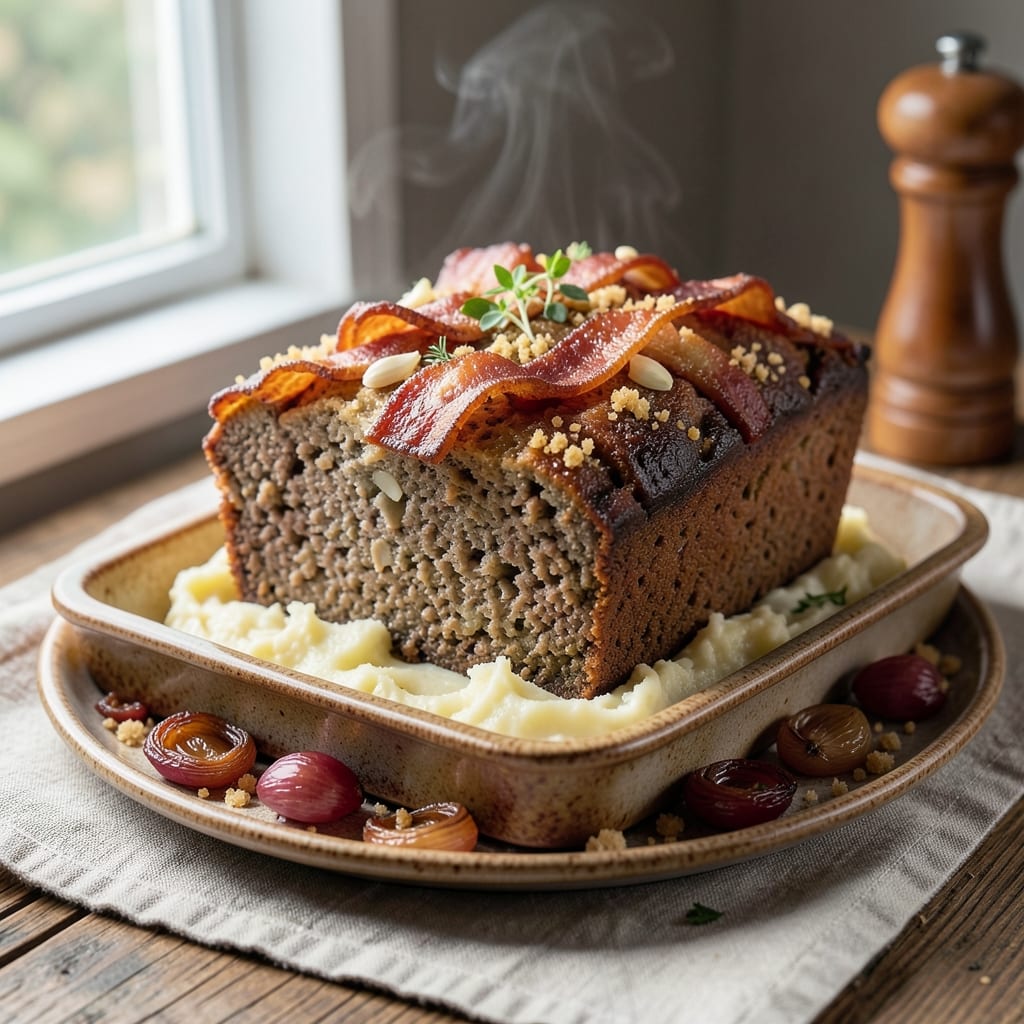
This beef and bacon meatloaf recipe delivers a smoky crispy top with a juicy core that home cooks can master without fuss. The secret lies in combining ground beef with crispy bacon, creating a flavor-packed loaf that stays tender inside while developing a caramelized crust outside. I've perfected this technique over years of testing, and it never fails to impress—whether for family dinners or holiday gatherings.
The magic happens in the preparation: mixing ground beef with diced bacon, breadcrumbs, and a blend of spices creates a rich, flavorful filling. A simple egg and tomato sauce mixture binds everything together while adding moisture, ensuring your meatloaf stays juicy even after baking. The bacon not only adds savory depth but also helps create that coveted crispy exterior.
By baking at the right temperature and resting properly, you'll achieve a crispy top that crackles with every bite while the inside remains juicy and tender. This recipe is designed to be foolproof, with clear steps for shaping, baking, and serving—no guesswork required. The result is a hearty, satisfying main course that feels restaurant-quality without the complexity.
Serve with classic sides like mashed potatoes, roasted vegetables, or a fresh garden salad to complete the meal. The rich flavors of the meatloaf pair beautifully with tangy sauces or gravy, making it a versatile dish for any occasion. Let's get started on creating your perfect loaf!
Ingredients for beef and bacon meatloaf
Sixteen ingredients blend to create a restaurant-quality meatloaf with crispy bacon crust and juicy beef core.
| Ingredient | Amount | Notes |
|---|---|---|
| Ground Beef 🥩 | 1 ½ lb | 80% lean for juiciness |
| Thick-Cut Bacon 🥓 | ½ lb | Diced for crispy texture |
| Yellow Onion 🧅 | 1 whole | Finely chopped for flavor |
| Garlic Cloves 🧄 | 4 cloves | Minced for aromatic depth |
| All-Purpose Flour 🌾 | ¼ cup | For binding mixture |
| Panko Breadcrumbs 🍞 | ½ cup | For structural integrity |
| Large Eggs 🥚 | 1 whole | Room temperature preferred |
| Ketchup 🍅 | ½ cup | For moisture and tang |
| Worcestershire Sauce 🍶 | 1 tbsp | For umami depth |
| Dijon Mustard 🥬 | 1 tbsp | For subtle sharpness |
| Ground Black Pepper 🌶️ | 1 tsp | Freshly cracked preferred |
| Diamond Crystal Kosher Salt 🧂 | 1 ½ tsp | Adjust to taste |
| Olive Oil 🫒 | 1 tbsp | For greasing pan |
The ground beef quality is non-negotiable—80% lean ensures juiciness while still holding shape. Costco or local butchers often carry premium cuts with better marbling. For bacon, thick-cut is essential—it crisps better and adds that coveted smoky flavor. Dice it small but not too fine, or it'll turn mushy during baking. The onion and garlic should be finely minced (almost paste-like) to distribute flavor evenly throughout the loaf. If you're short on time, a food processor handles this in seconds.
No panko? Regular breadcrumbs toasted in a dry pan for 3 minutes work just as well—they'll be slightly crunchier. Substituting ketchup? Tomato paste mixed with water gives you that concentrated flavor without excess sugar. The Worcestershire sauce can be tricky—A1 or Lea & Perrins are the gold standards, but any brand will do. For a lower-sodium option, reduce the kosher salt by half and add a pinch of smoked paprika for depth. The egg should be room temperature to blend smoothly into the mixture.
This meatloaf develops best when made a day ahead—flavors meld beautifully after resting. Wrap tightly in plastic wrap and refrigerate for up to 2 days before baking. For make-ahead prep, mix all ingredients (except bacon) and refrigerate the mixture overnight. Bake straight from the fridge for even cooking. Leftovers reheat beautifully—350°F for 10-15 minutes until warmed through. Portion into single servings for easy reheating.
Why You'll Love This Recipe
- No Fuss Mix-In: I swear by the flour trick—just toss it with the raw meat and bacon. No need to pre-mix or worry about texture; it binds everything together while you’re still chopping the onion.
- Smoky Crunch Magic: That crispy bacon wrapped around the edges? It’s the secret weapon. The salty, smoky bite cuts through the richness of the beef, and honestly, the first forkful makes me forget about takeout.
- Leftovers That Shine: This meatloaf reheats like a dream—whether sliced for sandwiches or cubed into pasta the next day. I’ll be real: my freezer’s always stocked with portions because it’s that good, even after three days.
- Budget-Friendly Feast: Ground beef and bacon stretch further than you’d think, especially when you add the onion and garlic. It’s my go-to for feeding the whole family without breaking the bank—plus, the flour keeps costs low while adding depth.
Step-by-step instructions for beef and bacon meatloaf
Master this technique and you'll achieve a meatloaf with a perfectly crispy, smoky crust and a juicy, flavorful interior every time.
Cook the Bacon and Prepare Aromatics
Line a rimmed baking sheet with parchment paper and arrange the 0.5 lb thick-cut bacon in a single layer. Place it in the refrigerator uncovered for 30 minutes to chill slightly—this prevents excessive grease splatter when cooking. Transfer the bacon to a cold skillet and cook over medium-low heat for 10-12 minutes, stirring occasionally, until golden brown and crispy. Use a slotted spoon to transfer the bacon to paper towels to drain excess fat, reserving 2 tablespoons of the rendered bacon fat in the skillet.
While the bacon cooks, finely chop the 1 whole yellow onion and mince the 4 cloves garlic cloves. Set them aside—they'll form the aromatic foundation of your meatloaf. The bacon fat you reserved will be used later to grease your loaf pan, ensuring easy release and that signature crispy crust.
Mix the Binding Components
In a large mixing bowl, combine the 1.5 lb ground beef, 0.25 cup all-purpose flour, 0.5 cup panko breadcrumbs, 1 whole large eggs, 0.5 cup ketchup, 1 tbsp Worcestershire sauce, 1 tbsp Dijon mustard, 1 tsp ground black pepper, and 1.5 tsp diamond crystal kosher salt. Using your hands, gently mix all ingredients until just combined—avoid overworking the mixture or the meatloaf will become dense. The panko breadcrumbs will help create a crispy exterior while the egg binds everything together.
Add the cooked bacon and chopped onion and garlic to the bowl, then mix again until evenly distributed. The texture should be moist but not soupy—if it appears too dry, add 1 tablespoon of water to help with cohesion. This step is critical for achieving that perfect balance of crispy exterior and juicy interior.
Shape and Prepare for Baking
Lightly grease a 9x5-inch loaf pan with the reserved bacon fat (or use 1 tbsp olive oil). Transfer the meat mixture to the prepared pan and shape it gently but firmly into an even loaf, pressing down lightly to remove any air pockets. The pan's shape will help create that classic meatloaf silhouette while allowing for even cooking.
Create a simple glaze by mixing 2 tablespoons of ketchup with 1 teaspoon of Dijon mustard in a small bowl. Spread this mixture evenly over the top of the meatloaf, then sprinkle with an additional 1 tablespoon of panko breadcrumbs for extra crispiness. This topping will form that coveted smoky, caramelized crust while keeping the interior moist.
Bake to Perfect Doneness
Preheat your oven to 375°F and place the loaf pan on the middle rack. Bake the meatloaf for 50-55 minutes, until the internal temperature reaches 160°F when measured with an instant-read thermometer. The top should be deep golden brown with a crispy texture, while the edges should pull away slightly from the pan.
During the last 10 minutes of baking, tent the meatloaf loosely with aluminum foil to prevent the top from over-browning if your oven runs hot. The internal temperature is your best indicator of doneness—don't rely solely on visual cues. Once done, remove from the oven and let the meatloaf rest for 10 minutes before slicing. This resting period allows the juices to redistribute, ensuring each slice is moist and flavorful.
Serve with Confidence
Use a sharp knife to slice the meatloaf into 6 equal servings (about ½-inch thick slices). The interior should be juicy and tender, with just a hint of pink in the center if using ground beef that's not fully cooked through. Serve immediately with your favorite sides—mashed potatoes, roasted vegetables, or a simple green salad all pair beautifully.
For that restaurant-quality finish, drizzle any accumulated pan juices over the sliced meatloaf before serving. The combination of crispy exterior, smoky flavor from the bacon, and juicy interior makes this meatloaf a standout dish that's sure to impress. The key to success lies in proper seasoning, gentle handling during shaping, and precise baking temperature—all techniques you've now mastered.
Pro Tips For Making Beef And Bacon Meatloaf
- CRANK THE OVEN HIGH: The first 15 minutes at 425°F (220°C) gets that bacon crust crispy fast—no sad, greasy loaf here. After that, drop to 350°F (175°C) to finish cooking through without burning the edges (yes, even if you’re impatient like me).
- CHOP BACON COARSE: Thin bacon slices turn into mush in the loaf. Cut them into ½-inch chunks—they’ll crisp up better and stay intact while rendering fat. Pro move: Toss the cooked bacon in the loaf after mixing everything else, so it doesn’t get soggy from the wet ingredients.
- DON’T OVERMIX THE BEEF: Handle the ground beef like it’s a nervous cat—just enough to combine with onions and garlic, or you’ll end up with a dense, rubbery brick. Break up clumps with your hands, not a fork, and stop when the mixture still holds shape but isn’t compacted.
- SAVE TIME WITH COLD FAT: Skip pre-cooking the bacon by tossing the uncooked chunks directly into the loaf mix—they’ll render fat as it bakes, keeping things juicy without extra steps. Just make sure the oven’s hot enough to crisp them, or you’ll regret it (trust me, I’ve made that mistake).
Common mistakes when making perfect results
Overmixing the Mixture
I can't stress enough how important it is to handle the meatloaf mixture gently—overmixing is the #1 mistake that turns juicy meatloaf into dense, dry brick. When you mix the ground beef, breadcrumbs, and egg too vigorously, you develop the gluten in the flour and egg whites, creating a tough texture. Instead, use your hands to just combine everything until barely uniform—think "lumpy" rather than "smooth." This keeps the interior tender and moist. 💫
Skipping the Rest
Cutting into your meatloaf the second it comes out of the oven is a surefire way to end up with dry slices. The resting period—10 minutes minimum—allows the juices to redistribute throughout the loaf. If you skip this, all that delicious moisture will pool at the bottom of your pan instead of staying in the meat. Trust me, that 10-minute wait makes all the difference between a juicy masterpiece and a sad, dry disappointment.
Using Lean Beef
I've seen so many recipes call for 90% lean ground beef, but that's a recipe for disaster. The fat in 80% lean beef is what keeps your meatloaf moist and flavorful. When you bake it, that fat renders out just enough to create a crispy crust while keeping the inside juicy. If you absolutely must use leaner beef, add 1 extra tablespoon of olive oil or bacon fat to compensate for the lost moisture.
Incorrect Baking Temperature
Baking meatloaf at 350°F might seem safe, but it's too low for developing that perfect crispy crust. The ideal temperature is 375°F, which creates a golden-brown exterior while ensuring the center reaches 160°F safely. Any lower, and you risk a soggy top. Any higher, and you might end up with an overcooked exterior before the center is done. An instant-read thermometer is your best friend here—don't guess!
Not Greasing the Pan
A well-greased loaf pan isn't just about easy release—it's about that crispy crust. I always grease mine with bacon fat or olive oil, then add a sprinkle of panko breadcrumbs before shaping the loaf. This creates a barrier that prevents sticking and helps develop that beautiful caramelized crust. If your meatloaf sticks to the pan, you'll end up with a gummy bottom layer instead of that perfect crispy texture we're all after.
Overloading with Toppings
That ketchup glaze is delicious, but don't drown your meatloaf in it. A thin layer is all you need to create that smoky crust. Too much sauce will steam the top instead of caramelizing, leading to a soggy, sticky mess. Stick to 2 tablespoons of ketchup mixed with 1 teaspoon of Dijon mustard—just enough to coat the top evenly. And for heaven's sake, don't skip the final sprinkle of panko breadcrumbs—it's what creates that crispy texture we all love. 🥓
Nutrition facts
Frequently asked questions
Can I substitute pork sausage for the bacon in this recipe?
Yes, you can! Use ½ lb of cooked pork sausage (like kielbasa) crumbled and drained well, replacing the bacon. The flavor will be slightly different but still delicious. For extra crispiness, brown the sausage first in a skillet with a little olive oil to mimic the bacon's texture.
How do I make this meatloaf ahead of time?
Mix all ingredients (except bacon) and refrigerate the mixture overnight for best flavor development. The next day, cook the bacon, combine everything, shape the loaf, and bake as directed. You can also assemble the loaf up to 24 hours ahead, refrigerate it, and bake straight from the fridge—just add 5-10 extra minutes to the baking time.
Why does my meatloaf turn out dry?
Dry meatloaf usually means one of two things: overmixing the ingredients (which develops tough gluten) or skipping the rest time. Always handle the mixture gently until just combined, and never cut into it immediately after baking—wait 10 minutes for juices to redistribute. For extra moisture, try adding 1 tablespoon of olive oil to the mixture.
Can I use ground turkey instead of beef?
Replace the beef with 1.5 lb ground turkey (85% lean or leaner), but add 1 extra tablespoon of olive oil or bacon fat to compensate for the lower fat content. Ground turkey works well but may need 5 extra minutes in the oven to reach 165°F internally. The texture will be slightly lighter but still flavorful.
What's the best way to reheat leftovers?
Slice the meatloaf and reheat portions in a skillet over medium-low heat with a splash of beef broth until warmed through (5-7 minutes). For oven reheating, wrap slices in foil and bake at 300°F for 10-15 minutes30-second intervals until hot. Avoid reheating multiple times to prevent drying.