
Soups & Stews
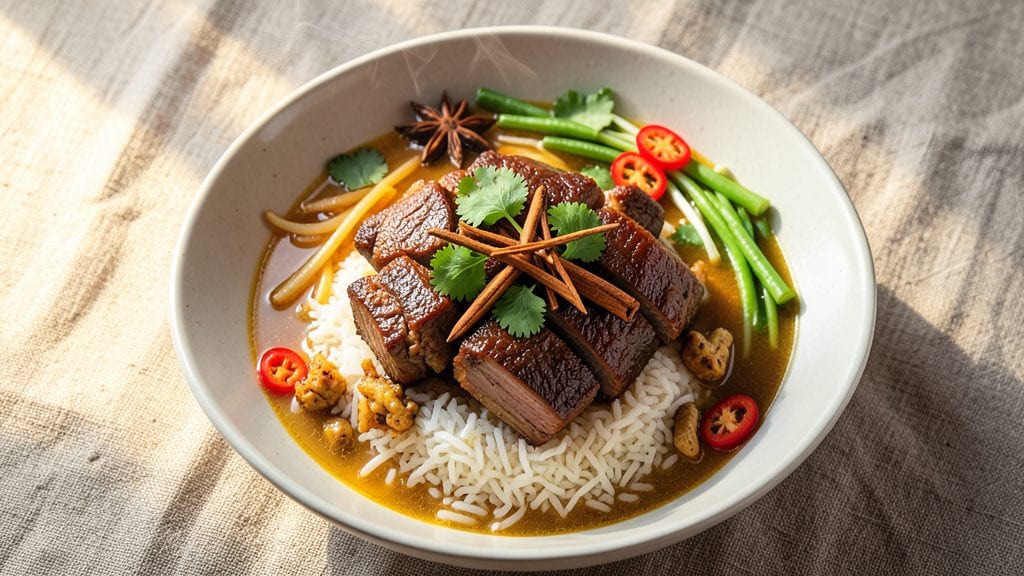
This beef brisket pho recipe transforms tough brisket into tender, aromatic slices swimming in a deep, smoky broth—exactly what I crave after long rides along the coast.
The secret lies in slow-cooking the brisket until it practically melts, then building layers of flavor through charred onions, star anise, and a touch of fish sauce. My family’s backyard cookouts taught me that patience pays off, and this dish proves it every time.
The broth is where the magic happens—simmering for hours with cinnamon, cloves, and ginger creates that signature pho depth. While the brisket cooks, rice noodles soak up just enough water to stay tender but still hold their shape.
Garnishes like Thai basil, bean sprouts, and lime brighten each bowl, balancing the rich, umami-packed broth. This isn’t just a soup; it’s a full meal in one bowl.
What you’ll end up with is a steaming pot of pho that smells like home—smoky, spiced, and deeply satisfying. The brisket falls apart at the touch of a spoon, the broth is rich but never heavy, and every bite is a perfect harmony of sweet, salty, and umami.
It’s the kind of dish that turns weeknights into special occasions, no matter how busy life gets.
Serve with extra lime wedges and chili oil for heat, or keep it classic with just fresh herbs. The best part? Leftovers taste even better the next day, making it ideal for meal prep. Let’s get cooking—your kitchen will smell like a Vietnamese street corner in no time.
Ingredients for beef brisket pho
Four pounds of beef brisket and aromatic spices create this soul-warming pho experience.
| Ingredient | Amount | Notes |
|---|---|---|
| Beef Brisket 🥩 | 2 lb | Flat cut, well-marbled preferred |
| Yellow Onions 🧅 | 2 whole | Charred for depth of flavor |
| Garlic Cloves 🧄 | 8 cloves | Peeled, minced for aromatic base |
| Fresh Ginger 🌿 | ½ cup | Julienned, skin removed |
| Star Anise 🌟 | 2 whole | Lightly crushed for aroma |
| Cinnamon Sticks 🌿 | 2 whole | 2-inch pieces for broth infusion |
| Cloves 🌶️ | 4 whole | Whole, for subtle spice |
| Fish Sauce 🍶 | ¼ cup | Red Boat preferred |
| Rice Noodles 🍜 | 12 oz | Banh pho or flat rice noodles |
| Thai Basil 🌿 | ½ cup | Fresh, for garnish |
| Bean Sprouts 🌱 | 2 cups | Fresh, for crunch |
| Limes 🍋 | 3 whole | Juiced, for brightness |
| Chili Oil 🌶️ | ¼ cup | For heat, optional |
| Salt 🧂 | 1 tsp | Kosher salt for seasoning |
| Black Pepper 🌶️ | ½ tsp | Freshly ground for heat |
The brisket is the star—look for a well-marbled flat cut at Costco or Whole Foods. The more fat, the better for flavor and moisture. If you can't find brisket, chuck roast works in a pinch, but it'll need longer cooking. For the spices, Penzeys or local Asian markets have the best quality star anise and cinnamon sticks—those little jars at regular grocery stores often have stale spices. Fresh ginger is a must; pre-packaged ginger root keeps longer than the paste, and you'll need about an inch for this recipe.
No fish sauce? Soy sauce or Worcestershire sauce can substitute, but you'll lose that signature umami. Thai basil is key for that authentic flavor—substitute Italian basil if needed, but it won't be the same. The rice noodles should be banh pho or flat rice noodles; if you can't find them, rice vermicelli works in a pinch. For the charred onions, use a gas flame or broiler—they should be blackened but not burnt. Skip the chili oil if you prefer a milder broth, but trust me, it adds the perfect kick.
This broth tastes even better the next day—make a big batch and freeze extras. Store the cooked brisket and broth separately in airtight containers for up to 5 days. Reheat gently on the stove, and the noodles can soak in hot broth for 10-15 minutes before serving. Garnishes like Thai basil and bean sprouts keep best in the fridge for 3-4 days, so add them fresh when serving.
Why You'll Love This Recipe
- One-Pot Magic: I swear by this—just the brisket, onions, and spices simmering together until the meat falls apart. No extra pots, no fuss, and that rich broth builds itself while you chop a few veggies.
- Deep Umami Bomb: That star anise and ginger? They turn the brisket into something ridiculously flavorful—sweet, savory, and warm all at once. The onions caramelize right in the broth, giving it this irresistible depth that’s hard to resist.
- Leftover Goldmine: Make a double batch and thank me later. The brisket stays tender for days, and the broth only gets better as it sits. I freeze portions for lazy nights when I just want that cozy pho vibe without starting from scratch.
- Budget-Friendly Feast: Brisket is cheaper than most cuts, and this recipe stretches it across bowls for the whole family. Plus, the spices are minimal but pack a punch—no need for fancy ingredients to make it taste like you spent hours in the kitchen.
Step-by-step instructions for beef brisket pho
Here's how to build a rich, aromatic broth that transforms simple ingredients into a restaurant-quality bowl.
Prepare the Brisket and Aromatics
Trim any excess fat from the 2 lb beef brisket, leaving about ¼ inch of fat cap for flavor. Cut the brisket into 2-inch chunks and set aside. Peel and mince the 8 cloves garlic cloves, then julienne the 0.5 cup fresh ginger, removing any skin. Lightly crush the 2 whole star anise and 4 whole cloves with the side of your knife to release their oils.
In a large Dutch oven, combine the brisket, 2 whole yellow onions (cut into quarters), the minced garlic, julienned ginger, crushed star anise, 2 whole cinnamon sticks (cut into 2-inch pieces), 1 tsp salt, and 0.5 tsp black pepper. This aromatic bundle forms the flavor foundation of your pho.
Sear and Simmer the Broth
Heat the Dutch oven over medium-high heat until it's very hot. Add the brisket and aromatics, searing for 5 minutes until the meat develops a deep brown crust. Pour in 12 cups cold water, which will help extract the meat's collagen and create a rich broth. Bring to a boil, then reduce heat to low and skim off any foam that rises to the surface.
Let the broth simmer uncovered for 3 hours, stirring occasionally. You'll notice the brisket will break down into tender shreds and the broth will turn a deep amber color. The aroma should be intoxicating—smoky, spiced, and deeply savory. If the liquid reduces too much, add hot water to maintain about 8 cups total volume.
Strain and Season the Broth
Remove the brisket pieces with tongs and strain the broth through a fine-mesh sieve into a clean pot, pressing gently on the solids to extract all the flavor. Discard the aromatics. Return the broth to medium heat and add the 0.25 cup fish sauce, stirring well. Taste and adjust seasoning—you want it to be rich but not salty, with a balance of umami and spice.
While the broth heats, shred the cooked brisket using two forks. The meat should pull apart easily into thin, tender strands. Keep both the broth and brisket warm until ready to assemble your bowls.
Assemble the Pho Bowls
Bring a large pot of water to a boil and cook the 12 oz rice noodles according to package instructions until just tender but still slightly firm to the bite. Drain and divide the noodles among 4 bowls. Top each with shredded brisket, 2 cups bean sprouts, and 0.5 cup thai basil. Ladle the hot broth over each bowl until the noodles are fully submerged.
Finish each bowl with a drizzle of 0.25 cup chili oil and the juice of 3 whole limes. The acidity brightens the rich broth while the chili oil adds a welcome heat. Serve immediately with extra bean sprouts, basil, and lime wedges on the side for customization.
Pro Tips For Making Beef Brisket Pho
- Char the Aromatics: DESCRIPTION:
- Trim the Brisket Fat: DESCRIPTION:
- Simmer Low and Slow: DESCRIPTION:
- Toast the Star Anise: DESCRIPTION:
Common mistakes when making this dish
Overcooking the Brisket
I’ve seen this happen more times than I can count—brisket that turns into tough, dry shreds instead of meltingly tender slices. The key is patience: pull the brisket when it reaches 203°F internal temperature, not when it’s fully falling apart.
Overcooking past this point turns collagen into dry, stringy strands. I’ve learned to trust my thermometer over my instincts—it’s the only foolproof way to nail the texture. 🌡️
Skipping the Char
That deep, caramelized flavor from charred onions and garlic? It’s non-negotiable for authentic pho. I once made broth without charring the aromatics, and it tasted flat—like something was missing.
Use a gas flame or broiler to blacken the onions until they’re smoky and slightly bitter. This step builds the pho’s signature depth that store-bought spice blends can’t replicate.
Ignoring the Broth’s Balance
Too much fish sauce makes the broth taste like a salty brine, while too little leaves it flat. Taste as you go—start with 0.25 cup fish sauce and adjust in 1 tbsp increments.
The broth should be rich, aromatic, and slightly sweet from the caramelized onions, with just a hint of saltiness. I keep a small bowl of broth nearby while tasting to avoid overpowering the flavor.
Using the Wrong Noodles
Rice vermicelli noodles won’t hold up in pho—they turn mushy too fast. Stick to banh pho or flat rice noodles, which stay firm even after soaking in hot broth.
Soak them in warm (not boiling) water for 10-15 minutes before assembling bowls. Over-soaking is a common mistake—noodles should be tender but still have a slight bite. 🍜
Rushing the Simmer
Three hours is the minimum for a proper pho broth—any less and the brisket won’t break down enough. I’ve tried cutting corners with pressure cookers, but the results lack the depth of a slow-simmered broth.
If you’re short on time, simmer for 4 hours instead. The extra time extracts more collagen and builds richer flavors. Trust the process—it’s worth the wait.
Forgetting the Garnishes
Thai basil, bean sprouts, and lime aren’t just decoration—they’re essential for balancing the rich broth. Fresh herbs brighten the dish, while lime adds acidity to cut through the fat.
I keep a bowl of garnishes on the table so everyone can customize their bowl. Skipping them turns a restaurant-quality pho into something that feels incomplete. 💫
Nutrition facts
Frequently asked questions
Can I substitute beef brisket with another cut of beef?
Yes, but with adjustments. A chuck roast works well—it needs 4-5 hours of cooking time due to its tougher texture. For quicker results, try beef short ribs (simmer for 3 hours) or beef shank, but they'll have a slightly different flavor profile. The key is choosing a well-marbled cut that can stand up to long simmering.
How do I make the broth less salty?
If your broth tastes too salty, dilute it by adding 1-2 cups of hot water while reheating. For a richer flavor without extra salt, balance it with 1 tbsp lime juice or 1 tsp sugar. Taste as you go—small adjustments make a big difference. The fish sauce is the main contributor, so measure carefully the first time.
Can I make this pho in a slow cooker?
Brown the brisket and aromatics in a skillet first, then transfer everything to your slow cooker. Use 12 cups water and cook on low for 8-10 hours or high for 5-6 hours. The slow cooker works great for hands-off flavor development, though the broth may need more seasoning since it's less concentrated. Skim excess fat before serving.
What if I don't have Thai basil?
Use Italian basil or cilantro as substitutes, though they won't be identical. For a closer match, combine ½ cup Italian basil + ¼ cup mint. The key is freshness—wilted herbs will make your pho taste flat. If you're missing it completely, add a pinch of cayenne pepper for heat to compensate for the missing herbal brightness.
How do I store leftovers?
Store broth and brisket separately in airtight containers for up to 5 days in the fridge. Reheat broth gently on the stove (never microwave) and add noodles fresh when serving. The brisket reheats beautifully in the broth. For longer storage, freeze broth for up to 3 months—thaw overnight in the fridge before using. Noodles don't freeze well, so cook them fresh when reheating.