
Main Courses
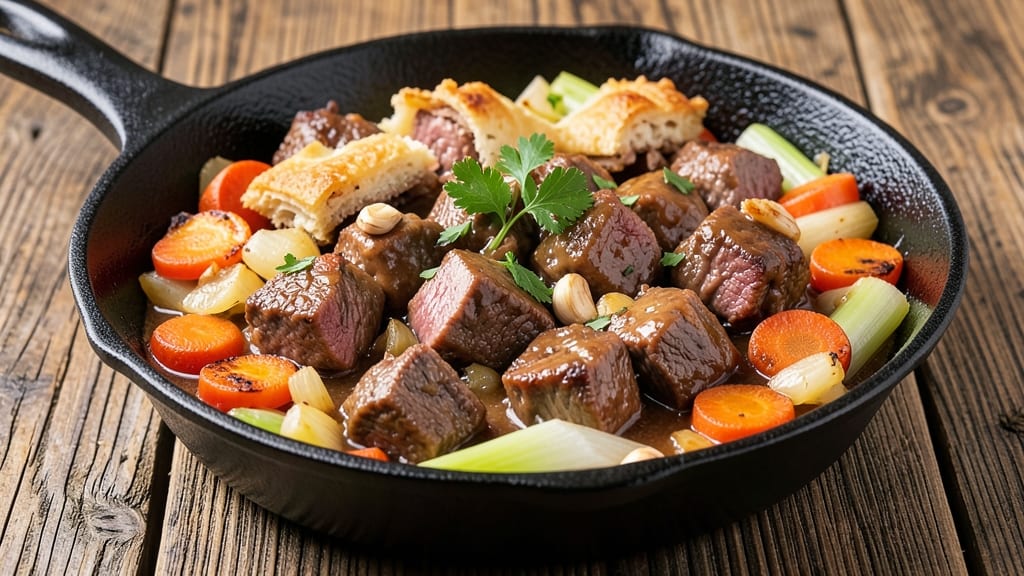
This beef cobbler recipe delivers comfort food at its finest—tender, slow-cooked beef smothered under a golden, buttery biscuit blanket that’s crisp on top and pillowy beneath. The secret lies in braising the beef until it’s fork-tender, then crowning it with a homemade biscuit dough that bakes into a perfect crust.
I perfected this dish after years of testing, balancing rich, savory meat with a flaky topping that soaks up every last bit of juicy flavor.
The magic happens in two stages: first, the beef simmers low and slow in a flavorful broth until it practically falls apart, while the biscuit dough rests just long enough to develop that signature texture.
What sets this apart is the foolproof biscuit method, where cold butter gets worked into the dough for maximum flakiness—no rolling required. The result? A dish that feels like a hug from your grandma’s kitchen, but with restaurant-quality precision.
By the time it emerges from the oven, you’ll have a steaming plate of juicy beef peeking through cracks in the biscuit, each bite offering a perfect harmony of tender meat and buttery crust.
The aroma alone will have everyone gathered around the table, and the leftovers? Even better the next day. This is the kind of meal that transforms a simple dinner into a memorable experience.
Serve with a side of buttery corn or roasted green beans to round out the meal—though I’ll warn you, the cobbler might just disappear before the sides make it to the table. Let’s get cooking!
Ingredients for beef cobbler
Juicy braised beef meets flaky biscuits—just 15 ingredients for ultimate comfort.
| Ingredient | Amount | Notes |
|---|---|---|
| Beef Chuck Roast 🥩 | 2 lb | Cut into 1.5-inch cubes |
| Yellow Onion 🧅 | 1 whole | Chopped, medium size |
| Carrot 🥕 | 3 medium | Peeled and chopped |
| Celery Stalks 🌿 | 3 whole | Chopped, medium size |
| Garlic Cloves 🧄 | 4 cloves | Minced, fresh preferred |
| All-Purpose Flour 🌾 | 2 cups | For biscuit dough |
| Unsalted Butter 🧈 | ¾ cup | Cold, cubed for biscuits |
| Baking Powder 🧂 | 2 tbsp | Metal container preferred |
| Salt 🧂 | 1 ½ tsp | Kosher or sea salt |
| Black Pepper 🌶️ | ½ tsp | Freshly ground preferred |
| Beef Broth 💧 | 2 cups | Low-sodium preferred |
| Tomato Paste 🍅 | 2 tbsp | Smooth, not chunky |
| Dried Thyme 🌿 | 1 tsp | Or 1 tbsp fresh |
| Worcestershire Sauce 🍯 | 1 tbsp | For depth of flavor |
| Milk 🥛 | ½ cup | Cold for biscuit dough |
The beef is everything. Chuck roast gives you that melt-in-your-mouth texture—sirloin or ribeye won’t work here. Grab it pre-cubed from Costco or your local butcher to save time. For the veggies, medium carrots and celery keep things balanced, but baby carrots work in a pinch. The tomato paste? Trader Joe’s squeeze tubes are perfect—no waste, keeps forever. Fresh thyme is ideal, but dried works at one-third the amount. The Worcestershire sauce adds that deep, savory punch—don’t skip it.
No beef broth? Chicken broth plus 1 tsp soy sauce gets you close. Short on tomato paste? 1 tbsp ketchup in a bind, though it’s not ideal. The baking powder must be fresh—if it smells like vinegar, toss it. For the biscuit dough, cold butter is non-negotiable. Use your hands to cut it into the flour for maximum flakiness. The milk should be cold too—room temp makes the dough tough. Prefer a different biscuit texture? Swap half the flour for whole wheat or add 1 tbsp cornmeal for extra crunch.
The braised beef keeps for 5 days in the fridge—tastes even better reheated. Portion the biscuit dough into golf-ball-sized pieces before baking for easy serving. Freeze unbaked biscuit dough for 3 months—thaw in the fridge overnight. The whole cobbler reheats beautifully—cover with foil for 10 minutes at 350°F to warm through. Leftovers make amazing sandwiches the next day.
Why You'll Love This Recipe
- One-Pot Magic: I swear by this—just dump everything in one pot, walk away, and let the beef turn tender while you sip wine. The onions and carrots caramelize right into the sauce, so you’re not left with a pile of dirty pans.
- Deep Flavor Payoff: That chuck roast? It melts into ridiculously rich, fork-tender shreds, and the garlic-clove punch makes every bite taste like you slow-cooked for hours. (Spoiler: You didn’t.)
- Leftovers That Win: Honestly, I make this on purpose to have leftovers—it reheats like a dream for sandwiches or tacos the next day. My kids even ask for it cold in lunchboxes. (Yes, even on a Tuesday night.)
- Budget Stretch Star: A chuck roast feeds a crowd for half the cost of steak, and the veggies (onion, celery, carrot) stretch further than you’d think. I’ll be real: This is how I feed my book club without breaking the bank.
Step-by-step instructions for juicy beef cobbler
Here's how to create tender beef stew topped with golden biscuits that soak up every flavorful bite.
Brown the Beef and Sauté Vegetables
Heat a large Dutch oven over medium-high heat. Add the 2 lb beef chuck roast cut into 1.5-inch cubes and brown on all sides for 4-5 minutes. You want deep golden color—this builds rich flavor. Remove the beef and set aside.
In the same pot, add 2 tablespoons tomato paste and cook for 1 minute until fragrant. Add the chopped yellow onion, 3 medium carrots, 3 whole celery stalks, and 4 cloves minced garlic. Sauté for 5-6 minutes until the vegetables soften slightly and release their aromas. This step develops the foundation of your stew's flavor.
Build the Stew Base
Return the browned beef to the pot. Add 2 cups beef broth, 1 tablespoon Worcestershire sauce, and 1 teaspoon dried thyme. Stir well to combine all ingredients. Bring to a gentle boil, then reduce heat to low, cover partially, and simmer for 1 hour 15 minutes. The beef should become fork-tender and the liquid should reduce slightly.
Here's the thing—don't peek or stir too often. Lifting the lid releases steam and can make the meat tough. Instead, check periodically by pressing a fork against the beef. When it slides in easily with minimal resistance, your stew is ready for the biscuit topping.
Prepare the Biscuit Dough
In a large bowl, combine 2 cups all-purpose flour, 1.5 teaspoons salt, and 0.5 teaspoon black pepper. Cut in the 0.75 cup cold cubed unsalted butter using a pastry cutter or your fingers until the mixture resembles coarse crumbs. Add 0.5 cup cold milk and 2 tablespoons baking powder. Stir gently just until combined—don't overmix.
I know it seems weird, but the dough should be slightly shaggy. This ensures light, flaky biscuits that won't be tough. Cover the bowl and let the dough rest at room temperature for 10 minutes while you preheat your oven to 425°F.
Assemble and Bake the Cobbler
Spoon the beef stew into a 9x13-inch baking dish. Drop spoonfuls of the biscuit dough directly onto the stew, spacing them about 1 inch apart. The dough should be slightly uneven—that's perfect for creating those beautiful peaks.
Bake for 20-25 minutes until the biscuits are golden brown and puffed. The edges should look crisp while the centers remain soft. Real talk: if you see the biscuits browning too quickly, tent them loosely with foil to prevent over-browning while they finish cooking.
Rest and Serve
Remove from the oven and let the cobbler rest for 5 minutes. This resting time allows the juices to redistribute throughout the stew, ensuring each bite is moist and flavorful. The biscuits will firm up slightly as they cool.
Serve immediately with extra biscuits on the side if desired. Each forkful delivers tender beef, savory vegetables, and buttery biscuits that soak up every last drop of stew. The contrast between the rich stew and flaky biscuits makes this comfort dish truly special.
Pro Tips For Making Beef Cobbler
- Sear the Chuck Roast Hard: I learned this the hard way—skipping the sear means bland, gray beef. Heat your Dutch oven until it’s smoking hot, then pat the roast very dry with paper towels before searing each side for 4-5 minutes. The crust locks in flavor and makes the slow cook later actually pay off.
- Cut Veggies Uniformly: Chop onions, carrots, and celery into ½-inch dice—no smaller, no larger. I used to eyeball it, but consistent sizing means even cooking and no mushy bits. A sharp chef’s knife and a steady rock-chop rhythm save time and frustration.
- Deglaze Aggressively: After browning the beef, don’t just splash in broth—scrape that pan like you’re digging for buried treasure. Use a wooden spoon to loosen all the fond, then pour in the liquid. That browned bit is where the deep flavor hides, and skipping it is like skipping the garlic in mashed potatoes—pointless.
- Use a Meat Thermometer: Chuck roast needs 205°F internal temp to melt like butter, not chew like shoe leather. I used to guess, and sometimes ended up with dry meat or undercooked chunks. A $10 thermometer changes everything—probe the thickest part and wait for that number, no excuses.
Health benefits of beef cobbler
Protein Powerhouse
This beef cobbler delivers a high-protein punch with every bite—about 40 grams of protein per serving from the chuck roast, making it perfect for muscle recovery or post-workout meals.
The slow-cooked beef provides complete protein with all essential amino acids, while the biscuit topping adds a modest 4-5 grams of protein per serving from the flour and milk. Honestly, this dish is like a protein-packed hug for your muscles. 💪
Rich in Iron
Beef is one of the best natural sources of heme iron, which your body absorbs more efficiently than plant-based iron. A 6-ounce serving of this cobbler provides about 30% of your daily iron needs, crucial for energy levels and preventing fatigue.
The tomato paste and Worcestershire sauce also contribute small amounts of iron, boosting the dish's nutritional value even further.
Fiber from Veggies
Don't overlook the carrots and celery in the stew—they add 3-4 grams of fiber per serving, supporting digestion and keeping you full longer. The fiber content balances the richness of the beef and biscuits, making this a more satisfying meal.
I always feel lighter after eating this compared to heavier meat dishes.
Comfort Food Nutrition
While this dish isn't a "health food," it offers balanced nutrition with protein, fiber, and even some vitamin C from the tomato paste and onions. The buttery biscuit topping provides healthy fats that help slow digestion, preventing blood sugar spikes.
It's the kind of meal that makes you feel good without leaving you sluggish.
Meal Prep Advantage
The slow-cooked beef keeps well in the fridge for 5 days, making this an excellent make-ahead meal. The protein and fiber combination helps stabilize blood sugar, perfect for busy weeknights when you need something hearty but won't weigh you down.
I often double the recipe and freeze half for lazy days when I don't feel like cooking. ✨
Customizable for Diets
Want to lighten it up? Swap half the beef for lean ground turkey or chickpeas to reduce fat while keeping protein. The biscuit dough can be made with whole wheat flour or even almond flour for a lower-carb option.
The beauty of this dish is how easily it adapts while still delivering that comforting flavor profile.
Nutrition facts
Frequently asked questions
Can I make this beef cobbler ahead of time?
The braised beef keeps for 5 days in the fridge, and the biscuit dough can be prepped 24 hours ahead. For the full cobbler, assemble it in the baking dish, cover tightly, and refrigerate overnight. Bake straight from the fridge at 425°F for 25-30 minutes, adding 5 minutes if needed. The flavors deepen after resting, making it even more delicious the next day.
Why does the biscuit topping need to be cold?
The cold butter and milk in the biscuit dough create steam when baked, which makes the biscuits light and flaky. If you use warm ingredients, the butter melts too quickly, resulting in dense, tough biscuits. Keep everything chilled until ready to bake—even the milk should be cold. This is the secret to that perfect buttery texture!
What if I don't have a Dutch oven?
No problem! Use a heavy-bottomed pot with a tight-fitting lid, or even a large oven-safe skillet. For browning the beef, a stainless steel or cast iron skillet works perfectly. Just ensure your pot can handle 1 hour 15 minutes of simmering on the stovetop. If using an oven-safe dish, transfer it to the oven for the braising phase at 325°F for 1 hour.
Can I make this dish gluten-free?
Yes, but with a few adjustments. Replace the all-purpose flour in the biscuit dough with a 1:1 gluten-free flour blend (like Bob's Red Mill) and add 1/4 teaspoon xanthan gum if your blend doesn't contain it. For extra flakiness, use 1/4 cup melted butter instead of cold cubes. The stew portion remains unchanged. The texture will be slightly different but still delicious!
How do I prevent the biscuits from burning before they're done?
If the biscuits brown too quickly, tent them loosely with aluminum foil after 15 minutes in the oven. This traps heat while allowing steam to escape, preventing over-browning. For extra insurance, reduce the oven temperature to 400°F once the biscuits are golden. The stew will stay warm while the biscuits finish cooking through. Patience is key—don't peek too often!