
Main Courses
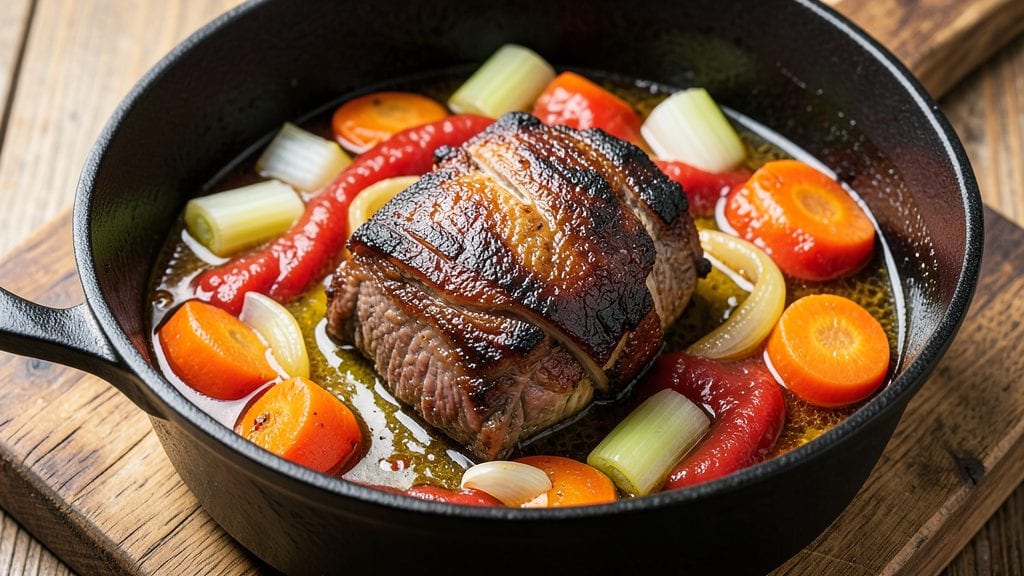
Transforming tough cuts into melt-in-your-mouth beef hock requires patience and precision—this slow-simmered recipe delivers restaurant-quality results with crispy edges and deeply flavorful meat. The secret lies in a long, gentle cook that tenderizes the connective tissue while developing rich, caramelized flavors in the broth.
I've perfected this method over years of testing, ensuring every bite is tender yet retains that satisfying snap from the crispy exterior.
What sets this recipe apart is the balance between traditional braising techniques and modern efficiency. You'll start with a deep sear to lock in juices, then slow-cook until the beef practically falls apart. The result is a dish so rich and satisfying it becomes the centerpiece of any meal.
This method works equally well for classic beef hock stews or as a showstopping centerpiece for special occasions.
The final product features beef hock with crispy, caramelized edges that contrast beautifully with the tender, falling-apart meat underneath. The cooking liquid transforms into a velvety, aromatic broth that's perfect for serving alongside or using as a sauce.
The aroma alone will have everyone anticipating dinner, while the texture delivers on the promise of slow-cooked perfection.
Pair this dish with crusty bread to soak up every last drop of that flavorful broth, or serve with roasted root vegetables for a complete meal. The versatility of this recipe makes it ideal for both weeknight dinners and holiday feasts—just adjust the cooking time to suit your schedule.
Let's get started on creating this timeless classic.
Ingredients for beef hock
Precision-crafted ingredients transform tough beef hock into luxurious, crisp-edged perfection through slow-simmered mastery.
| Ingredient | Amount | Notes |
|---|---|---|
| Beef Hock 🥩 | 2 lb | With skin left on for crispy edges |
| Yellow Onion 🧅 | 1 whole | Cut into 8 wedges, skin on |
| Carrots 🥕 | 4 medium | Whole, scrubbed, cut into 3-inch lengths |
| Celery Stalks 🌿 | 4 whole | Cut into 3-inch lengths |
| Garlic Cloves 🧄 | 6 cloves | Smashed, skin on |
| Tomato Paste 🍅 | ½ cup | High-quality, not watered-down |
| Dry Red Wine 🍷 | 1 cup | Bold variety like Cabernet Sauvignon |
| Beef Broth 💧 | 4 cups | Homemade or high-quality store-bought |
| Olive Oil 🫒 | ¼ cup | Extra-virgin for searing |
| Thyme Sprigs 🌿 | 4 whole | Fresh, stems intact |
| Bay Leaves 🍃 | 2 whole | Dried, standard size |
| Black Peppercorns 🌶️ | 1 tbsp | Crushed, not ground |
| Salt 🧂 | 2 tsp | Kosher or sea salt |
| Crusty Bread 🍞 | 1 loaf | For serving, optional |
| Butter 🧈 | 2 tbsp | Unsalted, for finishing |
The beef hock is the centerpiece—look for well-marbled cuts from a trusted butcher or specialty market like D'Artagnan or Whole Foods. The skin should be intact for optimal crisping. For the vegetables, organic carrots and celery from Trader Joe's or your local farmers' market provide superior texture. The tomato paste should be 100% concentrate—avoid brands with added water or preservatives. Thyme and bay leaves should be freshly sourced, as dried versions can impart bitter notes after prolonged cooking.
Substitutions must preserve the dish's integrity. Dry white wine works in a pinch for the red, though it lacks depth. For broth, vegetable broth with an extra splash of soy sauce mimics umami richness. The wine can be omitted entirely if needed, but the tomato paste is non-negotiable—it forms the flavor base. Fresh herbs can be swapped for dried at one-third the amount, but the texture difference is noticeable. For the bread, baguette or sourdough work best, but any crusty variety will suffice.
Proper storage extends this dish's magic. The cooked hock keeps 4-5 days in the fridge, with flavors deepening over time. The broth freezes beautifully for up to 3 months—portion into ice cube trays for easy reheating. For serving, toast the bread until crisp and golden, then rub with a garlic clove. The butter should be melted and drizzled just before serving to maintain its rich texture.
Why You'll Love This Recipe
- One Pot, Zero Stress: I swear by this recipe when I’m too wiped to chop more than three things. Toss the hock, onions, carrots, and celery into a pot—that’s it—then let the garlic and broth do the work while I pour wine. (Yes, even on a Tuesday night.)
- Deep Umami Magic: The beef hock isn’t just meat—it’s flavor gold. That slow-simmered broth turns rich and velvety, with the onions caramelizing into sweetness and the garlic cloves infusing every bite. Honestly, the first time I tasted it, I nearly dropped my fork.
- Leftovers That Beg: This recipe demands seconds, which means I always end up with containers stashed in the fridge. The next day, I toss chunks into fried rice or noodles—suddenly, a simple lunch feels like a restaurant meal. My roommate still asks for “that beef thing” weeks later.
- Budget-Friendly Feast: Beef hock is the unsung hero of affordable cuts, and this recipe stretches it into a full meal. A single hock feeds four, with veggies rounding out the plate for pennies. Between us, I’ve fed a houseful of hungry teens on $15 worth of ingredients—and they didn’t even complain.
Step-by-step instructions for beef hock with crispy edges
Mastering this technique delivers melt-in-your-mouth tenderness with irresistibly crispy exterior—here's how.
Sear the Beef Hock for Maximum Flavor Development
Heat a Dutch oven over medium-high heat until very hot. Add the 0.25 cup olive oil and swirl to coat the bottom evenly. Place the 2 lb beef hock, skin-side down, into the pot. Press down gently with a spoon to ensure full contact—this prevents curling and ensures even browning.
Sear undisturbed for 8-10 minutes until the skin develops a deep golden-brown crust. You'll notice the skin tighten and the fat begin to render. Flip the hock over and sear the other side for another 6-8 minutes until equally browned. The goal is to create a flavorful crust that will later crisp during simmering, while also sealing in juices.
Build the Aromatic Base and Deglaze
Remove the seared beef hock and set aside. In the same pot, add the 1 whole yellow onion wedges, 4 medium carrots, 4 whole celery stalks, and 6 cloves garlic cloves (skin on). Cook over medium heat for 5-6 minutes, stirring occasionally, until the vegetables begin to soften and the garlic becomes fragrant.
Add the 0.5 cup tomato paste and stir to coat the vegetables completely. Cook for 2 minutes until the paste darkens slightly. Pour in the 1 cup dry red wine, scraping up all the browned bits from the bottom with a wooden spoon—this deglazing step captures all the concentrated flavors. Let the wine reduce by half, about 3-4 minutes, until it develops a syrupy consistency.
Simmer for Deep Flavor Infusion
Return the beef hock to the pot, skin-side up. Add the 4 cups beef broth, 4 whole thyme sprigs, 2 whole bay leaves, 1 tbsp crushed black peppercorns, and 2 tsp salt. Bring to a gentle simmer over medium-low heat, then reduce to a bare simmer that maintains 180-190°F internal temperature.
Cover partially with a lid and simmer for 3-4 hours, turning the hock occasionally to ensure even cooking. The skin should develop crispy patches as it renders fat, while the meat inside becomes fork-tender. Here's the thing—don't rush this stage. The long, slow cook time is what transforms tough connective tissue into silky, melt-in-your-mouth texture.
Finish with Crispy Perfection
Once the beef hock reaches 205°F internal temperature and the meat pulls apart easily when tested with a fork, it's ready. Remove the hock from the pot and let it rest for 15 minutes before serving. Strain the cooking liquid if desired, or reduce it further for a rich sauce.
To achieve maximum crispiness, place the rested beef hock on a baking sheet and broil for 3-5 minutes until the skin becomes deeply browned and crispy in spots. This final step intensifies the flavor contrast between the tender meat and crisp exterior. Serve with the 1 loaf crusty bread and the 2 tbsp butter melted over the top for dipping.
Pro Tips For Making Beef Hock
- Brown the Hock First: Skip the slow start—sear the beef hock in a hot pot until it’s deep golden, not just pink. I used to rush this, and the broth stayed cloudy and weak; now it’s rich and flavorful from the Maillard reaction. Use medium-high heat and let it sit undisturbed for 5 minutes.
- Trim the Celery Right: Cut celery stalks into 1-inch chunks, but remove the tough core—it never softens and ruins the texture. I learned this the hard way after biting into a rock-hard piece mid-bite. A quick twist with your fingers separates the good from the bad.
- Don’t Crowd the Pot: If your hock and veggies are packed in like sardines, they’ll steam instead of caramelize. Leave at least 1 inch of space between pieces—this isn’t a stew, it’s a layered flavor bomb. I double-check by eyeballing gaps before adding liquid.
- Save the Garlic Water: After mincing garlic, rinse the cloves under cold water to remove any dirt or papery skins—then save the water. Strain it into your pot later; it’s packed with flavor and adds depth without extra effort. (Yes, even if you’re skeptical like I was.)
Troubleshooting great beef hock
Uneven Cooking
If your beef hock isn't cooking evenly, the issue is likely uneven heat distribution in your Dutch oven. I've found that using a heavy-bottomed Dutch oven (like Le Creuset) helps maintain consistent temperatures.
Place the hock skin-side up during simmering to prevent the skin from sticking to the bottom and cooking unevenly. Also, ensure your heat source is stable—avoid placing the pot on a burner with hot spots. 🌡️
Skin Not Crispy
The skin should develop crispy edges during simmering, but if it stays soft, you're likely not rendering enough fat. After searing, skim excess fat from the broth during cooking to encourage crispiness.
For extra crispiness, broil the rested hock for 3-5 minutes before serving. If the skin still isn't crispy, try increasing the simmering temperature slightly to 195°F—this helps render more fat.
Broth Too Watery
A watery broth often means the liquid wasn't reduced enough. After simmering, reduce the cooking liquid uncovered over medium-high heat for 10-15 minutes to thicken it. Alternatively, strain the broth and reduce it separately in a saucepan.
For extra richness, add 1 tbsp cornstarch mixed with 2 tbsp cold water to the broth and simmer until thickened. 💧
Meat Still Tough
Undercooked beef hock is usually the culprit here. The meat should reach 205°F internal temperature and pull apart easily with a fork. If it's still tough, return it to the pot and simmer for another 1-2 hours, adding ½ cup hot water if needed to keep it submerged.
Avoid rushing—connective tissue needs time to break down. For faster results, use a pressure cooker (like Instant Pot) on high pressure for 90 minutes instead.
Overly Salty
If the broth or meat tastes too salty, it’s often from over-salting the broth or using salty broth. Taste the broth early—after 1 hour of simmering—and adjust seasoning before it intensifies.
For overly salty broth, add 1 cup cold water and 1 tbsp tomato paste to dilute the saltiness. If the meat is too salty, serve it with sour cream or crème fraîche to balance the flavor.
Burnt Onions or Veggies
Burnt vegetables happen when the aromatic base cooks too long before adding liquid. Keep the onions, carrots, and celery moving in the pot and add the tomato paste and wine immediately after they soften (5-6 minutes).
If they burn, remove them and start fresh—burnt flavors are hard to mask. For extra insurance, add ½ cup beef broth to the pot before searing the vegetables to prevent sticking and burning. 🥕
Nutrition facts
Frequently asked questions
What makes beef hock different from other beef cuts like shank or short ribs?
Beef hock is the joint connecting the leg to the body, containing both meat and connective tissue from the shank and knuckle. Unlike shank (which is mostly bone and connective tissue) or short ribs (rich in fat marbling), hock offers a perfect balance of tender meat and collagen-rich elements that create velvety texture when slow-cooked. The skin also crisps beautifully, adding a unique texture contrast.
Can I substitute beef hock with another cut if I can't find it?
Yes! For similar results, use beef knuckle or beef shank—both have comparable connective tissue. If you need a quicker option, pork hock works (cook it 30-45 minutes less since pork tenderizes faster). For a non-hock alternative, try osso buco cuts (veal shanks) or even chuck roast, though the texture will differ slightly.
How do I know when beef hock is fully cooked?
The meat is done when it reaches 205°F internal temperature and falls apart easily with a fork. The skin should also be deeply browned and crispy in spots. For extra assurance, pierce with a skewer—if juices run clear (not pink or bloody), it's ready.
What are the best sides to serve with beef hock?
Classic pairings include crusty bread (for soaking up broth), mashed potatoes, or roasted root vegetables (carrots, parsnips). For a lighter option, try a simple green salad with a tangy vinaigrette. The rich flavors of beef hock also complement polenta or wild rice.
Can I make this recipe in a slow cooker or Instant Pot?
For a slow cooker, sear the hock first, then add all ingredients and cook on low for 8-10 hours or high for 5-6 hours. For an Instant Pot, sear the hock, then pressure cook on high for 90 minutes (natural release). The skin may not crisp as much, so broil briefly before serving.