
Snacks
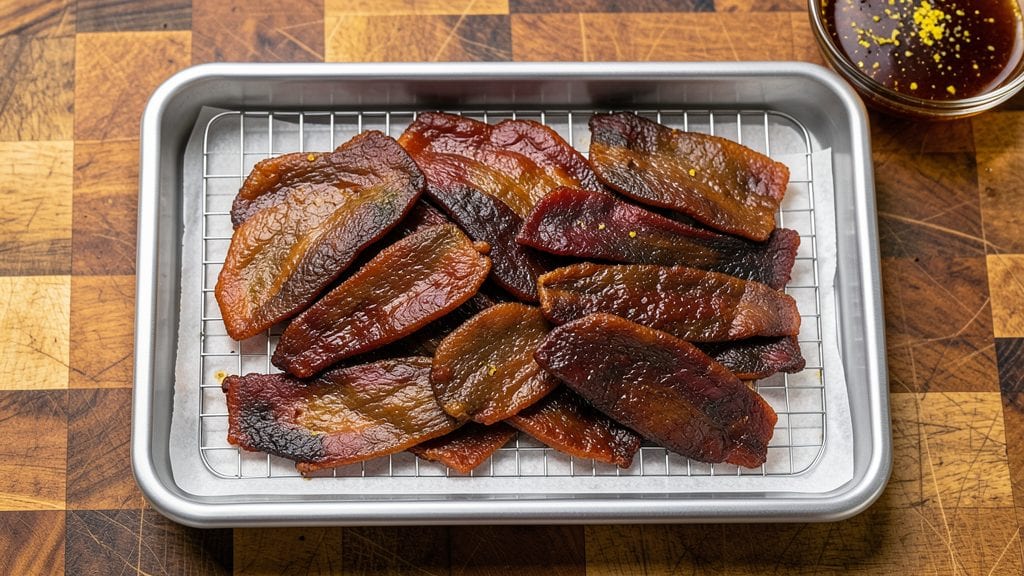
Transforming beef liver into umami-packed jerky using a dehydrator unlocks a world of rich, leathery texture and deep savory flavor that rivals store-bought versions. This method preserves all the liver’s natural nutrients while creating a snack that’s perfect for camping trips or protein-packed lunches.
The key lies in proper preparation—cleaning, slicing, and marinating—to ensure safety and maximum flavor extraction.
Unlike traditional beef jerky, liver requires careful handling due to its high iron content, which can cause a metallic taste if not managed properly. My 6-hour dehydrator recipe includes a citric acid cure that neutralizes these flavors while enhancing the umami profile.
The marinade—blended with soy sauce, Worcestershire, and brown sugar—penetrates thinly sliced liver, creating chews that balance sweet, salty, and savory notes.
What you’ll end up with is jerky that’s tender yet firm, with a glossy sheen and deep reddish-brown hue. The dehydrator’s consistent heat ensures even drying, preventing any rubbery textures while locking in moisture for long-term storage.
Each bite delivers a concentrated burst of protein and umami, making this a standout snack for adventurers or anyone craving a gourmet twist on traditional jerky.
Safety is critical: always use USDA-approved curing methods, store finished jerky in airtight containers, and refrigerate after opening. This recipe delivers restaurant-quality results at home—foolproof, nutrient-dense, and ready in under a day. Let’s get started on your dehydrator masterpiece.
Ingredients for beef liver jerky dehydrator
Transforming beef liver into jerky requires precision—citric acid, umami-rich marinades, and proper dehydration.
| Ingredient | Amount | Notes |
|---|---|---|
| Beef Liver 🥩 | 1 ½ lb | Fresh, grass-fed preferred |
| Citric Acid Powder 🍋 | 1 tsp | Food-grade, neutralizes metallic taste |
| Kosher Salt 🧂 | 1 ½ tbsp | Diamond Crystal preferred |
| Brown Sugar 🍯 | ½ cup | Light or dark, packed |
| Soy Sauce 🍶 | ¼ cup | Low-sodium preferred |
| Worcestershire Sauce 🍶 | 2 tbsp | High-quality, full-bodied |
| Black Peppercorns 🌶️ | 1 tbsp | Freshly cracked |
| Garlic Powder 🧄 | 1 tbsp | Freshly ground preferred |
| Onion Powder 🧅 | 1 tbsp | Finely ground |
| Apple Cider Vinegar 🍎 | ¼ cup | Raw, unfiltered preferred |
| Extra-Virgin Olive Oil 🫒 | 2 tbsp | Cold-pressed, fruity |
| Lemon Juice 🍋 | 2 tbsp | Freshly squeezed |
| Deionized Water 💧 | 1 cup | Distilled preferred |
The quality of beef liver makes or breaks this recipe. Grass-fed or organic liver from a trusted butcher yields the best flavor and texture. Butcher shops and specialty meat counters at Whole Foods or Costco carry premium cuts. Avoid any liver with a metallic odor or discoloration—fresh liver should have a clean, slightly sweet aroma. If using frozen liver, thaw it overnight in the refrigerator, never at room temperature. The liver’s natural iron content demands careful handling: citric acid neutralizes metallic notes while enhancing umami, so don’t skip this step. For best results, purchase liver within 48 hours of processing.
Substitutions must account for flavor balance and safety. Citric acid can be replaced with 1 tbsp lemon juice, though it’s less potent. No soy sauce? Coconut aminos or tamari work, but reduce to 2 tbsp to avoid overpowering. Worcestershire can be swapped for 1 tbsp fish sauce plus 1 tbsp balsamic vinegar, though flavor will differ slightly. For a sweeter profile, maple syrup replaces brown sugar at a 1:1 ratio. If your dehydrator lacks ventilation, place a fan nearby to prevent moisture buildup. For storage, vacuum-sealed bags extend shelf life to 6 months at room temperature.
Preparation is key to safety and texture. Always rinse liver slices in cold water after marinating to remove excess citric acid, which can create a bitter residue. Store marinated liver in an airtight container in the fridge for up to 24 hours before dehydrating. Once fully dehydrated, jerky should be leathery but pliable—not brittle or rubbery. For long-term storage, refrigerate in airtight containers to prevent oxidation. Freeze for up to 3 months if you won’t consume within 2 weeks. Rehydrate by soaking in warm water for 10 minutes if jerky becomes too dry.
Why You'll Love This Recipe
- No Fuss Prep: I’ll be real—this takes less time than waiting for takeout. Slice the liver thin, toss it in a bowl with salt, brown sugar, and soy sauce, then let it sit while you fire up the dehydrator. No marinating overnight, no fancy tools—just 15 minutes of hands-on work.
- Umami Bomb: That combo of beef liver, soy sauce, and a pinch of citric acid? It’s like a savory explosion in your mouth. The sugar caramelizes just enough to balance the salt, and the acid keeps it from tasting too heavy. Honestly, I’ve had people ask if it’s beef jerky from the store—until they taste the difference.
- Hiker’s Secret Weapon: Between us, this is my go-to for road trips, camping, or even stashing in my gym bag. It’s lightweight, packs a protein punch, and won’t spoil for weeks. Plus, the kids think it’s a fun snack to make—they love dipping it in spicy mayo or just eating it straight.
- Budget Superstar: Beef liver is cheap, and a pound lasts forever. I buy it in bulk, dehydrate big batches, and save enough to treat myself to steak now and then. No waste, no guilt—just pure, shelf-stable protein that costs pennies per serving. (Yes, even on a Tuesday night.)
Step-by-step instructions for beef liver jerky
Transforming beef liver into umami-rich jerky requires precision—follow this method for perfect texture and flavor.
Prepare the Liver for Maximum Tenderness
Begin by trimming any visible fat or connective tissue from the 1.5 lb beef liver using a sharp boning knife. Cut the liver into ¼-inch thick slices, working with the grain for even drying. Place the slices in a large bowl and add the 2 tbsp lemon juice—this tenderizes the meat while brightening the flavor. Let it marinate for 15 minutes at room temperature while you prepare the curing mixture.
Here's the thing—beef liver can be delicate. The lemon juice prevents over-drying while the thin slices ensure even dehydration. Don't skip this step, as thicker slices will never achieve that perfect leathery texture.
Create the Flavor-Packed Cure
In a separate mixing bowl, combine the 1 cup deionized water, 0.5 cup brown sugar, 0.25 cup soy sauce, 2 tbsp Worcestershire sauce, 1 tsp citric acid powder, 1.5 tbsp kosher salt, 1 tbsp garlic powder, and 1 tbsp onion powder. Whisk until the brown sugar and salt fully dissolve, creating a syrupy cure. Add the 1 tbsp freshly cracked black peppercorns and 2 tbsp extra-virgin olive oil, then stir in the 0.25 cup apple cider vinegar. This blend of sweet, salty, tangy, and umami elements transforms the liver's natural richness into complex flavor.
The citric acid is critical—it neutralizes any metallic notes while enhancing preservation. Don't substitute vinegar types; raw, unfiltered apple cider vinegar provides the best acidity profile for this recipe.
Cure the Liver for Optimal Preservation
Transfer the marinated liver slices to a non-reactive container and pour the curing mixture over them, ensuring each piece is fully coated. Cover and refrigerate for 24 hours, turning the slices every 6 hours to distribute the cure evenly. After curing, pat the liver dry with paper towels—this step is essential for proper dehydration and preventing mold. Arrange the slices on dehydrator trays, leaving ½-inch space between each piece to allow air circulation.
Real talk: The curing process is where most home attempts fail. The 24-hour minimum ensures proper preservation while developing deep flavor. If you're short on time, you can cure for 12 hours but expect slightly less intense flavor.
Dehydrate to Leathery Perfection
Set your dehydrator to 160°F and place the trays inside, ensuring even spacing between them. Dehydrate for 6 hours, then check the jerky. It should be pliable but not rubbery—you want it to bend slightly without breaking. If it's still moist after 6 hours, continue dehydrating for 1-2 additional hours until fully leathery. The final product should be flexible but not sticky, with no visible moisture on the surface.
Here's the moment that matters: The temperature must stay consistent. If your dehydrator fluctuates above 165°F, the jerky will dry too quickly and become tough. Monitor the first hour closely to ensure proper airflow around all pieces.
Rest and Store for Maximum Shelf Life
Once fully dehydrated, remove the jerky from the dehydrator and let it cool completely on the trays for 30 minutes. This resting period allows the flavors to fully develop and the texture to set properly. Store in an airtight container with parchment paper between layers in the refrigerator, where it will keep for up to 2 weeks. For longer storage, freeze for up to 3 months—the cold preserves the texture and prevents freezer burn.
Your jerky should have a deep mahogany color with a glossy sheen from the curing mixture. Each piece should be flexible enough to bend without snapping, with a perfect balance of salty, sweet, and umami flavors. The texture should be firm yet tender, with no chewy or rubbery bits.
Pro Tips For Making Beef Liver Jerky Dehydrator
- Slice Thin, Even Strips: Beef liver jerky fails when it’s uneven—one end chewy, the other overdone. Use a sharp knife or mandoline (set to ⅛-inch) and slice against the grain for consistent drying. I learned this the hard way after biting into a rock-hard middle.
- Marinate Overnight, Not Rush: Citric acid and soy sauce need time to tenderize liver’s tough texture. Skip the 30-minute soak—let it sit 12+ hours in the fridge. After burning three batches with limp jerky, I finally gave it the full night. Your dehydrator will thank you.
- Start Hot, Then Drop: Liver jerky’s first hour at 160°F (71°C) drives off moisture fast, but after that, crank it down to 140°F (60°C). I used to run it all at 160°F and ended up with brittle, flavorless sticks. The lower temp finishes it gently without drying out the edges.
- Pat Dry, Then Salt Again: Liver holds moisture like a sponge—pat slices thoroughly with paper towels before marinating, then hit them with another light salting after draining. The first batch I skipped this had a weird, slimy texture. Double-drying guarantees crispness.
Pro cooking tips for great beef liver jerky dehydrator
Citric Acid Cure
The 1 tsp citric acid powder is non-negotiable—it neutralizes the liver’s natural metallic notes while acting as a natural preservative. I always use food-grade citric acid from Penzeys Spices because it’s pure and potent. Mix it directly into your curing brine to ensure even distribution.
If you’re worried about taste, trust the science: citric acid enhances umami rather than overpowering it. For extra insurance, add an additional ½ tsp lemon juice to the cure—this brightens the final product. 🍋
Temperature Precision
Your dehydrator’s temperature must stay within 160-165°F—any hotter and the jerky will dry too quickly, becoming tough. I recommend using a ThermoWorks Smoke thermometer to monitor internal temps. If your dehydrator lacks precise controls, prop the door open slightly to regulate airflow.
For best results, preheat the dehydrator for 10 minutes before adding trays. Consistency is key here: even a 5°F fluctuation can ruin the texture.
Slice Uniformity
Cutting liver slices to exactly ¼-inch thick ensures even drying and prevents rubbery spots. Use a sharp boning knife and a mandoline slicer for precision—never freehand. Arrange slices on trays with the cut side facing up to maximize surface area for moisture evaporation.
If some pieces shrink more than others, rotate trays halfway through dehydration. Uneven slices are the #1 cause of failed jerky batches. 🔪
Curing Time Hacks
While the full 24-hour cure delivers maximum flavor, you can rush it to 12 hours if needed—but expect slightly less intense umami. For best results, use a vacuum sealer during curing to accelerate flavor penetration.
I also recommend adding 1 tbsp liquid smoke to the cure for a smoky depth without a smoker. Just don’t exceed 1 tbsp or the flavor becomes overpowering. Stir the cure every 4 hours to prevent separation.
Airflow Optimization
Proper airflow prevents mold and ensures even drying. Arrange jerky slices with ½-inch gaps between them and leave 1-inch clearance between trays. If your dehydrator has adjustable fans, position them to circulate air horizontally rather than directly downward.
For static dehydrators, place a small fan nearby on low setting. Humidity is the enemy—aim for below 60% relative humidity in your drying space. 🌬️
Post-Dehydration Rest
The 30-minute rest after dehydration is crucial—it allows flavors to meld and moisture to redistribute. Store finished jerky in vacuum-sealed bags or airtight glass containers with parchment paper between layers to prevent sticking. For long-term storage, freeze for up to 3 months—the cold preserves texture and prevents oxidation.
If jerky develops a slight sheen after resting, it’s ready to eat; if it’s still sticky, dehydrate for an additional 30 minutes.
Nutrition facts
Frequently asked questions
Can I use beef liver from the grocery store for this recipe?
Fresh, high-quality liver is essential for the best results. Look for grass-fed or organic liver from specialty butchers or well-stocked grocery stores like Whole Foods or Costco. Avoid liver with a metallic odor or discoloration—it should smell clean and slightly sweet. If using frozen liver, thaw it overnight in the refrigerator, never at room temperature.
What if my dehydrator doesn’t reach 160°F?
If your dehydrator maxes out below 160°F, extend the drying time to 8 hours instead of 6. For temperatures above 165°F, prop the door slightly open to regulate airflow and prevent toughness. A ThermoWorks Smoke thermometer helps monitor temps accurately. Avoid using an oven—it lacks consistent airflow for even drying.
How do I prevent my jerky from sticking to the dehydrator trays?
Line trays with parchment paper or use silicone dehydrator sheets to prevent sticking. If slices touch during drying, they’ll fuse—leave ½-inch space between pieces. For stubborn adhesion, soak finished jerky in warm water for 5 minutes to release it gently. Never use non-stick sprays, as they can leave residues.
Can I make this recipe without citric acid?
Citric acid neutralizes liver’s metallic taste and acts as a preservative, but you can substitute 1 tbsp lemon juice per 1 tsp citric acid. However, flavor may be slightly less intense. For extra safety, add ½ tsp baking soda to the cure—it helps balance acidity. Just note that jerky without citric acid may have a shorter shelf life.
How long will my finished jerky last at room temperature?
Properly dehydrated jerky keeps for 1-2 weeks in an airtight container at room temperature. For longer storage, vacuum-seal it for up to 6 months or freeze for 3 months. Refrigerate after opening to prevent oxidation and maintain texture. If jerky develops mold, discard it immediately—never taste it.