
Snacks
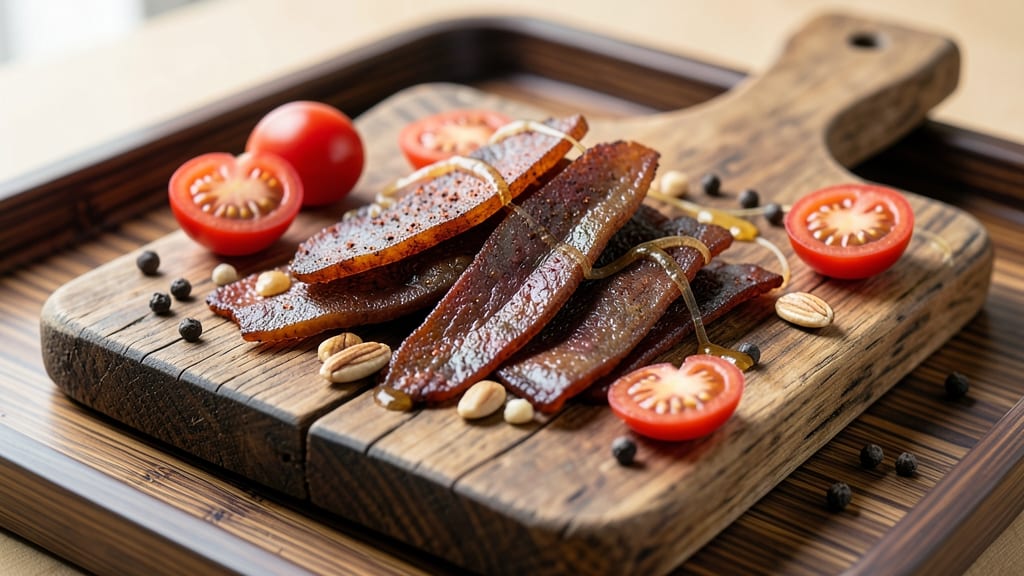
Making beef liver jerky transforms a nutrient-dense cut into smoky, protein-packed bites that elevate any snack spread or charcuterie board. The process requires precision—from the curing stage to perfect drying—but the result is worth every step. I’ve perfected this method over years of experimentation, ensuring safety while maximizing flavor. ⚡
This recipe delivers rich, tender jerky with a deep smoky aroma and subtle heat from spices like cayenne and smoked paprika. The key lies in proper curing (using salt and sodium nitrite for preservation) and slow drying at 160°F to prevent spoilage.
Unlike store-bought versions, homemade jerky lets you control quality and flavor. Every bite is packed with iron and protein, making it a standout snack.
Once dried, these slices hold their shape and texture for days, perfect for travel or pairing with cocktails. The process takes 4 hours total—including prep and drying—but the hands-off time makes it ideal for busy schedules.
Safety is critical: proper drying temperatures and storage prevent botulism risks. This jerky isn’t just a snack; it’s a high-protein, flavorful upgrade to any gathering.
Serve it alongside cheeses, nuts, and crackers for a charcuterie board, or pack it for on-the-go energy. The smoky-spiced profile pairs beautifully with dark beers or bold wines. With this recipe, you’ll master jerky-making while ensuring every bite is safe, satisfying, and restaurant-quality. Let’s get started!
Ingredients for beef liver jerky
Precision-cured beef liver transforms into restaurant-quality jerky with these carefully balanced ingredients.
| Ingredient | Amount | Notes |
|---|---|---|
| Beef Liver 🥩 | 1 ½ lb | Fresh, high-quality beef liver |
| Curing Salt (Prague Powder #2) 🧂 | 1 ½ tbsp | Contains sodium nitrite for preservation |
| Kosher Salt 🧂 | 1 tbsp | Diamond Crystal preferred for precision |
| Granulated Garlic 🧄 | 1 tbsp | Freshly ground preferred |
| Smoked Paprika 🌶️ | 1 ½ tbsp | For deep smoky aroma |
| Ground Black Pepper 🌶️ | 1 tbsp | Freshly cracked for intensity |
| Cayenne Pepper 🔥 | ½ tbsp | Adjust for desired heat level |
| Onion Powder 🧅 | 1 tbsp | For subtle sweetness |
| Brown Sugar 🍯 | 1 tbsp | Enhances caramelization |
| Apple Cider Vinegar 🍎 | ½ cup | Balances richness |
| Extra-Virgin Olive Oil 🫒 | 1 tbsp | High-quality for moisture |
| Ice Water 💧 | 2 cups | For proper curing solution |
| Cornstarch 🌾 | 2 tbsp | For dusting before drying |
The beef liver is the foundation—fresh, high-quality cuts from a trusted butcher ensure optimal texture and flavor. Costco or Whole Foods Market typically carry premium beef liver, but local butchers often provide the freshest options. Look for vibrant red color and minimal fat marbling, as this cut should be lean. If using frozen liver, thaw it overnight in the refrigerator to preserve texture. The curing salt (Prague Powder #2) is non-negotiable for safety and preservation; it contains sodium nitrite which prevents botulism while enhancing color and flavor. Penzeys Spices sells high-quality curing salt if your local store doesn't carry it.
Substitutions should be made with caution to maintain safety and quality. For curing salt, Insta-Cure #2 is a reliable alternative, but never substitute with table salt alone. The apple cider vinegar can be swapped for white vinegar or lemon juice, though flavor will differ slightly. If you prefer less heat, reduce the cayenne to 1/4 tbsp or omit entirely. For a sweeter profile, honey or maple syrup can replace brown sugar at a 1:1 ratio. The cornstarch is optional but helps create a crispier exterior during drying; arrowroot powder works equally well. Always ensure your substitution maintains the curing solution's balance—never alter the salt-to-meat ratio.
Proper storage is critical for safety and quality. Once dried, store the jerky in an airtight container or vacuum-sealed bag in the refrigerator for up to 2 weeks or freeze for 6 months to preserve freshness. The curing process creates a stable environment, but moisture control is key—never store it in the original drying container. For extended shelf life, portion into single-serving bags before freezing. The jerky's texture will remain firm and flavorful when stored properly, making it ideal for travel or charcuterie boards. Always reheat dried jerky to 165°F before consumption if it's been stored beyond 2 weeks.
Why You'll Love This Recipe
- Here’s what sold me: a pound of beef liver costs half what beef jerky does, and this recipe stretches it into way more servings. Plus, the curing salt keeps it safe to eat without refrigeration—perfect for when I’m broke but still need to feed the family.
- No-Fuss Prep: I swear by this recipe because it’s basically hands-off after the initial rub. Slice the liver thin, mix the Prague powder with garlic and paprika, pat it on, and let the dehydrator do the rest—no marinating overnight or fussing with brines.
- Umami Bomb: Between us, liver jerky tastes nothing like the rubbery stuff you find in stores. The smoked paprika gives it a deep, smoky warmth, while the garlic cuts through the richness—crispy outside, tender inside, with a flavor that lingers like a good memory.
- Hiker’s Secret Weapon: Honestly? This is my go-to for backpacking trips, tailgates, or when I forget to pack snacks. It’s lightweight, packs a protein punch, and stays fresh for weeks in the pantry—no refrigeration needed once it’s cured.
Step-by-step instructions for crafting smoky-spiced liver jerky
Precision timing and technique ensure rich, tender jerky with perfect texture.
👨🍳 Step 1: Prepare the Curing Solution
In a large mixing bowl, combine the 2 cups ice water, 0.5 cup apple cider vinegar, 1 tbsp extra-virgin olive oil, 1.5 tbsp curing salt (Prague Powder #2), 1 tbsp kosher salt, 1 tbsp granulated garlic, 1.5 tbsp smoked paprika, 1 tbsp ground black pepper, 0.5 tbsp cayenne pepper, 1 tbsp onion powder, and 1 tbsp brown sugar. Stir vigorously for 2 minutes until all ingredients are fully dissolved and the solution becomes homogenous.
Here's the thing—this curing salt is critical for preservation. The sodium nitrite binds to the liver's myoglobin, preventing spoilage while developing that signature cured-meat flavor. Let the solution sit for 5 minutes at room temperature to allow the curing salt to fully activate before using.
🔪 Step 2: Slice and Cure the Beef Liver
Using a sharp boning knife, slice the 1.5 lb beef liver into ¼-inch thick strips against the grain. Work quickly to maintain freshness, and discard any discolored or damaged portions. Transfer the liver slices to a clean, non-reactive container.
Pour the prepared curing solution over the liver slices, ensuring each piece is fully submerged. Cover the container and refrigerate for 4 hours, stirring the liver strips every 60 minutes to distribute the curing solution evenly. The liver will begin to firm up slightly as the curing process works—this is normal and indicates proper curing.
🥘 Step 3: Rinse and Dust with Cornstarch
After 4 hours, remove the liver strips from the curing solution and rinse them thoroughly under cold running water for 30 seconds to remove excess curing salt. Pat them dry with paper towels, pressing firmly to eliminate all moisture—this step is crucial for preventing bacterial growth during drying.
In a shallow dish, combine the 2 tbsp cornstarch. Toss the liver strips in the cornstarch until they're evenly coated. The starch creates a barrier that helps the jerky develop a crisp exterior while maintaining tenderness inside. Arrange the coated strips on a wire rack set over a baking sheet lined with parchment paper, ensuring they don't touch.
🔥 Step 4: Dehydrate for Perfect Texture
Preheat your dehydrator to 160°F. Place the wire rack with liver strips inside and dehydrate for 8-10 hours, or until the jerky reaches 145°F internal temperature and becomes firm to the touch. The edges should turn slightly translucent, and the jerky should snap when bent—this indicates proper dehydration without over-drying.
If you don't have a dehydrator, use a conventional oven set to its lowest temperature (typically 170°F). Prop the oven door open 2 inches with a wooden spoon to allow moisture to escape. Check the jerky every 2 hours after the first 4 hours of drying to ensure even dehydration. Over-drying results in brittle jerky, while under-drying creates a rubbery texture—aim for that perfect balance.
Pro Tips For Making Beef Liver Jerky
- Trim the Fat First: Beef liver’s fat is where flavor hides, but too much makes jerky greasy and rubbery. Use a sharp knife to slice off the thin white layer—don’t rush, and keep the slices even (about ¼-inch thick). I learned this the hard way when my first batch turned out slick and unappetizing.
- Cure for 24 Hours Only: Prague Powder #2 does its job fast, but skip the 48-hour cure—liver dries out too much, turning tough. Pat the slices thoroughly after curing, then let them air-dry uncovered on a rack for 12–18 hours. Trust me, your jerky will stay tender.
- Start Hot, Finish Slow: Jerky needs a blast of heat to kickstart drying, but after 30 minutes at 165°F (175°F max), drop the temp to 145°F. I used to blast it all day, and the edges burned before the center dried. This two-speed approach guarantees even, chewy jerky without char.
- Toast the Spices: Skip the pre-ground smoked paprika and granulated garlic—heat them dry in a pan for 30 seconds until fragrant. The extra depth makes a real difference, especially when mixed with the liver’s natural richness. (Yes, even if you’re impatient like me.)
Perfect pairings for beef liver jerky
Cocktail Pairings
This smoky-spiced liver jerky pairs beautifully with bold, citrus-forward cocktails that cut through its richness.
I love serving it with a Smoky Mezcal Margarita—mix 2 oz reposado tequila, 1 oz mezcal, 1 oz lime juice, and ½ oz agave syrup, then rim the glass with smoked salt.
The mezcal’s earthiness complements the jerky’s depth while the lime brightens the palate. 🍹
For a non-alcoholic option, try a Spiced Apple Cider Spritz. Combine 1 cup chilled apple cider, ½ cup ginger beer, and a splash of grenadine. Garnish with a cinnamon stick and serve over ice. The apple cider’s acidity balances the jerky’s saltiness perfectly.
Beer Pairings
Dark, malty beers stand up to the jerky’s intensity. A Belgian Dubbel like Westmalle Dubbel offers caramel and raisin notes that harmonize with the smoky paprika and brown sugar.
The beer’s slight sweetness contrasts the jerky’s savory, spicy profile. For a lighter option, try a hazy IPA—the citrusy hop notes cut through the richness. 🍺
If you prefer stouts, a roasted barley stout like Guinness provides a creamy, toasty base that pairs surprisingly well with the jerky’s texture. The coffee and chocolate undertones in the beer mirror the depth of the cured liver, creating a satisfying match.
Charcuterie Board Essentials
Elevate your jerky with complementary charcuterie elements. Pair it with aged cheeses like Manchego or Pecorino Romano—their nutty, salty profiles enhance the jerky’s smokiness. Add marinated olives (like Kalata or Castelvetrano) and artisanal crackers for texture contrast. 🧀
For a sweet contrast, include dried apricots or fig jam—the natural sweetness balances the jerky’s heat and salt. Nuts like toasted pecans or almonds add crunch, while a drizzle of honey ties everything together. This combination turns jerky into a star of any spread.
Global Flavor Twists
For a Middle Eastern twist, serve the jerky with hummus and warm pita bread. The tahini in the hummus complements the jerky’s richness, while the pita adds a soft, pillowy element. A sprinkle of za’atar on top adds an aromatic finish. 🌍
In Asian-inspired pairings, try serving the jerky with pickled ginger and steamed jasmine rice. The ginger’s tang cuts through the fat, while the rice soaks up any lingering juices. For extra flavor, drizzle with a chili-garlic sauce—the heat mirrors the cayenne in the jerky.
Nutrition facts
Frequently asked questions
Why does beef liver jerky need curing salt?
The curing salt (Prague Powder #2) contains sodium nitrite, which is essential for food safety. It prevents bacterial growth (like botulism) while developing that classic cured-meat flavor. Without it, homemade jerky would spoil quickly. Always use food-grade curing salt—never substitute with table salt.
Can I make beef liver jerky without a dehydrator?
Yes! Use a conventional oven set to its lowest temperature (170°F) with the door propped open 2 inches for airflow. Monitor closely—jerky needs 8-10 hours to dry properly. Check every 2 hours after the first 4 hours to avoid over-drying (brittle texture) or under-drying (rubbery texture).
How do I know when the jerky is fully dried?
Test for doneness by bending a slice—it should snap cleanly and feel firm to the touch. The edges should turn slightly translucent. Use a meat thermometer for accuracy: the internal temperature should reach 145°F. If it’s still pliable after 10 hours, continue drying for 1-2 more hours. Over-drying ruins texture!
What’s the best way to store homemade beef liver jerky?
Store in an airtight container or vacuum-sealed bag. Refrigerate for up to 2 weeks or freeze for 6 months to preserve freshness. For travel, portion into single-serving bags. Always reheat to 165°F if stored beyond 2 weeks. Proper storage prevents spoilage and maintains crisp texture.
Can I adjust the spice level in this recipe?
Reduce cayenne to ¼ tbsp for mild heat or omit entirely. For extra kick, add ½ tsp chipotle powder or 1 tsp hot sauce to the curing solution. Balance with more brown sugar if needed—sweetness mellows the heat. Always taste the curing solution before applying to the liver to preview the final flavor.