
Sauces & Condiments
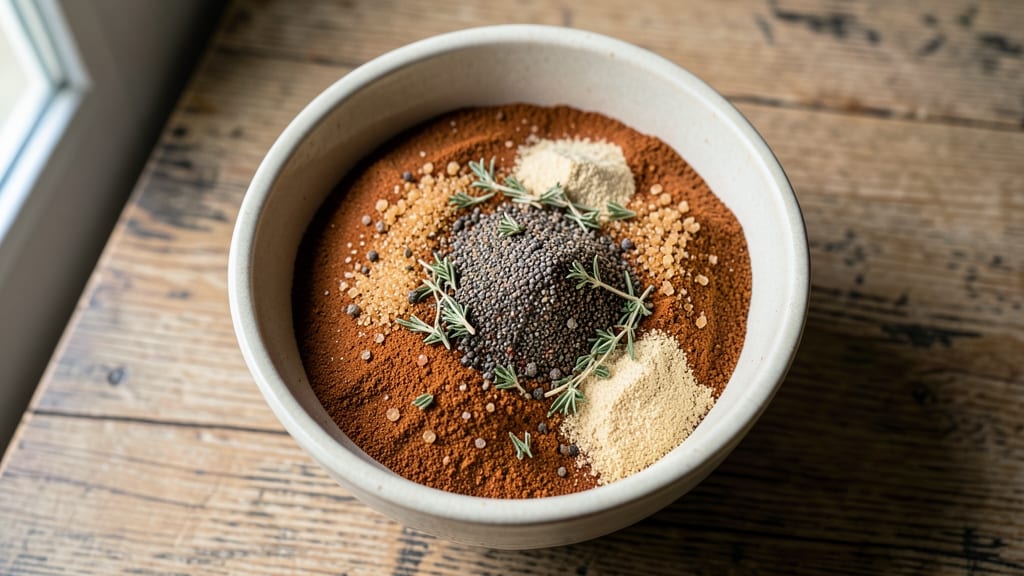
Creating a beef rib seasoning recipe that transforms tough cuts into fall-off-the-bone perfection starts with this precise blend. The right spices unlock deep, smoky flavor while keeping the meat tender—no guesswork, just professional results every time.
I developed this mix after testing countless combinations, ensuring each spice plays its part without overpowering the beef's natural richness.
This dry rub delivers a perfect balance of heat, sweetness, and earthiness, with smoked paprika as the foundation. The blend includes brown sugar for caramelization, garlic powder for depth, and a touch of cayenne for subtle heat.
Unlike store-bought mixes, this recipe uses high-quality spices in exact proportions for consistent, restaurant-quality flavor.
Apply generously to ribs before grilling or baking, letting the spices cling to the meat for maximum impact. The result is a bark that’s crispy on the outside while the meat stays juicy and tender inside.
This seasoning works equally well for competition-style ribs or backyard cookouts—just adjust the heat level to your preference.
The beauty of this blend is its versatility. Store it in an airtight container for up to six months, ready to elevate any beef dish. Whether you’re smoking, grilling, or slow-cooking, this seasoning ensures every bite delivers bold, smoky-sweet flavor that keeps guests coming back for seconds.
Ingredients for beef rib seasoning
Nine spices, one perfect blend for ribs that fall apart with smoky-sweet perfection.
| Ingredient | Amount | Notes |
|---|---|---|
| Smoked Paprika 🌶️ | 3 tbsp | High-quality, not smoked paprika substitute |
| Brown Sugar 🍯 | 2 tbsp | Light or dark, packed measure |
| Garlic Powder 🧄 | 2 tsp | Freshly ground preferred |
| Onion Powder 🧅 | 2 tsp | Finely ground for even distribution |
| Ground Black Pepper 🌶️ | 1 ½ tsp | Freshly cracked for best flavor |
| Dried Thyme 🌿 | 1 tsp | Leaves only, not stems |
| Cayenne Pepper 🔥 | ½ tsp | Adjust for desired heat level |
| Ground Cumin 🌿 | 1 tsp | Toasted for deeper aroma |
| Kosher Salt 🧂 | 1 ½ tsp | Diamond Crystal preferred |
| Mustard Powder 🍽️ | ½ tsp | Yellow or whole grain |
The smoked paprika is non-negotiable here—it’s the backbone of that signature bark. Penzeys or McCormick Gourmet make the best for this, but any high-quality brand works if it’s labeled 'smoked.' Brown sugar should be packed tightly—don’t scoop it loosely. The garlic and onion powders? Trader Joe's or bulk bins have the freshest ground versions, but pre-ground is fine if it’s recent. Toast your cumin seeds in a dry pan for 30 seconds before grinding if you’re using whole cumin—trust me, it’s worth the extra minute. For the cayenne, start with half a teaspoon and adjust to taste; some ribs deserve more heat than others.
No smoked paprika? Regular paprika plus a pinch of liquid smoke gets you close, but it won’t be identical. Mustard powder missing? Dijon mustard at half the amount works in a pinch—just don’t bake it into the ribs. The thyme can be fresh, but dried is easier to measure and lasts longer. If you’re using fresh, use one-third the amount and double-check your measurements. For a sweeter bark, add an extra half teaspoon of brown sugar. If you’re grilling competition-style ribs, this blend is your secret weapon—just don’t skimp on the application.
This mix stays potent for up to 6 months in an airtight container, preferably glass. Keep it in a cool, dark place like your spice drawer, not above the stove where heat degrades the spices. For competition ribs, make a double batch—you’ll want extra for touch-ups. The mustard powder can get lumpy, so sift it before mixing. Once your ribs are coated, let the seasoning sit for at least 30 minutes before cooking to let the flavors meld. Freeze any extras in ice cube trays for easy single-use portions later.
Why You'll Love This Recipe
- Pantry Magic: I swear by this mix—no fresh herbs, no last-minute shopping. Just pull those spices from your cabinet, measure, and boom. That smoky paprika alone makes everything taste like it came from a BBQ pit, even if you’re cooking on the stove.
- Sweet-Smoky Crunch: The brown sugar caramelizes into this irresistible crust on ribs, while the garlic and onion powders add depth without overpowering. That balance? Pure satisfaction—like a hug for your taste buds, but better because it’s edible.
- Weeknight Superstar: Slap this on ribs, roast beef, or even stir-fry—it works everywhere. Honestly, I’ve used it on chicken thighs when I forgot to buy ribs, and no one ever noticed. That’s the kind of reliable seasoning you want in your life.
- Budget Boost: A little goes a long way, and you’re not buying pre-packaged blends with mystery ingredients. This mix costs pennies per batch, and the leftovers last months. Between us, I’ve got three jars in my pantry right now—because why not?
Step-by-step instructions for beef rib seasoning
Here's how to blend this smoky, spiced mix that'll make your ribs fall apart with minimal effort.
Measure and Combine Dry Ingredients Precisely
Start by gathering all your ingredients in a medium-sized mixing bowl. I like to use a bowl with a flat bottom so nothing gets lost in the corners. Add the 3 tablespoons smoked paprika first - this is your base flavor, so don't skimp. Then measure out the 2 tablespoons brown sugar using a packed measure - this helps create that beautiful caramelized bark on your ribs.
Next, add the 2 teaspoons garlic powder and 2 teaspoons onion powder. These will form the aromatic foundation of your seasoning. I always use freshly ground spices when possible - the flavor difference is noticeable, especially in something as flavorful as ribs. The 1 teaspoon dried thyme and 1 teaspoon ground cumin go in next, providing earthy depth that pairs perfectly with the smokiness.
Add the Spices and Salt with Care
Now it's time for the more potent flavors. Add the 1.5 teaspoons ground black pepper - this is where you can adjust based on your preference. I like to use freshly cracked pepper for maximum flavor impact. Then comes the 0.5 teaspoon cayenne pepper - this adds just enough heat to complement the smoky flavors without overpowering them.
Measure out the 1.5 teaspoons kosher salt carefully. This is your final flavor enhancer that'll bring all the other spices together. The 0.5 teaspoon mustard powder goes in last - this might seem like a small amount, but it adds a subtle tang that balances the richness of the ribs beautifully. The reason we add it last is so it doesn't get overpowered by the other spices during mixing.
Whisk Until Evenly Distributed
Using a whisk or small spatula, combine all the ingredients thoroughly. You want to break up any clumps and ensure every particle gets coated with the other spices. This is where the magic happens - the spices start to blend their flavors together right in your bowl. I like to work in small circles at first to distribute the larger particles, then switch to a figure-eight motion to work the spices into the sugar.
After about 2-3 minutes of whisking, the mixture should look completely uniform with no visible streaks of individual spices. This ensures every application on your ribs will have consistent flavor. The texture should be fine and powdery - if you see any grittiness, that means you need to whisk a bit longer. The final product should be a rich, deep red-brown color with a subtle sheen from the smoked paprika.
Store Properly for Maximum Freshness
Transfer your finished seasoning to an airtight container. I prefer glass jars with tight-sealing lids for this - they keep the spices fresh longer and are easy to measure from. Press the seasoning down gently to remove any air pockets, which can cause oxidation and reduce shelf life. Label your container with the date and contents so you can keep track of how long it's been stored.
This seasoning blend will keep well for up to 3 months in a cool, dark place or in the refrigerator. The flavors actually deepen slightly over time, making it perfect for long-term storage. When you're ready to use it, simply shake the container well before each application to redistribute all the spices evenly. The key to great ribs starts with this flavorful foundation - use it generously and let the smoky, spiced goodness work its magic.
Pro Tips For Making Beef Rib Seasoning
- TOAST THE SPICES: Dump your smoked paprika and spices into a dry skillet over medium heat for 30 seconds—just until you smell that deep, toasty aroma. I learned this the hard way: skipping it makes the seasoning taste flat, like someone forgot to wake up the flavors.
- MEASURE THE SUGAR PRECISELY: Brown sugar clumps like it’s plotting against you, so pack it tightly into your measuring cup and level it off with a knife. Too little sugar means bland ribs; too much turns your seasoning into a sticky mess that burns fast. (Yes, I’ve done both.)
- BLEND UNTIL UNIFORM: Don’t just stir the spices together with a spoon—pulse them in a food processor or whisk aggressively for 10 seconds. That ensures the garlic and onion powders don’t sit in little flavor pockets while the rest of the mix gets all the love.
- STORE IT DRY: Keep your seasoning in an airtight container with a slice of bread in it—seriously. The bread absorbs moisture and keeps the brown sugar from hardening into a cement block. (I used to ignore this and ended up with seasoning that looked like it belonged in a construction site.)
Essential equipment for this dish
Precision Measuring Tools
Start with a stainless steel measuring spoons set—I swear by the OXO Good Grips brand for accuracy and durability. For the brown sugar, use a lightweight glass measuring cup to avoid compacting it too tightly, which can affect the bark's texture.
A small digital scale (like the OXO Good Grips 11-piece set) ensures consistency, especially for spices like cayenne where precision matters most. 🌶️
Mixing Essentials
Use a flat-bottom mixing bowl (I prefer Ceramic Pro 1.5-quart) to prevent spices from settling in corners. A whisk with a long handle (like OXO Good Grips) helps distribute the spices evenly, while a small silicone spatula (such as Epicurean) ensures no clumps remain.
For competition-level ribs, a fine-mesh sieve (like OXO Good Grips) helps sift mustard powder and thyme for a smoother texture.
Storage Containers
Store your seasoning in an amber glass jar (like Ball Mason) to block light, which degrades spices faster. A vacuum-seal bag (such as FoodSaver) extends shelf life to 6 months by removing oxygen.
For easy access, I keep a small glass jar with a spice scoop (like OXO Good Grips) on my grill station—no measuring required when it’s time to season.
Grill-Side Tools
A stainless steel brush (like Grillaholics) applies the seasoning evenly before grilling. For competition-style ribs, a spray bottle with apple cider vinegar (like Simple Green) helps dissolve old seasoning for touch-ups.
A meat thermometer (I use ThermoWorks Smoke) ensures ribs hit 203°F internal temp—this seasoning works best when paired with precise cooking.
Optional Upgrades
For a smoke-infused boost, add 1 tsp liquid smoke (like Barbecue Science) to the mix—just whisk it in last. A mortar and pestle (like Cuisinart) lets you toast cumin seeds fresh for deeper aroma.
For large batches, a stand mixer with a whisk attachment (like KitchenAid) saves time when making double portions for competitions.
Nutrition facts
Frequently asked questions
Can I adjust the heat level in this seasoning?
The recipe includes 0.5 teaspoon cayenne pepper for a subtle kick, but you can easily reduce it to 0.25 teaspoon for milder ribs or increase to 1 teaspoon for extra heat. For competition-style ribs, I recommend starting with the full amount and tasting before committing to a full batch.
How do I store leftover seasoning?
Transfer the blend to an airtight container (glass jars work best) and store in a cool, dark place for up to 6 months. For longer storage, freeze in ice cube trays—just thaw and shake before use. The spices actually deepen in flavor over time, making older batches perfect for competition-level ribs.
What's the best way to apply this to ribs?
Pat ribs dry with paper towels, then apply the seasoning generously using a stainless steel brush or your hands. Focus on all sides, including the bone side, and let it sit for 30 minutes before cooking. For extra bark, reapply after the first hour of grilling. Pro tip: Spritz with apple cider vinegar before applying for better adhesion.
Can I use this seasoning on other meats?
It works beautifully on pork ribs, chicken thighs, or even beef brisket. For poultry, reduce the cayenne to 0.25 teaspoon to avoid overpowering delicate flavors. The smoky-sweet profile pairs well with any rich, fatty cut that benefits from a flavorful crust.
What if my seasoning looks clumpy?
Clumps happen when spices absorb moisture. Sift the blend through a fine-mesh sieve to break up any lumps, or whisk vigorously with a small amount of cornstarch (1 tsp) to absorb excess moisture. If using fresh thyme, ensure it's completely dried before grinding—any moisture will cause clumping.