
Soups & Stews
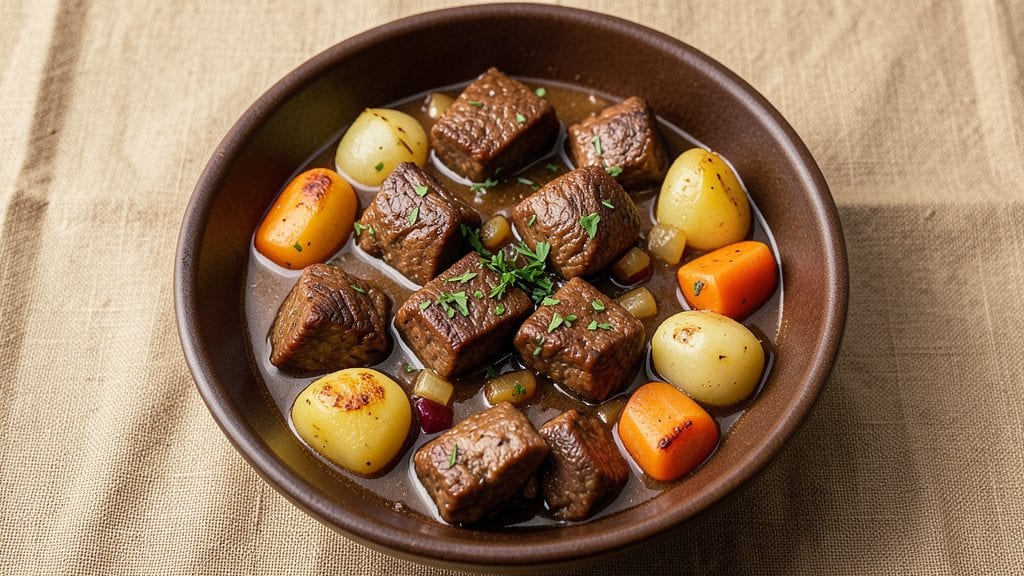
Betty Crocker's old-fashioned beef stew recipe delivers the kind of hearty, slow-simmered comfort that transforms tough cuts into melt-in-your-mouth tenderness. This classic method builds deep, savory flavors through proper browning and long cooking—no shortcuts, just proven technique that creates a rich broth and perfectly textured meat.
The secret lies in patience and precise timing, ensuring every bite is both satisfying and restaurant-quality at home.
What makes this stew truly special is its balance of simplicity and depth—just a few core ingredients working together over time. You'll start with browning beef chuck for maximum flavor, then let everything simmer until the meat practically falls apart.
The result is a thick, velvety stew packed with tender beef chunks, carrots, and potatoes that absorb the rich broth beautifully. This is the kind of dish that gets better with each passing hour as flavors meld together.
The beauty of this recipe is its versatility—serve it as a standalone meal or pair with crusty bread to soak up every last drop of that flavorful broth. The slow cooking process transforms inexpensive cuts into something luxurious, making it perfect for family dinners or cozy weeknight suppers.
Once you taste this version, you'll understand why it's been a kitchen staple for generations.
Ready in about 3 hours (with minimal active time), this stew is ideal for meal prepping or feeding a crowd. The rich aroma alone will have everyone gathering at the table, and the tender beef will disappear faster than you can say "seconds, please."
Let's create this timeless comfort dish together.
Ingredients for betty crocker old fashioned beef stew
Six core ingredients transform tough beef into melt-in-your-mouth perfection through slow simmering.
| Ingredient | Amount | Notes |
|---|---|---|
| Beef Chuck Roast 🥩 | 3 lb | Cut into 1.5-inch cubes |
| All-Purpose Flour 🌾 | ½ cup | For browning meat |
| Carrots 🥕 | 4 medium | Peeled and cut into chunks |
| Yellow Onion 🧅 | 1 whole | Chopped, medium size |
| Russet Potatoes 🥔 | 2 lb | Peeled and cut into chunks |
| Tomato Paste 🍅 | 2 tbsp | High-quality, no sugar added |
| Beef Broth 💧 | 4 cups | Low-sodium preferred |
| Red Wine 🍷 | 1 cup | Dry, like Cabernet Sauvignon |
| Garlic Cloves 🧄 | 4 cloves | Minced, fresh preferred |
| Fresh Thyme 🌿 | 2 sprigs | Or 1 tsp dried thyme |
| Bay Leaves 🍃 | 2 whole | Remove before serving |
| Salt 🧂 | 1 ½ tsp | Kosher or sea salt |
| Black Pepper 🌶️ | 1 tsp | Freshly ground preferred |
| Olive Oil 🫒 | 2 tbsp | Extra-virgin for cooking |
The beef chuck roast is non-negotiable—its marbling ensures rich flavor and tender texture. Look for cuts with visible fat at your local butcher or Costco's bulk section for better value. If buying pre-cut, check for uniform 1.5-inch cubes. The flour isn't for thickening; it's for creating a golden crust during browning. Bob's Red Mill all-purpose works perfectly. Carrots should be firm with bright orange color—avoid any with soft spots. The Trader Joe's organic carrots are my go-to for consistent quality.
No red wine? Substitute with extra beef broth—just add 1 tbsp of balsamic vinegar for depth. Fresh thyme is ideal, but dried works at one-third the amount. The tomato paste can be the squeeze-tube kind from Trader Joe's for convenience. For the potatoes, Yukon Golds hold their shape better than Russets, though both work. If you're short on time, pre-cut frozen potatoes save chopping effort. The bay leaves are crucial—don't skip them, but remember to remove them before serving.
This stew tastes even better the next day as flavors meld. Store in airtight containers for up to 5 days in the fridge. For freezing, portion into single-serving containers for 3 months. The broth thickens as it cools, so add a splash of water when reheating. I always make a double batch—one for dinner, one for lunches the following week. The leftovers reheat beautifully in the microwave or on the stovetop.
Why You'll Love This Recipe
- Foolproof One-Pot: I swear by this recipe because it’s the kind of dish where you dump everything in one pot and walk away. No fancy techniques—just brown the chuck roast, sprinkle in the flour to thicken, add the veggies, and let the slow simmer do the work. My lazy Sundays just got a whole lot easier.
- Deep, Savory Magic: That flour-coated roast? It’s the secret weapon—it creates this irresistible crust that melts into the broth, turning every bite into a rich, hearty experience. The carrots stay tender-crisp while the potatoes soak up all that flavor, making it taste like it simmered for hours (even if it didn’t).
- Leftovers That Don’t Suck: Honestly, this stew tastes better the next day. The flavors meld into this perfect balance of tender beef and thick, comforting broth. I make a double batch on Sundays because it’s the ultimate lunchbox filler or quick dinner reheat—no sad, watery leftovers here.
- Budget-Friendly Crowd-Pleaser: A single chuck roast feeds six, and the rest of the ingredients won’t break the bank. It’s the kind of dish my college friends begged me to make over and over—cheap, filling, and always a hit. Plus, the potatoes and carrots stretch the meal further, so you’re not left with a half-empty pot.
Step-by-step instructions for old fashioned beef stew
This classic method delivers melt-in-your-mouth beef and hearty vegetables through slow simmering.
Prepare and Brown the Beef
Cut the 3 lb beef chuck roast into 1.5-inch cubes for even cooking. Pat them dry with paper towels—this helps the flour adhere better and creates a better sear. In a large Dutch oven or heavy pot, heat 2 tablespoons olive oil over medium-high heat until shimmering.
Working in batches, add the beef cubes and cook undisturbed for 3-4 minutes per side until deeply browned. Don't crowd the pan—this prevents steam from lowering the temperature. The browned meat will release rich flavors into the stew. Transfer the browned beef to a plate and set aside.
Build the Flavor Base
In the same pot, reduce heat to medium and add the 0.5 cup all-purpose flour, stirring constantly for 1-2 minutes until it turns a nutty golden color. This creates a roux that thickens the stew and adds depth. Immediately add the chopped yellow onion and minced garlic cloves, cooking for 2-3 minutes until softened and fragrant.
Stir in the 2 tablespoons tomato paste and cook for another 1 minute to develop its caramelized flavor. Pour in the 1 cup red wine, scraping up any browned bits from the bottom of the pot. Let it simmer for 3-4 minutes until the wine reduces by half. This step forms the flavor foundation of the stew.
Simmer with Vegetables and Broth
Return the browned beef to the pot. Add the 4 medium carrots, 2 lb russet potatoes (cut into chunks), 4 cups beef broth, 2 sprigs fresh thyme, 2 whole bay leaves, 1.5 teaspoons salt, and 1 teaspoon black pepper. Stir gently to combine, then bring to a gentle boil.
Once boiling, reduce heat to low and cover partially with a lid. Let it simmer for 2 hours, stirring occasionally. The stew should bubble gently—if it boils vigorously, the beef will toughen. You'll know it's ready when the beef is fork-tender and easily pulls apart with minimal resistance.
Finish and Adjust Seasoning
Remove the bay leaves and check the seasoning. Taste the stew and adjust with additional salt or pepper if needed. The potatoes should be tender but still hold their shape, and the carrots should be soft with a slight bite. If the stew is too thick, add 1-2 tablespoons water to reach your preferred consistency.
Let the stew rest for 10 minutes before serving. This allows the flavors to meld and the juices to redistribute throughout the meat. Serve hot with crusty bread to soak up every last drop of that rich, savory broth.
Pro Tips For Making Betty Crocker Old Fashioned Beef Stew
- Brown the Roast First: The recipe might call for a quick sear, but trust me—this isn’t the time to rush. Get that beef chuck roast deep golden on all sides before pulling it out, or you’ll end up with bland, gray meat. I used to skip this, and the stew always tasted like it needed more seasoning afterward.
- Flour the Potatoes: Dredge those russet potatoes in flour before adding them to the pot. It’s a little extra work, but it keeps them from turning mushy—especially if you’re cooking this stew low and slow. My grandmother swore by this, and she was right: the flour creates a light crust that holds up.
- Simmer, Don’t Boil: The recipe might not say it, but simmering is the non-negotiable here. A rolling boil will break down the meat too fast and turn the stew into soup. Keep it at a gentle bubble—just enough to see tiny ripples—and the beef will stay tender without falling apart.
- Add Carrots Late: I learned this the hard way—adding carrots with the onions at the start turns them to mush. Instead, toss them in after the beef has cooked for 1.5 hours. They’ll stay crisp-tender and bright, not sad and limp. (Yes, even if you’re impatient like me.)
Best sauces and condiments for this dish
Classic Horseradish Cream
This tangy, creamy condiment cuts through the richness of beef stew beautifully. Mix ½ cup sour cream with 2 tablespoons prepared horseradish (like Liberty brand), 1 tablespoon Dijon mustard, and a pinch of salt.
Stir well and chill for 30 minutes before serving. The sharpness enhances the stew's depth while adding a refreshing contrast. 💛
Garlic Aioli
For a bold, garlicky kick, blend ½ cup mayonnaise (I prefer Duke's for quality) with 2 roasted garlic cloves, 1 teaspoon lemon juice, and ½ teaspoon smoked paprika.
Spread a thin layer on crusty bread or drizzle over the stew just before serving. The smoky-sweet notes complement the wine-infused broth perfectly.
Buttery Parsley Sauce
This elegant finishing sauce elevates the dish effortlessly. Melt 2 tablespoons butter in a pan, then whisk in 2 tablespoons flour to make a quick roux. Slowly add 1 cup warm beef broth, stirring until smooth.
Remove from heat and stir in ¼ cup chopped fresh parsley and 1 tablespoon lemon juice. Strain if you prefer a silky texture. The bright, herby flavor balances the stew's richness.
Spicy Tomato Jam
For a sweet-spicy contrast, simmer ½ cup tomato paste, 2 tablespoons honey, 1 tablespoon apple cider vinegar, and ½ teaspoon cayenne pepper in a small saucepan for 10 minutes until thickened.
Drizzle a spoonful over individual servings—it adds a fruity, tangy dimension that pairs wonderfully with the hearty stew. 🌶️
Creamy Mushroom Gravy
Sauté 1 cup sliced mushrooms in 1 tablespoon butter until golden, then deglaze with 2 tablespoons red wine. Stir in 1 tablespoon flour and cook for 1 minute. Gradually whisk in 1 cup beef broth and simmer until thickened.
Finish with 1 teaspoon fresh thyme and a splash of cream. This gravy adds earthy depth and a velvety texture that enhances every bite.
Crusty Bread with Garlic Butter
While not a sauce, a warm baguette slathered with garlic butter (melted butter mixed with minced garlic and parsley) is essential. The bread soaks up the stew's rich broth beautifully.
For extra flair, sprinkle with flaky sea salt and serve alongside the stew. The contrast of crispy bread and tender meat creates a satisfying textural experience. ✨
Nutrition facts
Frequently asked questions
Why does this recipe use beef chuck instead of a leaner cut?
The chuck roast's fat marbling is essential for creating a rich, flavorful broth during slow cooking. The fat renders out over time, infusing the stew with deep umami notes while keeping the meat incredibly tender. Lean cuts like sirloin won't deliver the same satisfying texture or depth of flavor.
Can I make this stew in a slow cooker instead of a Dutch oven?
Brown the beef first in a skillet, then transfer everything to your slow cooker. Cook on low for 7-8 hours or high for 4-5 hours—just add 1 extra cup of broth since slow cookers evaporate more liquid. The hands-off approach works perfectly for this recipe.
What's the best way to reheat leftovers without drying them out?
Reheat gently on the stovetop over low heat with a splash of beef broth or water—never microwave directly. For even better results, cover the pot and let it simmer for 10-15 minutes until thoroughly heated. This preserves the stew's creamy texture and prevents the meat from becoming rubbery.
How can I make this stew vegetarian?
Replace the beef with 2 cups of hearty mushrooms (like portobello or cremini) and 1 cup of lentils for protein. Use vegetable broth instead of beef broth, and add 1 tablespoon soy sauce for umami depth. The tomato paste and red wine still work beautifully in this version.
Why does the recipe call for resting the stew before serving?
The 10-minute rest allows the juices to redistribute throughout the meat and vegetables, preventing them from leaking out when served. This crucial step ensures each bite stays moist and flavorful. It's especially important for the potatoes and carrots to absorb the rich broth completely.