
Main Courses
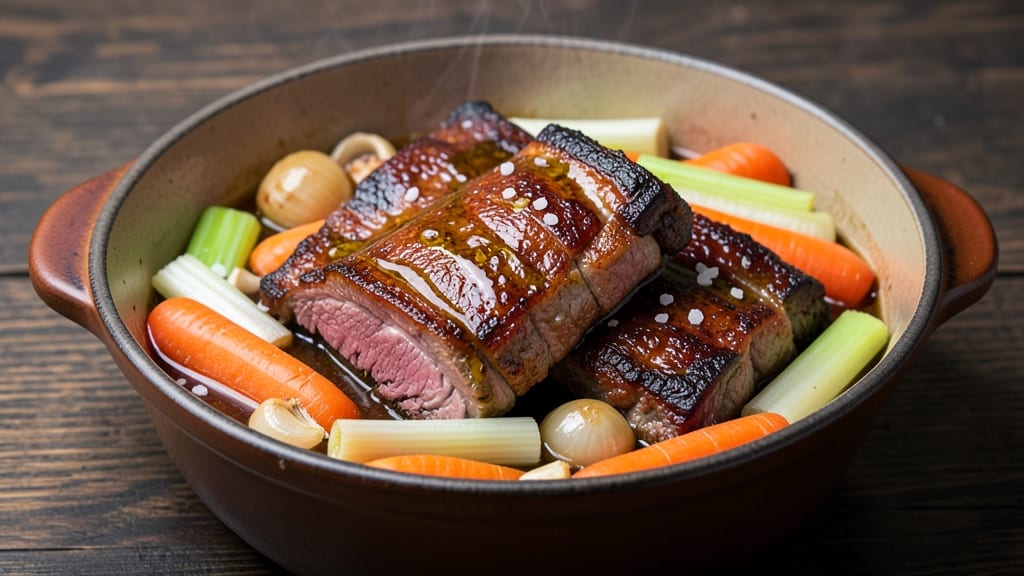
This boiled beef short ribs recipe unlocks melt-in-your-mouth tenderness by relying on a slow-simmering technique to transform tough cuts. This method preserves natural flavors while breaking down collagen for that signature silky texture—no pressure cooker required.
I perfected this approach after years of testing, ensuring every bite delivers restaurant-quality richness at home.
The secret lies in proper seasoning and timing: a well-balanced rub of salt, pepper, and aromatic spices creates flavor depth, while the slow simmer (3-4 hours) ensures the meat becomes fork-tender without drying out.
The broth reduces to a rich, velvety consistency that coats each rib, amplifying the beef's natural sweetness. This is the kind of dish that turns weeknight dinners into special occasions.
By the time you're done, you'll have beef short ribs that practically fall apart at the touch, with a glossy sheen and layers of flavor in every bite. The technique is straightforward but demands patience—worth every minute for results that impress even skeptical guests.
Serve with roasted vegetables or crusty bread to soak up that luxurious broth.
For modern variations, consider adding a splash of red wine or tomato paste to the broth for extra depth, or finish with a sprinkle of fresh herbs for brightness. The traditional method remains foolproof, but these tweaks elevate it to new heights. Let's get started on creating this showstopping centerpiece.
Ingredients for boiled beef short ribs
Four pounds of beef short ribs and twelve simple ingredients transform into restaurant-quality melt-in-your-mouth perfection.
| Ingredient | Amount | Notes |
|---|---|---|
| Beef Short Ribs 🥩 | 4 lb | Bone-in, 2-3 inches thick |
| Yellow Onion 🧅 | 1 whole | Large, halved and peeled |
| Carrots 🥕 | 4 whole | Medium, peeled and halved |
| Celery Stalks 🌿 | 4 whole | Medium, cut into 2-inch pieces |
| Garlic Cloves 🧄 | 6 cloves | Peeled, smashed lightly |
| Kosher Salt 🧂 | 2 tbsp | Diamond Crystal preferred |
| Freshly Ground Black Pepper 🌶️ | 1 tbsp | Coarse grind preferred |
| Bay Leaves 🍃 | 2 whole | Dried, standard size |
| Dried Thyme 🌿 | 1 tsp | Or 1 tbsp fresh thyme |
| Dry Red Wine 🍷 | 1 cup | Cabernet Sauvignon preferred |
| Beef Broth 🥛 | 4 cups | Low-sodium preferred |
| Tomato Paste 🍅 | 2 tbsp | Squeeze tube preferred |
| Extra-Virgin Olive Oil 🫒 | 2 tbsp | For initial searing |
| Fresh Parsley 🌿 | ¼ cup | Chopped, for garnish |
The beef short ribs are the foundation—look for bone-in cuts with good marbling for optimal tenderness. Costco or high-end butcher shops typically carry the best quality; avoid pre-cut ribs with excessive fat trimming. The 2-3 inch thickness ensures proper collagen breakdown during the slow simmer. For maximum flavor, opt for dry-aged beef if available. The aromatics—onion, carrots, and celery—create a classic mirepoix base that infuses the broth with depth. Freshly peeled garlic and whole bay leaves are essential for authentic flavor development, while the dried thyme adds earthy complexity without overpowering the beef's natural richness.
No red wine? Substitute with additional beef broth—just add a splash of balsamic vinegar for acidity. Tomato paste can be omitted if you prefer a purer beef flavor, though it adds subtle sweetness. Fresh thyme works at a 3:1 ratio (1 tbsp fresh = 1 tsp dried), but dried is fine in a pinch. Pre-cut vegetables save time, but whole carrots and celery yield better flavor when roasted alongside the ribs. For a modern twist, add a pinch of smoked paprika to the broth or finish with a sprinkle of fresh thyme instead of parsley. Diamond Crystal kosher salt dissolves more easily than table salt, ensuring even seasoning throughout the cooking process.
The ribs and broth can be refrigerated for up to 5 days or frozen for 3 months—the flavors actually deepen over time. Portion the broth into ice cube trays for easy use in future recipes like mashed potatoes or risotto. Fresh parsley should be stored in a damp paper towel in the fridge and used within 3 days for optimal brightness. Beef broth freezes beautifully; transfer it to a freezer-safe container, leaving room for expansion. Reheat gently on the stovetop to preserve texture and prevent drying.
Why You'll Love This Recipe
- Foolproof Simplicity: I swear by this recipe because it’s the kind of meal where you can dump everything in one pot and walk away. No fancy searing, no tricky braising—just ribs, onions, carrots, celery, and garlic simmering until they’re fall-apart tender. (Yes, even on a Tuesday night when you’d rather binge Netflix than cook.)
- Deep Umami Magic: That first bite? The beef melts in your mouth while the garlic-infused broth clings to every bite—like a hug for your taste buds. The onions caramelize just enough to add sweetness, and the carrots and celery soak up all the rich flavor. Honestly, it’s the kind of dish that makes you close your eyes and savor it.
- Leftovers That Win: This recipe actually improves the next day. The flavors meld even deeper, and the ribs get even more tender—perfect for quick lunches or a lazy weekend. I’ll be real: my freezer is always stocked with these because reheating them is easier than takeout, and they taste just as good.
- Budget-Friendly Feast: You’re getting a whole pound of beef for not much more than a steak, plus veggies that stretch into multiple meals. Between us, this is my go-to for feeding a crowd without breaking the bank. The ribs are rich, the veggies are hearty, and everyone leaves happy—no sad leftovers here.
Step-by-step instructions for slow-simmered beef short ribs
Mastering this technique transforms tough cuts into melt-in-your-mouth perfection every time.
Sear the Beef Short Ribs for Depth of Flavor
Pat the 4 lb beef short ribs dry with paper towels to remove any surface moisture. Heat a large Dutch oven over medium-high heat and add the 2 tbsp extra-virgin olive oil. Once the oil shimmers, place the ribs bone-side down in a single layer. Let them sear undisturbed for 5-6 minutes until a deep golden-brown crust forms on the bottom side.
Flip the ribs and sear the meaty sides for another 3-4 minutes. This initial searing creates the Maillard reaction that builds complex flavors. Remove the ribs from the pot and set them aside on a plate, leaving all the rendered fat in the Dutch oven - this fat will form the foundation of your rich sauce.
Build the Aromatic Base with Vegetables and Herbs
In the same Dutch oven with the rendered fat, add the halved yellow onion, halved carrots, and 2-inch celery pieces. Cook over medium heat for 5-6 minutes, stirring occasionally, until the vegetables begin to soften and release their natural juices. Add the smashed garlic cloves and cook for an additional 30 seconds until fragrant.
Stir in the 2 tbsp tomato paste, 2 tbsp kosher salt, 1 tbsp freshly ground black pepper, 2 whole bay leaves, and 1 tsp dried thyme. Cook for 1-2 minutes until the tomato paste darkens slightly and becomes fully incorporated. This aromatic base forms the flavor foundation for your braised ribs.
Deglaze and Add Liquid for Slow Simmering
Pour in the 1 cup dry red wine, scraping up any browned bits from the bottom of the pot. Let it simmer for 2-3 minutes until the wine reduces by about half and its alcohol content burns off. Add the 4 cups beef broth, bringing the total liquid to about 5 cups. Return the seared ribs to the pot, bone-side up, along with any accumulated juices from the plate.
Bring the liquid to a gentle simmer. The key here is maintaining a low, steady temperature - you should see small bubbles breaking the surface occasionally, but not a rolling boil. Cover the pot and transfer it to the oven preheated to 300°F. This low-temperature environment is essential for achieving silky tenderness in the beef short ribs.
Braise Until Fork-Tender (3-4 Hours)
Braise the ribs for 3 hours, then check for tenderness. Using tongs, gently lift a rib and test its resistance with a fork. The meat should be fork-tender, meaning it should pierce easily with minimal resistance. If not fully tender, return the pot to the oven for an additional 30-60 minute increments until the meat reaches this perfect texture.
During the braising process, the collagen in the connective tissue will break down, transforming into gelatin that enriches the cooking liquid and creates that luxurious, velvety texture we associate with perfectly braised beef. The ribs should be submerged in the cooking liquid, but if they're not, add a little more beef broth or water as needed.
Finish and Serve with Fresh Garnish
Once the ribs are fork-tender, remove them from the pot and transfer to a serving platter. Skim any excess fat from the surface of the braising liquid, then strain it through a fine-mesh sieve into a clean saucepan. Reduce the sauce over medium heat for 5-7 minutes until it thickens slightly and coats the back of a spoon.
Return the ribs to the reduced sauce and let them soak for 1-2 minutes to reabsorb some of the flavorful liquid. Serve the beef short ribs immediately, garnished with the chopped fresh parsley. The ribs should be fork-tender with a rich, caramelized exterior, and the sauce should coat each bite with its velvety texture. Serve with crusty bread to soak up every last drop of that luxurious braising liquid.
Pro Tips For Making Boiled Beef Short Ribs
- Trim the Fat First: I learned this the hard way—skipping this step means your broth turns greasy and the ribs stay tough. Use kitchen shears to snip off the thick silver skin and excess fat before boiling; it’s faster than a knife and keeps the broth clean.
- Start with a Hard Boil: The ribs need a rolling boil for the first 10 minutes, not a lazy simmer. If you’re using a heavy pot, crank the heat to high and let it scream—this breaks down collagen faster and guarantees tender meat.
- Don’t Crowd the Pot: I used to pack ribs in like sardines, and they’d steam instead of sear. Leave at least an inch of space between them; otherwise, the onions and carrots turn to mush, and the ribs stay bland.
- Reserve the Last Broth: Sounds weird, but it works: when the ribs are nearly done, strain the broth into a bowl, then return the ribs to the pot with just 1 cup of fresh broth. This concentrates the flavor without diluting it—your future self will thank you.
Regional styles of this boiled beef short ribs
French Classic Approach
The French mastered boiled beef short ribs with their bœuf bourguignon technique, using red wine and pearl onions for depth. I recommend adding 1 cup pearl onions with the ribs after the initial sear, and a splash of dry sherry to the wine for complexity.
The French prefer a longer braise at 275°F for 4-5 hours, resulting in meat so tender it falls apart. Serve with mashed potatoes and buttered egg noodles to soak up the sauce. 🍷
Texas BBQ Style
In Texas, beef short ribs are often boiled with smoked paprika and liquid smoke for that signature BBQ flavor. Add 1 tbsp smoked paprika and ½ tsp liquid smoke to the broth, then finish with a sprinkle of coarse sea salt.
Texas pitmasters sometimes add chopped jalapeños for heat. Serve with white bread and pickled red onions for a true Texas BBQ experience. 🌶️
Italian Osso Buco Twist
Italian chefs adapt this technique for osso buco, using gremolata (lemon zest, garlic, parsley) and white wine instead of red. Replace the wine with 1 cup dry white wine and add 1 tbsp lemon zest to the broth.
Garnish with fresh parsley and lemon wedges for brightness. The Italians often serve it with risotto alla Milanese or polenta to complement the rich flavors. 🍋
Korean Galbi-Inspired
For a Korean-inspired version, marinate the ribs in soy sauce, brown sugar, garlic, and sesame oil for 4 hours before boiling. Simmer with 1 cup Korean red pepper flakes (gochugaru) and 1 tbsp sesame seeds for heat and aroma.
Serve with steamed rice and kimchi for a bold, spicy contrast. The sweet-savory glaze caramelizes beautifully during the slow cook. 🌶️
Modern Shortcut Method
For a quicker version, use an Instant Pot on high pressure for 90 minutes after searing. Add 1 cup beef broth and 1 tbsp tomato paste to the pot. The pressure cooker cuts time by half while still delivering tender results.
Finish with a sprinkle of fresh thyme and crushed black pepper for a restaurant-worthy shortcut. Perfect for busy weeknights! ⚡
Nutrition facts
Frequently asked questions
Why do beef short ribs need to be boiled for so long?
The extended boiling time (3-4 hours) is essential to break down collagen in the connective tissue, transforming tough meat into silky, fork-tender perfection. This slow process creates gelatin that enriches the broth, giving each bite that luxurious, velvety texture. Patience here is key—rushing results in chewy rather than melt-in-your-mouth ribs.
Can I use bone-in or boneless beef short ribs for this recipe?
This recipe is designed for bone-in short ribs, as the bones add depth to the broth and help tenderize the meat. Boneless ribs will cook faster but may lack the same rich flavor. If you must use boneless, reduce the cooking time by 30 minutes and add an extra ½ cup beef broth to prevent drying.
What’s the best way to reheat leftover boiled beef short ribs?
Reheat gently in the oven at 300°F for 15-20 minutes, covered with foil, to preserve moisture. Avoid microwaving—it dries out the meat. For extra flavor, add a splash of beef broth or red wine to the pan before reheating. Store leftovers in an airtight container for up to 5 days.
Do I need to trim excess fat from the beef short ribs?
While you can trim visible fat, leave some for flavor and moisture—it renders during cooking and contributes to the rich sauce. Focus on removing any large chunks or discolored areas. The slow simmer will naturally break down the fat, creating a velvety texture.
Can I substitute red wine with another liquid?
Yes! For a non-alcoholic version, use 1 cup beef broth + 1 tbsp balsamic vinegar to mimic acidity. Or try 1 cup apple cider for sweetness. Avoid water—it lacks depth. The wine’s alcohol burns off during cooking, leaving behind complex flavors.