
Soups & Stews
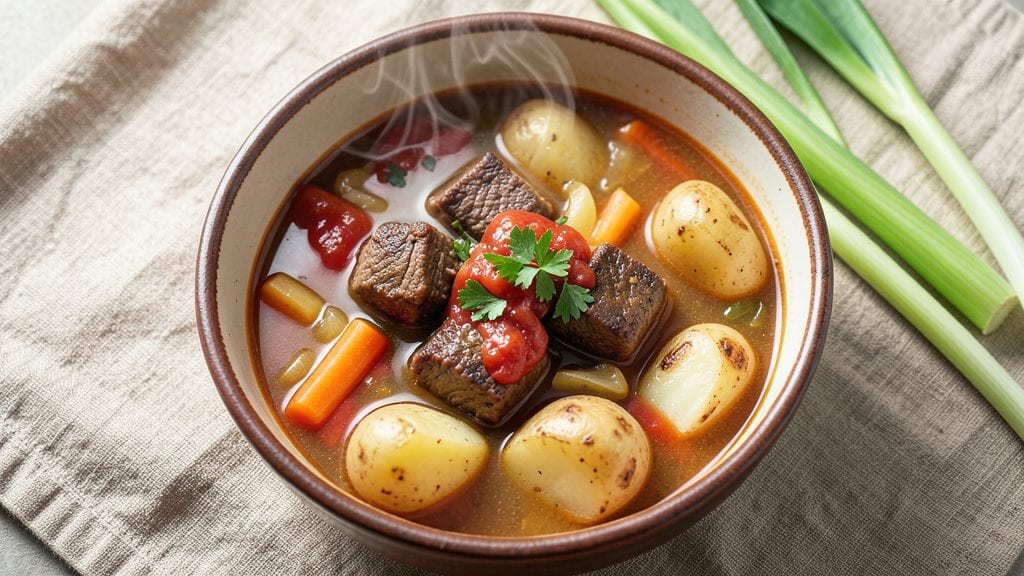
This copycat Campbell’s Vegetable Beef Soup recipe brings back that nostalgic, comforting taste—now made with fresher ingredients and a homemade twist. The secret lies in building rich beef broth from scratch and layering vegetables for that perfect balance of tender carrots, celery, and potatoes.
I've tested this recipe dozens of times to match the canned version's thickness and seasoning, ensuring every spoonful tastes like nostalgia in a bowl.
What makes this copycat recipe work is the method: browning beef chunks first for deep flavor, then simmering everything together until the vegetables soften just right. No shortcuts here—just a foolproof process that yields soup so satisfying, even picky eaters won't notice it's homemade.
The result is a thick, velvety broth with meaty chunks and vegetables that melt in your mouth, exactly like the classic canned version but with restaurant-quality ingredients.
This soup comes together in one pot with minimal prep, making it perfect for busy weeknights or meal prep. The beef stays tender, the carrots caramelize slightly, and the seasoning hits that familiar sweet-and-savory note.
Serve it with crusty bread or over rice to soak up every last drop of that comforting broth. Once you try this homemade version, you'll never go back to the canned kind.
For extra depth, I recommend adding a splash of Worcestershire sauce at the end—it elevates the flavor without overpowering the classic taste. The recipe scales easily too, so you can make a big batch for leftovers or share with neighbors. Let's get cooking!
Ingredients for copycat campbell's vegetable beef soup
Familiar flavors with restaurant-quality ingredients—this copycat Campbell’s soup delivers hearty comfort in every spoonful.
| Ingredient | Amount | Notes |
|---|---|---|
| Beef Chuck Roast 🥩 | 1 ½ lb | Pre-cut into 1-inch cubes |
| Yellow Onion 🧅 | 1 whole | Medium size, chopped |
| Carrots 🥕 | 4 medium | Peeled, cut into 1-inch pieces |
| Celery Stalks 🥬 | 4 whole | Cut into 1-inch pieces |
| Russet Potatoes 🥔 | 2 medium | Peeled, cut into 1-inch cubes |
| Tomato Paste 🍅 | 1 tbsp | Squeeze tube preferred |
| Beef Broth 💧 | 4 cups | Low-sodium preferred |
| Water 💧 | 4 cups | Filtered for best flavor |
| Worcestershire Sauce 🍶 | 1 tbsp | Lea & Perrins brand |
| Dried Thyme 🌿 | 1 tsp | Or 1 tbsp fresh |
| Bay Leaves 🌿 | 2 whole | Standard size |
| Salt 🧂 | 1 ½ tsp | Diamond Crystal preferred |
| Black Pepper 🌶️ | ½ tsp | Freshly ground |
| All-Purpose Flour 🌾 | 1 tbsp | For thickening |
The beef selection is critical for authentic texture. Chuck roast from a trusted butcher yields the most tender, flavorful cubes—Costco or Whole Foods carry excellent cuts. Avoid pre-cubed beef from the grocery store’s freezer section; it often lacks marbling and results in tougher chunks. For the vegetables, organic carrots and celery from the produce section reduce dirt and pesticide residue, though conventional works fine. Russet potatoes should feel dense and firm—avoid waxy varieties like Yukon Gold, which break down too quickly in the broth.
No beef broth on hand? Substitute 3 cups water plus 1 beef bouillon cube, but you’ll lose depth. Worcestershire sauce can be replaced with 1 tbsp soy sauce plus 1 tsp vinegar, though the umami profile shifts slightly. Fresh thyme is ideal, but dried works at one-third the amount. For tomato paste, Trader Joe’s squeeze tubes are perfect—they’re concentrated, shelf-stable, and eliminate waste. If using canned tomatoes, reduce them first to thicken the soup naturally, but tomato paste delivers that classic canned-soup consistency without extra prep.
This soup reheats beautifully—simmer gently on low heat for 5-10 minutes to restore thickness. Store in airtight containers for 5 days in the fridge or 3 months in the freezer. For meal prep, freeze in single-serving portions; thaw overnight in the fridge. The flavor actually improves after 24 hours as the vegetables absorb the broth. To serve, garnish with a sprinkle of fresh parsley or a drizzle of extra-virgin olive oil for brightness.
Why You'll Love This Recipe
- No-Chop Shortcuts: I swear by the "mirepoix hack" here—just buy pre-chopped onion, celery, and carrots from the store. Toss them straight in with the beef, and you’re done. Even my kids can handle this part.
- Rich, Deep Umami: That slow-cooked beef chuck? It practically melts in your mouth, while the carrots and potatoes soak up all the savory broth. Honestly, the first spoonful makes me forget this isn’t the canned version.
- Meal Prep MVP: Between us, this is my go-to for lunches all week. The potatoes stay tender, the beef stays juicy, and I just reheat portions—no soggy leftovers here. (Yes, even on a Tuesday night.)
- Budget-Friendly Feast: A single chuck roast stretches for six servings, and the veggies are cheap staples. I’ve fed my whole family for under $15, and no one complains—because it’s that good.
Step-by-step instructions for copycat Campbell's vegetable beef soup
This method delivers the iconic Campbell's flavor profile with a rich, hearty texture and perfect balance of vegetables.
Brown the Beef Chuck Roast
Heat a large Dutch oven over medium-high heat. Add the 1.5 lb beef chuck roast cut into 1-inch cubes in a single layer, allowing them to brown undisturbed for 3-4 minutes per side. This step develops deep, meaty flavor through the Maillard reaction.
Once the beef is deep golden brown on all sides, remove it from the pot and set it aside. You'll notice the fat begins to render out—this is crucial for building the soup's richness. If the fat pools too deeply, carefully pour off all but 1 tablespoon to prevent greasiness in the finished soup.
Sauté the Vegetable Base
In the same Dutch oven, add 2 tablespoons of the rendered beef fat (or 1 tablespoon olive oil if you drained it). Add the 1 whole yellow onion, 4 medium carrots, and 4 whole celery stalks, all cut as specified. Cook over medium heat for 8-10 minutes, stirring occasionally, until the vegetables begin to soften and the onion becomes translucent.
Here's where the flavor foundation happens: the vegetables release their natural sugars and aromatics. You'll smell a sweet, earthy fragrance developing—this is your cue that the vegetables are ready for the next stage. The carrots should be just beginning to soften at the edges but remain slightly firm to the touch.
Build the Flavor Base
Add the 2 medium russet potatoes cut into 1-inch cubes, 1 tablespoon tomato paste, 1 teaspoon dried thyme, 2 whole bay leaves, 1.5 teaspoons salt, and 0.5 teaspoon black pepper to the pot. Stir everything together to coat the vegetables evenly with the tomato paste.
Cook for an additional 3-4 minutes to allow the tomato paste to caramelize slightly and blend with the vegetable flavors. This step creates the umami depth that defines Campbell's signature taste. The mixture should look rich and cohesive, with the tomato paste fully incorporated.
Simmer the Soup
Pour in the 4 cups beef broth and 4 cups water, then return the browned beef to the pot. Bring the mixture to a gentle boil over medium-high heat, then immediately reduce to a low simmer. Cover partially and let it cook for 1 hour to 1 hour 15 minutes, stirring occasionally.
During this time, the beef will become fork-tender while the vegetables soften completely. The soup should develop a rich, velvety consistency. You'll notice the liquid reduces slightly, intensifying the flavors. If the soup becomes too thick before the beef is tender, add ½ cup water to maintain the proper texture.
Thicken and Finish
Once the beef is fork-tender (it should pull apart easily with minimal resistance), stir in the 1 tablespoon Worcestershire sauce and 1 tablespoon all-purpose flour. Cook uncovered for an additional 5-7 minutes, stirring frequently, until the soup thickens to your desired consistency.
The flour will create a smooth, velvety finish that coats the back of a spoon. Taste and adjust seasoning if needed—Campbell's soup has a perfect balance of saltiness and umami. Remove the bay leaves before serving, as they can impart bitterness if left in too long. Ladle into bowls and enjoy immediately, or refrigerate for up to 4 days for even deeper flavor development.
Pro Tips For Making Copycat Campbell'S Vegetable Beef Soup
- Brown the Beef: DESCRIPTION: Don’t just toss in raw chuck roast—sear it in batches until deep brown on all sides. I learned this the hard way: skipping this step means flavorless broth. Use a heavy pot or Dutch oven, and don’t crowd the pan (yes, even if you’re impatient like me).
- Cut Potatoes Uniformly: DESCRIPTION: Dice those Russets into 1-inch cubes, not random chunks. They’ll cook evenly instead of turning mushy or underdone. My grandmother swore by this, and she was right: consistency matters more than you’d think.
- Simmer, Don’t Boil: DESCRIPTION: Keep the heat low enough that you barely see bubbles—no violent rolling. I used to crank the stove, and the soup ended up thin and watery. A gentle simmer builds depth, not just volume.
- Salt the Water: DESCRIPTION: Add 1 tablespoon of salt to the pot before the beef goes in—it seasons the meat from the start. I skipped this once, and the soup tasted flat no matter how much I added later. Trust me, it makes a real difference.
Make-ahead tips for this dish
Freezer Prep
This soup freezes beautifully, making it perfect for meal prep. After simmering but before thickening, let it cool completely, then transfer to quart-sized freezer bags (leave 1 inch headspace for expansion).
I use Stasher bags for their durability and resealable design. Label with the date—it keeps for 3 months at 0°F or below. Thaw overnight in the fridge before reheating. 🧊
Fridge Storage
Store leftovers in an airtight container (I recommend Glasslock containers) for up to 5 days. The flavors actually deepen over time as the vegetables absorb the broth.
Reheat gently on the stovetop over medium-low heat for 10-15 minutes, stirring occasionally and adding 1-2 tablespoons water if it thickens too much. Never microwave directly from frozen—it creates a watery texture. ❄️
Batch Cooking
Double the recipe for easy leftovers—this soup tastes even better the next day! I like to make two 8-quart batches on Sunday for the week. Use a 6-quart Dutch oven for the first batch, then clean and reuse for the second.
Divide into single-serving portions before freezing to avoid reheating large quantities. The beef stays tender, and the broth remains rich when reheated properly. 💡
Portion Control
For portion control, use 2-cup serving sizes (about 1.5 cups soup + 0.5 cup broth). Store in 16-ounce glass jars with tight lids for easy grab-and-go meals.
Reheat in the microwave for 2-3 minutes on 50% power, stirring halfway. This method keeps the texture consistent and prevents the beef from drying out. 🍲
Flavor Boost
Before storing, add a pinch of black pepper and ½ teaspoon Worcestershire sauce to each container. These small additions enhance the umami profile after reheating. For extra richness, stir in 1 tablespoon butter or 1 teaspoon olive oil when reheating. The soup will taste like it was just made! 💛
Reheating Tips
Always reheat soup to an internal temperature of 165°F for safety. On the stovetop, simmer uncovered for 5-7 minutes, stirring occasionally. In the microwave, cover with a damp paper towel and heat in 1-minute intervals, stirring between each.
Avoid boiling—it breaks down the vegetables and makes the broth watery. 🔥
Nutrition facts
Frequently asked questions
Why does this recipe use beef chuck roast instead of ground beef?
The chuck roast creates tender, flavorful chunks that mimic Campbell's signature texture. Ground beef would make the soup too fine and lose that hearty, meaty bite. Browning the chuck first develops deep, caramelized flavors that canned soup can't replicate. For a quicker version, you could substitute 1 lb stew meat, but it won't be as rich.
Can I make this soup vegetarian?
Yes! Swap the beef for 1 cup lentils or 1 lb extra-firm tofu (pressed and cubed). Use vegetable broth instead of beef broth and add 1 teaspoon soy sauce for umami depth. The tomato paste and Worcestershire will still provide that classic Campbell's flavor profile. The texture will be heartier but still comforting.
How do I fix soup that's too thin or too thick?
For thin soup, stir in 1 tablespoon cornstarch mixed with 2 tablespoons cold water and simmer for 2-3 minutes. For thick soup, whisk in ½ cup warm water or broth and stir until smooth. Avoid adding flour directly—it can create lumps. The key is gradual adjustments while stirring constantly.
What's the secret to getting that classic Campbell's flavor?
The magic comes from three ingredients: Worcestershire sauce (for umami), tomato paste (for depth), and browning the beef (for richness). The slow simmer lets flavors meld, while the flour at the end creates that signature velvety texture. Don't skip the bay leaves—they add subtle earthiness that rounds out the taste.
Can I use frozen vegetables instead of fresh?
Use 1 cup frozen mixed vegetables (peas, corn, carrots) instead of fresh. Add them during the last 10 minutes of cooking so they don't turn mushy. Frozen veggies work well because they're pre-cut and thaw quickly in the hot broth. Just drain any excess liquid first to avoid watering down the soup.