
Main Courses
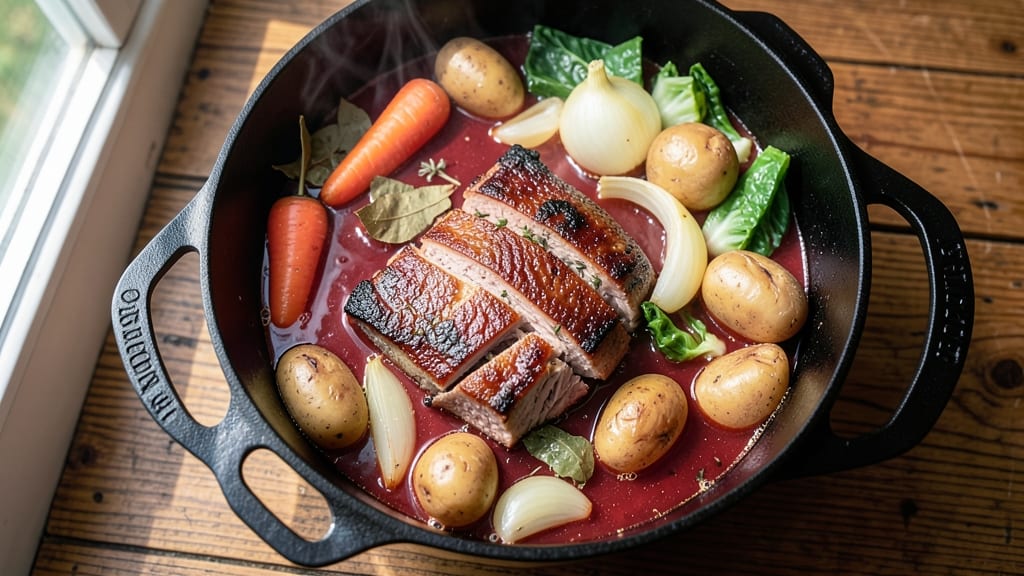
Corned beef brisket boil transforms a tough cut into melt-in-your-mouth perfection with a crispy bark and deep, spiced flavors that’ll fill your kitchen with nostalgia. This traditional method—slow-braised in a flavorful liquid—has been my go-to for St. Patrick’s Day and beyond, delivering restaurant-quality results at home. The secret lies in patience: letting the meat tenderize over hours while the spices infuse every bite.
What sets this recipe apart is the balance of technique and simplicity. You’ll start with a foolproof spice rub that clings to the brisket, then slow-cook it until fork-tender while maintaining that coveted crispy exterior.
The traditional sides—cabbage, carrots, and potatoes—absorb the rich broth, turning them into flavorful companions. No fancy equipment needed, just time and attention to detail.
By the time you’re done, you’ll have a brisket so tender it nearly falls apart, with a crispy bark that crackles with every bite. The aroma alone will have everyone gathering around the table, while the meat delivers layers of smoky, savory, and slightly sweet flavors.
This is comfort food at its finest—perfect for celebrations or a cozy Sunday dinner.
The best part? Leftovers reheat beautifully, making this a meal that feeds a crowd and keeps giving. Whether you’re hosting or treating yourself, this recipe delivers professional-quality results with minimal effort. Let’s get started—your kitchen will thank you.
Ingredients for corned beef brisket boil
Six core ingredients transform tough brisket into restaurant-quality melt-in-your-mouth perfection with crispy bark.
| Ingredient | Amount | Notes |
|---|---|---|
| Corned Beef Brisket 🥩 | 4 lb | Whole pack, 4-5 lb preferred |
| Yellow Onions 🧅 | 2 whole | Medium size, sliced into wedges |
| Carrots 🥕 | 4 lb | Whole, unpeeled, trimmed |
| Russet Potatoes 🥔 | 4 lb | Whole, unpeeled, scrubbed |
| Green Cabbage 🥬 | 1 whole | Medium head, cut into wedges |
| Bay Leaves 🌿 | 4 whole | Dried, standard size |
| Garlic Cloves 🧄 | 6 cloves | Whole, peeled, smashed |
| Black Peppercorns 🌶️ | 1 tbsp | Whole, lightly crushed |
| Mustard Seeds 🌿 | 1 tsp | Yellow, whole |
| Salt 🧂 | 2 tbsp | Diamond Crystal kosher |
| Brown Sugar 🍯 | 1 tbsp | Light or dark |
| Apple Cider Vinegar 🍎 | ½ cup | Bottled, unfiltered preferred |
| Water 💧 | 12 cups | Filtered, room temperature |
| Beef Broth 🍲 | 2 cups | Low-sodium, homemade or store-bought |
The brisket is non-negotiable—4-5 lb packs from Costco or your butcher deliver the best results. Look for good marbling, not too lean. I always grab mine from Whole Foods when I want that extra-rich flavor. The corned beef pack comes with its own spice blend, but we’re boosting it with extra bay leaves, peppercorns, and mustard seeds for depth. Pro tip: if your brisket has a thick fat cap, leave it on—it renders beautifully during cooking and adds flavor to the broth. The sides? Organic carrots and potatoes from the store’s produce section hold up best—their skins stay intact even after hours of boiling.
No corned beef pack? Substitute a 4-lb beef brisket and make your own corning mix with salt, brown sugar, mustard seeds, and a splash of vinegar (let it cure overnight). Short on carrots? Turnips or parsnips work too, but they’ll have a slightly different texture. The cabbage is traditional, but Napa cabbage or Brussels sprouts add variety. For the broth, low-sodium is key—you’re adding salt anyway. The apple cider vinegar? White vinegar in a pinch, but it’ll lack that subtle sweetness. And if you’re feeling lazy, skip the extra spices—the pack’s seasoning is already solid, but we’re taking it to the next level.
This reheats like a dream—3-4 days in the fridge, 3 months frozen. I portion the brisket into slices and store it separately from the broth and veggies. The broth? Freeze it in ice cube trays for easy portions—perfect for soups or gravies later. The veggies? They’re best eaten fresh, but you can reheat them gently in the broth if you’re craving leftovers. For that crispy bark, baste the brisket with its own juices in the last 30 minutes of cooking—worth the extra minute.
Why You'll Love This Recipe
- One-Pot Magic: I swear by this recipe because it’s literally dump-and-go. Toss the brisket, onions, carrots, and potatoes into a pot with the spices, cover it with water, and let it simmer. No chopping skills required—just rough cuts work fine. By the time the potatoes are tender, the brisket falls apart like it’s been slow-cooked all day.
- Salty-Sweet Symphony: That first bite? Chef’s kiss. The brisket soaks up the corned beef spices until it’s tender and packed with flavor, while the onions caramelize just enough to add a deep, sweet crunch. The cabbage softens into something almost buttery, and the carrots stay crisp—like a hug in your mouth.
- Leftovers for Days: Between us, this makes way more than I can eat in one sitting. I’ll be real: I make a big batch on Sunday, and by Wednesday, I’m still reheating it for lunch. The flavors only get better as it sits, and the brisket shreds so easily for sandwiches or tacos. No sad leftovers here—just happy seconds.
- Budget Feast: Honestly, this is my go-to when I need to feed a crowd without breaking the bank. A whole brisket, a few veggies, and some spices stretch into enough meals for a week. Plus, the cabbage and potatoes bulk it up so everyone leaves the table full—no one complains about the cost.
Step-by-step instructions for slow-braised corned beef brisket
Here's how to transform tough brisket into melt-in-your-mouth perfection with that coveted crispy bark.
Prepare the Brisket and Vegetables
Begin by thoroughly rinsing the 4 lb corned beef brisket under cold water to remove any excess curing salts. Pat it completely dry with paper towels—this step is non-negotiable for crispy bark. Place the brisket in a large Dutch oven or heavy pot that can handle 3-4 quarts of liquid.
Peel and trim the 4 lb carrots, leaving the root end intact for stability. Slice the 2 whole yellow onions into 8 wedges each. Cut the 1 whole green cabbage into 8 wedges, keeping the core intact. Scrub the 4 lb russet potatoes clean but leave them whole. Arrange these vegetables in a single layer around the brisket in the pot, creating a protective barrier that will help tenderize the meat.
Build the Flavor Base
In a small bowl, combine the 6 cloves garlic cloves (lightly smashed), 1 tbsp black peppercorns (lightly crushed), 1 tsp mustard seeds, 2 tbsp salt, 1 tbsp brown sugar, and 0.5 cup apple cider vinegar. This aromatic blend will infuse the meat with complex flavors as it braises. Add the 4 whole bay leaves to the pot as well.
Pour in the 12 cups water and 2 cups beef broth, ensuring all the vegetables and brisket are submerged. The liquid should cover the brisket by at least 2 inches. Bring the mixture to a gentle boil over medium-high heat, then immediately reduce to a low simmer. The surface should have just a few small bubbles breaking through—this prevents toughening the meat.
Braise Until Fork-Tender
Cover the pot and maintain a steady low simmer for 3 hours. Here's the thing—you want the liquid to reduce gradually, concentrating flavors but not boiling violently. After 3 hours, check the brisket's tenderness by inserting a fork into the thickest part. If it slides in easily with minimal resistance, it's ready. If not, continue simmering for another 30-60 minutes, adding a splash of water if needed to keep the brisket submerged.
During the last 30 minutes of cooking, increase the heat to medium and uncover the pot. This exposes the brisket to direct heat, allowing the surface to develop that coveted crispy bark. The edges should turn golden brown and slightly caramelized—this is your signal that the exterior is transforming from rubbery to irresistibly crisp.
Rest and Serve
Once the brisket reaches fork-tenderness and develops crispy edges, remove it from the pot and transfer to a cutting board. Tent loosely with aluminum foil and let it rest for 15 minutes. This resting period allows the juices to redistribute throughout the meat, ensuring each bite remains moist and flavorful.
While the brisket rests, skim any excess fat from the braising liquid and return the vegetables to the pot. Simmer uncovered for another 10 minutes to thicken the sauce slightly. Carve the brisket against the grain into ¼-inch slices and serve with the crispy vegetables and rich braising liquid. The contrast of tender, crispy-edged meat with the silky vegetables creates an unforgettable dining experience.
Pro Tips For Making Corned Beef Brisket Boil
- Boil It Twice: Start with a rolling boil for 10 minutes to purge the brisket of excess salt and spices—this keeps the broth from tasting like a pickle jar. Then lower to a simmer. I learned this the hard way when my first batch turned out too briny, and now the flavors balance perfectly.
- Peel Those Potatoes: Skip the peeling if you’re in a hurry, but if you want that restaurant-quality look, pare the potatoes after they’ve cooked. The skins soften beautifully and add texture—no one notices if they’re slightly imperfect, and you save 15 minutes of prep.
- Don’t Crowd the Pot: Packing the pot too tight with veggies and meat traps steam, turning your carrots and potatoes into mush. Leave at least an inch of space between everything—this guarantees even cooking and keeps the cabbage crisp instead of soggy.
- Save the Broth: Strain the cooking liquid through a fine-mesh sieve and reserve it. It’s liquid gold for gravy, mashed potatoes, or even a quick sauce—just reduce it by half on the stovetop. I used to dump it, then realized it’s the star of the next meal.
Creative variations of this corned beef brisket boil
Irish-Style Boil
This is the traditional take you’ll find in Irish pubs, where the brisket is boiled alongside green cabbage, carrots, and potatoes until fork-tender. The key difference? Skip the vinegar and boost the spices with 1 tbsp whole juniper berries and 2 tsp coriander seeds tied in cheesecloth.
The juniper adds a piney depth that’s quintessential for St. Patrick’s Day. Serve with buttered soda bread and a pint of Guinness for authenticity. 🍀
Jewish Delicatessen Twist
For a New York-style deli experience, add 1 cup sauerkraut and 2 tbsp caraway seeds to the pot during the last 30 minutes of cooking. The tangy sauerkraut and caraway mimic the flavors of classic pastrami.
Slice the brisket thin, pile high on rye bread, and top with mustard and pickles for a sandwich that’ll transport you to the Big Apple. 🥪
Smoky BBQ Fusion
Infuse your brisket with smoky depth by adding 2 tbsp smoked paprika and 1 tbsp chipotle powder to the spice blend. In the last 30 minutes, glaze the brisket with ½ cup BBQ sauce (I love Sweet Baby Ray’s Original).
Serve with cornbread and collard greens for a Southern-inspired mashup. The smoky-sweet contrast is pure magic. 🔥
Asian-Inspired Glaze
Swap the vinegar for ½ cup soy sauce and add 1 tbsp grated ginger and 2 cloves minced garlic to the braising liquid. In the final 20 minutes, brush the brisket with a glaze of ¼ cup hoisin sauce and 1 tbsp honey.
Garnish with scallions and sesame seeds for a fusion dish that’s bold and unexpected. 🌶️
Slow-Cooker Shortcut
For hands-off cooking, transfer everything to a 6-quart slow cooker and cook on low for 8 hours. The slow cooker’s gentle heat keeps the meat tender without overcooking the veggies.
Add 1 cup apple juice to the liquid for extra sweetness, and finish with a sprinkle of fresh parsley. Perfect for busy days—just press a button and let it work its magic. ⏰
Spicy Cajun Kick
Kick up the heat with 1 tbsp cayenne pepper and 1 tsp smoked cayenne in the spice blend. Add 1 cup diced bell peppers and 1 diced jalapeño to the pot.
Serve with cornbread and a side of cooling avocado slices to balance the fire. This Louisiana-inspired version is a crowd-pleaser for spice lovers. 🌶️
Nutrition facts
Frequently asked questions
Why does the brisket need to be submerged in liquid?
Submerging the brisket ensures even cooking and prevents it from drying out. The liquid helps break down collagen in the meat, creating that signature tender texture. Aim for at least 2 inches of liquid coverage—this keeps the brisket moist while infusing it with flavor from the vegetables and spices.
Can I use a regular pot instead of a Dutch oven?
Yes, but a Dutch oven is ideal because its heavy base distributes heat evenly, preventing hot spots that can toughen the meat. If using a regular pot, choose one with a tight-fitting lid and monitor the simmer closely to avoid boiling. A 6-quart pot works well for a 4 lb brisket.
How do I know when the brisket is fully cooked?
The brisket is done when it reaches an internal temperature of 203°F and is fork-tender. Insert a fork into the thickest part—if it slides in easily with minimal resistance, it’s ready. The edges should also develop a crispy, caramelized bark.
What if my brisket isn’t tender after 3 hours?
Don’t rush it! Extend the cooking time by 30-60 minutes and add a splash of water if the liquid evaporates. The key is patience—low and slow is what transforms tough brisket into melt-in-your-mouth perfection. If it’s still tough, check your heat level: it should be a gentle simmer, not a rolling boil.
Can I make this recipe in an Instant Pot?
Use the High Pressure setting for 60 minutes, then switch to Sauté mode for the last 10 minutes to crisp the bark. Add 1 cup extra liquid to account for pressure cooking. The Instant Pot speeds up the process while keeping the meat tender and flavorful.