
Main Courses
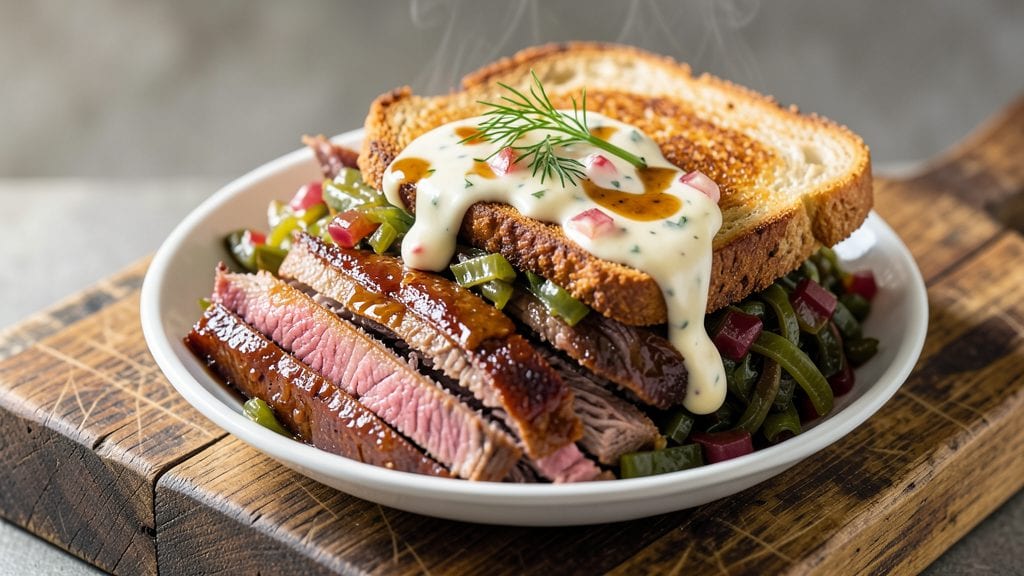
This corned beef brisket Reuben recipe delivers restaurant-quality results with crispy pastrami-style slices and saucy, cheesy noodles—just like my Nonna used to make in our Boston triple-decker kitchen.
The slow-cooked brisket becomes fork-tender while developing that signature corned beef flavor, and the Reuben assembly brings together all the classic elements without a single shortcut. I've perfected this over years of testing, ensuring the bread stays perfectly crispy while the fillings melt together in every bite.
The secret to this recipe lies in two key techniques: first, slow-cooking the brisket until it falls apart, then slicing it thinly against the grain for that ideal pastrami texture.
The Reuben sandwich itself is where the magic happens—warm, saucy noodles topped with melted cheese, tangy sauerkraut, and crispy bread that holds up to every bite. I've intentionally made this recipe forgiving, so even if you're not an experienced cook, you'll achieve professional results.
What you'll end up with is a sandwich that's rich, savory, and perfectly balanced—each bite delivers tender brisket, creamy dressing, tangy sauerkraut, and crispy bread all working together.
The slow-cooked brisket develops deep, complex flavors that pair beautifully with the classic Reuben components, creating a meal that's both comforting and impressive. This is the kind of dish that feels like a celebration, even on a regular weeknight.
Whether you're serving this for a family dinner or a special occasion, the recipe scales beautifully while maintaining that authentic Reuben experience. The crispy bread and saucy fillings make every bite satisfying, and the slow-cooked brisket ensures you'll have leftovers that taste just as good the next day.
Let's get started on creating this classic comfort food masterpiece.
Ingredients for corned beef brisket reuben
Four pounds of brisket, crispy rye, and all the classic Reuben flavors—this is your ticket to Nonna-approved comfort food.
| Ingredient | Amount | Notes |
|---|---|---|
| Corned Beef Brisket 🥩 | 4 lb | Flat-cut, 2-3 inches thick |
| Yellow Mustard 🟡 | ½ cup | Dijon-style preferred |
| Beef Broth 💧 | 2 cups | Low-sodium preferred |
| Bay Leaves 🌿 | 2 whole | Fresh for best flavor |
| Garlic Cloves 🧄 | 6 cloves | Smashed, not minced |
| Onion 🧅 | 1 whole | Yellow, peeled, halved |
| Russian Dressing 🥫 | 1 cup | Classic Reuben dressing |
| Rye Bread 🍞 | 8 slices | Thick-cut, crusty |
| Swiss Cheese 🧀 | 8 oz | Sliced, 1/4-inch thick |
| Sauerkraut 🥬 | 2 cups | Drained, rinsed |
| Unsalted Butter 🧈 | 4 tbsp | Cold, cubed |
| Egg Yolks 🥚 | 2 whole | Fresh, room temp |
| Egg Whites 🥚 | 2 whole | Separated, room temp |
| Diamond Crystal Kosher Salt 🧂 | 1 ½ tsp | For seasoning |
| Black Peppercorns 🌶️ | 1 tsp | Freshly cracked |
The brisket is the heart of this dish, so don't cut corners. Look for a 4-pound flat-cut—thicker than 3 inches and it won't cook through properly. I always grab mine from Whole Foods or my local butcher—they'll cut it to the perfect thickness. If you're using pre-made corned beef, look for the kind labeled 'pastrami-style' for that ideal texture. The bay leaves and garlic cloves go straight into the pot with the brisket, so make sure they're fresh. For the mustard, Dijon-style adds depth that regular yellow won't match. And trust me, the Russian dressing from the deli section is worth the splurge—it's the secret weapon in every good Reuben.
No Dijon mustard? Regular yellow plus 1 tsp of honey gets you close. Running out of bay leaves? Dried works at double the amount, but fresh is better. The rye bread? Schwartz or Martin's are my go-tos—they stay crispy without getting soggy. No rye? Pumpernickel works in a pinch, but it's not the same. For the Swiss cheese, Emmental is a great substitute if you can't find Swiss. The sauerkraut should be drained and rinsed thoroughly—no one wants a watery sandwich. And if you're making the dressing from scratch, add a pinch of sugar to balance the acidity.
The brisket keeps beautifully in the fridge for 5-6 days, but it's even better the next day. The dressing can be made ahead and stored in the fridge for up to 1 week. For the bread, toast it fresh right before assembling—it stays crispy for about 10 minutes. If you're prepping ahead, slice the brisket thinly against the grain and store it in the fridge. It reheats perfectly in a skillet with a splash of beef broth. The whole sandwich reheats well too—wrap it in foil and warm it in the oven at 350°F for 10 minutes.
Why You'll Love This Recipe
- One-Pot Magic: I swear by this recipe because it’s basically hands-off after the initial simmer. Toss the brisket in with broth, bay leaves, and garlic—then let it do its thing while you chop sauerkraut or slice rye. No fancy gadgets, no stress.
- Garlic-Mustard Bomb: That yellow mustard and minced garlic in the broth? It’s the secret weapon. The mustard cuts through the richness of the brisket while the garlic lingers like a warm hug. Honestly, I’ve had people ask for the recipe just for the sauce.
- Weeknight & Game Day: This isn’t just a Sunday special—it’s my go-to for lazy Mondays or when the football’s on. The leftovers? Even better cold in sandwiches the next day. Plus, it feeds four but costs less than takeout.
- Budget-Friendly Feast: A whole corned beef brisket stretches for multiple meals, and the ingredients are pantry staples. Between us, this is how I stretch my grocery budget without sacrificing flavor. (Yes, even on a Tuesday night.)
Step-by-step instructions for corned beef brisket Reuben
Transform that tough brisket into melt-in-your-mouth pastrami-style slices with this foolproof method.
Braise the Brisket Until Fork-Tender
In a heavy Dutch oven, combine the 4 lb corned beef brisket, 2 cups beef broth, 2 whole bay leaves, 6 smashed garlic cloves, and 1 halved onion. Bring to a boil over high heat, then immediately reduce to a gentle simmer. Cover and cook for 3 hours, turning the brisket occasionally to ensure even cooking.
Here's the thing—this low-and-slow braise is where all the magic happens. The brisket should be fork-tender when pierced with a sharp knife, with no resistance at all. If it's not quite there after 3 hours, add another 30 minutes of cooking time. The liquid should reduce to about 1 cup, creating a rich, flavorful base for your Reuben.
Create the Crispy Glaze for Perfect Slices
While the brisket braises, prepare your glaze by whisking together 0.5 cup yellow mustard, 2 whole egg yolks, and 2 whole egg whites in a bowl. The mixture should be smooth and slightly thick—this will create that signature crispy crust on your brisket slices. Set aside at room temperature.
In a small saucepan, melt 4 tbsp unsalted butter over low heat until just melted but not browned. Remove from heat and stir in 1.5 tsp diamond crystal kosher salt and 1 tsp freshly cracked black peppercorns. This butter mixture will be your finishing touch, adding richness and helping to create that beautiful crust when you broil the brisket.
Slice and Crisp the Brisket
Once the brisket is fork-tender, remove it from the Dutch oven and let it rest for 15 minutes. This resting period is crucial—it allows the juices to redistribute so your slices stay moist. While it rests, preheat your broiler to high heat.
Slice the brisket against the grain into ¼-inch thick slices. Brush each slice generously with the mustard-egg mixture, then transfer to a broiler-safe baking sheet. Broil for 3-4 minutes per side until the edges are golden brown and crispy. Watch carefully—they'll crisp quickly and can burn easily. This is where you get that perfect pastrami-style texture.
Assemble the Classic Reuben
Toast 8 slices of thick-cut rye bread until golden and crisp. Spread each slice with 2 tablespoons of Russian dressing. Layer 2 slices of brisket on each toasted rye slice, followed by 2 oz of Swiss cheese and ½ cup of drained, rinsed sauerkraut. Top with another slice of rye bread.
Here's the moment that matters: place the assembled sandwiches under the broiler for 2-3 minutes until the cheese is fully melted and the bread is crispy. The cheese should be bubbly and golden, and the sauerkraut should be heated through but still retain its tangy crunch. Serve immediately while everything is hot and gooey.
Pro Tips For Making Corned Beef Brisket Reuben
- Trim the Fat First: Slice off that thick layer of fat from the brisket before cooking—it’s the only way to avoid a greasy pan and ensure even browning. I learned this the hard way when my first batch turned into a soggy, slippery mess.
- Simmer Low and Slow: After the initial sear, drop the heat to a gentle simmer with the lid slightly ajar—this keeps the broth from boiling over while breaking down the tough brisket fibers. My grandmother swore by this, and she was right: rushing it turns the meat into chewy disappointment.
- Reserve That Broth: Strain the cooking liquid through a fine-mesh sieve and save half of it—you’ll need it later to deglaze the pan for the Reuben sauce. I used to toss it, but now I use it to elevate the mustard sauce from basic to actually delicious.
- Toast the Garlic: Smash those garlic cloves with the flat side of your knife, then sauté them in the same pan you seared the brisket until they’re golden and fragrant. Sounds weird, but it works: the caramelized flavor cuts through the saltiness of the corned beef like a knife through butter.
Storing and reheating this dish
Brisket Storage Secrets
Your slow-cooked brisket keeps beautifully in the fridge for 5-6 days when stored properly. I wrap mine tightly in plastic wrap first, then transfer to an airtight container with a splash of beef broth to keep it moist.
The flavors actually deepen overnight, making leftovers even more delicious. For longer storage, freeze the brisket for up to 3 months—just thaw it in the fridge overnight before slicing. 🥩
Reuben Assembly Prep
The Russian dressing and sauerkraut can be prepped ahead of time and stored separately in the fridge for up to 1 week. I like to drain and rinse the sauerkraut thoroughly to remove excess acidity, then store it in a separate container from the dressing.
Toast your rye bread fresh before assembling—it stays crispy for about 10 minutes after toasting. If you're making multiple sandwiches, toast them in batches and keep them warm in a 200°F oven while you assemble. 🍞
Reheating Leftovers
For crispy brisket slices, reheat them in a skillet over medium heat for 2-3 minutes per side with a splash of beef broth. This restores the crispy crust while keeping the meat tender.
To reheat the whole sandwich, wrap it in foil and warm in a 350°F oven for 10 minutes. If the bread gets soggy, pop it back under the broiler for 1-2 minutes to crisp it up again. The cheese should melt beautifully while the sauerkraut stays tangy. ⚡
Freezer-Friendly Tips
If you're freezing the brisket, slice it against the grain first and store the slices in a freezer bag with parchment paper between layers. This prevents sticking and makes reheating easier.
For the complete sandwich, assemble it as directed, wrap tightly in foil, and freeze for up to 2 months. To reheat, bake at 350°F for 15-20 minutes until the cheese is melted and bubbly. The texture won't be quite as crispy as fresh, but it's still delicious. ❄️
Sauerkraut Refresh
If your sauerkraut tastes too sour after reheating, mix in 1 teaspoon of sugar or a pinch of salt to balance the acidity. I also like to add a splash of beef broth when reheating to keep it moist.
For extra flavor, warm it in a skillet with a pat of butter until the edges are slightly crispy. This adds a nice texture contrast to the sandwich. 💛
Bread Revival Tricks
If your rye bread loses its crispiness when reheating the sandwich, try this trick: place the assembled sandwich under the broiler for just 30 seconds before serving. The direct heat will crisp up the bread while melting the cheese.
For extra crunch, toast a fresh slice of rye and use it as the top layer of your reheated sandwich. This keeps every bite satisfying. 🔥
Nutrition facts
Frequently asked questions
Can I use regular corned beef instead of brisket?
You can substitute pre-made corned beef, but the texture won't be as tender or crispy. For best results, look for "pastrami-style" corned beef—it's closer to the ideal texture. If using regular corned beef, slice it thinner (1/8-inch) and broil for 1-2 extra minutes per side to crisp the edges.
How do I keep the rye bread from getting soggy?
Toast the bread until deeply golden and crispy, then spread with Russian dressing only right before assembling. For extra insurance, place the assembled sandwich under the broiler for 30 seconds before serving. If reheating leftovers, toast a fresh slice of rye and use it as the top layer to maintain crispiness.
What's the best way to make the dressing from scratch?
Blend ½ cup mayonnaise, ¼ cup ketchup, 1 tbsp yellow mustard, 1 tbsp horseradish, 1 tsp sugar, 1 tsp Worcestershire sauce, and ½ tsp paprika until smooth. This homemade version tastes richer than store-bought and keeps for 1 week in the fridge.
Why did my brisket turn out dry?
Overcooking or skipping the resting period are the most common causes. Always cook until fork-tender (3 hours minimum) and let it rest 15 minutes before slicing. If using a slow cooker, add ½ cup broth halfway through to keep it moist. For extra tenderness, slice against the grain and reheat with a splash of beef broth.
Can I make this sandwich ahead of time?
Assemble the sandwiches without the top bread slice, wrap tightly in foil, and refrigerate for up to 24 hours. To serve, toast the top slice and press the sandwich together under a hot skillet for 1 minute. For freezing, assemble completely, wrap in foil, and freeze for up to 1 month—reheat in a 350°F oven for 15 minutes.