
Soups & Stews
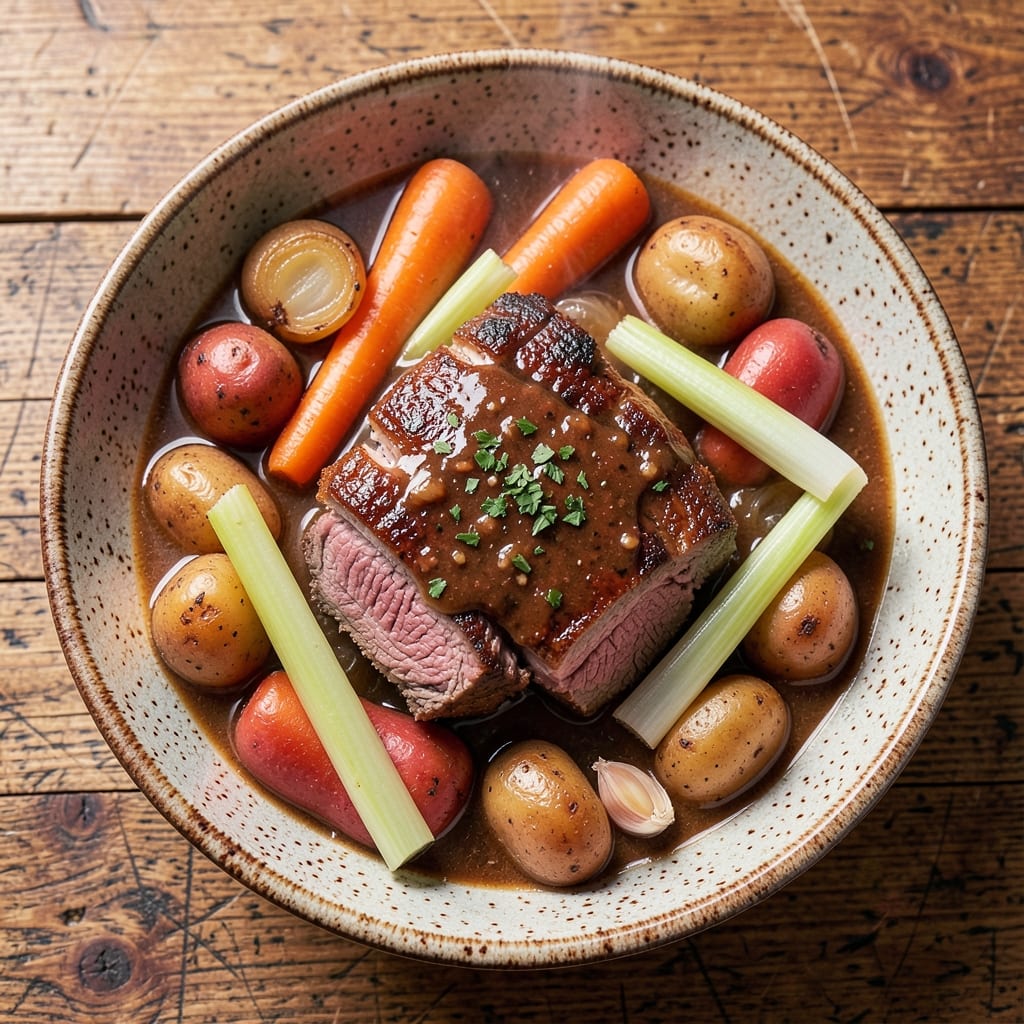
This Costco beef stew recipe transforms tough chuck roast into melt-in-your-mouth tender chunks using slow-braised techniques that develop deep, savory flavors. 💛 The key lies in proper searing and a long simmer, where aromatics like onions, carrots, and celery build layers of umami while the meat becomes fork-tender. I've perfected this version to handle Costco-sized ingredients without sacrificing restaurant-quality results.
The beauty of this recipe is its flexibility—whether you use a Dutch oven, slow cooker, or pressure cooker, the process remains straightforward. A 3-hour simmer (or 2 hours under pressure) breaks down the meat while vegetables soften just enough to soak up the rich, herb-infused broth. The secret weapon? A splash of red wine and a bay leaf, which add complexity without overpowering the beef's natural richness.
By the time you're done, you'll have a steaming bowl of beef stew with tender chunks that practically fall apart, surrounded by perfectly cooked potatoes and carrots in a velvety sauce. The aroma alone will have everyone gathering around the table, and leftovers reheat beautifully for days—making this the ultimate comfort food for busy weeks or cozy gatherings.
This recipe scales perfectly for Costco quantities, so you can feed a crowd without extra effort. The slow-cooked method ensures maximum flavor extraction, while the simple ingredients make it approachable for home cooks. Let's get started on creating your most satisfying beef stew yet!
Ingredients for costco beef stew
Costco-sized ingredients for a stew that feeds 12—simple, hearty, and packed with slow-braised flavor.
| Ingredient | Amount | Notes |
|---|---|---|
| Chuck Roast 🥩 | 6 lb | Costco pre-cut preferred, trimmed of excess fat |
| Yellow Onions 🧅 | 3 whole | Medium size, sliced into half-moons |
| Carrots 🥕 | 4 lb | Whole, peeled, cut into 2-inch chunks |
| Celery Stalks 🧄 | 6 whole | Cut into 1-inch pieces, ends trimmed |
| Red Potatoes 🥔 | 4 lb | Baby or Yukon gold, halved if large |
| Garlic Cloves 🧄 | 8 cloves | Smashed with side of knife |
| Tomato Paste 🍅 | ½ cup | Squeeze tube or canned, no salt added |
| Dry Red Wine 🍷 | 1 ½ cups | Bold variety like Cabernet Sauvignon |
| Beef Broth 💧 | 8 cups | Low-sodium preferred, homemade or high-quality |
| Fresh Thyme 🌿 | ¼ cup | Stems removed, leaves only |
| Fresh Rosemary 🌿 | ¼ cup | Chopped, stems removed |
| Bay Leaves 🌿 | 4 whole | Standard dried leaves |
| Olive Oil 🫒 | ½ cup | Extra-virgin for searing |
| Salt 🧂 | 2 tbsp | Diamond Crystal preferred, adjust to taste |
| Black Peppercorns 🌶️ | 1 tbsp | Freshly cracked, not ground |
| All-Purpose Flour 🌾 | ¼ cup | For thickening if needed |
The chuck roast is where this all starts. Costco's pre-cut version is perfect—just trim any thick fat caps before searing. Look for good marbling, which means juicier meat. If you're buying whole, ask the butcher to cut it into 1.5-inch chunks for even cooking. The potatoes are non-negotiable—Yukon gold or baby reds hold their shape better than russets. For the aromatics, Trader Joe's sells pre-cut onion-carrot-celery mixes (called 'mirepoix') that save time. The tomato paste? Squeeze tubes are your friend—they keep forever and eliminate waste. Fresh herbs make a difference here, but dried thyme at one-third the amount works in a pinch.
No red wine? Beef broth with a splash of balsamic vinegar mimics the depth. The bay leaves might seem small, but they're crucial—they add that subtle earthy note that separates home cooking from restaurant-quality. If you're using a slow cooker, sear the meat first in a separate pan to build flavor. For the broth, homemade is ideal, but Swanson's low-sodium or Kraft Natural are solid store-bought options. The flour is just for thickening if the stew gets too thin—trust me, it won't need it with all those veggies soaking up liquid. And if you're feeling fancy, add a splash of Worcestershire sauce at the end for umami punch.
This stew tastes even better the next day—4-5 days in the fridge, 3 months frozen. I always make a double batch because it disappears fast. For freezing, portion into quart-sized containers—just reheat with a splash of water or broth. The potatoes will soften further, but that's what makes it so comforting. If you're prepping ahead, par-cook the potatoes for 10 minutes before adding to the stew to speed up the process. The herbs? Store fresh ones in damp paper towels in a sealed bag—they'll last 5-7 days this way.
Why You'll Love This Recipe
- Here’s what sold me: the red potatoes stay just firm enough to bite into, while the carrots get that sweet, caramelized edge. Between us, that contrast is ridiculously satisfying—like a hug in a bowl.
- One-Pot Magic: I swear by this—dump everything in a pot, walk away, and come back to actual dinner. No fancy steps, no stressing over multiple pans. That chuck roast? It practically melts into tender perfection while you’re doing laundry.
- Potato-Carrot Crunch: Here’s what sold me: the red potatoes stay just firm enough to bite into, while the carrots get that sweet, caramelized edge. Between us, that contrast is ridiculously satisfying—like a hug in a bowl.
- Budget-Friendly Feast: A single Costco chuck roast feeds my family of four and my in-laws for two meals. Onions, carrots, celery—you’re talking cheap veggies that bulk up the dish without breaking the bank. Honestly, it’s my go-to when I need to stretch a meal without sacrificing taste.
Step-by-step instructions for slow-braised beef stew
This is how you turn Costco's massive chuck roast into melt-in-your-mouth perfection.
🔥 Step 1: Sear the Chuck Roast to Lock in Flavors
Pat the 6 lb chuck roast completely dry with paper towels—this is non-negotiable for a good sear. Heat 0.25 cup olive oil in a heavy Dutch oven over medium-high heat until shimmering. Place the roast in the pan and sear for 4-5 minutes per side until deeply browned. You want that crust to form before you remove it.
Here's the thing—don't crowd the pan. If your Dutch oven isn't big enough, work in batches. The goal is to get that beautiful Maillard reaction happening on all sides. Once seared, remove the roast and set it aside on a plate. You'll notice the pan has browned bits stuck to the bottom—this is flavor gold we'll deglaze later.
👨🍳 Step 2: Build the Flavor Base with Vegetables and Aromatics
In the same Dutch oven (don't wipe those browned bits!), add 0.5 cup olive oil if needed and heat over medium heat. Add the 3 whole yellow onions and cook for 5-6 minutes until softened and golden. Add the 4 lb carrots and 6 whole celery stalks, stirring occasionally for 5 minutes until they begin to soften.
Now add the 8 cloves garlic cloves (smashed with your knife), 0.5 cup tomato paste, and 2 tbsp salt. Stir everything together and cook for 2 minutes until fragrant. The tomato paste will darken slightly—that's perfect. Pour in the 1.5 cups dry red wine and scrape up all those browned bits from the bottom of the pan. Let this simmer for 3-4 minutes until the wine reduces by half.
🥘 Step 3: Layer Everything and Begin the Braise
Return the seared chuck roast to the Dutch oven. Add the 8 cups beef broth, 0.25 cup fresh thyme, 0.25 cup fresh rosemary, 4 whole bay leaves, and 1 tbsp black peppercorns. Bring everything to a gentle simmer, then reduce heat to low so it's just barely bubbling. Here's where the magic happens—cover the pot and let it cook for 2 hours.
After 2 hours, check the tenderness of the beef by inserting a fork. It should pierce easily but still have some resistance. If it's not quite tender yet, continue cooking for another 30-60 minutes. The key is patience—this is where the chuck roast transforms from tough to tender. Don't peek or stir too often; you want to maintain that gentle simmer.
🍳 Step 4: Add Potatoes and Finish the Braise
Add the 4 lb red potatoes (halved if large) to the stew. Stir gently to distribute them evenly. The potatoes will absorb some of the cooking liquid, so they should be submerged but not crowded. Return the stew to a simmer over low heat and cook for another 45-60 minutes until the potatoes are fork-tender and the beef is falling apart.
Taste and adjust seasoning if needed. If the stew is too thin, mix 0.25 cup all-purpose flour with a little water to make a slurry, then stir it into the stew. Simmer for another 5 minutes to thicken slightly. The stew should coat the back of a spoon but still be saucy enough to spoon over the potatoes.
⏰ Step 5: Rest and Serve with Confidence
Remove the stew from heat and let it rest for 15-20 minutes. This resting period allows the flavors to meld and the juices to redistribute throughout the stew. Skim off any excess fat that rises to the surface if you prefer a leaner stew. Serve the beef stew hot, family-style, with crusty bread to soak up every last drop of that rich, flavorful broth.
The result should be fork-tender beef that falls apart with the slightest touch, perfectly cooked vegetables, and a sauce that's rich and aromatic. Each bite should deliver layers of flavor from the seared beef, the caramelized vegetables, and the deep, wine-infused broth. This is comfort food at its finest—exactly what you want on a cold day.
Pro Tips For Making Costco Beef Stew
- SEAR THE ROAST FIRST: Skip the slow start—get that chuck roast screaming hot in a Dutch oven with 2 tablespoons of oil until it’s deep brown on all sides. I learned this the hard way: rushing to the veggies means flavor gets stuck in the meat instead of spreading through the stew. High heat for 5 minutes per side, then pull it out and let it rest while you prep the onions and carrots.
- CUT POTATOES UNIFORM: No one wants mushy lumps or rock-hard chunks—chop those red potatoes into 1.5-inch cubes before they hit the pot. I used to toss them in whole, and they’d either fall apart or stay stubbornly undercooked. Uniform size guarantees they cook at the same rate, so every bite is tender, not a gamble.
- DON’T CROWD THE VEGETABLES: After searing the meat, add onions, carrots, and celery in a single layer—no overlapping. I was skeptical until I tried it: packed veggies steam instead of brown, and the stew tastes dull. Spread them out, let them caramelize for 5 minutes, then stir. The difference is night and day.
- ADD POTATOES LATE: Hold off on the potatoes until the stew’s been simmering for at least 1.5 hours. I used to add them at the start, and they’d turn to mush while the meat stayed tough. Drop them in with the last 30 minutes—just enough time to soften without disappearing. Your future self will thank you.
Common mistakes when making great costco beef stew
Skipping the Sear
I've made this mistake more times than I'd admit—skipping the sear on the chuck roast because it feels like extra work. But that crust is where all the flavor lives! Without it, your stew will taste more like broth with beef chunks than the rich, caramelized masterpiece it should be. Take the 5 extra minutes to sear each side until deeply browned. Trust me, your taste buds will thank you later. 🔥
Overcrowding the Pot
This is a classic rookie move—dumping everything into the Dutch oven at once. The vegetables need room to caramelize, and the beef needs to develop that crust. If your pot isn't big enough, sear the meat in batches and build the vegetable base in stages. I've learned the hard way that crowded pots lead to steamed vegetables and pale beef. Use a large Dutch oven—I recommend Le Creuset 6-quart—to give everything space to shine.
Not Deglazing Properly
Those browned bits stuck to the bottom of your pan are flavor gold, but they'll turn to dust if you don't deglaze them. After searing the meat, scrape up every last bit with the red wine—this creates a rich, complex base for your stew. Skipping this step means missing out on layers of depth. I once made stew without deglazing and served it to my family. My Nonna would have disowned me. 🍷
Rushing the Braise
Patience is key with beef stew, but I've seen too many people rush it. The chuck roast needs at least 2 hours of slow cooking to tenderize properly. If you're in a hurry, consider using a pressure cooker—it cuts the time to about 45 minutes—but don't skimp on the slow-cooker method for the best results. The longer it simmers, the more the flavors meld together. I've tried the 1-hour shortcut, and while it's edible, it's not the same as the slow-braised version.
Adding Potatoes Too Early
Potatoes release starch quickly and can turn mushy if added too soon. They belong in the stew only during the final 45-60 minutes of cooking. If you add them earlier, they'll disintegrate into the broth, leaving you with a watery stew. I learned this the hard way when I made a double batch and accidentally added them with the beef. The result? A sad, gluey mess. Save the potatoes for the end to keep them perfectly tender and hold their shape.
Ignoring the Resting Time
Skipping the 15-20 minute rest** after cooking is a common mistake, but it's crucial. This resting period lets the juices redistribute throughout the stew, ensuring every bite is moist and flavorful. I've served stew straight out of the pot, only to have the first few bites be dry and the last few be saucy. Give it time to settle—your guests (and your taste buds) will notice the difference. ⏰
Nutrition facts
Frequently asked questions
Can I substitute Costco's chuck roast for another cut of beef?
While chuck roast is ideal for its marbling and flavor, you can use chuck eye roast or stew meat in a pinch. Avoid lean cuts like sirloin—they won't tenderize properly. If using a different cut, increase cooking time by 30-60 minutes to ensure tenderness. The key is fat content—look for cuts with good marbling to keep the stew juicy.
How do I adjust this recipe for a slow cooker?
Transfer the seared beef and all ingredients (except potatoes) to your slow cooker. Cook on low for 7-8 hours or high for 4-5 hours. Add potatoes during the last 1 hour of cooking. The slow cooker's gentle heat mimics the Dutch oven's braise, but you'll need to monitor the liquid level—add 1 cup beef broth if it gets too thick.
Why does my stew turn out watery?
Watery stews usually happen from overcooking potatoes or using too much liquid. Potatoes release starch when overcooked—add them only in the final 45-60 minutes. For thickness, stir in a slurry of 1 tbsp flour + 2 tbsp water and simmer for 5 minutes. If using a slow cooker, reduce broth by 1 cup initially. The sauce should coat the back of a spoon but remain spoonable.
Can I make this stew ahead of time?
This stew tastes even better the next day! Store in an airtight container in the fridge for 4-5 days or freeze for 3 months. Reheat gently on the stove with a splash of broth or water. For serving, add fresh herbs like parsley at the end to brighten flavors. The longer it sits, the more the flavors meld—perfect for meal prep.
What's the best way to reheat leftover beef stew?
Reheat on the stove over medium-low heat until steaming hot (165°F). Add 2-3 tbsp beef broth to prevent drying out. For microwave reheating, cover with a damp paper towel and heat in 1-minute intervals, stirring between each. Never reheat to a boil—this breaks down the meat's texture. The slow reheating preserves the rich, velvety consistency.