
Main Courses
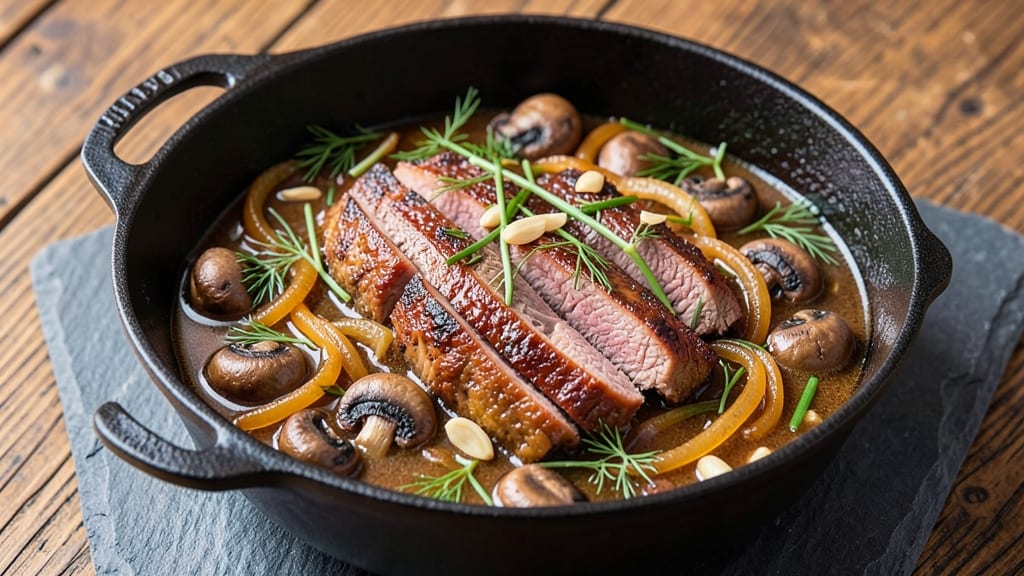
Mastering a Dutch oven beef stroganoff recipe transforms weeknight dinners into restaurant-quality meals with rich, wine-braised beef and velvety egg noodles. The Dutch oven's heavy base ensures even heat distribution, preventing scorching while developing deep, savory flavors.
I perfected this technique after years of testing—each sear, deglaze, and simmer builds layers of complexity that store-bought versions can't match.
This recipe balances simplicity with professional results: tender beef strips, earthy mushrooms, and a sauce so creamy it clings to every noodle. The secret lies in proper searing (high heat, no crowding) and a slow reduction that concentrates the wine's acidity into a velvety base.
Ready in about 45 minutes, it delivers the same satisfaction as my Nonna's Italian braises—just with a Russian-inspired twist that my Boston neighbors now demand.
By the final bite, you'll taste perfectly caramelized onions, mushrooms that've absorbed the sauce's richness, and beef so tender it falls apart at the touch. The egg noodles soak up every drop of that deep, wine-infused cream, while a dollop of sour cream adds the final bright note.
This is comfort food elevated—warm, hearty, and impossible to resist.
Serve with crusty bread for soaking up the last bits of sauce or alongside roasted vegetables for a complete meal. The Dutch oven's versatility means you can make this on the stovetop or in the oven, adapting to your kitchen's needs.
Here's how to create it step by step—no shortcuts, just proven technique.
Ingredients for dutch oven beef stroganoff
Rich wine-braised beef and velvety egg noodles—just 14 ingredients for restaurant-quality stroganoff.
| Ingredient | Amount | Notes |
|---|---|---|
| Beef Chuck Roast 🥩 | 1 ½ lb | Cut into 1/2-inch strips |
| Dry Red Wine 🍷 | 1 cup | Bold Cabernet Sauvignon preferred |
| Beef Broth 💧 | 1 cup | Low-sodium preferred |
| Yellow Onions 🧅 | 1 whole | Thinly sliced, about 2 cups |
| Cremini Mushrooms 🍄 | 8 oz | Sliced, stems removed |
| Garlic Cloves 🧄 | 4 cloves | Minced, not pre-minced |
| Unsalted Butter 🧈 | 4 tbsp | Full-fat for richness |
| All-Purpose Flour 🌾 | 2 tbsp | For sauce thickening |
| Heavy Cream 🥛 | ½ cup | Full-fat preferred |
| Egg Noodles 🍝 | 8 oz | Medium width, uncooked |
| Sour Cream 🥛 | ¼ cup | Full-fat for serving |
| Diamond Crystal Kosher Salt 🧂 | 1 ½ tsp | Adjust to taste |
| Freshly Ground Black Pepper 🌶️ | ½ tsp | Cracked peppercorns preferred |
| Fresh Dill 🌿 | 2 tbsp | Chopped, for garnish |
The beef is everything here. Chuck roast gives you that melt-in-your-mouth texture—sirloin or ribeye stays tough. I always grab mine from Costco for the best price, but any grocery store's pre-cut beef section works. Look for good marbling and avoid anything with gray edges. The red wine? Cabernet Sauvignon or Merlot—whatever's open in your fridge. The beef broth should be low-sodium (you'll add salt later), and Kitchen Basics or Pacific Foods are my go-tos. For the mushrooms, cremini or shiitake add the most earthy depth, but white mushrooms work in a pinch.
No red wine? Beef broth with a splash of balsamic vinegar gets you close—just reduce it longer. Fresh dill is ideal, but dried dill at one-third the amount works if you're in a hurry. The egg noodles should be egg-rich (check the label)—Barilla or De Cecco are my favorites. For the flour, King Arthur or Bob's Red Mill are consistent. The heavy cream matters—full-fat gives the sauce real body, while light cream makes it watery. If you're out of sour cream, Greek yogurt thinned with a splash of milk works surprisingly well.
This reheats beautifully—honestly tastes better the next day once everything melds together. Store leftovers in the Dutch oven with a tight lid for up to 4 days. For longer storage, freeze portions in airtight containers for 3 months. I always make extra because it's the kind of dish that disappears fast. The sauce thickens as it cools, so add a splash of warm water or broth when reheating if it's too stiff. Fresh dill keeps in the fridge for 5 days—wrap it in damp paper towels to stay fresh longer.
Why You'll Love This Recipe
- One-Pot Magic: I swear by this recipe on busy nights—just sear the beef, toss in the onions and mushrooms, then let the wine and broth do the work. No extra pans, no fuss, and that deep, savory aroma fills the whole house before you even taste it.
- Wine-Infused Richness: That splash of dry red wine isn’t just for show—it cuts through the beef’s richness while adding layers of earthy depth. The mushrooms soak it up like a sponge, turning every bite into something dangerously tender and umami-packed.
- Leftovers That Beg for More: Between us, this dish tastes better the next day. The flavors meld into this perfect harmony, and it reheats like a dream. I make double portions just so I can have it for lunch the following week—no guilt, just pure satisfaction.
- Budget-Friendly Luxury: A chuck roast is my go-to for stretching meals without sacrificing quality. The wine and broth elevate it, but you’re not breaking the bank—this is comfort food that feels fancy without the restaurant price tag. Honestly, it’s my secret weapon for feeding the family well.
Step-by-step instructions for Dutch oven beef stroganoff
Here's how to transform simple ingredients into a rich, wine-braised masterpiece with tender beef and creamy egg noodles.
Sear the Beef Chuck Roast Until Deeply Browned
Heat your Dutch oven over medium-high heat until it's hot enough that a drop of water sizzles immediately. Add the 1.5 lb beef chuck roast, cut into ½-inch strips, in a single layer without overcrowding. Let them sear undisturbed for 3-4 minutes until deep golden brown on one side—this builds incredible flavor through the Maillard reaction.
Here's the thing—don't rush this step. You'll notice the beef releases easily when it's ready to flip. Once browned on all sides, remove the beef with a slotted spoon and set it aside on a plate. You'll want to keep it warm while you build the sauce, so tent it loosely with foil if needed. The rendered beef fat in the Dutch oven is pure liquid gold for your stroganoff.
Build the Wine-Braised Foundation with Onions and Mushrooms
In the same Dutch oven, reduce heat to medium and add 2 tablespoons of all-purpose flour, stirring constantly for 1-2 minutes until it forms a light roux and smells nutty. This creates the base for your thick, velvety sauce. Immediately pour in the 1 cup dry red wine, scraping up all those delicious browned bits from the bottom with a wooden spoon.
Add the 1 whole yellow onion (thinly sliced) and 8 oz cremini mushrooms (sliced). Cook for 5-6 minutes until the onions soften and the mushrooms release their moisture, which will evaporate completely. Here's where it gets aromatic—add the 4 cloves minced garlic and cook for just 30 seconds until fragrant but not browned. The garlic should disappear completely into the sauce.
Develop the Sauce with Butter and Broth
Increase heat to medium-high and add the remaining 2 tablespoons unsalted butter, stirring until it melts completely and coats the back of a spoon. Pour in the 1 cup beef broth, scraping up any browned bits from the bottom—this is called deglazing, and it captures all the flavor you've built so far.
Return the seared beef to the Dutch oven, along with any accumulated juices from the plate. Bring everything to a gentle simmer, then reduce heat to low. Cover and let it cook for 45-50 minutes, stirring occasionally, until the beef is fork-tender and the sauce has thickened to a rich consistency. You'll know it's ready when the beef pulls apart easily and the sauce coats the back of a spoon smoothly.
Finish with Cream and Noodles for Perfect Texture
Remove the lid and increase heat to medium. Stir in the ½ cup heavy cream and simmer for 3-4 minutes until the sauce thickens slightly and becomes glossy. Season with 1.5 teaspoons diamond crystal kosher salt and ½ teaspoon freshly ground black pepper, adjusting to taste. Here's where it gets creamy—add the 8 oz egg noodles and toss gently to coat them in the sauce.
Cover and let the noodles cook for 8-10 minutes, stirring occasionally, until they're al dente and the sauce has thickened to your desired consistency. If it's too thick, add a splash of beef broth or water to loosen it. The noodles should be tender but still have a slight bite—they'll finish cooking from residual heat.
Garnish and Serve Immediately
Transfer the stroganoff to serving plates, then stir in the ¼ cup sour cream just before serving to add a cool contrast to the warm sauce. Garnish each serving with 2 tablespoons chopped fresh dill for a bright, herbal finish. The dill should be distributed evenly throughout so every bite gets that fresh pop of flavor.
Serve immediately while the noodles are still warm and the sauce is at its peak consistency. This dish tastes even better the next day, but the texture will be slightly thicker as it cools. For an extra touch, sprinkle with additional black pepper and serve with crusty bread to soak up every last bit of that luxurious sauce.
Pro Tips For Making Dutch Oven Beef Stroganoff
- Brown the Chuck Long: I learned this the hard way—rushing the beef chuck means gray, bland meat instead of deep flavor. Sear it in the Dutch oven over medium-high heat for 8-10 minutes per side until it’s dark brown, almost black in spots. That crust locks in juices and builds the sauce’s foundation.
- Slice Mushrooms Thin: Thick mushroom chunks turn to mush in stroganoff. Instead, slice creminis paper-thin (almost translucent) so they cook fast but stay intact. Toss them in the last 3 minutes of simmering—any earlier, and they’ll turn to paste.
- Deglaze with Wine: Don’t just dump the wine and walk away. After searing the beef, immediately add the red wine and scrape the browned bits off the bottom with a wooden spoon. Let it bubble for 2 minutes to cook off the alcohol—this makes the sauce richer and less harsh.
- Strain the Broth: Store-bought beef broth often has sediment that clouds your sauce. Strain it through a fine-mesh sieve before adding it to the Dutch oven. It’s a 30-second step that keeps your stroganoff looking polished and silky.
Common mistakes when making this dish
Overcrowding the Pan
I’ve made this mistake more times than I’d admit—dumping all the beef strips in the Dutch oven at once. The result? Steamed beef instead of seared, and a sauce that tastes more like broth than the rich, wine-braised masterpiece we’re aiming for.
The key is patience: sear in batches if needed, and always leave space between pieces. A single layer of beef strips should fit comfortably without touching. This ensures that beautiful Maillard reaction happens on every surface, giving your stroganoff its deep, caramelized flavor foundation. 🔥
Skipping the Deglaze
Those browned bits stuck to the bottom of your Dutch oven aren’t just for show—they’re packed with flavor. When I first tried this recipe, I rushed past the deglazing step, and the sauce tasted flat.
Always pour in that 1 cup red wine (or beef broth substitute) and scrape vigorously with a wooden spoon to lift every last bit. This step transforms your dish from good to extraordinary, capturing all the caramelized goodness. Don’t skip it—your taste buds will thank you.
Using Low-Quality Wine
I learned this the hard way when I grabbed a cheap boxed wine from the back of the pantry. The result? A sauce that tasted like it had been cooked with vinegar.
For stroganoff, you need wine with enough body and acidity to stand up to the rich cream and beef. A Cabernet Sauvignon or Merlot from your local grocery store’s wine section works perfectly—no need for expensive bottles.
If you’re out of wine, use beef broth with 1 tablespoon balsamic vinegar, but reduce it longer to concentrate the flavors.
Undercooking the Beef
The beef should be fork-tender, not just barely cooked through. I once served stroganoff where the beef had large, chewy pieces—disaster. After searing, simmer the beef covered for 45-50 minutes until it pulls apart easily.
Check it at 40 minutes and adjust time if needed. The sauce will thicken as it cooks, so don’t rush it. Patience here makes all the difference between tough and tender beef. 💪
Adding Cream Too Early
Heavy cream is delicate and can break if added too soon. I’ve seen sauces curdle when cream is stirred in before the beef is fully cooked. Always wait until the beef is tender and the sauce has thickened before adding the ½ cup heavy cream.
Simmer it for just 3-4 minutes to warm through gently—this keeps the sauce silky and prevents any separation. The last thing you want is a broken sauce when you’ve put so much effort into everything else.
Over-Salting the Sauce
It’s easy to go overboard with salt, especially when you’re tasting as you go. I’ve ruined perfectly good stroganoff by adding too much salt early on. Season gradually: add the 1.5 teaspoons kosher salt and ½ teaspoon black pepper at the very end, after the cream has been incorporated.
Taste and adjust carefully—you can always add more salt, but you can’t take it out. The goal is a well-balanced, flavorful dish, not a salty one.
Nutrition facts
Frequently asked questions
Can I substitute chicken or pork for the beef in this recipe?
The rich, deep flavors of beef make this stroganoff special, but you can adapt it! For chicken, use 1.5 lb boneless thighs (dark meat stays juicier) and reduce simmering time to 25-30 minutes. Pork tenderloin works too, but cut it into ½-inch strips and cook for 35-40 minutes to avoid toughness. Just remember—these meats have different textures and cooking times, so adjust accordingly.
How do I make this dish in a regular pot instead of a Dutch oven?
You can absolutely do it! Use a heavy-bottomed pot with a tight-fitting lid. The key is patience—sear the beef in batches if needed, then proceed with the same steps. The Dutch oven's even heat distribution helps prevent scorching, so keep an eye on the sauce and stir occasionally. For best results, use medium-low heat when simmering the beef to mimic the Dutch oven's gentle cooking.
Can I prepare this recipe ahead of time or freeze it?
This stroganoff tastes even better the next day! Let it cool completely, then store in an airtight container in the fridge for up to 4 days. For freezing, portion into containers and freeze for 3 months. Thaw overnight in the fridge, then reheat gently on the stove with a splash of beef broth or water to restore creaminess. The sauce will thicken as it cools, so add liquid when reheating if needed.
What's the best way to reheat leftovers?
Gently reheat on the stove over low-medium heat with a splash of beef broth or water to loosen the sauce. Stir frequently to prevent sticking. If using the microwave, cover with a damp paper towel and heat in 30-second intervals, stirring between each. The Dutch oven works perfectly for this—just place it on the stove and warm through. Never reheat directly from frozen without thawing first.
What sides pair well with this beef stroganoff?
Classic choices include crusty bread for soaking up sauce, roasted potatoes for heartiness, or a simple green salad with lemon vinaigrette. For a Russian-inspired touch, serve with buttered egg noodles on the side or pickled vegetables. In my Boston kitchen, I often pair it with steamed asparagus or sautéed green beans for a complete meal.