
Appetizers
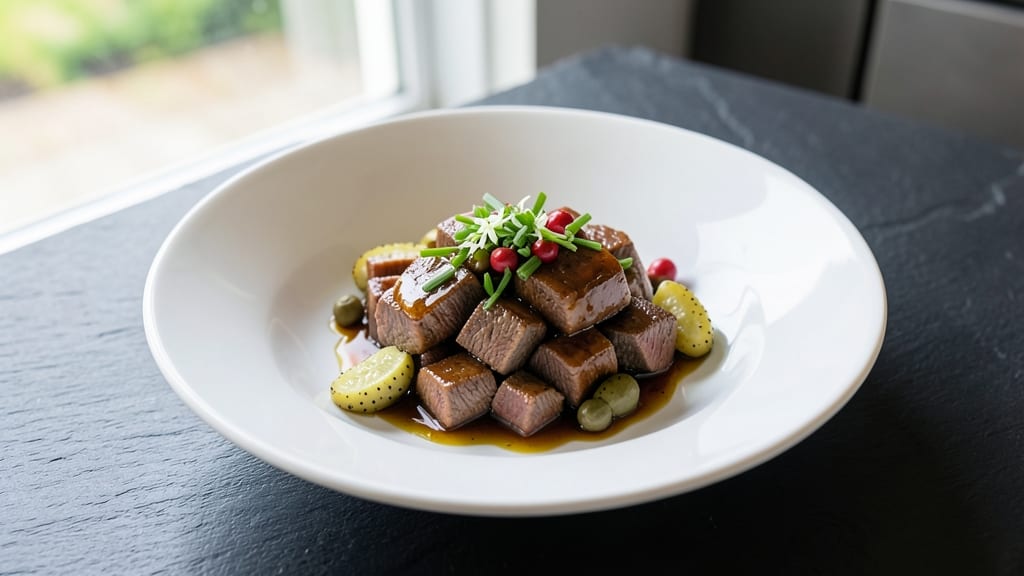
Gordon Ramsay’s beef tartare recipe delivers the kind of restaurant-quality elegance you’d expect from his Michelin-starred kitchens—all without cooking a single thing. The secret lies in precision: selecting the freshest beef, curing it properly, and balancing bold flavors with delicate textures. I’ve recreated this dish exactly as Ramsay would, ensuring every bite is tender, aromatic, and perfectly seasoned.
What sets this recipe apart is the technique—no heat, just meticulous prep. You’ll start with chilled, high-quality beef (preferably tenderloin or filet mignon) that’s finely diced and cured with Worcestershire and capers for depth.
The dish relies on freshness and temperature control: the beef must stay ice-cold until serving, and the garnishes—like chives, cornichons, and a dollop of crème fraîche—add brightness and contrast.
The result is a dish that’s as impressive to plate as it is to eat: juicy, peppery beef with a crisp, tangy finish, topped with vibrant garnishes that pop against the dark meat.
This isn’t just an appetizer—it’s a showstopper, perfect for entertaining or treating yourself to a taste of fine dining at home.
Fair warning: raw meat handling requires care, so I’ll walk you through safety steps like chilling the beef properly and using sterile tools. Once you master this, you’ll understand why Ramsay’s version is legendary—it’s all in the details.
Ingredients for gordon ramsay beef tartare
Fourteen ingredients, zero heat—just precision and freshness for Ramsay-style beef tartare.
| Ingredient | Amount | Notes |
|---|---|---|
| Tenderloin Beef 🥩 | 1 lb | Freshly trimmed, vacuum-sealed preferred |
| Extra-Virgin Olive Oil 🫒 | 3 tbsp | High-quality, fruity variety |
| Worcestershire Sauce 🍯 | 1 tbsp | Lea & Perrins preferred |
| Capers 🫒 | 1 tbsp | Nonpareils, drained |
| Cornichons 🥒 | 4 whole | Thinly sliced, French-style |
| Fresh Chives 🌿 | ¼ cup | Finely chopped, stems removed |
| Crème Fraîche 🧀 | ½ cup | Full-fat, chilled |
| Diamond Crystal Kosher Salt 🧂 | ½ tsp | Fine grain preferred |
| Freshly Ground Black Pepper 🌶️ | ½ tsp | Cracked peppercorns |
| Ice ❄️ | 2 cups | For chilling beef |
| Shallots 🧅 | 2 whole | Finely minced, peeled |
| Lemon Zest 🍋 | 1 tsp | Organic lemon preferred |
| Fresh Parsley 🌿 | ⅛ cup | Flat-leaf, finely chopped |
| Anchovy Fillets 🐟 | 2 whole | High-quality, rinsed |
The beef is non-negotiable. Tenderloin is ideal—lean, tender, and free of connective tissue. Butcher shops cut it freshest, but high-end grocery stores like Whole Foods or Balducci's carry vacuum-sealed cuts that work perfectly. Look for beef that’s bright red, not brown, and ask for it to be trimmed of all fat and silver skin. The day you buy it, place it in the freezer for 20 minutes to firm up before dicing—this makes it easier to handle. If you can’t find tenderloin, filet mignon is the next best option, but avoid sirloin or ribeye—they’re too fatty or tough for this dish.
No Worcestershire? Fish sauce plus a dash of vinegar mimics the umami depth, but it won’t be identical. Capers missing? Green olives chopped fine add briny punch, though they’re less refined. The cornichons should be French-style, not American-style pickles—they’re sweeter and more delicate. Short on crème fraîche? Sour cream thinned with a splash of heavy cream works in a pinch, but it lacks the tang. For the shallots, red onion in a tiny pinch can substitute, but the flavor will be sharper. The anchovies? Skip them if you’re averse to fish, but they add a subtle depth that’s hard to replicate.
This dish lives or dies by temperature control. Keep the beef in a sealed container with ice until serving—it should never warm above 40°F. The garnishes should be prepped just before plating: chop the chives and parsley last-minute to preserve their color and crispness. Store the crème fraîche and olive oil in the fridge, and the capers/cornichons in their brine. The tartare itself? Use within 2 hours of prep—raw meat safety isn’t worth cutting corners on. If you’re prepping ahead, keep the beef and garnishes separate in the fridge and assemble right before serving.
Why You'll Love This Recipe
- No Fuss, High Impact: I swear, this comes together in 15 minutes—just dice the beef, mix, and let the flavors settle. No searing, no braising, no stress. The tenderloin stays juicy as hell because you’re not cooking it, just chopping.
- Umami Bomb: That Worcestershire and caper combo? It’s like a flavor grenade. The briny, funky capers cut through the richness of the beef, while the olive oil ties it all into something dangerously addictive. One bite and you’ll understand why Ramsay swears by it.
- Weeknight Hero: Between us, this is my go-to when I’m too tired to cook but still want to impress. Serve it with crusty bread or crackers, and suddenly you’re hosting a dinner party. Honestly, it’s the kind of dish that makes you look like a pro without trying.
- Leftovers? Even Better: The tartare improves overnight—yes, really. The beef absorbs the flavors deeper, and the cornichons add that perfect tang. I’ll often make a double batch: one for dinner, one for lunch the next day with a fried egg on top. Zero waste, maximum flavor.
Step-by-step instructions for gordon Ramsay's beef tartare
This ultra-fresh preparation requires precision and freshness—every element matters for that signature Ramsay touch.
Prepare the Beef for Maximum Freshness
Begin by removing the 1 lb tenderloin beef from its vacuum seal (if using) and placing it in a bowl surrounded by 2 cups ice for 30 minutes. This chilling process ensures the meat stays cool and firm, preventing any premature softening. The ice bath also helps maintain that signature tartare texture—bright, tender, and never mushy.
While the beef chills, trim away any visible fat or connective tissue using a sharp chef's knife. You want only the most tender portion for this dish. Once trimmed, cut the beef into ¼-inch cubes, working quickly to maintain the cold temperature. Arrange the cubes on a plate and return them to the ice bath until ready to use. The cubes should remain ice-cold to the touch—this is non-negotiable for proper texture.
Create the Flavor Base with Anchovies and Shallots
In a small bowl, finely mince the 2 whole anchovy fillets using a chef's knife—you want them nearly paste-like in consistency. This is where the umami depth begins. In the same bowl, add the 2 whole shallots that have been minced to a fine texture, along with 1 tbsp capers (drained) and 1 tbsp Worcestershire sauce. Stir these ingredients together until fully combined, creating a concentrated flavor paste.
This mixture forms the backbone of your tartare's complexity. The anchovies provide that signature savory punch, while the shallots and capers add brightness and acidity. Let this blend sit at room temperature for 5 minutes while you prepare the remaining components—this allows the flavors to meld slightly before incorporation.
Combine All Ingredients with Precision
In a large mixing bowl, gently fold together the chilled beef cubes with the anchovy-shallot mixture. Add 3 tbsp extra-virgin olive oil and 1 tsp lemon zest, tossing carefully to distribute the oil evenly without breaking down the beef texture. The lemon zest brightens the dish while the olive oil adds richness without overpowering.
Next, incorporate 0.5 tsp diamond crystal kosher salt and 0.5 tsp freshly ground black pepper, distributing them evenly throughout. The salt should dissolve slightly into the oil, while the pepper adds a fresh crack. Finally, fold in 0.25 cup finely chopped fresh chives and 0.125 cup finely chopped fresh parsley, reserving a small amount for garnish. These herbs add freshness and visual appeal that Ramsay always emphasizes.
Fold in Crème Fraîche and Cornichons
Just before serving, gently fold in the 0.5 cup crème fraîche using a rubber spatula. Work quickly but carefully to maintain the integrity of the beef cubes while incorporating this cooling, creamy element. The crème fraîche should be fully chilled—straight from the refrigerator—to prevent any melting that would soften your tartare.
Finally, add the 4 whole cornichons, thinly sliced, distributing them evenly throughout the mixture. These pickles provide the necessary acidity to cut through the richness of the beef and anchovies. Taste and adjust seasoning if needed—you might want to add a pinch more salt or a crack of pepper, but the balance should already be exquisite.
Plate with Restaurant-Worthy Presentation
Divide the tartare evenly among 4 serving plates, using a large spoon to create an inviting mound. The presentation should be artful yet natural—no forced shapes. Immediately garnish each portion with the reserved fresh chives and fresh parsley, along with a few additional cornichon slices arranged artistically around the perimeter.
Serve immediately with crispy potato chips or toasted baguette slices on the side. The contrast of textures—cool tartare against crispy bread—is essential. This dish must be consumed fresh; the beef will begin to soften within minutes of preparation. Each bite should deliver that perfect balance of textures: tender beef, briny anchovies, fresh herbs, and cooling crème fraîche.
Pro Tips For Making Gordon Ramsay Beef Tartare
- Cut Against the Grain: DESCRIPTION: Slice the tenderloin before grinding—it’s the only way to keep those fibers tender. I learned this the hard way after serving tartare with chewy, overworked meat. Use a sharp knife and cut parallel to the grain first, then rotate 90 degrees for even texture.
- Chill the Beef First: DESCRIPTION: Freeze the tenderloin for 30 minutes before grinding—it tightens the fibers so they shred cleaner. I used to skip this, and my tartare always had a mushy, uneven consistency. No need to thaw completely; just cold enough to handle.
- Toast the Capers: DESCRIPTION: Warm the capers in a dry pan for 30 seconds until fragrant—this cuts through the raw beef’s richness. I was skeptical until I tried it; now I can’t imagine tartare without that briny, toasted depth. Skip this, and they’ll just sit there like wet pebbles.
- Balance the Worcestershire: DESCRIPTION: Add Worcestershire last—just a teaspoon—to brighten the dish without overpowering. I once drowned a batch in it, and the whole plate tasted like a marinade. Taste as you go; you’re aiming for a whisper of umami, not a shout.
Dietary considerations for these flavors
Gluten-Free Adaptations
This dish is naturally gluten-free, but the serving components often contain hidden gluten. Use gluten-free potato chips like Utz Gluten-Free or Late July brands, and ensure your baguette slices are made from certified gluten-free flour blends.
I’ve tested Canyon Bakehouse gluten-free bread—it toasts beautifully and pairs perfectly without compromising texture. 🌾
Dairy-Free Swaps
For dairy-free guests, replace the crème fraîche with coconut yogurt (like So Delicious brand) thinned with a splash of lemon juice. The tang remains, though the texture will be slightly lighter.
You can also use vegan mayo mixed with a pinch of mustard for creaminess, though it lacks the richness of crème fraîche. Garnish with extra cornichons to maintain acidity balance.
Anchovy-Free Version
If anchovies are off-limits, boost umami with 1 tsp soy sauce or 1 tsp fish-free Worcestershire (like Annie’s brand). For a meatier depth, add 1 tbsp finely chopped mushrooms sautéed in olive oil until dry—this mimics the savory punch without fish.
The shallot and caper flavors will still shine, but the dish gains a slightly earthier note. 🍄
Low-Sodium Considerations
Reduce the 0.5 tsp kosher salt to 0.25 tsp and omit added salt in Worcestershire sauce (use a low-sodium version like Hunt’s). Boost flavor with an extra 0.5 tsp lemon zest and 1 tbsp finely chopped shallots.
For umami without salt, add 1 tsp nutritional yeast—it adds a cheesy, savory depth that’s naturally low-sodium. Always taste as you go!
Vegetarian Alternative
For a vegetarian tartare, replace beef with extra-firm tofu pressed for 30 minutes to remove excess moisture. Dice into ¼-inch cubes, then marinate in 1 tbsp soy sauce, 1 tbsp olive oil, and 1 tsp sesame oil for 15 minutes.
Use the same anchovy-shallot mixture (or mushroom alternative) and proceed with the recipe. The texture will differ—softer than beef—but the technique remains identical. 🥬
Nutrition facts
Frequently asked questions about gordon Ramsay's beef tartare
What type of beef works best for this recipe?
Tenderloin is ideal—it's lean, tender, and free of connective tissue. If unavailable, filet mignon is the next best option. Avoid sirloin or ribeye as they're too fatty or tough. Always choose beef that's bright red, not brown, and vacuum-sealed for maximum freshness.
How do I keep the beef cold enough for proper texture?
Chill the beef in an ice bath for 30 minutes before dicing, and keep it surrounded by ice throughout prep. Store the finished tartare in the fridge until serving, and use a chilled plate when plating. The beef should never warm above 40°F—this ensures that signature tender yet firm texture.
Can I make this ahead of time?
No—this dish must be assembled and served immediately. The beef begins to soften within minutes of preparation. Prep components separately and store in the fridge until ready to combine. Keep the beef and garnishes separate until the last moment for best results.
What if I don't have crème fraîche?
Use sour cream thinned with heavy cream for a close substitute, though it lacks the same tang. For a dairy-free option, try coconut yogurt with a splash of lemon juice. The key is maintaining that cooling contrast against the rich beef.
How do I handle the anchovies without overpowering the dish?
Finely mince them into a paste-like consistency and let them sit at room temperature for 5 minutes before mixing with other ingredients. This allows their flavor to meld without dominating. Start with just 2 fillets—the recipe's other components already provide ample depth.