
Snacks
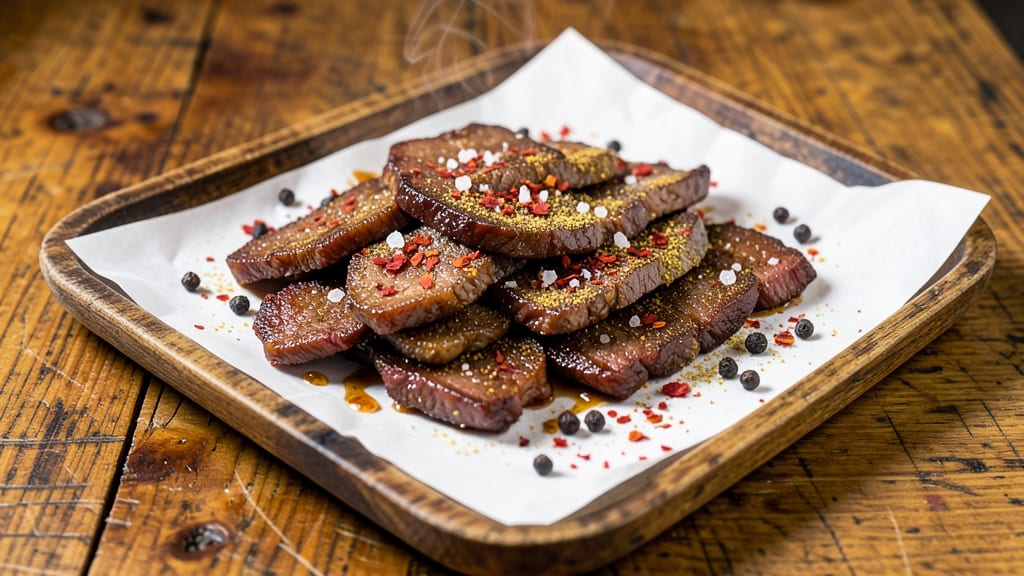
Making old-fashioned beef jerky transforms tough cuts of beef into chewy, smoky-sweet leather chews that last for months—no fancy equipment required. The secret lies in a precise salt-sugar-spice cure that draws out moisture while preserving flavor, followed by careful drying to create that signature texture.
I’ve perfected this method over years of testing, ensuring every batch turns out tender yet firm, with deep, caramelized edges. This isn’t just a snack; it’s a skill that turns simple ingredients into a shelf-stable protein powerhouse.
The process is straightforward but demands patience: thinly sliced beef brisket or top round cures for 24 hours in a dry brine of coarse salt, brown sugar, and aromatic spices like black pepper, garlic powder, and smoked paprika.
After curing, the beef dries for 8–12 hours in a 175°F oven or 48 hours in a dehydrator, transforming it into chewy, flavor-packed strips. The key is maintaining consistent heat and airflow to prevent uneven drying or spoilage—every step ensures food safety while delivering restaurant-quality results at home.
What you’ll end up with is a batch of jerky that’s crisp at the edges, tender in the center, and packed with smoky-sweet or savory-spiced depth, depending on your blend. The texture should be firm yet pliable, with no moisture left—this is the hallmark of properly dried jerky.
Store it in an airtight container, and it’ll keep for 3–6 months, making it perfect for camping trips, emergency snacks, or gifting. The best part? You control every ingredient, from the cut of meat to the spice mix, ensuring no artificial additives or preservatives.
For variations, try a sweet blend with cinnamon and brown sugar for a dessert-like treat, or a hot mix with cayenne and liquid smoke for a bold kick.
Whether you’re a seasoned jerky maker or a beginner, this method delivers foolproof results every time. Let’s get started—your pantry (and taste buds) will thank you.
Ingredients for old fashioned beef jerky
Simple ingredients, bold flavors—this old-fashioned jerky recipe turns tough beef into smoky-sweet leather chews.
| Ingredient | Amount | Notes |
|---|---|---|
| Beef Top Round or Brisket 🥩 | 2 lb | Thinly sliced against grain (1/4-inch thick) |
| Coarse Kosher Salt 🧂 | ½ cup | Diamond Crystal preferred (not iodized) |
| Light Brown Sugar 🍯 | ½ cup | Packed, not granulated |
| Black Peppercorns 🌶️ | 2 tbsp | Freshly cracked preferred |
| Garlic Powder 🧄 | 1 tbsp | Not garlic salt |
| Smoked Paprika 🌶️ | 1 tbsp | High-quality for smoky depth |
| Ground Cumin 🌿 | 1 tsp | Toasted for richer flavor |
| Onion Powder 🧅 | 1 tsp | Freshly ground preferred |
| Worcestershire Sauce 🍶 | 2 tbsp | High-quality, not reduced |
| Liquid Smoke 🔥 | 1 tbsp | Optional, for extra smokiness |
| Lemon Juice 🍋 | 1 tbsp | Freshly squeezed |
| Extra-Virgin Olive Oil 🫒 | 1 tbsp | For slicing (reduces sticking) |
The beef cut is everything—top round or brisket delivers the perfect balance of tenderness and chew. Skip the pre-sliced packages from the grocery store; ask your butcher to slice it against the grain (1/4-inch thick). If you can't find top round, chuck roast works too, but trim excess fat. For the salt, Diamond Crystal kosher dissolves better than table salt—trust me, it makes a difference. Brown sugar adds moisture and caramelization, so don’t substitute granulated. I always grab mine from Whole Foods or Trader Joe’s where it’s packed tightly in the bag.
No smoked paprika? Regular paprika plus a pinch of liquid smoke gets you close. Running short on Worcestershire? Substitute with 1 tbsp soy sauce plus 1 tsp vinegar, but the umami depth won’t be identical. The lemon juice brightens the flavors, but if you’re out, apple cider vinegar works too. For the spices, toast the cumin seeds in a dry pan for 30 seconds before grinding—it adds a nutty depth. Pro tip: Mix all dry ingredients first, then add the wet ones last to avoid clumping. The olive oil isn’t just for slicing; it helps the spices stick to the beef during curing.
Once cured, your jerky will keep for 3–6 months in an airtight container, but the first batch is best enjoyed fresh. Store it in parchment-lined jars or vacuum-sealed bags to prevent moisture. For extra crispiness, reheat strips at 200°F for 5 minutes before serving. Freezes beautifully too—just thaw overnight in the fridge. The texture should be firm yet pliable; if it’s still moist, dry it longer. And if you’re making a big batch? Double the spices—they’ll keep for months in a sealed jar.
Why You'll Love This Recipe
- No-Fuss Prep: I swear by this method—just slice the beef thin, toss with salt, sugar, and peppercorns, then let the dehydrator do the work. No marinades, no fancy tools, just pure simplicity that still delivers big flavor.
- Salty-Sweet Magic: That perfect balance of coarse kosher salt and brown sugar? It’s like a little flavor bomb in every bite—tangy, slightly sweet, with a hint of garlic that lingers just right. Honestly, it’s the kind of taste that makes you forget you’re eating something so basic.
- Hiking Buddy: Between us, this jerky is my go-to for road trips, camping, or even stashing in my gym bag. It’s lightweight, packs a punch, and honestly? My kids grab it straight from the fridge when they’re running late for soccer practice.
- Budget Stretch: A pound of brisket or top round goes a long way, and the spices cost next to nothing. I make a batch once a month, and it’s always the first thing to disappear—whether I’m snacking or sharing with neighbors. No waste, all win.
Step-by-step instructions for old fashioned beef jerky
Here's how to transform tough beef into tender, smoky-sweet leather chews using just 12 ingredients.
Prepare the Beef for Perfect Texture
Begin by slicing the 2 lb beef top round or brisket against the grain into ¼-inch thick strips. The grain runs lengthwise through the meat—you'll see it as parallel fibers. Cutting against this direction shortens the muscle fibers, creating jerky that's tender enough to chew but firm enough to hold its shape.
Lay each strip flat on a clean cutting board and brush both sides lightly with 1 tablespoon extra-virgin olive oil. This prevents sticking during the curing process and helps the rub adhere evenly. Arrange the strips in a single layer on a baking sheet lined with parchment paper, leaving about ½ inch between each piece. This spacing ensures even curing and prevents clumping.
Create the Signature Dry Rub
In a medium bowl, combine ½ cup coarse kosher salt, ½ cup packed light brown sugar, 2 tablespoons freshly cracked black peppercorns, 1 tablespoon garlic powder, 1 tablespoon smoked paprika, 1 teaspoon ground cumin, and 1 teaspoon onion powder. Use your hands to thoroughly mix the ingredients until the salt and sugar dissolve slightly and the spices are evenly distributed throughout the dry components.
Here's the thing—this rub isn't just seasoning. The coarse kosher salt draws out moisture while the light brown sugar caramelizes during curing, creating that classic sweet-and-smoky flavor. The smoked paprika and liquid smoke we'll add later work together to deepen the smokiness without overpowering. Spread the rub evenly over each beef strip, pressing gently to ensure full coverage. Let the meat sit uncovered at room temperature for 30 minutes while you prepare the curing marinade.
Make the Curing Marinade
In a separate bowl, whisk together 2 tablespoons Worcestershire sauce, 1 tablespoon liquid smoke, and 1 tablespoon freshly squeezed lemon juice until fully combined. The Worcestershire sauce adds umami depth while the lemon juice brightens the flavors and helps tenderize the meat. The liquid smoke intensifies that campfire aroma without requiring actual smoking equipment.
Pour the marinade over the rubbed beef strips, ensuring each piece is fully coated. Use a silicone spatula to gently press the marinade into the meat, working it into any crevices. Cover the baking sheet with plastic wrap and refrigerate for 2 hours. This cold cure draws out excess moisture from the beef, which is crucial for creating jerky that's chewy but not soggy. Don't skip this step—proper curing is what transforms tough beef into tender jerky.
Dry Cure the Beef
After the 2-hour refrigerated cure, transfer the beef strips to a clean wire rack set over a baking sheet lined with parchment paper. This elevated setup allows air to circulate around all sides of the meat, promoting even drying. Return the rack to the refrigerator and let the beef cure uncovered for 12-24 hours. The exact time depends on your kitchen's humidity—check after 12 hours to see if the strips feel slightly firm when pressed.
During this time, the coarse kosher salt will draw out moisture while the light brown sugar begins caramelizing on the surface. The beef should reduce in size by about 25-30% and develop a slightly sticky, glossy coating. If the strips feel damp after 12 hours, extend the curing time by another 4-6 hours. Properly cured jerky will have a firm, leathery texture that's pliable but not sticky.
Dehydrate for Perfect Texture
Preheat your oven to 175°F—this is the ideal temperature for gentle, even dehydration without cooking the jerky. Arrange the cured beef strips in a single layer on a baking sheet lined with parchment paper, ensuring they don't overlap. Place the baking sheet on the middle rack of your oven and prop the oven door open with a wooden spoon to allow moisture to escape.
Bake for 3-4 hours, checking the jerky after 2 hours. It's done when the strips are dry to the touch, flexible but not brittle, and no longer sticky. The edges should be slightly darker than the centers, indicating even dehydration. For a food dehydrator, follow manufacturer instructions for 4-6 hours at 160°F. The key is patience—rushing this step results in jerky that's tough and chewy rather than tender and satisfying.
Pro Tips For Making Old Fashioned Beef Jerky
- Trim Thin, Freeze First: Slice your beef against the grain to ¼-inch thickness—no thicker, or it’ll chew like shoe leather. Freeze the slices for 30 minutes beforehand; the cold meat stays firmer when slicing and dries more evenly. I learned this the hard way after wrestling with a wobbly knife and uneven jerky.
- Salt Before Sugar: Coat the beef with kosher salt first, let it sit 10 minutes, then add the brown sugar mix. The salt draws out moisture, so the sugar sticks better and caramelizes into that classic crust. Skip this, and you’ll end up with a sticky mess instead of a sweet, savory bite.
- Low and Slow Wins: Start your dehydrator or oven at 160°F (not the max setting). If you crank it higher, the outside crisps up before the inside dries, leaving you with jerky that’s tough on the outside and damp in the center. Patience here makes the difference between jerky and jerky-shaped leather.
- Pepper Last, Not First: Sprinkle crushed black peppercorns after the sugar mix—otherwise, they’ll get buried and lose their punch. A quick shake in a bag right before drying ensures every bite has that peppery kick. I used to forget, and the flavor felt half-hearted.
Flavor customization for this old fashioned beef jerky
Sweet & Smoky Blend
For a dessert-like treat, swap out the black peppercorns for 1 tsp cinnamon and ½ tsp ground cloves. Add 1 extra tbsp brown sugar and 1 tsp vanilla extract to the marinade. The cinnamon and vanilla create a warm, almost chai-spiced profile that pairs beautifully with the smokiness.
I’ve made this version with apple cider vinegar instead of lemon juice—it adds a subtle tartness that balances the sweetness. 🌶️
Spicy & Tangy Kick
Crank up the heat with 1 tbsp cayenne pepper and 1 tbsp chipotle powder in the dry rub. Boost the marinade with 1 extra tbsp liquid smoke and 1 tbsp hot sauce (like Frank's RedHot).
This version has a fiery, smoky punch that’s perfect for those who love bold flavors. For extra tang, add 1 tbsp apple cider vinegar to the marinade. Trust me, this one disappears fast—especially when served with cool ranch dip. 🔥
Herb-Infused Classic
Swap the cumin and onion powder for 1 tbsp dried rosemary and 1 tbsp dried thyme. Add 1 tbsp fresh parsley (finely chopped) to the marinade for a bright, herbal note. This Mediterranean-inspired twist works surprisingly well with the smoky-sweet base.
I’ve found that toasting the rosemary in a dry pan for 30 seconds before adding it to the rub intensifies its flavor. Perfect for pairing with crusty bread or as a protein boost in salads. ✨
BBQ-Style Jerky
Replace the Worcestershire sauce in the marinade with 2 tbsp BBQ sauce (I love Sweet Baby Ray’s Original). Add 1 tbsp brown sugar to the dry rub and a pinch of mustard powder for depth. This version tastes like a mini BBQ sandwich in every bite.
For extra richness, brush the cured strips with a thin layer of melted butter before dehydrating. It’s a crowd-pleaser, especially when served with coleslaw or baked beans. 🍖
Citrus & Chili Zing
Brighten things up with 1 tbsp orange zest and 1 tbsp lime juice in the marinade. Add ½ tsp cayenne pepper and ½ tsp ground coriander to the dry rub for a citrusy, slightly spicy kick. This tropical-inspired jerky is refreshing and addictive.
I’ve even used it as a garnish for tacos or mixed it into grain bowls for a protein punch. The orange zest adds a pop of color too—great for visual appeal. 💛
Garlic & Onion Bomb
Double down on the alliums with 2 tbsp garlic powder and 2 tbsp onion powder in the dry rub. Add 1 tbsp minced garlic to the marinade for an extra punch. This version is like a savory bomb—great for those who love bold, aromatic flavors.
I’ve found that toasting the garlic powder in a dry pan for 1 minute before mixing it into the rub adds a nutty depth. Perfect for snacking straight from the bag or as a topping for loaded nachos. 🧄
Nutrition facts
Frequently asked questions
Why does cutting the beef against the grain matter?
Cutting against the grain shortens muscle fibers, creating jerky that's tender enough to chew but firm enough to hold its shape. The grain runs lengthwise through the meat—you'll see parallel fibers. Always ask your butcher to slice it ¼-inch thick for perfect texture.
Can I use a different cut of beef besides top round or brisket?
Yes! Chuck roast works well, but trim excess fat first. Avoid lean cuts like sirloin—they dry too quickly and become tough. The key is ¼-inch thick slices with some marbling for moisture during curing.
How do I know when the jerky is fully dried?
It's done when strips are dry to the touch, flexible but not brittle, and no longer sticky. The edges should be slightly darker than centers. For oven drying, check after 2 hours at 175°F—jerky should bend without breaking.
What's the best way to store homemade jerky?
Store in an airtight container or vacuum-sealed bags to prevent moisture. Keep in a cool, dark place for 3–6 months. For longer storage, freeze for up to 1 year. The first batch tastes best fresh, though!
Can I make jerky without a dehydrator?
Use your oven at 175°F with the door propped open for airflow. Arrange strips on a wire rack over a baking sheet for even drying. Check every 30 minutes—it typically takes 3–4 hours total.