
Main Courses
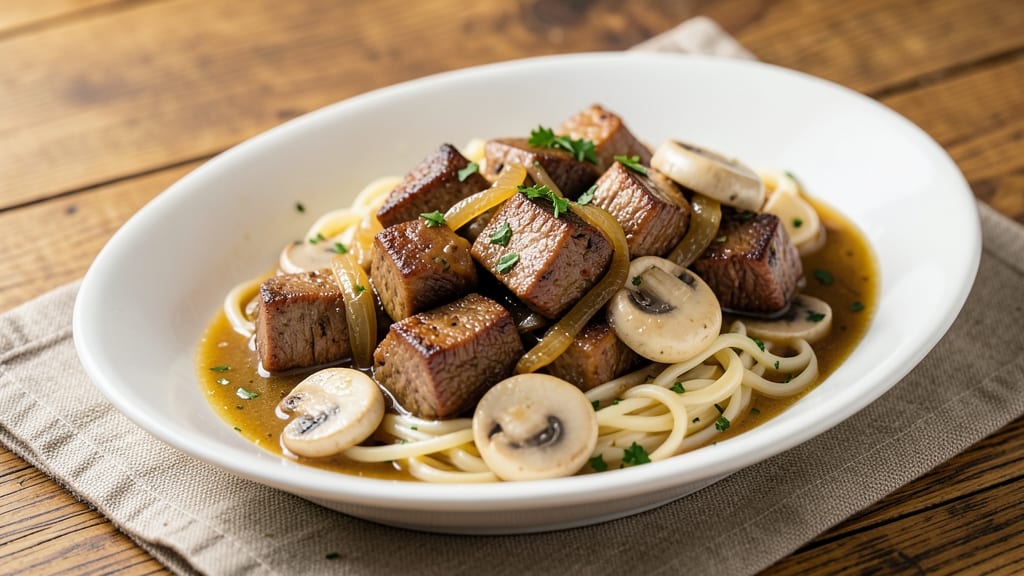
The old-fashioned beef stroganoff recipe brings classic Russian comfort food to your kitchen with brandy-infused richness and perfectly tender beef chunks. This dish traces back to 19th-century Russia, where it originated as a luxurious beef and mushroom sauce—now adapted for home cooks with a creamy, brandy-kissed finish.
The key lies in proper searing and slow cooking to develop deep, savory flavors while keeping the beef fork-tender.
What sets this recipe apart is the traditional technique of browning beef and mushrooms separately before combining them in a velvety sauce. A splash of brandy adds warmth and complexity, while sour cream creates that signature creamy texture without overpowering the meat.
The result is a dish that’s both nostalgic and refined—ideal for family dinners or special occasions.
By the time you serve this stroganoff over egg noodles or rice, you’ll have a restaurant-quality meal with golden-brown beef, earthy mushrooms, and a sauce that’s rich yet balanced.
The brandy infusion elevates it beyond basic stroganoff, making it a standout dish that feels like a homecoming. Ready to recreate this timeless classic?
This recipe also includes modern twists, like wine reductions or gluten-free noodles, so you can adapt it to your preferences while staying true to its roots. Let’s get cooking!
Ingredients for old fashioned beef stroganoff
Tender beef, earthy mushrooms, and brandy-kissed sauce—this classic needs just 15 simple ingredients.
| Ingredient | Amount | Notes |
|---|---|---|
| Beef Chuck Roast 🥩 | 1 ½ lb | Cut into 1-inch cubes, trimmed of fat |
| White Button Mushrooms 🍄 | 16 oz | Sliced 1/4-inch thick, stems removed |
| Yellow Onion 🧅 | 1 whole | Medium, thinly sliced |
| Garlic Cloves 🧄 | 4 cloves | Minced, fresh preferred |
| All-Purpose Flour 🌾 | 2 tbsp | For browning beef |
| Unsalted Butter 🧈 | 4 tbsp | European-style preferred |
| Brandy 🍷 | ¼ cup | High-quality, 80-proof minimum |
| Dry White Wine 🍷 | ½ cup | Sauvignon Blanc or Chardonnay |
| Beef Broth 💧 | 1 ½ cups | Low-sodium, homemade or quality store-bought |
| Sour Cream 🥛 | ½ cup | Full-fat for creaminess |
| Heavy Cream 🥛 | ¼ cup | Whole milk works in pinch |
| Diamond Crystal Kosher Salt 🧂 | 1 ½ tsp | Adjust to taste |
| Freshly Ground Black Pepper 🌶️ | 1 tsp | Cracked peppercorns preferred |
| Fresh Parsley 🌿 | ¼ cup | Chopped, for garnish |
| Egg Noodles 🍝 | 8 oz | Medium width, or gluten-free substitute |
The beef is non-negotiable—chuck roast delivers that melt-in-your-mouth texture, while sirloin stays tough. Grab it pre-cubed from Costco or your butcher counter for convenience. For mushrooms, white buttons are classic, but cremini adds depth. The brandy? Hudson Baby Amber or Elijah Craig elevate the dish—skip the cheap stuff. Fresh parsley might seem optional, but it brightens the dish at the end. I always grab a big bunch and use half here, half on other recipes.
No brandy? Substitute apple cider or extra beef broth—just reduce the liquid by 2 tbsp. White wine can be swapped for dry vermouth, but it’ll taste different. Mushrooms can be cremini or shiitake for more umami. Short on sour cream? Crème fraîche or Greek yogurt work too, though the texture changes. The flour is just for browning—don’t skip this step! It’s what builds flavor. For a lighter version, use half-and-half instead of heavy cream, but the sauce won’t be as rich.
This sauce gets better the next day—make extra and reheat gently. The beef reheats beautifully, but add a splash of broth to keep it moist. Store in airtight containers for 4 days or freeze for 3 months. I always double the recipe—leftovers make amazing stroganoff sandwiches. The noodles? Cook them al dente, then toss with a little butter and parsley. Trust me, it’s worth the extra minute.
Why You'll Love This Recipe
- One-Pot Magic: That flour-thickened sauce? It’s the secret weapon—just toss in your browned beef, mushrooms, and onions, then let it simmer. No extra pans, no fuss, and honestly, I’ve never met a stroganoff that didn’t taste better when made this way.
- Rich Without Effort: The beef chuck roast melts into tender, juicy perfection while the mushrooms soak up all that garlic-onion goodness. That creamy, slightly tangy sauce? It’s the kind of flavor that makes you forget you didn’t spend hours in the kitchen.
- Leftovers That Beg: This dish tastes even better the next day—yes, really. I swear by it for lunchboxes or quick reheats, and the texture holds up like a champ. Between us, I’ve brought this to potlucks and had people ask for the recipe within 10 minutes.
- Budget-Friendly Crowd-Pleaser: A chuck roast stretches farther than you’d think, and mushrooms add depth without breaking the bank. It’s my go-to for feeding the whole family (or guests) without stressing over expensive cuts or last-minute grocery runs.
Step-by-step instructions for old fashioned beef stroganoff
Here's the classic method—rich brandy-infused sauce and perfectly tender beef chunks every time.
Sear the Beef Chuck Roast for Maximum Flavor
Pat the 1.5 lb beef chuck roast dry with paper towels and cut it into 1-inch cubes, trimming any excess fat. Heat 2 tablespoons of the unsalted butter in a large Dutch oven over medium-high heat until it foams. Working in batches if needed, add the beef cubes and sear undisturbed for 2-3 minutes per side until deep golden brown. This creates the Maillard reaction that builds deep, caramelized flavor.
Here's the thing—don't overcrowd the pan. You want those beef cubes to develop a proper crust, not steam. If your pan gets too crowded, work in two batches. Season each batch immediately after searing with 1 teaspoon of the diamond crystal kosher salt and ½ teaspoon of the freshly ground black pepper. Transfer the browned beef to a plate and set aside temporarily.
Build the Brandy-Wine Sauce Base
Reduce heat to medium and add the remaining 2 tablespoons unsalted butter to the Dutch oven. Toss in the sliced 16 oz white button mushrooms and cook for 4-5 minutes until they release their moisture and begin to soften. Add the thinly sliced 1 whole yellow onion and cook for another 3 minutes until translucent.
Stir in the 4 cloves minced garlic and cook for 30 seconds until fragrant—don't let it burn. Sprinkle the 2 tablespoons all-purpose flour over the mushrooms and onions, stirring constantly for 1-2 minutes until the flour turns golden and nutty. This creates a roux that will thicken your sauce beautifully.
Deglaze and Simmer with Brandy and Wine
Pour in the 0.25 cup brandy and immediately scrape up any browned bits from the bottom of the pan with a wooden spoon. Let the brandy simmer for 2-3 minutes until it reduces by half and the alcohol burns off completely. You'll smell that rich, caramelized aroma—this is where the magic happens.
Add the 0.5 cup dry white wine and continue scraping up those flavorful bits. Let the wine reduce by half as well, about 3-4 minutes. Then pour in the 1.5 cups beef broth, stirring to combine. Bring the mixture to a gentle simmer and let it cook uncovered for 10 minutes to develop deeper flavors. You want the sauce to reduce slightly but still coat the back of a spoon.
Finish with Cream and Sour Cream
Return the browned beef cubes to the Dutch oven and stir to combine with the sauce. Add the 0.25 cup heavy cream and 0.5 cup sour cream, stirring gently to incorporate. Simmer the stroganoff for 5-7 minutes until the sauce thickens slightly and coats the beef beautifully. The sauce should be velvety but still pourable—if it's too thick, add 1-2 tablespoons of water or beef broth.
Taste and adjust seasoning with additional diamond crystal kosher salt and freshly ground black pepper as needed. The sauce should be rich but not overly salty. Remove from heat and let it rest for 5 minutes to allow the flavors to meld completely.
Serve Over Perfectly Cooked Egg Noodles
While the stroganoff rests, cook the 8 oz egg noodles according to package instructions until al dente. Drain and return them to the pot, tossing with 1 tablespoon of the reserved cooking water to prevent sticking. Divide the noodles among serving plates and ladle the beef stroganoff generously over each portion.
Garnish each serving with 1 tablespoon of the chopped 0.25 cup fresh parsley and an extra crack of black pepper. The dish should be rich, velvety, and packed with tender beef chunks that practically melt in your mouth. Serve immediately while the noodles are hot and the sauce is at its peak consistency.
Pro Tips For Making Old Fashioned Beef Stroganoff
- Sear the Chuck First: Cut the beef chuck into 1-inch cubes, then pat them bone-dry with paper towels before searing in a screaming-hot pan with oil. I learned this the hard way—skipping the dry step means the beef steams instead of developing that deep, caramelized crust that makes stroganoff taste like a restaurant dish. Let them brown 3-4 minutes per side without moving them; yes, it’ll look messy, but that’s how flavor builds.
- Deglaze with Beer, Not Water: After browning the beef, don’t reach for the water or broth—grab a cold beer (lager or pale ale works best). The alcohol burns off quickly, and the maltiness cuts through the richness of the mushrooms and onions, balancing the sauce. If you’re avoiding alcohol, use an equal mix of beef broth and a splash of apple cider vinegar, but beer is the real upgrade here.
- Sweat the Mushrooms Low and Slow: Mushrooms release their water like a faucet left running, and if you rush them, your stroganoff will turn into a sad, watery mess. Cook them on low heat for 8-10 minutes, stirring occasionally, until they’re soft and the liquid has mostly evaporated. This isn’t the prettiest method, but it’s the thing that matters most for a thick, velvety sauce.
- Thicken with Cold Butter: Once your sauce is reduced and the flour has cooked out, take the pan off the heat and stir in 2 tablespoons of cold butter, cut into small pieces. The cold fat will instantly thicken the sauce without clumping, and the richness will make the dish sing. I was skeptical until I tried it—now I can’t imagine doing it any other way.
Regional styles of these flavors
Russian Imperial Roots
The original stroganoff traces back to 19th-century Russia, where it was created for Count Stroganoff as a luxurious beef and mushroom dish. The classic version used beef tenderloin instead of chuck, and the sauce was made with sour cream and dill—no brandy.
This adaptation keeps the Russian soul while adding the brandy infusion that makes it feel more modern and approachable for home cooks. 🌍
Hungarian Goulash Influence
Hungarian immigrants brought their paprika-spiced beef stew traditions to Russia, which influenced stroganoff’s development. In Hungary, you’ll find "gulyás" with similar beef and mushroom combinations, but the sauce is thicker and often served with bread dumplings instead of noodles.
For a fusion twist, add 1 teaspoon sweet paprika to the sauce base—it deepens the earthy flavor without overpowering the brandy. 🌶️
Americanized Comfort Food
When stroganoff arrived in the U.S. in the 1950s, it became a midweek family dinner staple. American versions swapped dill for parsley, added wine, and served it over egg noodles (a nod to German and Italian pasta traditions).
The brandy infusion is a modern American touch—original Russian recipes didn’t include alcohol. For a true retro vibe, use bourbon instead of brandy and add a pinch of nutmeg to the sauce. 🍷
Swedish Meatball Stroganoff
In Sweden, stroganoff evolved into a meatball-based dish with a lighter, creamier sauce. The Swedish version often includes cream of mushroom soup and dill for brightness.
To adapt this style, replace the beef cubes with pan-seared Swedish-style meatballs (made with ground beef, pork, and breadcrumbs) and reduce the sour cream by 2 tablespoons. Serve with lingonberry jam for a sweet-tart contrast. 🇸🇪
Modern Gluten-Free Adaptations
For a gluten-free twist, swap egg noodles for rice noodles or shirataki noodles, and use cornstarch instead of flour to thicken the sauce. The brandy-wine reduction still works beautifully—just ensure your beef broth is gluten-free certified.
Garnish with toasted sesame seeds for a subtle crunch. This version keeps the dish’s creamy richness while making it accessible for dietary restrictions. 🥢
Vegetarian Stroganoff Twist
Swap the beef for portobello mushrooms or hearty lentils to create a vegetarian-friendly version. Sauté the mushrooms in the same way as the original, then proceed with the brandy-wine reduction.
Use vegetable broth instead of beef broth, and add 1 teaspoon soy sauce for umami depth. The sauce still thickens beautifully, and the dish remains hearty and satisfying. 🌱
Nutrition facts
Frequently asked questions
Can I substitute brandy with another alcohol in this recipe?
Yes! For a similar depth of flavor, use bourbon or apple cider (reduce by 2 tablespoons liquid elsewhere). Avoid cheap vodka—it lacks the caramelized notes brandy adds. For a non-alcoholic version, simmer 1 tablespoon brown sugar with the mushrooms to mimic the brandy's richness.
Why does my stroganoff sauce turn out too thin?
This usually happens if you didn't properly thicken the roux (flour + butter step) or overcooked the sauce. For a quick fix, mix 1 tablespoon cornstarch with 2 tablespoons cold water, stir into the sauce, and simmer for 2 minutes. Always simmer sauces uncovered to reduce properly.
What's the best way to reheat leftover beef stroganoff?
Reheat gently in a skillet with 1-2 tablespoons beef broth over low heat for 3-4 minutes to prevent curdling. Microwaving can make the sauce grainy—never reheat it uncovered. For extra richness, stir in 1 tablespoon sour cream at the end. Leftovers taste even better the next day!
Can I make this gluten-free while keeping the creamy texture?
Replace flour with 2 tablespoons cornstarch for the roux, and use gluten-free beef broth. For noodles, try rice noodles or shirataki noodles. The sauce will still thicken beautifully—just stir the cornstarch into the butter before adding liquids. The texture stays velvety!
What's the secret to tender beef in stroganoff?
Three things: proper searing (golden brown crust), low-and-slow cooking (simmering, not boiling), and not overcrowding the pan during browning. Chuck roast is ideal—it stays tender when cooked slowly. Avoid thin cuts like sirloin, which dry out.