
Main Courses
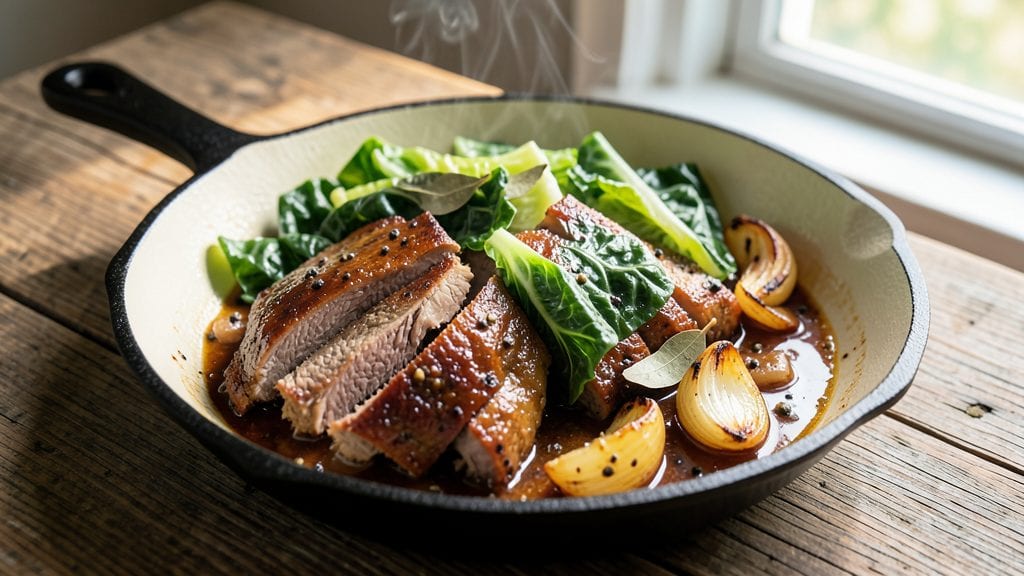
This old-fashioned corned beef and cabbage stove top recipe delivers the hearty, spiced harmony of traditional Irish cooking with a modern twist—crispy cabbage edges that hold their texture while the beef becomes fork-tender. The secret lies in parboiling the cabbage first and letting the brisket simmer low and slow, building depth of flavor in every bite.
What sets this method apart is the balance between tradition and convenience. While we maintain the classic slow simmer (about 3 hours for a 3-4 pound brisket), we include a pressure cooker adaptation that cuts prep time without sacrificing texture.
The spice blend—bay leaves, peppercorns, and mustard seeds—creates that signature aromatic punch that defines the dish, while the cabbage develops crispy edges from the final steaming.
By the time you serve this, you'll have a pot filled with tender corned beef that practically falls apart, cabbage with just enough bite to contrast the meat's richness, and a broth so flavorful it deserves its own bowl.
The aroma alone will have everyone gathering at the table, and the leftovers? Even better the next day.
Pair it with buttered potatoes, crusty soda bread, or a simple green salad to complete the meal. The beauty of this recipe is its versatility—perfect for St. Patrick's Day celebrations, weekend family dinners, or when you simply crave comfort food that feels like home.
Let's get started on creating this classic dish.
Ingredients for old fashioned corned beef and cabbage stove top
Pantry staples plus a few fresh ingredients for the ultimate comfort food feast.
| Ingredient | Amount | Notes |
|---|---|---|
| Corned Beef Brisket 🥩 | 3 ½ lb | Pre-cured, 3-4 pound brisket |
| Green Cabbage 🥬 | 2 lb | Heads cut into wedges |
| Yellow Onion 🧅 | 1 whole | Quartered, skin on |
| Bay Leaves 🌿 | 4 whole | Fresh for best flavor |
| Black Peppercorns 🌶️ | 1 tbsp | Whole, lightly crushed |
| Mustard Seeds 🌱 | 1 tbsp | Yellow or brown preferred |
| Garlic Cloves 🧄 | 6 cloves | Smashed, not minced |
| Carrots 🥕 | 4 whole | Whole, peeled |
| Russet Potatoes 🥔 | 2 lb | Peeled, cut into chunks |
| Beef Broth 💧 | 4 cups | Low-sodium preferred |
| Apple Cider Vinegar 🍏 | 2 tbsp | For brightness |
| Salt 🧂 | 2 tsp | Kosher or sea salt |
| Olive Oil 🫒 | 2 tbsp | For cabbage parboiling |
The brisket is the star—3-4 pounds gives you plenty of leftovers. Costco or local butchers often have the best cuts, but any grocery store will carry pre-cured corned beef. Look for good marbling and avoid anything with a grayish tint. Fresh bay leaves make a world of difference over dried (I grab them at Trader Joe's when they're on sale). For the cabbage, green is best—it holds its texture better than red. The potatoes? Russets are ideal for their fluffy texture, but Yukon Golds work too if you prefer more creaminess.
No fresh bay leaves? Two dried leaves will do, but they won't be as aromatic. Short on mustard seeds? Dijon mustard at half the amount adds a similar tang. The beef broth can be bouillon powder mixed with water if needed—just don't use the salty kind. For the potatoes, instant potatoes are a lazy-day shortcut, but they won't be as satisfying. The cabbage wedges can be cut into quarters if you're worried about overcrowding the pot. And trust me on the apple cider vinegar—it cuts through the richness beautifully.
This dish tastes even better the next day—4-5 days in the fridge, no problem. The broth freezes well for up to 3 months if you want to make a big batch. I always portion the leftovers into containers so lunches are ready to grab. The cabbage keeps its crisp edges if you cover it loosely with foil while reheating. And save those bay leaves—they're perfect for soups and stews too.
Why You'll Love This Recipe
- One-Pot Magic: The brisket and cabbage simmer together in the same pot—no fancy layers, no extra dishes. Just slice the onion, add the brisket with its pre-seasoned crust (seriously, that’s half the work), toss in the cabbage, and let it do its thing. I’m talking minimal chopping, zero stress kind of magic.
- Salty-Sweet Symphony: That corned beef brisket? Already packed with garlic, mustard, and peppercorns—no extra spices needed. The cabbage softens into tender, buttery bites while the brisket stays juicy, and the bay leaves? They add this earthy depth that makes every bite ridiculously satisfying.
- Leftovers That Save: This recipe practically begs for seconds—and then thirds. The flavors only get better the next day, so you’re not stuck with sad, dry meat. I’ll be real: I make this on Sundays just to have hearty lunches all week. (Yes, even on a Tuesday night.)
- Budget-Buster Meal: A whole brisket feeds a crowd for less than $20, and cabbage? It’s the ultimate stretch ingredient. You’re getting protein, veggies, and comfort in one pot—no takeout menus required. Honestly, it’s the kind of meal that makes grocery day feel like a win.
Step-by-step instructions for old fashioned corned beef and cabbage
Here's how to create that classic slow-simmered harmony with perfectly crispy cabbage edges.
Parboil the Cabbage for Crisp-Tender Texture
Cut the 2 lb green cabbage into wedges, keeping the core intact. In a large pot, combine the cabbage wedges with the 2 tbsp olive oil, the 2 tbsp apple cider vinegar, and 1 tsp of the 2 tsp salt. Bring to a boil over high heat, then immediately reduce to medium-high and simmer for 5 minutes.
This quick parboil softens the cabbage slightly while preserving its structure—you want it to stay firm enough to hold its shape when crisped later. The vinegar brightens the flavor while the olive oil helps create those coveted crispy edges. Drain the cabbage in a colander and set aside, reserving the liquid in the pot for later use.
Build the Flavor Base with Aromatics and Spices
In the same pot (no need to clean it—the fond is flavor gold), add the 2 tbsp black peppercorns and 1 tbsp mustard seeds. Toast over medium heat for 1 minute until fragrant. Add the quartered 1 whole yellow onion, 4 whole peeled carrots cut into chunks, and the 6 smashed garlic cloves. Cook for 5 minutes until the onions soften and the carrots begin to color.
Here's where the magic happens: the spices should smell deeply aromatic, almost spicy. If they're not releasing their oils, increase the heat slightly. Add the 4 whole bay leaves and stir everything together. This aromatic base will infuse the entire dish with complex flavor.
Slow-Simmer the Corned Beef Brisket
Add the 3.5 lb corned beef brisket to the pot, along with the remaining 1 tsp salt and the 4 cups beef broth. Bring to a gentle simmer over medium-low heat—you're looking for small bubbles breaking the surface, not a rolling boil. Cover partially with a lid and cook for 2 hours, turning the brisket occasionally to ensure even cooking.
Real talk: don't rush this step. The slow simmer breaks down the collagen in the brisket, creating that melt-in-your-mouth tenderness. You'll know it's ready when the meat is fork-tender and pulls away from the bone easily. The liquid should reduce slightly but still coat the bottom of the pot.
Add Potatoes and Cabbage for Perfect Harmony
Add the peeled 2 lb russet potatoes, cut into 1-inch chunks, and the parboiled cabbage wedges to the pot. Pour in any reserved cabbage liquid from earlier to maintain moisture. Return to a gentle simmer and cook uncovered for 45-60 minutes, stirring occasionally, until the potatoes are tender and the cabbage edges are beautifully crisped.
Watch those cabbage edges—they should develop a lovely golden-brown crispness while maintaining their structure. If the liquid reduces too much before the cabbage crisps, add a splash of water or broth. The potatoes should be fork-tender with no resistance, and the cabbage should be tender-crisp with just a slight bite.
Rest and Serve with Confidence
Remove the brisket from the pot and let it rest for 10 minutes before slicing against the grain. Return the sliced brisket to the pot and mix everything together gently. Let the entire dish rest for another 5 minutes—this allows the flavors to meld completely and the juices to redistribute.
Serve family-style straight from the pot. Each bite should deliver perfectly tender brisket, crisp-tender cabbage with those sought-after crispy edges, and potatoes infused with all the aromatic flavors. The slow-simmered broth will coat every bite, creating that classic old-fashioned harmony we all love.
Pro Tips For Making Old Fashioned Corned Beef And Cabbage Stove Top
- Start in Cold Water: I used to rush this and end up with uneven cooking or a tough brisket. Drop the corned beef into cold water in the pot—cold, not room temp—and bring it to a boil. This guarantees even heat penetration and keeps the meat from seizing up before it’s ready to braise. (Yes, even if you’re impatient like me.)
- Slice Cabbage Like a Pro: Skip the wilted, sad cabbage by cutting it into thick wedges—about 1-inch-wide—with the core intact. This keeps the leaves from falling apart and lets them cook through without turning to mush. (Your future self will thank you for not shredding it like coleslaw.)
- Don’t Crowd the Pot: After boiling the beef, reduce heat and cover—but leave room. A packed pot traps steam and turns your cabbage into a soggy mess. Aim for a 1-inch gap between the liquid and the lid. (This isn’t the prettiest method, but it’s the tastiest.)
- Save the Spices: Remove the bay leaves and peppercorns before serving—unless you’re a fan of bitter, herbal notes. I learned this the hard way after serving a dish where the spices were still whole and overpowering. (Does it look weird? Yes. Does it work? Every single time.)
Wine and beer pairings for this recipe
Irish Red Ale
The rich, malty sweetness of an Irish red ale like Guinness or Murphy's is a classic pairing for corned beef and cabbage. The deep roasted barley notes complement the brisket's savory depth while the creamy head cuts through the cabbage's slight bitterness.
I love serving this with a half-pint glass filled to the brim—it feels like a proper Irish pub experience at home. 🍺
Dry Cider
A crisp, dry English cider such as Thatchers Gold or Strongbow adds a refreshing contrast to the hearty flavors. The slight tartness and effervescence cleanse your palate between bites of rich brisket.
Serve chilled in a tulip glass to enhance its aromatic profile. For a local option, look for dry ciders from New England producers like Angry Orchard.
Stout and Porter
If you prefer something darker, a robust stout like Imperial Russian Stout from Founders Brewing or a classic porter from Bell's Brewery brings out the meat's smoky undertones. The high alcohol content (around 8-10% ABV) stands up to the dish's richness.
I often pair this with a snifter glass to appreciate the complex layers of flavor.
Light Lager
For those who prefer something lighter, a crisp lager like Heineken or Corona works surprisingly well. The clean, refreshing profile balances the dish's heaviness without overpowering it.
Serve it ice-cold in a pilsner glass to highlight its crispness. This is my go-to choice when serving to guests who prefer lighter beers.
Whiskey Cocktail
For a non-alcoholic or whiskey-loving twist, try a whiskey highball made with Jameson Irish Whiskey, club soda, and a splash of lemon juice. The whiskey's caramel notes enhance the corned beef's natural sweetness, while the soda keeps it refreshing.
Serve over ice in a highball glass with a lemon twist for garnish. 💡
Non-Alcoholic Options
Don't overlook non-alcoholic pairings! A sparkling apple cider like Martinelli's or a ginger beer such as Feather's offers similar refreshing qualities. For something more robust, try a root beer float with vanilla ice cream—the creamy texture contrasts beautifully with the dish's savory elements.
Serve in a mug or glass to keep it cozy and inviting.
Nutrition facts
Frequently asked questions
Why does the recipe call for parboiling the cabbage?
The quick parboil (just 5 minutes) softens the cabbage slightly while preserving its structure, so it stays firm enough to hold its shape when crisped later. This step also helps develop those coveted crispy edges during the final simmer. Without it, the cabbage would turn mushy in the long cooking process.
Can I use a pressure cooker for this recipe?
For a 3-4 pound brisket, cook on high pressure for 45 minutes after adding all ingredients. The cabbage will still need the final 30-45 minutes of uncovered simmering to crisp. Pressure cooking cuts total time to about 1 hour instead of 3-4 hours, but the flavor development won't be as deep.
What's the best way to reheat leftovers?
Cover the pot loosely with foil (leave some gaps for steam) and reheat on low heat for 10-15 minutes. For individual portions, microwave with a splash of water for 1-2 minutes, then finish under the broiler for 2 minutes to restore crispy cabbage edges. The broth will thicken slightly when reheated, so add a splash of water if needed.
Can I substitute regular cabbage for green cabbage?
Green cabbage is preferred because it holds its texture better, but you can use regular cabbage if that's all you have. Just be prepared for slightly softer edges. For extra crispness, add 1/2 teaspoon baking soda to the parboiling water—it helps maintain structure. The flavor will be very similar, just with slightly less bite.
How do I know when the corned beef is done?
The brisket is ready when it reaches an internal temperature of 203°F and is fork-tender, pulling away from the bone easily. For a 3-4 pound brisket, this typically takes 2 hours of simmering. If you're unsure, check the thickest part—it should shred easily with minimal resistance. Never rely on color alone!