
Snacks
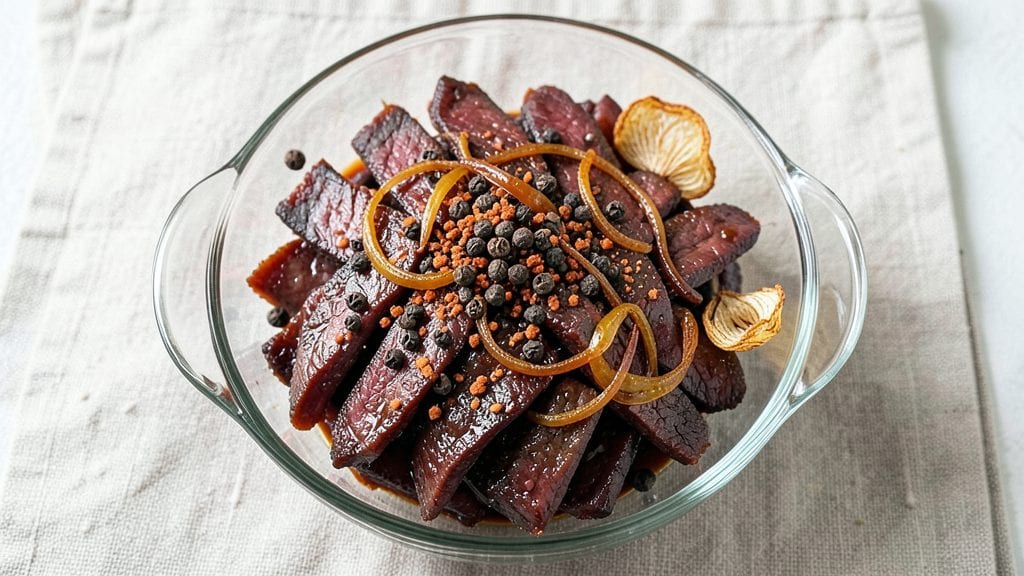
This pepper beef jerky recipe transforms tough cuts of beef into smoky, spiced strips with a satisfying leather-like crunch—perfect for snacking or gifting. The key lies in precise curing and dehydration, whether you use a smoker, oven, or traditional air-drying method.
I’ve perfected this technique over years of testing, ensuring every bite delivers bold peppery heat balanced with savory depth.
The process begins with selecting the right cut—lean beef like top round or flank steak works best—and marinating it in a blend of black pepper, smoked paprika, and garlic powder for at least 12 hours.
This seasoning creates a flavorful crust that penetrates the meat, while the dehydration step transforms it into a chewy, portable snack with a shelf life of weeks. Safety is critical, so we’ll cover proper curing times and storage tips to guarantee a product that’s both delicious and safe to eat.
What you’ll end up with is jerky that’s crisp on the edges, tender in the center, and packed with smoky-spiced flavor—ideal for hiking trips, game day, or as a protein-packed snack.
The method is straightforward but requires patience; no shortcuts here, just a foolproof technique that delivers restaurant-quality results at home. Ready to make jerky that rivals store-bought? Let’s get started.
This recipe works equally well with a smoker, food dehydrator, or even your oven, giving you flexibility based on your equipment. Whether you prefer classic air-dried jerky or quicker dehydrator methods, the principles remain the same: precise seasoning, controlled drying, and attention to detail.
The result is jerky that’s worth the effort—bold, crunchy, and impossible to resist.
Ingredients for pepper beef jerky
Lean beef, bold spices, and precise curing—everything you need for restaurant-quality pepper beef jerky.
| Ingredient | Amount | Notes |
|---|---|---|
| Top Round Beef Roast 🥩 | 2 lb | Lean cut, trimmed of fat |
| Black Peppercorns 🌶️ | ½ cup | Freshly cracked for bold flavor |
| Smoked Paprika 🌶️ | ¼ cup | High-quality for smoky depth |
| Garlic Powder 🧄 | 2 tbsp | Freshly ground preferred |
| Kosher Salt 🧂 | 2 tbsp | Diamond Crystal preferred |
| Brown Sugar 🍯 | ¼ cup | Light or dark variety |
| Worcestershire Sauce 🍶 | 2 tbsp | High-quality for umami |
| Liquid Smoke 💨 | 1 tbsp | Optional for extra smokiness |
| Apple Cider Vinegar 🍎 | ¼ cup | For tenderizing and tang |
| Onion Powder 🧅 | 1 tbsp | For subtle depth |
| Cayenne Pepper 🔥 | 1 tsp | Adjust for heat preference |
| Granulated Sugar 🍚 | 1 tbsp | For curing balance |
The beef is non-negotiable. Top round or flank steak from the meat counter—ask for well-trimmed cuts with minimal fat. Costco or local butchers often have the best prices for bulk packs. Look for beef with good marbling but trim any visible fat yourself. The leaner the cut, the better it’ll slice thin and dry evenly. I always buy 2 lbs for 4 servings—enough for testing and leftovers. If you’re unsure about the cut, ask the butcher for ‘jerky-grade beef’; they’ll know exactly what you need.
No smoked paprika? Substitute half the amount with regular paprika plus a pinch of liquid smoke—it’ll mimic that campfire aroma. The Worcestershire sauce can be swapped for 1 tbsp soy sauce plus 1 tsp balsamic vinegar, but you’ll lose some depth. Freshly cracked black pepper is ideal, but if you’re using pre-ground, toast it lightly in a dry pan first to wake up the flavor. The brown sugar adds just enough sweetness to balance the heat, but if you’re avoiding sugar, use an extra tbsp of apple cider vinegar for tang. And trust me on the liquid smoke—it’s worth the extra step for that authentic smoky kick.
This marinade keeps in the fridge for up to 1 week, so make extra. The beef needs 12-24 hours in the marinade—longer for thicker cuts. Once sliced, pat the strips dry with paper towels before dehydrating. Store in airtight containers or vacuum-sealed bags for up to 3 weeks in the pantry or 6 months in the freezer. For gifting, portion into small bags with a handwritten tag—it’s always a hit.
Why You'll Love This Recipe
- No-Fuss Prep: I swear by this recipe because it’s literally just slicing beef, tossing it in a bowl, and letting the dehydrator do the work. No marinating overnight, no fancy equipment—just a handful of spices and 6 hours of hands-off time.
- Smoky Spice Bomb: That combo of cracked black peppercorns and smoked paprika? It’s like a warm hug for your taste buds—savory, slightly sweet, with a kick that lingers. The garlic powder ties it all together without overpowering, so every bite is ridiculously satisfying.
- Snack Attack Ready: Between us, this jerky is my secret weapon for road trips, gym bags, or when I’m too tired to cook but still need protein. It keeps for weeks in the fridge, so I always have a stash for lazy days or last-minute picnic packs.
- Budget Protein Win: Top round roast is affordable, and a single batch stretches into so many uses—tacos, salads, or just straight-up snacking. Honestly, it’s one of those recipes where you make it once, realize how cheap and versatile it is, and never buy pre-packaged jerky again.
Step-by-step instructions for smoky-spiced beef jerky
Here's how to transform lean beef into restaurant-quality jerky with bold peppery heat and smoky depth.
Prepare the Cure with Precision
In a medium bowl, combine the 0.5 cup black peppercorns, 0.25 cup smoked paprika, 2 tbsp garlic powder, 2 tbsp kosher salt, 0.25 cup brown sugar, 2 tbsp Worcestershire sauce, 1 tbsp liquid smoke, 0.25 cup apple cider vinegar, 1 tbsp onion powder, 1 tsp cayenne pepper, and 1 tbsp granulated sugar. This is your flavor foundation - each ingredient plays a critical role in both taste and preservation.
Use a mortar and pestle to crush the black peppercorns into coarse granules before mixing. The vinegar and Worcestershire sauce will begin breaking down the beef's proteins immediately, so don't let the mixture sit too long before using. The liquid smoke adds that campfire intensity while the brown sugar helps balance the acidity and creates a subtle caramelization during drying.
Cure the Beef for Optimal Texture
Trim any remaining fat from the 2 lb top round beef roast and slice it against the grain into ¼-inch thick strips. The lean cut is perfect for jerky as it has minimal fat that would interfere with drying. Arrange the beef strips in a single layer on a baking sheet lined with parchment paper.
Pour the cure mixture evenly over the beef, ensuring each strip gets full coverage. Let it marinate in the refrigerator for 4-6 hours, turning the strips occasionally. This curing time is crucial - it tenderizes the meat while allowing the flavors to penetrate deeply. The beef should develop a slightly tacky surface and absorb about 80% of the marinade.
Dry to Perfect Leather-Like Texture
Preheat your dehydrator to 165°F (or use an oven with the door slightly ajar for airflow). Arrange the marinated beef strips on dehydrator trays, ensuring they don't overlap. The proper spacing prevents moisture buildup that could lead to spoilage.
Dry the beef for 6-8 hours, checking periodically. The jerky is done when it's pliable but no longer sticky to the touch - you should be able to bend it slightly without breaking. The internal temperature should reach 160°F when measured with a meat thermometer. This drying process transforms the beef into that signature chewy, leather-like texture while preserving all the complex flavors.
Cool and Package for Maximum Shelf Life
Remove the jerky from the dehydrator and let it cool completely on a wire rack. This cooling step is essential as it prevents condensation from forming when you package it. The jerky should be completely dry to the touch with no moisture remaining on the surface.
Once cooled, transfer the jerky to airtight containers or resealable bags. Store in a cool, dark place where it will keep for up to 2 weeks at room temperature or 3 months in the refrigerator. The proper drying and packaging ensure food safety while maintaining that perfect texture and flavor profile.
Pro Tips For Making Pepper Beef Jerky
- FREEZE BEFORE SLICING: I learned this the hard way—slicing raw top round against the grain without chilling first makes it gummy. Pop the roast in the freezer for 20-30 minutes to firm it up. The slices will hold their shape better during drying, and you’ll avoid that sad, mushy jerky texture.
- GRIND YOUR PEPPER: Whole black peppercorns? Skip it. Unless you’re going for a rustic, uneven bite, grind them first—even a quick pulse in a spice grinder makes a real difference. Smoked paprika and garlic powder need the pepper to blend evenly, so don’t cut corners here.
- LOW AND SLOW WINS: After burning three batches, I finally figured out: jerky dehydrates best at 160°F (71°C), not max heat. If your dehydrator or oven runs hotter, prop the door open slightly or use a rack to circulate air. Rushed drying = chewy jerky; patience = perfect texture.
- TRIM AND TENDONS: My grandmother swore by this, and she was right: remove all visible fat and connective tissue from the top round before slicing. Those little white tendons never dry properly and turn rubbery. A sharp knife and steady hand make this easier than it sounds—just work slowly.
Regional styles of this pepper beef jerky
Texas-Style Pepper Jerky
In Texas, jerky is all about bold, smoky heat with a touch of sweetness. I like to add 1 tbsp of chili powder and ½ tsp of ground cumin to the marinade for that signature Lone Star kick.
The key here is using coarse-ground black pepper and letting the beef cure for 12-16 hours—this creates a deeper, more complex flavor profile. Texans often smoke their jerky over oak or pecan wood for that unmistakable BBQ aroma. 🔥
Carolina Cayenne Kick
South Carolina takes jerky to a spicy new level with their love of cayenne. I boost the heat by adding 2 tsp of cayenne pepper and 1 tsp of red pepper flakes to the marinade. The secret?
A longer cure time of 24 hours lets the heat penetrate deeply. Carolinians also prefer a slightly thicker cut—about ⅓-inch thick—for extra chew. Serve with a side of peach preserves to balance the heat.
Midwest Smoked Paprika Twist
The Midwest approach focuses on smoky depth with a touch of sweetness. I replace half the black pepper with extra smoked paprika and add 1 tbsp of maple syrup to the marinade.
The beef is sliced slightly thicker—about ⅛-inch—and dried at 155°F for a softer texture. This style pairs perfectly with cheddar cheese and apple slices for a classic Midwest snack plate.
Southwest Chipotle Fusion
For a Southwest twist, I blend 1 tbsp of chipotle powder and ½ tsp of ground coriander into the marinade. The beef is cured for 8-10 hours and dried at 160°F for a firmer texture.
This version works amazingly well with black beans and avocado slices for a protein-packed taco-style snack. The chipotle adds a smoky, slightly sweet heat that’s perfect for spice lovers. 🌶️
Pacific Northwest Cedar-Infused Style
Out West, jerky takes on a lighter, cedar-infused flavor. I add ½ tsp of cedar planks powder (or a few drops of cedar extract) to the marinade and smoke the beef over cedar wood chips for 30 minutes before drying.
The result is a subtly aromatic jerky with a cleaner, more herbal note. This style pairs beautifully with fresh berries and almonds for a balanced snack.
Nutrition facts
Frequently asked questions
Can I use a different cut of beef besides top round?
Yes, but choose lean cuts with minimal fat. Flank steak or silverside roast work well—just trim all visible fat first. Avoid fatty cuts like ribeye as they won't dry properly. For extra tenderness, freeze the beef for 24 hours before slicing, then thaw completely before marinating.
How do I adjust the heat level in this recipe?
Start with the 1 tsp cayenne pepper in the recipe, then adjust to taste. For mild heat, reduce to ½ tsp or omit entirely. For extra spice, add ½-1 tsp red pepper flakes or a pinch of crushed chili peppers. Always taste the marinade before applying to beef!
What's the best way to dry jerky without a dehydrator?
Use an oven set to 175°F with the door slightly open for airflow. Place beef strips on a wire rack over a baking sheet and dry for 4-6 hours, flipping halfway. For traditional air-drying, hang strips in a cool, dry place (like a garage) for 3-5 days with good airflow. A fan helps speed up the process.
Why did my jerky turn out too tough or chewy?
This usually happens from over-drying or using slices that were too thick. Aim for ¼-inch thick strips and check internal temperature at 160°F. If using oven/dehydrator, reduce temperature to 155°F for softer texture. The beef should bend slightly without breaking when done.
How can I make this jerky last longer?
Proper drying is key—jerky should be bone dry with no moisture. Store in vacuum-sealed bags or airtight containers in a cool, dark place. Refrigerated jerky lasts 3 months, while frozen jerky keeps for 6+ months. For gifting, portion into small bags with oxygen absorbers for maximum shelf life.